

I’ll never forget the sinking feeling I had during my first wedding tasting. Excited, yes, but utterly overwhelmed. The array of dishes, the endless choices, and the nagging fear that I might end up with a menu that didn’t quite hit the mark. It was a lightbulb moment—I realized I was going in unprepared, winging my questions and hoping for the best. Spoiler: that didn’t end well. But over time, I discovered that asking the right questions, especially during that crucial tasting, can make or break the entire catering experience.
Why Nailing Your Questions During the Tasting Matters More Than You Think
When I finally started to ask strategic questions, everything changed. Suddenly, I was gaining insight into the chef’s flexibility, ingredient quality, and whether they truly understood my vision. The tasting session transformed from a nerve-wracking appointment into a collaborative dance, where clarity and expectations aligned. It’s astonishing how a few well-placed questions can prevent costly mistakes and ensure your menu is a perfect fit.
According to industry experts, most couples and event planners overlook the importance of the tasting conversation, leading to last-minute surprises and dissatisfaction. Pro tips from catering pros emphasize that being proactive with your inquiries fosters better communication and higher-quality results.
Is It Really Worth Overthinking Your Caterer Questions?
Admittedly, I used to think that cuddling up with a long list of questions was overkill. But early on, I made a rookie mistake—failing to ask about ingredient sourcing and creative options—only to find out afterward that some components couldn’t be changed or were subpar. That lesson taught me the importance of detail-oriented conversations. Now, I make sure to ask about seasonal ingredients, presentation ideas, and service styles, ensuring nothing’s left to chance.
So, if you’ve ever felt anxious about missing crucial details or wondering whether your caterer truly understands your vision, you’re not alone. The good news? With some targeted questions, you can take control of the tasting and turn it into a powerhouse of clarity and confidence. Ready to learn exactly what to ask? Let’s dive into the four key questions that will elevate your catering experience and set your event apart.
Prepare Your Question Arsenal Before the Tasting
Before the tasting begins, list out every uncertain area—ingredient sources, presentation styles, and service options—like packing a toolkit for every scenario. During my first tasting, I nearly missed asking about the chef’s flexibility on seasonal ingredients. I was distracted and unprepared; the chef suggested a whipped cream topping that didn’t align with my vegan guests. Afterwards, I created a detailed question list, ensuring I covered all angles. This proactive approach guarantees you’re ready to address potential issues head-on, preventing surprises that could derail your event.
Ask Precise, Actionable Questions to Uncover Flexibility and Quality
Use targeted questions to gauge how adaptable the caterer is. For example, rather than asking, “Can you customize the menu?”, ask, “If I want to replace beef with plant-based proteins on your mains, how easily can that be accommodated?” This clarifies the caterer’s flexibility and limits ambiguities. During one wedding, I asked about alternative proteins, and the chef immediately suggested lentil patties as a substitute. This quick, precise questioning made the menu both inclusive and tailored to my vision.
Probe for Ingredient Sourcing and Quality Assurances
Ingredients set the foundation for great food. Ask, “Where do you source your organic vegetables, and can I see certification?” or “Do you use local and seasonal ingredients?” Once, I learned that a caterer sourcing produce from far away couldn’t guarantee freshness. Asking these questions allowed me to select a provider committed to quality, reducing the risk of stale or out-of-season ingredients ruining my menu. For more insights on menu ideas, check out innovative catering ideas for modern weddings.
Discuss Presentation and Service Style in Detail
The visual appeal of your dishes influences guest experience. Ask, “Can you customize plating styles to match our theme?” and “What serving style do you recommend for my size of guest list?” I once asked about buffet versus plated dinners, and the caterer recommended a seated, plated service to avoid lines—a choice that elevated the elegance of my wedding and sped up overall flow. Clear, detailed questions about presentation help ensure your event matches your aesthetic and operational goals.
Clarify Flexibility in Dietary Restrictions and Special Requests
Dietary needs vary, and last-minute requests can cause chaos. Ask, “How do you handle gluten-free, vegan, or allergy-specific requests?” I failed to verify this at a previous tasting and faced last-minute menu changes. After that, I always ask about accommodations, which now ensures seamless service and satisfied guests. Tailoring your questions to cover special diets guarantees inclusivity and smooth execution. For additional ideas on menu customization, visit wedding catering tips from industry experts.
Incorporate Hands-On Testing When Possible
If the caterer offers a tasting session, request a trial of your chosen dishes, and inquire, “Can I see a sample of the plating or presentation for this dish?” During my testing, I asked specifically for a plated presentation of the centerpiece dish. Seeing it before the event allowed me to suggest small tweaks—such as adjusting the garnish placement—to perfect the visual impact. This step minimizes surprises and saves time during the actual event.
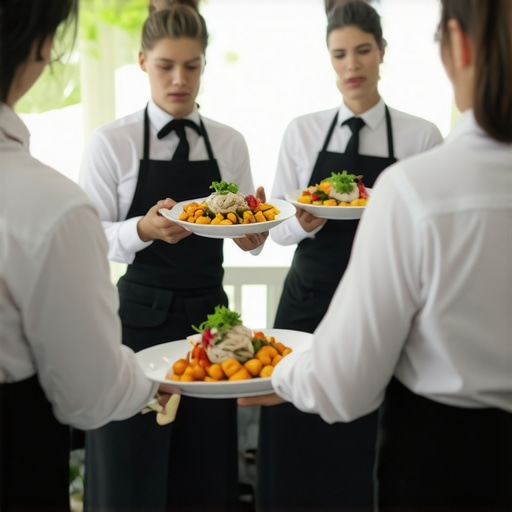 Many assume that choosing a reputable caterer or event staff guarantees a flawless experience, but the truth is more nuanced. One common misconception is that event success solely hinges on the quality of food and servers, overlooking the critical nuances of communication and expectation management. Overlooking these details often leads to overlooked mistakes that can sabotage your event’s flow and guest experience. For instance, a popular myth is that hiring more servers always improves service; in reality, overstaffing can cause unpredictable interactions and logistical chaos, especially if staff aren’t properly coordinated. This is why understanding the importance of *team dynamics and specialized training* becomes essential. According to industry experts, the secret in complex events is not just in staffing numbers but in the quality and alignment of service skills. Check out how to select the right servers for your event’s unique needs for better insight. But what about the hidden pitfalls during the planning phases? One often missed aspect is neglecting the subtle signals of professionalism from staff, such as their ability to read the room — a skill that distinguishes average servers from top-tier professionals. This is where many planners stumble, mistaking generic training for the nuanced, *situational awareness* that drives seamless service. An insightful study by Dr. Susan Murphy on hospitality behavior demonstrates that servers trained in *adaptive communication* significantly enhance guest satisfaction. To elevate your event, consider focusing on trainings that emphasize *proactive engagement* and smart signal reading. Moreover, inconsistent service style and coordination can become the silent killers of your event flow. For example, mismatched service approaches between catering and servers—like buffet chaos versus plated elegance—can disrupt the event tone. To avoid such pitfalls, delve into strategies outlined in strategies for successful corporate catering.
Have you ever fallen into this trap? Let me know in the comments. Remember, mastering the hidden nuances of catering and staffing isn’t just about the basics. It’s about fine-tuning your expectations and communicating those effectively to professionals who understand the subtleties of high-stakes events. When in doubt, a detailed pre-event briefing and clear signal reading can be the difference between an average gathering and an extraordinary one. Combining quality staff training with strategic planning guarantees your event will impress—and run smoothly from start to finish.
How Do I Maintain Seamless Catering Operations Over Time?
Maintaining a consistently smooth catering operation requires a strategic combination of reliable tools, disciplined routines, and proactive management. Personally, I rely heavily on Trello for task management because it keeps all team members aligned on preparation schedules, special requests, and last-minute adjustments. Its visual task boards allow me to track progress in real-time and easily assign responsibilities, reducing miscommunications during busy event days.
For inventory tracking, I swear by Sortly. Its barcode scanning feature simplifies stock management, ensuring I always know what’s available without manual counts, which can be error-prone. Having an up-to-date inventory helps prevent shortages and over-purchasing, saving money and ensuring menus run flawlessly.
Communication is critical, especially when coordinating with servers and chefs. I use WhatsApp Business for immediate, organized messaging. It allows me to create groups for different teams and locations so that updates, last-minute changes, or questions don’t get lost in a sea of emails. Quick, clear communication minimizes delays and errors during service.
To streamline operations, I incorporate EventCollab, a platform tailored for catering workflows. It enhances coordination by integrating order details, timing, and staff schedules into one interface. Over time, I’ve learned that the best tools are those that adapt to your workflow rather than forcing you into a rigid system. Regularly reviewing these tools’ effectiveness and seeking feedback from your team ensures continuous improvement.
What’s the Future of Tools in Catering? A Prediction
I believe that AI-powered scheduling and logistics platforms are just around the corner. These systems will analyze past event data, predict staffing needs, optimize kitchen workflows, and even suggest menu adjustments based on seasonality or guest preferences, making maintenance and scaling more intuitive. Staying ahead means embracing tech that learns and adapts alongside your growth.
Master Your Tools to Scale Successfully
To truly scale your catering business, mastering your toolkit is essential. Invest time in training your team on the technology, customize workflows to fit your unique needs, and continuously refine your systems. When this is done well, it becomes second nature—freeing you to focus on delivering extraordinary guest experiences. Want to see how advanced tools can revolutionize your operations? Try integrating innovative catering ideas for modern weddings with your existing setup for a fresh perspective that impresses clients and guests alike.
Additionally, always evaluate your tools’ compatibility and security. For instance, I regularly review our data privacy policies to ensure client information remains protected, referencing trusted sources like our privacy standards. This diligence guarantees long-term reliability and trustworthiness in your operations.
Finally, don’t overlook the importance of staff training on these tools. Even the most advanced software won’t be effective if your team isn’t comfortable using it. Schedule regular training sessions, offer tutorials, and encourage feedback to ensure everyone is up to speed. This proactive approach minimizes downtime and maximizes efficiency, especially when scaling up for larger events or multiple locations.
Remember, the secret to lasting success is a blend of trustworthy technology, disciplined routines, and continuous learning. By refining your operations with the right tools, you’ll be better equipped to handle the complexities of catering, weddings, and corporate events—making every event a seamless experience for your team and clients alike.
Lessons From My Catering Journey That Changed Everything
- One of the most unexpected lessons I learned is that even the most seasoned servers need clear signals and ongoing training to excel at high-stakes events. Assuming experience alone guarantees smooth service is a mistake I paid for early on.
- I realized that the quality of ingredient sourcing isn’t just about freshness—it’s about building trust with vendors who understand your standards. Over time, I discovered that local, seasonal ingredients vastly outperform imported, out-of-season produce in both taste and client satisfaction.
- Streamlining communication through dedicated apps and tools transformed my event coordination. Investing in platforms like our recommended tools saved hours daily and minimized last-minute chaos.
- Finally, I found that embracing technology and detailed planning didn’t just improve efficiency; it elevated the entire guest experience, turning good events into unforgettable memories.
My Weaponry for Event Excellence
- Trello: For real-time task management, it keeps every team member aligned on responsibilities, reducing miscommunication during busy service windows.
- Sortly: Inventory management made simple with barcode scanning, ensuring I never run out of essentials or overstock on perishables.
- WhatsApp Business: Quick, organized communication with staff helps me respond to issues instantly, maintaining service flow.
- EventCollab: Integrating schedules and client preferences into one platform ensures everyone is on the same page from start to finish.
The Spark to Stay Ahead in Catering and Staff Management
Don’t wait for the next big event to test new strategies. The future of catering success hinges on your willingness to adapt and refine your team’s skills continually. Embrace innovative tools, deepen your understanding of staff dynamics, and never underestimate the power of precise questions in negotiations and planning. Your ability to anticipate and solve problems before they arise will define the legacy of your events. What innovative approach have you considered trying next to elevate your catering or staffing game? Share your thoughts below and let’s grow together.