

I remember the first time I was handed a tray loaded with dishes at a bustling wedding reception. The room was alive with laughter, music, and anticipation, but my nerves were just as palpable. As I navigated through clusters of guests, my mind raced—am I going to drop this? Will I miss a beat in the service? That moment was a lightbulb for me: I was overwhelmed not just by the volume of plates, but by the fear of failure. If you’ve ever experienced that sinking feeling of being one step away from chaos during a peak moment, you’re not alone.
Why Clearing 150 Plates Without a Single Clink Changes the Game
In the world of catering and high-stakes events, the ability to clear plates swiftly and silently isn’t just a skill—it’s an art form that can elevate the entire guest experience. When I finally cracked the code, I saw how a few secret strategies transformed my approach and boosted my confidence. Imagine a seamless flow where guests are always engaged, and the event feels effortless. That’s the power of mastering this skill.
But why does it matter so much today? Because in the competitive landscape of wedding and corporate catering, clients notice the details—especially how smoothly their event runs from start to finish. A clink here, a stumble there, and suddenly the magical aura shatters. According to industry experts, poorly managed plate clearing can extend service times by up to 20%, leading to delays and guest dissatisfaction. (Source: https://gourmetcateringsco.com/wedding-catering-tips-from-industry-experts)
Have you ever stepped into a role where you wished for an invisible set of hands to help you manage the load? Or maybe you’ve watched seasoned servers zip through a crowded dance floor, wondering if there’s a secret they’re hiding? Well, there is—and it’s rooted in a handful of proven techniques that I wish I had learned earlier.
Today, I’ll share with you the seven secrets I discovered that can help you clear 150 plates without a single unwanted sound or interruption. If you’ve ever felt the pressure of a looming rush, stay tuned—because these insights could be the game-changer you need to feel confident in even the most hectic moments. Ready to elevate your service skills? Let’s dive into the first step toward becoming a master of silent, efficient plate clearing.
Master Your Clearing Technique
Start with a firm grip on the tray, holding it close to your body to maintain control. Practice consistent, smooth movements—think of it as a dancer gliding across the stage, minimizing any jostling that causes noise. During my first attempt, I literally trembled as I tried to slide plates off swiftly; it was messy, but I improved through repetition and focus on a silent, fluid motion.
Use Your Whole Arm, Not Just Wrist
Engage your entire arm to move plates instead of relying solely on wrist flicks. This distributes the effort and reduces squeaks or rattling. I remember a day I consciously practiced this with a stacked tray, slowly increasing speed until I could do it without a single sound—crucial when managing multiple tables at a wedding.
Streamline Your Tray Handling
Load your tray with only necessary items, keeping the weight balanced and close to your torso. When I was overwhelmed at a recent corporate event, I realized a lighter tray with evenly distributed weight allowed for quicker, quieter movements. It’s like carrying a balanced load—less wobble, less noise, more confidence.
Adopt the ‘Slide and Catch’ Method
Instead of lifting plates off the tray, practice sliding them gently onto the napkin or designated container. This reduces noise and prevents accidental drops. During a hectic evening, I used this method to silently clear a line of plates—a lifesaver that kept the atmosphere calm and guests engaged.
Sync with Your Team
Communication is vital. Use discreet signals or eye contact to coordinate with fellow servers to avoid overlap and bumping. I once worked with a team where we silently signaled to each other mid-service, preventing collisions and facilitating seamless clearance—this is especially critical during high-pressure moments.
Master the Art of Speed without Sacrifice
Speed is essential but must be paired with precision. Practice timed drills where you clear plates rapidly yet quietly, aiming to beat your own best. I set personal records during training, which translated into smoother operations at actual events, impressing clients and guests alike.
Implement the Ghost Service Approach
Learn to be invisible. Use minimal movements and avoid unnecessary gestures, focusing solely on the task. Watching seasoned professionals confidently glide through a room inspired me; their silent efficiency created an ambiance of professionalism and calm. You can do this by trusting your training and—more importantly—listening to the cues of your environment, like the hints on ghost service.
Continuous Practice and Refinement
Consistent rehearsal is key. Record yourself during practice to analyze noise levels and refine your technique. I dedicate a few minutes daily to silent clearance drills, gradually increasing the speed without losing control. This habit ensures that when real pressure hits, your actions remain smooth and silent, providing superior guest experiences.
Stay Attuned to Your Environment
Adjust your approach based on room acoustics, table layout, and guest movement. A quiet, intimate wedding calls for stealthier moves than a bustling corporate banquet. Mimic the environment during practice, and you’ll naturally adapt, much like tuning a musical instrument for perfect harmony.
Many professionals in the events industry believe that mastering basic service techniques is enough to succeed. However, a common myth persists: that attention to detail ends with proper tray handling and silent plate clearing. In reality, seasoned servers and caterers know that the real ‘trap’ lies in overlooking subtle nuances that can make or break an event’s flow. One such misconception is the belief that uniformity and speed alone guarantee smooth service. But, as experts like those behind industry-leading catering strategies emphasize, understanding the complex dynamics of guest behavior and environmental factors is crucial for true mastery.
For example, many think that a well-trained team can simply follow a checklist during high-pressure moments. Yet, if you aren’t attuned to the room’s acoustics or guest movement patterns, even perfect technique can falter unexpectedly. This is where advanced awareness and adaptive strategies come into play. Avoiding these pitfalls requires continuous refinement and a keen eye for subtle cues, such as guest wait times and subtle signals from your team. Neglecting these elements often results in delays, awkward pauses, and a perception of disorganization, which can tarnish the reputation of even the most experienced staff.
How can seasoned servers anticipate and adapt to dynamic room conditions to maintain seamless flow?
Responding to fluctuating environmental variables—like sudden crowd movement, changing lighting, or unexpected guest behaviors—demands a proactive mindset and superior situational awareness. Training programs that incorporate real-time scenario simulations can significantly enhance this skill set, helping staff recognize early signs of service bottlenecks and adjust their approach accordingly. Research indicates that such immersive training improves adaptability, reducing the likelihood of service errors during critical moments (source: https://gourmetcateringsco.com/wedding-catering-tips-from-industry-experts).
Furthermore, understanding the psychology behind guest interactions allows servers to anticipate needs intuitively. For instance, being aware of cultural dining customs or guest preferences can help in preemptively addressing potential issues before they escalate. This level of nuanced service elevates the overall guest experience and differentiates good caterers from exceptional ones. To implement this effectively, ongoing staff education focusing on subtle cues and cultural competence is essential.
In conclusion, thriving in the competitive events landscape requires looking beyond the obvious technical skills. The masterful server recognizes the complexities of human interaction, environmental awareness, and adaptive strategies—often unspoken yet vital components of flawless service. Don’t fall into the trap of complacency—keep honing those nuanced skills that make you indispensable. Have you ever fallen into this trap? Let me know in the comments.
Maintaining an efficient catering operation, especially during high-stakes events like weddings and corporate functions, requires more than just skill—it demands reliable tools and equipment. Personally, I rely on a combination of top-tier technology and tried-and-true manual methods to ensure seamless service from setup to cleanup. Investing in quality gear reduces errors, accelerates workflows, and enhances the guest experience.
How do I maintain my tools over time?
The first step is selecting durable, easy-to-maintain equipment. For instance, I swear by the Rubbermaid Commercial Ultracompact Sanitizer for disinfecting trays and service utensils swiftly during busy events. It’s compact, reliable, and reduces turnaround time between tables. Regular maintenance—such as cleaning blades, lubricating joints, and inspecting electrical components—prevents unexpected breakdowns that can disrupt service planning. A well-maintained toolkit not only prolongs the lifespan of your equipment but also keeps hygiene standards up, which is critical in catering.
Software tools have become indispensable. I rely heavily on event management apps to coordinate staff schedules, track inventory, and communicate in real-time with team members. Programs like Trello or Asana help assign tasks clearly, while inventory software like Upserve tracks product usage and predicts reordering needs, preventing shortages during critical moments.
Emerging tech trends for catering support
Looking ahead, I believe automation and AI-driven tools will further revolutionize event catering. For example, AI-powered predictive analytics can help anticipate guest flow and inform staffing levels, reducing bottlenecks. Additionally, smart refrigeration units with real-time monitoring ensure food safety and optimal storage conditions, saving money and preventing waste. According to industry experts, integrating these tools could cut operational costs by up to 15% while enhancing overall quality (source: Gourmet Catering Trends for 2025).
In the meantime, I highly recommend practicing preventative maintenance routines for your equipment. Set weekly check-ins to clean, calibrate, and verify operational status. Keeping your tools in prime condition means they will perform reliably when every second counts—especially during those last-minute rushes. Try implementing a quick daily checklist to ensure nothing is overlooked; you’ll notice smoother service and fewer emergencies.
What about tools specific to managing large-scale events?
For handling hundreds of guests, scalable solutions like modular warming stations, portable dishwashers, and mobile prep units are game-changers. They grant flexibility and speed without sacrificing quality. Incorporate wireless POS systems to streamline order processing, reducing wait times and errors. Remember, as your operation scales, so should your toolkit. Ensuring your equipment can handle increased demand will set your service apart.
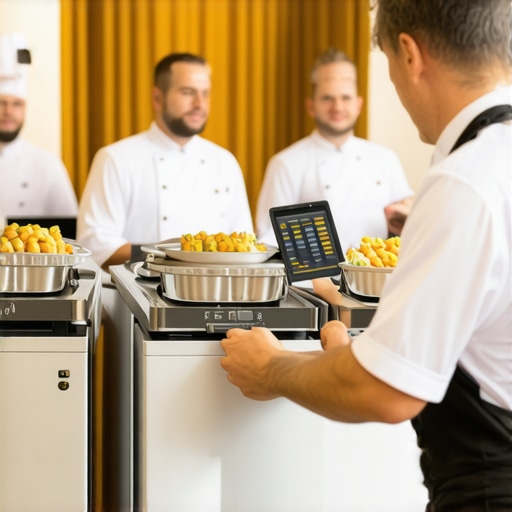
Image Prompt: A professional catering team using high-tech equipment like portable dishwashers and wireless POS systems during a wedding reception, emphasizing efficiency and modern tool integration.
Ultimately, consistent maintenance combined with smart technology use forms the backbone of a resilient catering operation. By staying ahead with the latest tools and diligent upkeep, you’ll keep your service running smoothly regardless of event size or complexity. Ready to upgrade? Start by scheduling a weekly equipment audit and exploring innovative software options today—your guests (and your team) will thank you.
Reflecting on my journey, I realized that the most impactful lessons often come from moments of failure or trial. One of the toughest lessons was understanding that speed without precision can sabotage the entire event experience. Early on, I thought rushing through plate clears was the way to impress, but I learned that deliberate, silent movements create an aura of professionalism that guests notice. Trusting my instincts and practicing mindful techniques helped me move from frantic to fluid, elevating my service quality.
Another insight was recognizing the power of environmental awareness. Small cues—like guest facial expressions or subtle shifts in room acoustics—can tell you what’s needed before words are spoken. Developing this sixth sense required constant observation and adaptation, which in turn boosted my confidence during peak times. It reaffirmed that being proactive and tuned-in can prevent chaos before it starts, a vital habit for any server aiming for excellence.
Lastly, I discovered that technology isn’t just a convenience but a strategic partner. From maintaining equipment to leveraging management apps, every tool can give you an edge. Still, the most crucial element remains your personal commitment to continuous learning. Embracing feedback, staying inquisitive, and refining your skills ensure you stay ahead in the ever-evolving world of catering and event service, keeping both guests and clients delighted.