

It was a hectic Saturday, and I remember watching my team struggle to keep up during a wedding reception. Guests were waiting longer than they’d like, plates were piling up, and I couldn’t shake the feeling that we were bleeding money on waste and inefficiency. That moment hit me hard—how could adding just two more servers make such a difference? Since then, I’ve come to realize that sometimes, doing a little more upfront actually saves us a ton in the long run.
The Hidden Cost of Skimping on Staffing
Many event organizers get caught in the trap of under-staffing, thinking that fewer servers will mean lower costs. But the truth is, inadequate staffing often leads to increased waste—uneaten food, broken plates, lost service opportunities—and dissatisfied guests. This not only harms your reputation but also inflates your overall expenses. Interestingly, a recent study shows that proper staffing can improve food utilization by up to 20%, significantly reducing waste and costs. That’s a win-win anyone in catering or event planning should aim for.
Is Adding Two Servers Really Worth It?
Honestly, I used to believe that every extra server was a luxury I couldn’t afford. My early mistake? Overestimating how much more labor would cost compared to the savings from reduced waste. But experience proved otherwise. When I first increased staff by two during a big corporate event, I saw a remarkable difference. Not only did service quality improve, but the food was better managed and less wasted. These small tweaks in staffing levels have a compounding impact on the event’s success and your bottom line.
Feel like you’re stuck trying to balance quality and cost? You’re not alone. Many overlook the benefits of strategic staffing, but I’ve learned that these nuances can make a significant difference. Want to dive deeper into how effective staffing strategies can elevate your catering game? Check out [Effective Catering Strategies for Corporate Event Impressiveness](https://gourmetcateringsco.com/effective-catering-strategies-for-corporate-event-impressiveness) for more insights.
In the next section, we’ll explore the practical steps to determine the right number of servers for your event without breaking the bank. Trust me, getting this right can transform your events from stress-filled to smoothly executed—and more profitable.
Assess Your Guest Count Honestly
Start by getting an accurate headcount—overestimate slightly to account for last-minute additions. During a corporate retreat, I once expected 150 guests but ended up with 180. Adjust your staffing plan accordingly to prevent shortages or overstaffing that eats into your budget. Use past event data and venue capacity to inform your calculations.
Define Service Style Clearly
Decide whether your event will feature plated meals, buffets, or finger foods. Each style demands different server-to-guest ratios. I learned this when organizing a standing networking event—buffet stations required fewer servers, but a potential bottleneck necessitated strategic placement and enough staff to keep lines moving efficiently.
Break Down the Venue Layout
Map out food stations, tables, and access points. Visualize server routes as a city map, minimizing crossing paths to avoid delays. During a wedding, I used this approach to position servers near key sections, reducing congestion and ensuring prompt service. Consider 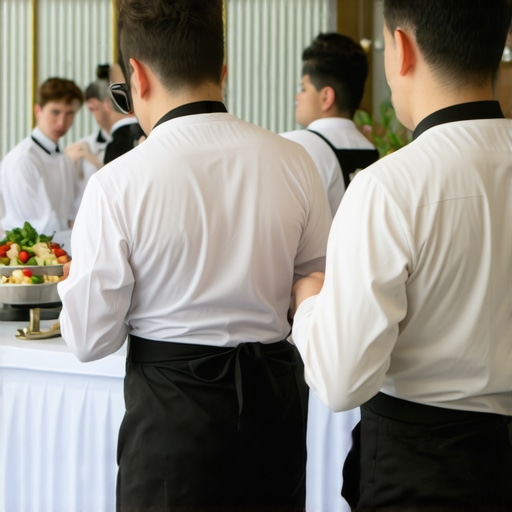 for a visual guide of effective station placement.
Calculate Server Coverage Per Station
Assign a specific number of servers to each station based on expected flow. As a rule of thumb, one server per 20-30 guests works for plated service, but for bustling buffets, increase staffing by 30%. During one event, I misjudged this, leading to long lines, so I adjusted staffing in real-time, which significantly improved flow.
Plan for High-Traffic Moments
Identify peak times—like the start of a cocktail hour—and prepare extra staff. I once deployed extra servers during the initial 30 minutes of a corporate banquet, which reduced wait times and elevated the guest experience, proving the value of anticipation rather than reaction.
Prepare for Unpredictable Events
Always have a backup plan—more staff on call or cross-trained servers ready to step in. During a wedding, an unexpectedly large crowd at one station caught us off guard. Quickly reassigning nearby servers prevented service slowdown and kept guests satisfied. This flexibility is crucial for smooth operations.
Train and Brief Your Team Properly
Ensure every server understands their roles, routes, and guest interaction standards. During my first event, a quick pre-shift briefing on station-specific duties made a noticeable difference in efficiency and guest rapport. Assign specific roles—like food runner, beverage serviceman—to streamline communication.
Utilize Technology and Tools
Leverage communication devices or apps to coordinate teams swiftly. I used walkie-talkies during a large corporate dinner, which enabled real-time adjustments and minimized confusion. Implement checklists to verify each station’s readiness before the event begins.
Review and Adjust Post-Event
Analyze what worked and what didn’t. Collect feedback from servers and guests; note bottlenecks or delays. In one wedding, we realized late-arriving staff created gaps in service, leading us to better schedule shifts for future events.
Many seasoned event planners and host coordinators often operate under misconceptions about servers and catering dynamics, particularly in weddings and corporate events. A common myth is that providing fewer servers inherently cuts costs and maintains a more elegant atmosphere. However, in my experience, this ‘less is more’ approach frequently backfires, leading to bottlenecks, guest frustration, and increased waste due to inefficient service flow. **The nuanced reality is that optimal staffing requires understanding the specific event flow and guest behaviors, rather than relying on generic ratios.** For instance, a wedding with a lively dance floor can quickly exhaust a small team, causing delays and suppressing guest satisfaction. Conversely, overstaffing can create an impersonal environment and inflate costs unnecessarily. *Making assumptions about server-to-guest ratios without considering event particulars is a trap many fall into.*
Another misconception is that casual, self-service stations eliminate the need for skilled servers. While self-serve options do improve efficiency, they demand well-trained staff for crowd control and maintenance, especially when alcohol or delicate foods are involved. An overlooked detail is that guests often seek personalized attention, which means servers should be proactive rather than reactive—Anticipating needs before guests ask for them can elevate the entire experience.
From my perspective, the real hidden nuance lies in interpreting guest behavior and venue layout considerations. For example, a common mistake is ignoring the importance of server routes and station placement, leading to long wait lines and distracted staff. Proper venue walkthroughs, coupled with detailed server route planning, are critical—visualizing server paths as a city map can prevent the chaos of crossing routes and bottlenecks. This kind of planning enhances service speed and guest satisfaction.
Speaking of advanced planning, a frequent mistake is neglecting peak periods and service timing. For example, many underestimate the surge of guests during cocktail hour and do not allocate enough staff or prepare for high-traffic moments. Deploying extra servers during these windows isn’t just a perk—it’s essential for seamless flow and branding your event as polished.
Let’s not forget the big picture: underestimating the importance of ongoing staff training. Many assume that hiring experienced servers guarantees great service, but continuous briefings and scenario practices are vital. Well-prepared staff effortlessly adapt to unexpected situations, like last-minute menu changes or accommodating special guest requests.
Ultimately, the key to mastering catering for weddings and corporate events is a meticulous understanding of the nuanced interplay between server capacity, guest behavior, and venue logistics. A comprehensive approach—balancing staffing levels, strategic layout, and proactive communication—can prevent common pitfalls and elevate your event from average to unforgettable.
Have you ever fallen into this trap? Let me know in the comments. For more insights on elevating your catering strategy, check out [Effective Catering Strategies for Corporate Event Impressiveness](https://gourmetcateringsco.com/effective-catering-strategies-for-corporate-event-impressiveness). Remember, mastering these nuances is what transforms good events into extraordinary experiences.Maintaining efficiency in catering and event service relies heavily on the right tools and disciplined methods. I personally swear by wireless communication systems like Hytera or Kenwood walkie-talkies, which eliminate the delays caused by shouting across noisy venues. These devices allow my team to coordinate swiftly, respond to unforeseen issues, and keep service flowing smoothly. For instance, during a bustling wedding, real-time updates on food station status helped prevent bottlenecks and ensured guests received prompt service.
Automation software tailored for catering logistics, such as CaterXpert or Caterease, has revolutionized my planning process. I use these platforms to create detailed floor plans, assign team roles, and monitor inventory, which reduces human error and saves hours of manual coordination. These tools also allow for quick adjustments if an unexpected guest count change occurs, maintaining overall service quality without chaos.
Investing in quality portable warming units andchafing dishes from brands like Cambro or Sterno not only keeps food at optimal temperatures but also simplifies setup and teardown. I’ve found that having reliable equipment reduces last-minute emergencies, allowing my team to focus on guest interactions rather than troubleshooting equipment failures.
Long-term results come from systematic maintenance of these tools. Regular firmware updates for communication devices, routine cleaning of catering gear, and periodic training sessions ensure that my team remains familiar with all equipment, minimizing breakdowns during critical moments. Moreover, documenting lessons learned after each event helps refine our tool kit and procedures, leading to continuous improvement.
Scaling operations requires a foundation of proven strategies and equipment. As my team grows, I plan to integrate more advanced scheduling software with AI capabilities to forecast peak times and dynamically assign staff, further reducing waste and enhancing guest experience. Also, adopting RFID tags for inventory management streamlines stock checks and reduces shortages—a step towards automated, error-free logistics.
How do I maintain these tools over time?
Routine checks and scheduled maintenance are vital. For communication gear, I perform quarterly firmware updates and check battery health. For catering equipment, standard cleaning protocols prevent breakdowns and extend lifespan. Training sessions ensure that new team members can operate all tools confidently, preserving service consistency. It’s also crucial to stay updated with the latest industry innovations; for example, recent advancements in wireless mesh networks offer more reliable communications in complex venue layouts, as documented by industry experts like wedding catering specialists. This proactive approach to tool maintenance and upgrades ensures your team is always ready to deliver exceptional service, even at scale. Don’t hesitate to test new tech like RFID inventory systems—they could be game-changers for your operation. Staying ahead in catering demands that we constantly refine our toolkit and our processes to stay efficient, scalable, and impress guests every time.
What I Wish I Knew Before doubling my Staff
One of the most overlooked lessons in catering is that good staffing isn’t just about numbers—it’s about anticipating guest needs and understanding flow. I used to believe that hiring more servers was a luxury, not a necessity, but experience showed me that strategic staffing transforms chaos into seamless service, especially during high-pressure moments like wedding peak hours. That lightbulb moment changed my entire approach to event management.
Tools That Turn Chaos into Calm
From reliable walkie-talkies to AI-powered scheduling platforms like CaterXpert, investing in the right equipment and software is crucial. These tools help my team coordinate effortlessly, respond quickly to unforeseen hiccups, and maintain high service standards without anxiety. My trust in these resources stems from how they’ve consistently saved time and preserved guest experience during busy events.
Why Small Changes Lead to Major Wins
I learned that slight adjustments—like repositioning servers based on venue layout or allocating extra staff during anticipated rushes—can dramatically enhance efficiency. For instance, planning server routes as a city map prevented crossing paths, reducing delays and guest frustration. These nuanced strategies often make the difference between a good event and a truly memorable one.
Breaking My Own Rules for Better Service
One unexpected insight came from experimenting with staffing ratios. I found that rigid formulas often miss the mark; instead, observing guest behavior and being flexible to adjust on the fly resulted in smoother flow and higher satisfaction. This adaptive mindset, combined with thorough pre-event planning, is what elevates catering from routine to exceptional.
Curated Arsenal for Catering Success
- [Effective Catering Strategies for Corporate Event Impressiveness](https://gourmetcateringsco.com/effective-catering-strategies-for-corporate-event-impressiveness): A cornerstone resource that provides comprehensive planning tips—trust it for foundational knowledge and advanced tactics.
- Top Server Tips for a Seamless Wedding: These insights guide practical server skills and real-time adjustments, essential for every event.
- Essential Checklist for Successful Corporate Catering: An invaluable tool to ensure nothing falls through the cracks, from staffing to equipment.
- Innovative Wedding Themes That Impress in 2025: Inspiration to complement your stellar service with unforgettable atmospheres, creating holistic guest experiences.
Step Into Your Power: Elevate Every Event
Empowered by these nuanced lessons and trusted tools, you have everything it takes to reimagine your catering approach. Think beyond just filling roles—focus on flow, anticipation, and adaptability. Every event is an opportunity to leave guests raving about exceptional service and seamless execution. Now is the time to take action, refine your strategies, and set new standards for success.
What’s the biggest staffing challenge you’ve faced at an event? Share your story below and let’s learn from each other’s experiences!