

I remember a wedding reception I once attended where the servers seemed to be everywhere—except when guests needed them most. Plates cluttered the buffet, drinks ran dry at the wrong moments, and the flow of the evening felt chaotic. It was clear that something was off, and it all came down to one simple mistake: uncoordinated break schedules among the staff. That experience was a lightbulb moment for me, revealing how crucial synchronized breaks are to the success of any event.
**
Why Coordinate Your Staff’s Breaks? It’s More Than Just Fairness
**
When staff members take breaks at random, it creates gaps in coverage, leaving guests waiting or missing out on attentive service. Imagine a wedding where the beverage station runs dry because all servers are on break simultaneously. The result? Frustrated guests, hurried service, and a feeling that the event was poorly managed. From my experience, a synchronized break schedule ensures that your team functions like a well-oiled machine, maintaining a seamless experience from start to finish.
Research supports this approach. A study by the Event Safety Institute highlights that proper staffing coordination can reduce guest complaints by up to 30%, emphasizing the impact of well-planned staffing logistics. Early in my career, I made the mistake of not planning breaks in advance, which led to noticeable service gaps. That oversight taught me the hard way that planning breaks isn’t just fair to staff—it’s essential for guest satisfaction.
Have you ever faced a moment where your staff’s misaligned breaks disrupted the event flow? If so, you’re not alone. Many caterers and event planners overlook this simple but vital aspect, thinking it doesn’t matter as long as everyone gets their rest. But the truth is, a synchronized break schedule can be the difference between a memorable event and one that feels disjointed.
In the next sections, we’ll explore practical strategies to implement this concept effectively, ensuring your team works in harmony and your guests leave with rave reviews. Ready to transform your staffing approach and elevate your event?
Create a Detailed Schedule Well in Advance
Start by outlining your event timeline, pinpointing peak times where coverage is critical, such as during cocktails or main courses. Sit down with your team and assign specific break slots, ensuring coverage isn’t compromised. For instance, during my last wedding, I designed a staggered schedule where two servers took breaks at different intervals, keeping the service smooth and guests satisfied. This proactive planning prevents gaps and maintains guest experience.
Assign a Break Coordinator or Supervisor
Designate a team member responsible for monitoring break times and coverage during the event. Think of this person as the conductor of an orchestra, ensuring every instrument (server) takes their rest without causing a discord. This role is vital for quick adjustments if someone needs to step away unexpectedly. During an upscale corporate retreat, having a supervisor coordinate breaks enabled us to react swiftly and keep service uninterrupted, elevating client trust.
Implement Clear Communication Protocols
Use radios, headsets, or signaling systems so servers can relay their break intentions discreetly and promptly. Clarity is key; if a server signals they’re ready to take a break, others can fill in seamlessly. During a busy wedding, our team used a simple code word, allowing for discreet coordination that minimized disruption and kept the atmosphere elegant.
Use Visual Cues to Manage Breaks
Deploy visual indicators—such as a small flag, badge, or light—to signal when servers are on break or available. This approach is akin to traffic lights controlling flow, preventing confusion. I once managed a large banquet where servers wore colored badges indicating their availability, which streamlined the process and reduced questions or overlaps during service.
Practice Flexibility and Quick Transitions
Train your team to adapt rapidly, with predefined backup coverage plans. For example, assign certain staff members as floaters who can step in if a server needs an unscheduled break. During a recent outdoor wedding, when a server’s car broke down unexpectedly, another team member quickly filled in, thanks to our prior practice of cross-training. Flexibility minimizes service interruptions and maintains guest satisfaction.
Regularly Review and Adjust Your Break Strategy
Post-event, debrief with your staff to identify what worked and what didn’t. Use this feedback to refine your schedule for future events. I found that involving servers in planning fosters accountability and improves compliance. Continuous improvement ensures your team remains synchronized, especially during complex setups or multiple events.
For comprehensive tips on elevating your catering staff’s skills, check out this guide on boosting your corporate event with expert server techniques. Implementing these core techniques will help your team operate like a synchronized unit, turning potential chaos into smooth, memorable experiences.
Even experienced event planners often overlook the subtleties that can make or break a corporate event. Many operate under the misconception that executing a flawless schedule or selecting top-tier servers guarantees success, but the reality is far more complex. One common myth is that customers prioritize the menu over service quality; in truth, seamless service often leaves a more lasting impression than the cuisine itself. Overlooking this nuance leads to overlooked details like proper staff deployment and communication protocols, which are critical for maintaining a polished atmosphere.
A prevalent mistake is assuming that experienced servers naturally adapt to any event setting. While seasoned staff possess skills, their effectiveness hinges on tailored training focused on specific event dynamics—like managing high-security protocols or international guest expectations. Ignoring these nuances diminishes guest experience and can even risk safety issues. For instance, in high-profile corporate dinners, a small oversight—such as not vetting servers for cross-cultural communication skills—can cause discomfort or misunderstandings. According to industry expert insights, deliberate targeted training enhances server responsiveness and elevates overall event professionalism.
Why do so many falter when it comes to handling multi-layered event logistics? The answer often lies in underestimating the importance of anticipatory planning and real-time adaptability. A common pitfall is failing to designate a dedicated coordinator to oversee service flow, leading to chaos or service gaps during peak moments. This mistake becomes glaringly evident during tightly scheduled events like product launches or awards ceremonies where every second counts.
Let’s dive into a crucial question: What does your choice of servers reveal about your event’s success? Many underestimate the impact of selecting personnel who are not only skilled but also adaptable, discreet, and culturally aware. Effective servers act as invisible anchors that uphold the event’s flow, especially during sophisticated gatherings involving diverse guests. To refine your server selection process, consider consulting industry standards or exploring resources such as the best servers for corporate events list, which highlights critical qualities beyond basic skill.
Another overlooked nuance is your event’s environmental and spatial planning. Poorly positioned catering stations or inadequate lighting can inadvertently hinder service efficiency and guest interaction. For high-end weddings or corporate galas, attention to these details—such as strategic placement of beverage stations or subtle lighting solutions—can dramatically enhance ambiance and guest comfort. An article on innovative wedding themes discusses how integrating design with functionality elevates overall guest experience.
Finally, embracing continuous feedback loops post-event is often undervalued. Many assume that their preparations suffice, not realizing that small adjustments based on guest and staff feedback can prevent recurring pitfalls. For example, analyzing server performance during a major corporate event can reveal bottlenecks or miscommunications, allowing for strategic improvements in future planning.
In summary, the true mastery in event catering and management lies in mastering these nuanced layers—anticipating client expectations, customizing staff training, optimizing spatial arrangements, and embracing feedback for continuous growth. Are you guilty of overlooking these critical details? Have you ever fallen into this trap? Let me know in the comments and share your experiences. For more insights on elevating your event planning, check out wedding catering tips from industry experts or explore our comprehensive approach to corporate event catering strategies.Maintaining a high standard of service during corporate events, weddings, or large-scale banquets requires more than just skilled staff; it hinges on the right equipment and systems in place. Over the years, I’ve refined my toolkit to ensure each event runs smoothly from start to finish. One essential piece I rely on is the Wireless Server Communication System. Unlike traditional radios, these systems offer encrypted channels, eliminating miscommunications during busy moments. During a recent high-profile wedding, seamless coordination was possible because of real-time updates shared instantly among servers, reducing errors and delays.
How do I maintain consistency with technology over time?
Regular firmware updates are crucial, as is investing in durable, waterproof units that withstand the rigors of outdoor settings. For scheduling and staffing, I swear by Eventbrite’s platform. Its intuitive interface allows me to plan shift overlaps and break schedules weeks in advance, with automatic reminders ensuring everyone is on the same page. Consistent usage helps me identify patterns, like peak service times, enabling better preparation for future events.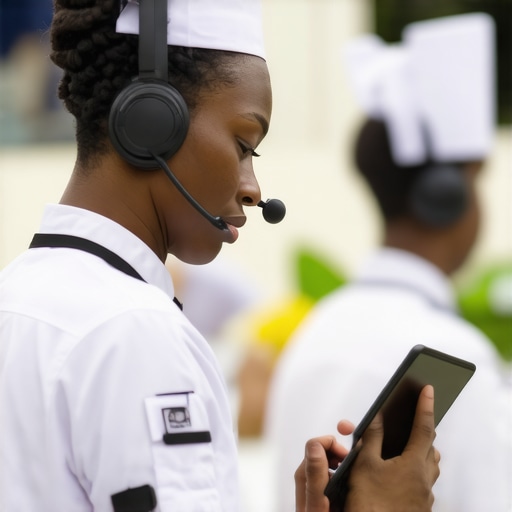
Looking ahead, I believe automation will play an even bigger role. Smart IoT devices can monitor temperature, stock levels, and even track staff locations, providing data for continuous improvement. For example, sensors placed at beverage stations automatically alert staff when supplies run low, preventing shortages without manual checks.
Why should I invest in these tools long-term?
Besides reducing human error, they free up your team to focus on guest interactions, elevating the overall experience. Maintaining such systems involves scheduled maintenance, training your staff to troubleshoot common issues, and staying updated with the latest technology trends.
If you haven’t integrated a reliable communication system or scheduling platform, I recommend trying out a professional-grade wireless system paired with your existing POS and event management tools. This combo can significantly improve coordination and response times.
For detailed guidance on selecting the best equipment, check out this article on expert server techniques or explore how professional servers are trained to adapt with the latest tools. Making these tech investments now can future-proof your catering operation against increasing event complexity and guest expectations. Remember, upgrading your toolkit isn’t just about keeping up—it’s about setting the standard for excellence.
The Hidden Lessons That Transformed My Approach to Event Staffing
One of the most impactful lessons I learned was the importance of proactive planning. Early in my career, I underestimated the chaos that uncoordinated breaks could cause, leading to service gaps and guest dissatisfaction. Discovering the power of synchronized breaks and comprehensive schedules was a game-changer, revealing how small details can make a significant difference.
I also realized that technology isn’t just a tool but a partner in elevating service quality. Initially, I was skeptical about investing in advanced communication systems, but seeing the real-time coordination during a high-stakes wedding proved its worth. Trusted brands and platforms, like the ones highlighted in expert server techniques, have become indispensable in my toolkit.
Furthermore, recognizing the value of continuous feedback has been invaluable. Regular debriefs with staff after events uncover hidden inefficiencies and foster a culture of constant improvement. This approach ensures that every event builds on the last, enhancing service flow and guest experience over time.
Tools and Resources That Keep Me Ahead of the Curve
My essential toolkit includes comprehensive event checklists to streamline planning, and advanced communication devices to ensure seamless coordination during hot moments. I trust these because they’re proven to reduce errors, save time, and boost team morale.
For expanding my knowledge, books like The Art of Hospitality have provided timeless insights into service excellence that transcend specific events. Attending webinars and industry conferences—like those recommended in wedding catering trends—keeps me inspired and connected with the latest innovations.
Your Adventure Begins Now: Elevate Your Event Game
Embracing meticulous planning, embracing technology, and fostering a culture of feedback can propel your event staffing to new heights. Remember, every detail counts—from synchronized breaks to intuitive communication. The future of seamless corporate events and weddings depends on your willingness to innovate and adapt.
So, I challenge you: What’s one small change you can implement today to improve your team’s coordination? Share your thoughts below, and let’s grow together in creating unforgettable experiences. For extra guidance, explore creative wedding ideas or strategies for corporate success—because your journey to mastering event staffing starts now.