

I remember standing in the back of a dimly lit ballroom three years ago, watching a line of thirty hungry marketing executives stare at empty chafing dishes. It was a gala I’d helped organize, and because I wanted to be the “cool” coordinator who didn’t want to nag people, I’d told the caterer we’d have “somewhere around 150 guests.” I never gave them a hard number or a locked-in date. When 185 people actually checked in at the door, the kitchen staff looked like they’d seen a ghost. The silence that followed the realization that we were out of the main course was deafening. That sinking feeling in my stomach—the one where you realize you’re five steaks short and twenty chairs behind—is a visceral nightmare I never want you to experience. Today, I’m showing you why that firm deadline isn’t just a suggestion—it’s your insurance policy for a smooth event. We’re going to fix that today by talking about the one clause in your contract that saves your sanity: the firm headcount deadline. This isn’t just about food; it’s about mastering corporate event planning secrets to seamless success so you can actually enjoy the party you worked so hard to create.
Don’t Let Late RSVPs Ruin Your Dinner Service
I made a massive mistake early in my career by thinking that flexibility was a sign of good service. I thought that by allowing guests to RSVP whenever they felt like it, I was being “guest-friendly.” In reality, I was setting my catering team up for failure and potentially ruining the essential checklist for successful corporate event catering I had spent weeks building. When you don’t provide a firm headcount, your caterer can’t accurately order ingredients, which leads to either massive waste or embarrassing shortages. Even the most seasoned professionals can’t conjure up twenty extra portions of sea bass in an hour. Worse, it affects your labor and table logistics. If you’re trying to figure out how to staff a 200 person reception with only 12 professionals, you need to know exactly how many mouths those twelve people are feeding. Without that number, your server-to-guest ratio goes out the window, and service slows to a crawl, leaving guests frustrated and the staff burnt out.
Is a hard cutoff really worth the social awkwardness?
I get it. You don’t want to be the “mean” host who tells your cousin or your CEO’s assistant that they missed the window. But here’s the reality: according to the National Association of Catering and Events, food costs and staffing logistics are finalized often 72 hours to a week before the event to ensure quality. If you miss that window, you aren’t just paying for extra food; you’re paying a premium for the chaos you’re causing the kitchen. Have you ever had a caterer tell you it was “too late” to change your numbers? It’s a tough conversation, but it’s one that protects your event’s quality. This is also why I always tell my clients that your wedding budget needs a 10 percent buffer—because even with a deadline, those last-minute “I forgot to RSVP” surprises will inevitably cost you. By setting a firm date, you’re drawing a line in the sand that ensures the food is hot, the servers are ready, and nobody is left staring at an empty plate while others eat.
Stop Guessing and Start Counting Your Guests
Planning an event without a hard number is like trying to build a house when you don’t know if it’s for a family of four or a small army. You will either end up with too many rooms or guests sleeping on the lawn. To avoid this, I use a ‘T-minus 14’ rule. Two weeks out, you need to be aggressively chasing down the stragglers. This gives you a one-week buffer to finalize the logistics before the caterer’s drop-dead deadline, which is usually seven days prior. During a tech summit last spring, I waited until 72 hours before to confirm the count. My lead server was frantic because the floor plan was set for 300, but the kitchen had only prepped for 260. We had to literally hide tables behind curtains to keep the room from looking empty—a classic case of why the ultimate guide to corporate event catering logistics exists in the first place.
Work Backward from the Kitchen’s Prep Schedule
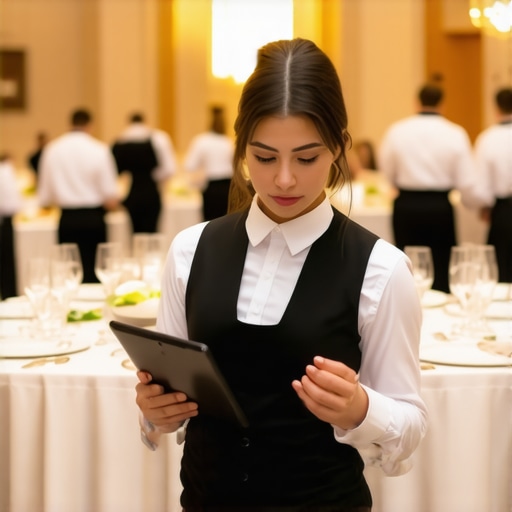
Catering isn’t a microwave operation; it’s a precision-timed symphony. When you give a final number, that triggers the purchasing of protein, the chopping of vegetables, and the scheduling of labor. Think of it as a factory line or a high-speed train; once the kitchen starts the engines, you can’t just add a new passenger car at 80mph. This is especially true for complex menus where optimizing server efficiency to enhance event satisfaction depends on a known guest count per station. If your staff-to-guest ratio is off, the guest experience suffers, and your team burns out before the first course is even cleared. Always ask your caterer for their specific ‘ordering cutoff’ so you know exactly when the point of no return is reached.
Automate Your Reminders Before the Panic Sets In
Don’t rely on people to remember a date on a physical card. Use a digital RSVP system that sends automated nudges at the ten-day and five-day marks. I once managed a 500-person gala where we skipped the automated reminder, and 40% of the RSVPs came in after the deadline. It was a nightmare of manual data entry and panicked phone calls to the chef. Now, I insist that your server lead needs a copy of the event script including the RSVP timeline so they know exactly when the danger zone for changes has passed. This ensures that everyone from the front of the house to the loading dock is prepared for the specific volume of the crowd.
Prepare for the Ghost Guests and Last-Minute Additions
Despite your best efforts, someone will show up who didn’t RSVP, and someone who did will stay home. This churn is normal, but you shouldn’t let it derail your budget. I always tell my clients to lock in their number at 95% of their expected attendance if they are on a tight budget, or 105% if they want a safety net for unexpected VIPs. It is also vital that your catering contract should explicitly mention leftover policies. If you pay for 200 and only 180 show up, you need to know if that extra food stays with you or goes back to the kitchen. Having this clarity upfront prevents awkward disputes while the band is playing and the champagne is flowing, allowing you to focus on the guests who actually made the cut.
The Buffet Illusion That Actually Kills Your Profit
Most planners I talk to believe that a buffet is the ‘safe’ choice for fluctuating headcounts because it feels more casual and flexible. In my experience, it is actually the most dangerous trap you can fall into. While you might save slightly on labor, you inevitably lose those savings to food waste. A study from the Cornell University School of Hotel Administration highlights that imprecise volume forecasting in self-service environments can lead to food waste exceeding 30% of total production. This is exactly why most buffets waste 30 percent of the food produced and why I often advocate for a hybrid or plated model. When you have a hard number, every ounce of protein is accounted for; when you have a ‘floating’ buffet number, the kitchen over-preps by default to avoid the embarrassment of an empty tray, and you pay for that fear.
Why You Should Audit Your Server Ratios for Every VIP Group
We’ve all heard the standard industry advice: one server for every twenty guests. But if you are managing a high-stakes corporate dinner or a luxury wedding, following that generic rule is a recipe for disaster. The nuance most people miss is that staffing isn’t about total guest count; it’s about service density. If you have ten VIPs at a head table, they need a dedicated body, not 5% of a server’s attention. This is why you should audit your server to guest ratio for VIP dinners specifically, rather than applying a blanket number to the whole room. Expertise isn’t just about showing up; it’s about identifying the pressure points in the room before the first drink is poured.

Should You Adjust Your Staffing Based on the Menu Complexity?
Absolutely. If you are serving a three-course meal with wine pairings, a 1:20 ratio will fail. The server needs to be a storyteller and a technician, not just a plate-carrier. You need to look for server skills that make every event stand out, such as the ability to anticipate a guest’s need for a refill before they even realize their glass is half-empty. A common mistake is hiring ‘warm bodies’ from a temp agency to fill gaps. True pros know how to move through a room like shadows. Without that finesse, you end up with the ‘oops’ factor: the dreaded hallway bottleneck.
Avoid the Hallway Jam That Freezes Your Service
The most sophisticated mistake I see is a lack of ‘traffic flow’ planning. You can have the perfect headcount and the best food, but if your servers don’t have a designated ‘in’ and ‘out’ path from the kitchen, they will eventually collide. This creates a visible lag in service that guests feel, even if they can’t name it. I always insist on a pre-event walkthrough to how to coordinate server movements to prevent hallway traffic jams. It’s a small detail that separates a chaotic wedding from a seamless gala. When the staff moves in a synchronized rhythm, the energy in the room stays high. When they are struggling to navigate a crowded floor, the tension is palpable. Have you ever fallen into this trap or been at an event where the service felt like a slow-motion car wreck? Let me know in the comments below.
I’ve moved away from paper binders entirely. My current ‘tech stack’ for scaling large-scale events is built on two things: real-time collaborative floor plans and digital event scripts. If I am not using a tool that allows my server lead to see headcount changes in real-time, I am setting the team up for a collision. This digital transition is central to corporate event catering strategies for success because it eliminates the lag between the client’s request and the server’s execution. I personally use AllSeated for 3D walkthroughs because it allows us to visualize ‘server shadows’—the invisible paths where staff move—before the first guest arrives. When you can see a potential bottleneck in a digital render, you save hours of physical labor and emotional stress on the day of the gala.
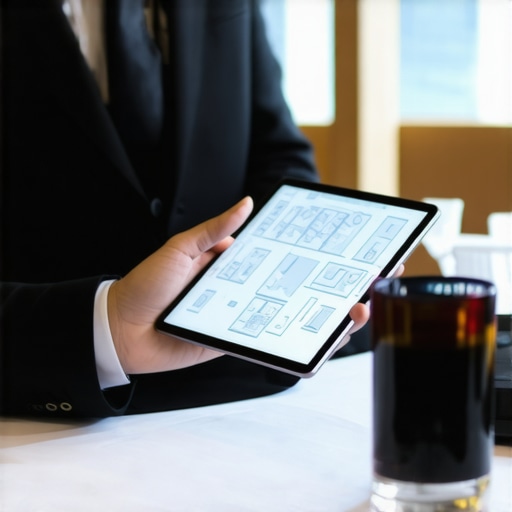
Beyond the software, the ‘Lineup’ method—a standard popularized by the Ritz-Carlton leadership—is my non-negotiable for long-term maintenance. Every single shift, regardless of size, starts with a 15-minute huddle to review the ‘non-negotiables’ of the day. This is how you cultivate the best corporate event servers for 2025 who don’t just work, but perform. It turns a job into a craft. During these briefings, we don’t just talk about food; we talk about the ‘why’ behind the service. If you are struggling with consistency, contact us to discuss how to structure these pre-shift huddles for your specific venue size.
How do I maintain elite service standards across multiple teams?
The secret to maintaining high standards as you scale isn’t more oversight; it’s better documentation. I treat my event scripts like a technical manual for a high-performance engine. When I say your server lead needs a copy of the event script, I mean a live, cloud-based version that reflects every last-minute allergy and VIP arrival. I often point to the ‘Service Profit Chain’ theory from the Harvard Business Review, which demonstrates that employee satisfaction and internal quality are the primary drivers of client loyalty. By giving your team the right tools—like digital tablets for the lead server and high-speed communication headsets—you reduce the ‘chaos friction’ that leads to burnout.
Looking toward the future, I predict we will soon see AI-driven ‘load balancing’ for floor staff. We are already seeing the early stages of real-time sensors that detect when a table’s water carafes are low or when a course has been lingering too long. To stay ahead of the curve and embrace wedding catering trends to impress guests in 2025, you have to start applying these top server tips to elevate your event experience today. Don’t wait for a disaster to upgrade your systems. My challenge to you for your next event: audit your communication method. If you are still relying on group texts or shouted instructions, it is time to transition to a dedicated app like Slack or Voxer to keep your professional directives clear, archived, and actionable.
The Hard Truths About Guest Lists That No One Mentions
One of the most profound shifts in my career happened when I stopped treating the headcount as a target and started treating it as a logistical boundary. I used to think a few extra guests were no big deal, but I learned that even five unexpected people can trigger a domino effect of cold food and stressed staff. My lightbulb moment was realizing that wedding catering tips from industry experts aren’t just about the food—they are about protecting the atmosphere. I also learned that you can’t be everyone’s friend during the RSVP window; you have to be the guardian of the kitchen’s sanity. If you don’t set a hard line, the maybe guests will bleed your budget dry. Finally, I realized that the best way to handle dietary restrictions on a budget is to force those conversations early, before the chef has even touched a knife.
#IMAGE_PLACE_HOLDER_E#
My Personal Must-Haves for a Stress-Free Service
I don’t walk into a ballroom without my digital Go Bag. This includes a cloud-synced copy of the seating chart and a direct line to the kitchen lead. If you want to boost your corporate event with expert server techniques, you need a system that tracks real-time table clears. I highly recommend using collaborative floor-plan software like AllSeated, which I mentioned earlier, but also look into specialized apps like Social Tables for dynamic seating. For those looking to refine their effective catering strategies for corporate event impressiveness, the best resource is actually shadowing a seasoned captain during a live service. There is no book that can replace the feeling of a room when the timing is perfect.
Step Into Your Next Event With Confidence
You’ve done the hard work of gathering the data, setting the boundaries, and hiring the right professionals. Now, it’s time to let the plan work so you can actually be present for the moment. Implementing these corporate event catering strategies for success isn’t about micromanaging—it’s about building a foundation where excellence happens by default. If you’re feeling overwhelmed by the logistics of your upcoming date, don’t hesitate to contact us to see how we can streamline your service. Have you ever had a guest show up who completely forgot to RSVP, and how did you manage the extra plate at the last minute? Let me know in the comments below!