

I’ll never forget the charity gala where I sat across from a potential donor, only to find myself staring into the abyss of a massive hydrangea arrangement. Every time I tried to make a point, I had to physically lurch to the left. By the entree, my neck was stiff, and my dignity was gone. It was a classic rookie mistake I made early in my career—prioritizing ‘the look’ over the actual human beings in the chairs. We spend so much time obsessing over wedding catering trends that will delight guests, yet we often forget that the best ‘decor’ is the conversation happening right under our noses. It’s frustrating for the guests and even more so for the hosts who paid for a connection that never happened. Today, I’m going to show you exactly how to maintain that elegance without turning your dinner table into a barricade.
Stop Building Walls Between Your Guests
When you place a massive, opaque object in the middle of a dinner table, you aren’t just decorating; you’re installing a barrier. In my experience, guests eventually give up trying to talk to the people across from them. They stay in their little bubbles of two or three. It kills the energy of the room. This isn’t just about weddings, either. If you are planning the ultimate wedding reception meal or a high-stakes corporate dinner, the goal is connection. I’ve seen professional servers struggle to navigate these ‘floral fortresses’ too, trying to pour wine around dangling crystals without causing a catastrophe. It’s a mess for everyone involved, and it is a major reason why you should never use tall centerpieces for networking mixers where the whole point is to meet new people.
Is the ‘Wow Factor’ Actually Worth the Hype?
You might think, ‘But it looks so grand in photos!’ Sure, but your guests aren’t living in a photograph. A study published by the University of Wolverhampton suggests that eye contact and non-verbal cues are responsible for over 50% of our social understanding and bonding. If you block that eye contact, you’ve essentially muted the table. I used to think that bigger meant better, but I learned the hard way that knowing how to style a long kings table without blocking sightlines is the real secret to a successful event. Have you ever felt trapped behind a centerpiece, feeling like you were dining alone in a crowded room? Let’s talk about how we can fix this without losing the beauty.
Follow the 14-Inch Rule to Keep People Talking
To keep the energy high, you need to understand the ‘dead zone.’ In my years of event management, I’ve found that anything sitting between 14 and 24 inches from the table surface is a social killer. It’s exactly at eye level when people are seated. To fix this, I always carry a retractable measuring tape during setup. If we are aiming for luxury wedding catering ideas for a fairytale atmosphere, we ensure the florals are either hugging the table—think lush runners of greenery and low-profile blooms—or they are soaring on thin, spindly stands. Knowing how to style a long kings table without blocking sightlines means realizing that guests need to see the mouth and eyes of the person opposite them to pick up on social cues. I remember a gala in 2019 where the florist arrived with 18-inch solid ceramic cubes. Within ten minutes of the first course, I saw guests leaning so far out of their chairs they nearly tipped over. I had to make the executive call to move those cubes to the bar and replace them with simple floating candles. The atmosphere changed instantly from ‘stiff’ to ‘electric.’
Swap Heavy Vases for Floating Installations
If you really want that ‘wow’ factor without the barricade effect, stop thinking about objects and start thinking about architecture. Use clear acrylic blocks or thin metal ‘Harlow’ stands that act like the legs of a skyscraper, holding the beauty way above the conversation. This is one of the most innovative catering ideas for modern weddings because it leaves the table surface free for the actual food. When you how to mix high and low floral arrangements for visual depth, you create a landscape that looks great from the doorway but remains functional for the person sitting down. Just be careful with the ‘DIY’ route here; the hidden cost of diy centerpieces at scale often includes unstable stands that topple the moment a guest bumps the table. 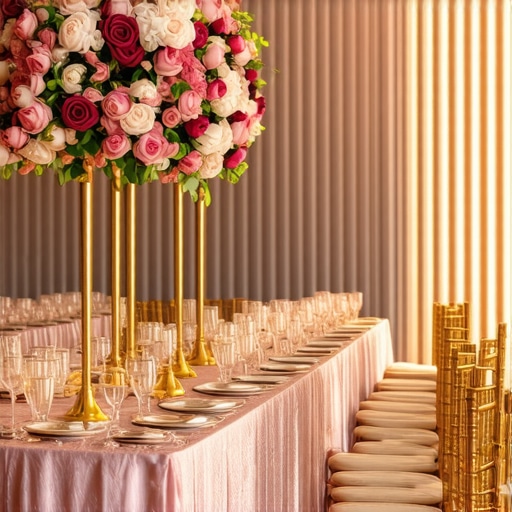
Train Your Team to Protect the Guest Experience
The layout isn’t just for the guests; it’s a workspace for the staff. A table cluttered with oversized decor makes optimizing server efficiency to enhance event satisfaction nearly impossible. I’ve seen incredibly talented teams struggle because they couldn’t find a place to set down a tray or reach a water glass without risking a floral collapse. This is why server skills that make every event stand out often include the ability to ‘read’ a table and subtly adjust decor if it’s hindering service. When you are doing the final walkthrough, sit in one of the chairs. If you can’t see the person across from you, or if a server can’t comfortably pour wine, the design has failed. For high-end events, you should also audit your server to guest ratio for vip dinners to ensure that even with complex layouts, the service remains seamless and non-intrusive. Every centerpiece should serve the meal, not compete with it.
It’s a hard truth to swallow, but sometimes the most expensive decor is the very thing that ruins the culinary experience. I’ve seen hosts spend five figures on exotic lilies only to have the heavy scent overpower the delicate nuances of the sea bass. This is the hidden danger of using scented candles at the dinner table or highly fragrant florals; you’re effectively muting the palate. According to a study published in the Journal of Sensory Studies, olfactory interference can decrease a diner’s ability to identify complex flavor profiles by up to 40%. If your guests can’t taste the food you’ve agonized over, the event is a sensory failure regardless of the budget. I always tell my clients: if the flower smells stronger than the wine, it belongs in the foyer, not the dining room.
Your Centerpiece Might Be Fighting the Chef
The ‘oops’ factor usually happens when we prioritize the eyes over the nose and mouth. Beyond the height issues we discussed, the aromatic profile of your table is part of the corporate event catering strategies for success that most planners miss. I once managed a high-end product launch where the scent of eucalyptus runners was so pungent it made the expensive Pinot Noir taste like cough syrup. It was a disaster that could have been avoided by simply understanding that dining is a multi-sensory experience. 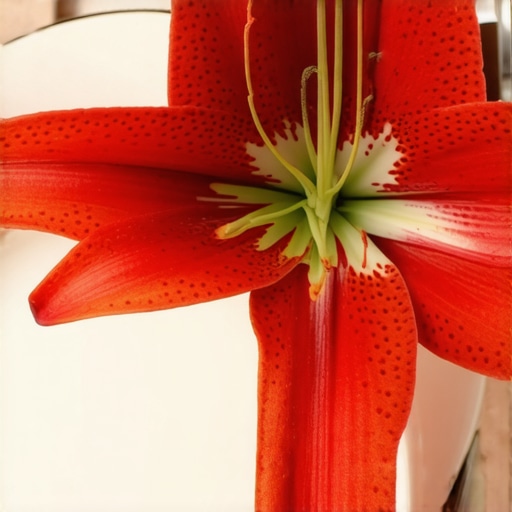
Stop Assuming the Buffet is Always Easier
A common myth in the industry is that a buffet is the ‘safe’ choice for large crowds. In reality, it’s often a logistical nightmare that kills the flow of conversation. When you analyze why most buffets waste 30 percent of the food produced, you realize that the cost-saving is an illusion. Furthermore, the ‘cafeteria’ vibe of standing in line contradicts the goal of effective catering strategies for corporate event impressiveness. If you want to show your guests they are valued, a seated, synchronized service is far superior. It allows your team to utilize top server tips to elevate your event experience, such as personalized attention to dietary needs without the guest having to hunt for a label.
Why Are Round Tables Still Ruining Your Networking Flow?
We need to talk about the ‘Round Table Trap.’ For decades, the 60-inch round has been the default. But in my experience, round tables are killing your networking event flow because they force guests to only speak to the two people immediately beside them. The distance across a 60-inch round is too great for natural conversation without shouting. If you truly want to foster connection, look into how to arrange seating to encourage interaction between strangers using long, narrow ‘Kings tables.’ This layout brings people closer together and facilitates a much more dynamic ‘cross-pollination’ of ideas. Have you ever fallen into this trap where the decor or the layout got in the way of the actual dinner? Let me know in the comments.
Why I Never Design a Room Without Digital Sightline Mockups
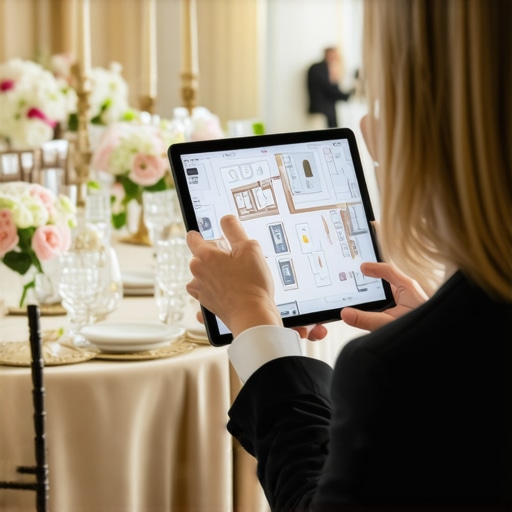
I’ve reached a point where I won’t sign off on a floor plan unless I’ve seen it in a 3D rendering first. I use tools like Social Tables or AllSeated specifically because they allow me to drop a camera view right at the ‘seated eye level’ of a guest. It’s one thing to see circles on a 2D map; it’s another to realize that the guest at Table 12 is staring directly into the back of a speaker stack. When you are mastering corporate event planning secrets to seamless success, you realize that logistics are the invisible skeleton of the party. If the skeleton is crooked, the whole body fails. I personally use these tools to simulate the ‘server lanes’ as well. If a server has to squeeze past a guest’s chair to reach the table, the luxury experience is immediately punctured. We have to stop guessing and start measuring. This digital precision is the only way to guarantee that your essential checklist for successful corporate event catering actually translates to the physical world.
How do I maintain these high standards over the long haul?
Consistency is the hardest part of this industry. You can have a brilliant first hour, but if the energy dips during the dessert course, that’s what people remember. To prevent this, I rely on a ‘Living Event Script.’ This isn’t just a timeline; it’s a dynamic document that includes every sensory cue from lighting shifts to the exact moment the server lead should signal the kitchen for the next course. I’ve found that why your server lead needs a copy of the event script is because they are the conductor of the orchestra. Without it, they are just reacting to problems rather than preventing them. Maintaining quality across twenty or fifty events a year requires a culture of ‘constant auditing.’ I have a rule: if a server sees a centerpiece that has shifted or a candle that has burned down too low, they have the authority to fix it instantly without asking. This ownership of the guest experience is what separates a service partner from a mere staffing agency.
The Gear That Separates Amateurs From Pros
Beyond the software, there are physical tools that stay in my ’emergency kit’ at every gala. High-quality, discrete earbud communicators are non-negotiable. If you see staff shouting across a ballroom, the elegance is dead. According to the Manual of Service Standards by the Federation of Dining Room Professionals (FDRP), the ‘silent language’ of service—where gestures and subtle cues replace verbal noise—is the hallmark of a five-star environment. We also use laser levels during the initial setup of long tables to ensure every wine glass is perfectly aligned. It might sound obsessive, but when guests walk into a room where everything is mathematically perfect, they subconsciously feel more relaxed and taken care of. This level of detail is essential when you want to boost your corporate event with expert server techniques that actually impress high-net-worth clients. I predict that in the very near future, we will see servers using AR glasses to instantly identify guest dietary restrictions just by looking at a seat number, moving us even further toward a perfectly personalized, frictionless experience.
Your Next Move for a Flawless Event
If you want to take your hosting to the next level, stop looking at your event from a standing position. Here is my advanced tip: During your next venue walkthrough, bring a 3.5-foot tall stick (the average eye level of a seated guest). If that stick hits a floral arrangement, a pillar, or a speaker, you need to move the obstacle or the table. Ditch the ‘good enough’ attitude and embrace the ‘guest-eye-view’ philosophy. For those of you managing teams, ensure you are optimizing server efficiency to enhance event satisfaction by giving them the tools and the clear sightlines they need to do their jobs without becoming part of the ‘visual noise.’ Trust me, your guests—and your neck—will thank you for it.
Hard Lessons from Decades of Designing Guest Interactions
In my career, I’ve realized that the most expensive arrangements are often the loudest distractions. If your guests are leaning like they’re in a high-speed wind tunnel just to see who they’re talking to, the design has failed. I’ve learned that silence at a table is usually a spatial problem, not a social one. When people can’t see each other, they stop trying. Secondly, never underestimate the olfactory impact of your decor; if the lilies smell stronger than the risotto, your caterer is fighting a losing battle. Lastly, remember that top server tips to elevate your event experience aren’t just about carrying plates—they’re about maintaining the visual and physical integrity of the table throughout the night.
The Essential Toolbox for Every Perfectionist Host
To move beyond guesswork, I rely on a few non-negotiable resources. For digital precision, I use AllSeated to verify that every seat has an unobstructed view before a single flower is cut. For the physical setup, a retractable laser level ensures that the geometry of the room feels intentional and grounded. I also recommend studying the Manual of Service Standards to understand how the pros handle mastering corporate event planning secrets to seamless success. Finally, keeping a close eye on innovative wedding themes that wow guests in 2025 helps you stay ahead of trends while applying these timeless rules of human connection.
#IMAGE_PLACEHOLDER_E#
Lead with Heart and Precision
Event planning is a balancing act between the grand vision and the tiny, human moments that happen in the shadows of the decor. When you prioritize the comfort and senses of your guests, you create an environment where connection happens effortlessly. Don’t be afraid to pull back on the ‘wow factor’ if it means giving your guests more room to breathe and engage. As you look toward your next gala or wedding, remember that you are not just a host—you are an architect of memories. Have you ever been to an event where the decor made it impossible to actually eat or talk? Let me know in the comments below!