

I will never forget the look on a client’s face when a server at their 200-guest gala accidentally tipped a gravy boat onto a silk dress. It wasn’t just a spill; it was a symptom of a much larger problem. I had hired ‘general help’ for a high-end affair, thinking that as long as they were polite, everything would be fine. I was wrong. The atmosphere felt rushed, the plates landed with a heavy thud, and the elegance I’d promised evaporated by the first course. That disaster taught me a hard lesson: there is a world of difference between someone who carries a tray and a professional trained in the delicate art of French service. Today, I want to share how shifting my focus to specialized staffing changed my business—and why it will do the same for your next big event.
The Day I Realized Mediocre Service Kills the Mood
In my early days, I made the mistake of thinking luxury was all about the menu. I spent thousands on wagyu and truffles but skimped on the people actually delivering it. I even once made the rookie error where I thought the lead server should never be managing the kitchen, yet I didn’t have the right specialized hands on the floor to pick up the slack. The result? A disjointed mess. It wasn’t until I witnessed a team of French service specialists—servers who plate food directly in front of the guest with rhythmic, synchronized grace—that I understood the ‘why.’ This style of service isn’t just about food; it’s a performance that tells your guests they are valued. When you boost your corporate event with expert server techniques, you aren’t just feeding people; you are curated an atmosphere of respect and sophistication. We’re going to look at exactly how these specialists manage the flow of a room and why their technical precision is the ultimate insurance policy for your reputation.
Is French service actually worth the hype?
I get it. You see the higher price tag for specialized staff and your inner accountant starts sweating. You might wonder if guests even notice the difference between a standard plated dinner and tableside French service. The truth is, they don’t just notice it—they feel it. According to historical records from the Encyclopedia Britannica, ‘service à la française’ was the gold standard for royalty because it maximized the visual impact of the feast. In a modern setting, this translates to guests feeling pampered rather than processed. Have you ever been at a wedding where you felt like just another number in a buffet line? That is exactly what we are trying to avoid. By choosing the perfect servers for your wedding or gala who understand these nuances, you eliminate the ‘cafeteria vibe’ and replace it with something truly memorable. These pros possess specific server skills that make every event stand out, from the way they hold a spoon and fork as tongs to their ability to read a guest’s needs before a word is even spoken. Have you ever felt like the service at your event was an afterthought rather than a highlight?
Reorganize your hierarchy for the floor
Moving from standard service to high-end French service requires a complete shift in how you view your team’s architecture. In a typical setup, servers are islands, each managing their own zone with little coordination. For a specialized event, you need to think of your staff like a precision-tuned engine where every piston moves in sync. Before any guest arrives, you must organize a staff meeting before a 500-person dinner—or even a 50-person one—to establish the ‘line of sight.’ I learned this the hard way at a 2019 tech launch. I skipped the pre-shift technical briefing because we were running late with the floral setup. When it came time for the main course, the synchronized ‘reveal’ was a disaster; half the team started from the left, the other from the right, and the CEO was left staring at an empty plate for three minutes while his deputies were already eating. That chaos taught me that the lead server is the conductor, and your server lead needs a copy of the event script to time every movement to the second. 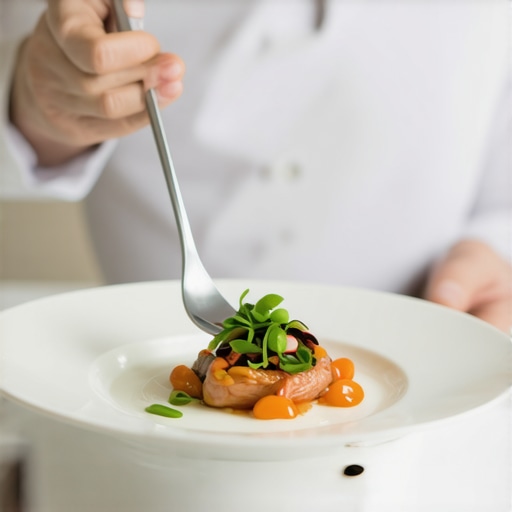
The pincer grip is your secret weapon
The most visible ‘skill’ in French service is the use of the fork and spoon as a pair of tongs in one hand. It’s a technical move that requires muscle memory and significant practice. If your staff hasn’t mastered this, they aren’t ready for a luxury floor. This technique allows for the elegant transfer of delicate items—like a seared scallop or a tender asparagus spear—from a silver platter to the guest’s plate without the clunky ‘clack’ of standard tongs. It’s these top server tips to elevate your event experience that transform a meal into a curated moment. When a server approaches from the left, holding the platter with their left hand and using the pincer grip with their right, it creates a sense of intimacy and care that no buffet can replicate.
Audit your ratios before the doors open
You cannot execute specialized service if your staff is spread too thin. You must audit your server to guest ratio for VIP dinners to ensure that for every two tables, there is a dedicated team. In French service, we often use a ‘team of two’ approach: one server presents the platter while the second manages the wine and water refills. This ensures the guest is never left unattended while the primary server is at the sideboard. It might feel like overkill to have so many bodies on the floor, but it is the only way to maintain the ‘rhythm’ of a high-end gala. If you are struggling with the budget, learn how to staff a 200-person reception with only 12 professionals by focusing on efficiency and specialized training rather than just raw numbers. This ‘lean but skilled’ approach ensures that every movement serves a purpose, preventing the ‘busy-work’ look that often plagues amateur catering teams.
Don’t confuse a crowded room with a well-served one
Most event planners believe that if they just throw more bodies at the problem, the service will automatically improve. I call this the ‘quantity over quality’ trap. In reality, a bloated team without clear direction creates a ‘bumping’ effect—where servers literally trip over each other in the kitchen galley, leading to broken glassware and cold entrees. By optimizing server efficiency to enhance event satisfaction, you realize that twelve elite professionals will always outshine twenty-five untrained ‘bodies in suits.’ I’ve seen 500-person galas run smoother with a lean, disciplined crew than small weddings with an army of uncoordinated staff. It’s about the choreography, not the headcount. When you are mastering corporate event planning secrets to seamless success, you learn to prioritize technical skill and spatial awareness over raw numbers.
Can you spot a pro before they even pick up a tray?
Professionalism isn’t just about wearing a clean shirt; it’s about ‘situational awareness.’ An expert server enters a room and immediately scans for the three horsemen of event disaster: empty water glasses, wobbly table legs, and guests looking around for a napkin. You can usually see 3 signs your event server is a pro within seconds of meeting them, specifically in how they carry themselves—chest open, eyes up, and a calm, non-rushed pace. A famous study from the Cornell School of Hotel Administration suggests that guests perceive service as higher quality when staff appear ‘available but not intrusive.’ This psychological balance is what separates a high-end experience from a frantic one where servers are constantly hovering. 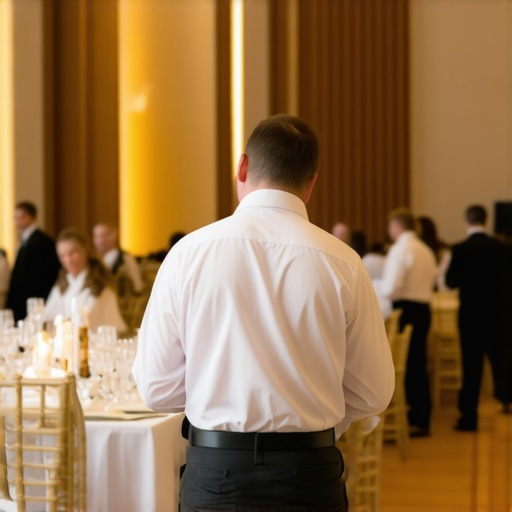
The lead server trap that ruins your flow
Here is the biggest ‘oops’ I see even experienced planners make: they assign their best person—the server lead—to the VIP table. It sounds logical, right? You want the CEO or the bride’s parents to have the best service possible. But why a lead server should never be assigned a single table is simple: they become ‘blind’ to the rest of the room. When the lead is stuck pouring wine for the guest of honor, they can’t see the fire starting in the kitchen or the buffet line that has stalled. Their job is to be the ‘eye in the sky,’ identifying bottlenecks before they become disasters. If you don’t know how to spot a bad lead server in the first 10 minutes of an event, look for the one who is doing ‘task work’ like clearing plates instead of ‘management work’ like checking the timing of the next course. A true lead is a conductor, not a first violinist. Have you ever fallen into this trap of over-assigning your best people only to have the rest of the room suffer? Let me know in the comments. I’d love to hear how you handled the fallout and what you changed for the next event.Avoiding the lead server trap is just the beginning of running a flawless event. To keep the machine running month after month, I rely on a specific toolkit that most people overlook. For starters, I never step onto a floor without a cloud-based floor management tool. I personally use platforms that allow for real-time seat tracking because when a guest with a severe nut allergy moves from table 4 to table 12, the entire team needs to know instantly. This is a core part of mastering corporate event planning secrets to seamless success. I also equip my leads with silent vibrating pagers rather than standard radios. There is nothing worse than the sound of a walkie-talkie crackling during a heartfelt wedding toast. We use haptic feedback vibrations to signal the kitchen that it is time to fire the next course without making a sound. This level of technical coordination is one of those server skills that make every event stand out because it keeps the ‘seams’ of the event hidden from the guests’ view. 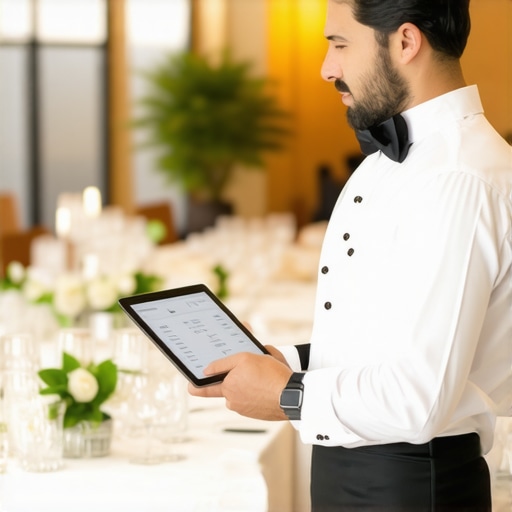
How do I keep my team sharp for every single gala?
Maintenance in this industry isn’t just about keeping the silver polished; it is about keeping the mental edge of your staff. I have found that the best way to maintain high standards over a long, grueling season is through rigorous ‘post-game’ analysis. After every major event, we review the timing of the meal against the original technical brief. If you are not sure why this matters, remember that your server lead needs a copy of the event script to even begin this process. We look at the raw data—did the third course take 12 minutes to clear instead of the planned 8? Why? By optimizing server efficiency to enhance event satisfaction, we turn every minor timing hiccup into a training module for the next weekend. According to the Culinary Institute of America’s ‘Remarkable Service’ manual, the highest form of service is ‘anticipatory,’ which requires staff to be constantly observant of non-verbal cues. I maintain this by running ‘vibe checks’ mid-event, where I ask servers to identify three things guests at their table might need in the next five minutes. It keeps them proactive rather than reactive, ensuring that the service never feels sluggish or lazy.
The future of service involves more than just human hands
Looking ahead, I predict we are going to see a massive surge in augmented reality (AR) for server training and live floor management. Imagine a lead server wearing discreet glasses that highlight which guests have yet to receive their wine pairing or which tables are lagging behind the service schedule. While we aren’t quite there yet, keeping an eye on wedding catering trends to impress guests in 2025 shows that technology is becoming less of a cold machine and more of a warm assistant. My advice? Start small and start now. This weekend, try implementing one of these top server tips to elevate your event experience: have your lead server step back from the tables entirely for fifteen minutes and just watch the flow. You will be amazed at the bottlenecks they can spot when they aren’t busy carrying a tray.
What My Most Expensive Failures Taught Me About Hospitality
I’ve learned that the biggest threat to a luxury event isn’t a technical glitch or a late delivery—it’s a server who hasn’t been trained to see the invisible needs of a guest. After a decade in the trenches, here are a few hard-won truths: First, never assume a ‘polite’ server is a skilled server; grace is a technical discipline that requires hours of rehearsal. Second, if your team isn’t communicating via non-verbal cues by the time the first course hits, you’ve already lost the rhythm of the room. Finally, I realized that the difference between a staffing agency and a service partner is what determines if your event feels like a transaction or an immersive experience. #IMAGE_PLACEHOLDER_E#
The Tools That Keep My Events Running on Autopilot
To maintain this level of technical precision, I rely on a specific ecosystem of resources. For floor coordination, I swear by digital mapping tools that allow us to mark allergies and VIPs in real-time, preventing those awkward ‘who gets the salmon?’ moments. I also recommend every aspiring lead read the Culinary Institute of America’s ‘Remarkable Service’ manual; it’s the definitive guide for high-end hospitality. When you elevate your wedding with professional servers, these are the standards you are paying for. I also keep a copy of the ultimate guide to corporate event catering logistics on my tablet for every pre-shift meeting to ensure no technical detail is left to chance.
Take the Leap Toward Truly Elite Hospitality
Moving from standard service to specialized French service can feel intimidating at first, but the rewards—the gasps of delight from guests and the total peace of mind for the host—are worth every bit of training. You don’t need to overhaul your entire business model overnight; start by implementing wedding catering tips from industry experts one event at a time. Before you know it, you won’t just be managing staff; you’ll be conducting a masterpiece of hospitality. Have you ever had a moment where expert server techniques completely saved your event from a potential disaster? Let me know in the comments below!