

I’ll never forget the sound of three hundred people simultaneously cringing. It was 2017, and I’d hired a ‘singing waiter’ to burst into song during the main course of a high-stakes corporate gala. I thought it was genius. But I forgot one tiny detail: I hadn’t told the actual catering team. When the performer stood on a chair and started his aria, two very confused (and very professional) servers rushed over to pull him down, thinking he’d had one too many gin and tonics. It was mortifying. The music was too loud, the CEO was mid-bite of a steak, and the ‘surprise’ felt less like a gift and more like a disturbance. That failure taught me everything I know today about mastering corporate event planning secrets. You can’t just wing a surprise. It requires the precision of a clockmaker and the stealth of a ninja. Today, I’m going to show you how to choreograph a moment that leaves your guests breathless—for the right reasons—and ensure your team is actually on your side when the music starts.
Give Your Guests Something to Talk About
Most corporate events are forgettable. We’ve all been there: the beige chicken, the predictable slide deck, and the polite networking. According to research by EventMB, nearly 82% of event planners believe that ‘wow’ moments are essential for guest retention, yet so few actually pull them off without it feeling forced. A surprise performance is the ultimate tool to avoid the mid-event lull in guest energy that usually hits right after the speeches. When you get it right, the energy in the room shifts instantly. You transform a room of strangers into a community sharing a singular, electric moment. But that electricity requires a grounded wire. One of my biggest early mistakes was gatekeeping the surprise from the people running the floor. I now know that your server lead needs a copy of the event script just as much as your AV tech does. If the people carrying the heavy trays don’t know the ‘waiter’ is about to break into a dance routine, you’re asking for a literal collision of worlds.
Does anyone even like surprise performances anymore?
I get the skepticism. We’ve all seen the YouTube videos of flash mobs gone wrong or the awkward magician who corners people during the cocktail hour. You’re probably worried that a surprise will feel ‘cheesy’ or, worse, interrupt the flow of a productive evening. It’s a valid fear. The key isn’t the performance itself; it’s the transition. A surprise should feel like a natural escalation of the evening’s vibe, not a jagged interruption. Have you ever sat through a surprise that felt more like a hostage situation than a highlight? I certainly have, and it’s usually because the planner forgot to account for the guests’ comfort. To make this work, you have to think like a producer. You aren’t just ‘booking an act.’ You are staging an intervention against boredom. By the end of this guide, you’ll know how to vet your talent, time your ‘drop’ perfectly, and keep your catering staff in the loop so they can support the spectacle instead of accidentally shutting it down.The ‘drop’ of a surprise is like the peak of a roller coaster—it only works if the climb was steady and the track was inspected. If you launch a gospel choir while people are still chewing their main course, you’re competing with the steak for their attention, and the steak usually wins. The sweet spot for a mid-event surprise is usually during the transition to dessert. At this point, the heavy lifting of the meal is over, and guests are mentally ready for a shift in pace. Using the logic of serving dessert before the final speech, you create a window where the energy is naturally rising. This is when your secret weapon—the service staff—becomes the most important part of the production.
Give Your Service Team the Script Early
Your servers aren’t just there to move plates; they are the stage managers of the dining room. If you don’t treat them as part of the performance, they will inadvertently sabotage it. I learned this the hard way at a tech launch where a ‘surprise’ dance crew started their routine right as the servers were clearing the appetizer plates. One dancer did a backflip into a bus tub full of balsamic glaze. It wasn’t ‘urban chic’—it was a disaster that left a permanent stain on the carpet and my reputation. Now, I make sure to organize a staff meeting before a 500-person dinner specifically to walk the server lead through the ‘hot zones’ of the room. When you boost your corporate event with expert server techniques, your staff knows to clear the floor five minutes before the music starts, ensuring no one is caught with a tray of hot coffee in the line of fire.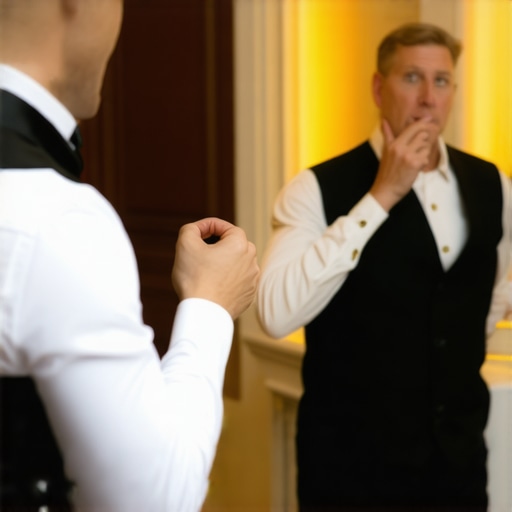
Identify the Pros on the Floor
Not every server is built for high-stakes coordination. You need to be able to spot the leaders who can pivot on a dime. When you can identify 3 signs your event server is a pro within seconds of meeting, you know exactly who to entrust with the timing of the room lights. I usually look for the one who isn’t just following the line but is actively scanning the room for guest eye contact. This person is your ‘trigger’ for the performance, the one who can signal the kitchen to hold the next course until the standing ovation dies down.
Audit Your Talent Beyond the Highlight Reel
Booking a surprise act based on a three-minute YouTube clip is like buying a car based on a photo of the steering wheel. You need to know how they handle a crowd that isn’t expecting them. Corporate audiences are notoriously ‘stiff’ for the first thirty seconds of a surprise; they are waiting for permission to have fun. Ask your talent how they break the ice. Do they have a plan for the one guest who tries to join them on stage or the CEO who looks confused? Effective effective catering strategies for corporate event impressiveness include ensuring the talent has a ‘safe space’ to prep away from guest eyes, often a back hallway or a partitioned-off section of the kitchen.
Test the Tech Before the Lights Go Down
Audio feedback is the fastest way to kill a ‘wow’ moment. If the singer’s mic screeches the second they open their mouth, the surprise is ruined. This is why you should always do a sound check before the CEO speaks or any performance begins. Use the time when the room is being set to run the track at full volume. Sound travels differently in an empty room than in one filled with 300 bodies, so adjust your levels to account for the ‘human dampening’ effect. Finally, ensure your server lead needs a copy of the event script to know exactly when to dim the house lights. This level of coordination turns a simple dinner into a choreographed experience that feels seamless and intentional.Let’s dig deeper into the ‘more is better’ fallacy. Most planners think that throwing a massive headcount at a high-stakes dinner guarantees success. In reality, over-staffing often results in a crowded floor where servers spend more time dodging each other than watching guest water glasses. When you how to choose the right staffing ratio for a VIP event, you aren’t just looking for numbers; you’re looking for spatial efficiency. I’ve seen events with twenty servers feel chaotic, while a lean team of twelve pros makes the evening feel like a choreographed ballet. This is where you need to look past the surface level. 
Is Your Service Partner Actually a Staffing Agency in Disguise?
This is a question I wish I’d asked a decade ago. There is a massive gap between the difference between a staffing agency and a service partner. An agency sends you ‘warm bodies’ who know how to carry a plate; a service partner sends you experts who understand the nuances of the ‘silent clear’ and anticipation. According to data from Bizzabo, nearly 80% of event marketers believe that the quality of the on-site team is the single most important factor in guest satisfaction scores. If you are hiring from a generic pool, you are effectively gambling with your brand’s reputation.
Stop Throwing Warm Bodies at Cold Problems
One of the most common mistakes I see in high-end corporate galas is the misuse of the Lead Server. I’ve walked into rooms where the ‘Lead’ is busy running bread baskets while the junior staff is struggling with a complex wine service. This is a fatal error. I now firmly believe that why a lead server should never be assigned a single table is the most underrated rule in the industry. Your lead needs to be a free-floating ‘troubleshooter’ who can spot the CEO’s empty glass or a guest’s dropped napkin from across the room. When the lead is pinned down by a table, the entire room loses its eyes.
Wait, what about the floor-length linens?
Here is a hidden nuance that separates the pros from the amateurs: safety and silence. We all love the look of draped fabric, but the impact of floor-length linens on server safety is real. If your team isn’t trained to navigate heavy linens while carrying hot trays, you’re one trip away from a lawsuit. It sounds like a small detail, but these are the top server tips to elevate your event experience that high-level planners obsess over. Have you ever fallen into this trap? Let me know in the comments.Maintaining excellence isn’t about luck; it’s about the infrastructure you build when no one is watching. I moved away from messy paper binders years ago and transitioned to digital floor-plan management tools. I personally use Social Tables because it allows me to visualize the room in 3D before a single fork is polished. This prevents those ‘spatial surprises’ that lead to server bottlenecks and awkward guest collisions. When you utilize an essential checklist for successful corporate event catering within a digital ecosystem, you remove the human error of a misplaced post-it note. Every guest allergy and every VIP seating preference is synced across the devices of your entire lead team.
Stop Relying on Your Memory
Beyond the software, you need a living document for your team that evolves. I’ve found that even the most detailed plans fail if they aren’t updated with real-time feedback. We use a ‘Post-Event Autopsy’ method. Within 48 hours of the event, the server lead and the kitchen head meet to discuss what broke. Was the bar too far from the kitchen? Did our strategy for optimizing server efficiency to enhance event satisfaction actually work, or did we have three people standing around the coffee station? According to the Professional Convention Management Association (PCMA), standardizing digital communication protocols and post-event reviews can reduce on-site operational errors by up to 30%. By recording these nuances, you ensure that the next time you book the same venue, you aren’t making the same mistakes twice. 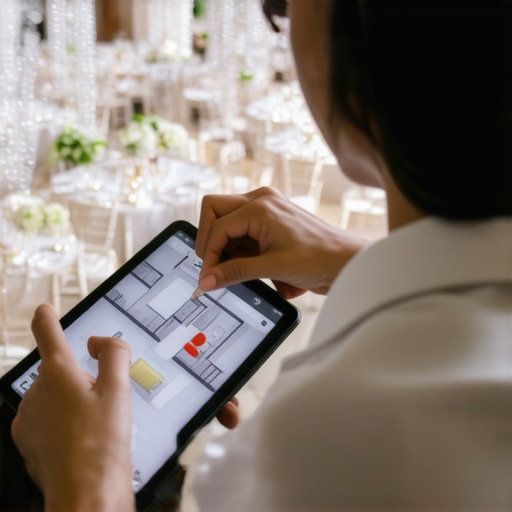
How do I keep my team sharp for the long haul?
Consistency is the hardest part of this industry. To maintain high standards, you have to treat every event like a training ground. I make it a point to highlight server skills that make every event stand out during our pre-shift briefings. This isn’t just about technical ability; it’s about mindset. I also maintain a strict hierarchy of responsibility: for instance, I always remind my staff why your lead server should never be the one managing the kitchen. If the person supposed to be watching the guests is stuck behind a swinging door arguing about appetizers, the front-of-house quality will inevitably drop.
Invest in the Tools That Eliminate Friction
I’m obsessed with the ‘quiet’ side of events. This means high-quality, lightweight serving trays that don’t strain the wrists and digital radios with earpieces that actually stay in place. If your team is physically comfortable and can communicate without shouting across the ballroom, their performance remains level even in the eighth hour of a wedding. Looking forward, I predict we will see AI-driven floor management that tracks real-time guest movement to suggest where more servers are needed before a bottleneck even forms. My challenge to you: For your next event, implement a ‘zero-paper’ walkthrough. Force yourself to use a digital layout and see how much faster your team adapts to last-minute seating changes.
Hard Truths I Learned the Expensive Way
Over the years, I’ve realized that the real ‘wow’ factor isn’t about how much money you spend on talent, but how much friction you remove from the guest experience. A ten-thousand-dollar acrobat act will fail if the guests are frustrated by slow wine service or a cold main course. The real magic happens in the silence between the spectacles. I’ve found that top server tips to elevate your event experience often come down to the staff’s ability to read the room’s temperature. If they see a guest leaning in to hear a speaker, they know to lower their voice and move more stealthily. This level of server skills that make every event stand out is what separates a standard dinner from a legendary corporate gala. Another lightbulb moment? Never assume your ‘professional’ talent knows how to navigate a busy banquet hall; they are artists, not logisticians. You must bridge that gap by treating your performers and your servers as one cohesive team.
Build Your Event Command Center
To pull this off, you need more than just a clipboard and a prayer. I swear by digital floor-plan tools like Social Tables for visual precision, allowing you to map out ‘safe zones’ for performers. For communication, ditch the cheap walkies and invest in something like the Motorola CLP series with discrete earpieces; nothing kills a high-end vibe faster than radio static over a speaker. I also highly recommend every planner reads The Art of Gathering by Priya Parker; it changed my entire philosophy on why we bring people together and how to create purpose-driven moments. When you combine these tools with effective catering strategies for corporate event impressiveness, you stop being a planner and start being a director of a seamless production.
Take the Leap and Surprise Them
It’s easy to play it safe. It’s easy to serve the beige chicken, run the standard slides, and call it a day. But if you want to leave a lasting impact on your brand and your guests, you have to be willing to choreograph those high-stakes, electric moments. By focusing on coordination, vetting your talent beyond their highlight reel, and empowering your service team, you ensure that your next big ‘surprise’ is the highlight of the year rather than a logistical nightmare. Start small, utilize your essential checklist for successful corporate event catering, and watch how the energy in the room transforms when the unexpected happens perfectly. What is the most ambitious surprise you have ever tried to pull off at a corporate event? I would love to hear your success stories—or your most educational failures—in the comments below!