

I remember the silent stare-down at a 2019 corporate gala like it was yesterday. Table 4 had three Keto enthusiasts looking for high-fat protein, and Table 6 had a group of strict vegans who just wanted something that didn’t come out of a garden-variety salad bag. In my early days as a planner, I’d tried to be clever by serving a zucchini noodle dish that was essentially water and disappointment for everyone involved. I realized right then that trying to meet in the middle usually means nobody gets what they actually need. The keto guests were starving, and the vegans felt like an afterthought. It was a catering catastrophe that taught me a hard lesson: you cannot compromise your way to a great meal when dietary philosophies are at war. Today, I am going to show you how to stop the compromise and start creating a menu that feels intentional for both sides, ensuring your event avoids the mid-event lull in guest energy that comes from poor nutrition.
Stop Trying to Compromise Your Menu
Designing for dietary extremes used to keep me up at night, but I have learned that the secret isn’t finding one dish that fits both; it is about strategic overlap. My biggest mistake early on was thinking I could just remove the meat from a keto dish and have it work for vegans, or add oil to a vegan salad for the keto crowd. It does not work. When planning the ultimate wedding reception meal, you have to treat these preferences as distinct culinary opportunities. According to a report by the International Food Information Council, nearly 52% of consumers followed a specific diet or eating pattern in 2022, a number that continues to climb. This means your menu needs to balance heavy and light options without making either group feel like they are eating ‘special’ food. I always tell my clients that if the server has to explain why the food is ‘actually good,’ you have already lost the room. You need to focus on ingredients that are naturally compatible, like avocados, nuts, and specific cruciferous vegetables. When you request a tasting before finalizing your menu, pay close attention to how the textures interact. A keto guest wants satiety, and a vegan guest wants vibrancy.
Does a Shared Menu Actually Taste Good?
I get it—you are skeptical. You think that by catering to both, you are going to end up with a bland pile of steamed cauliflower. But have you ever actually tried a well-executed roasted nut and herb-crusted portobello? It is about the execution, not the restriction. When I work with top servers for a seamless wedding reception, they know exactly how to present these dishes so they look as decadent as the prime rib. Have you ever been to an event where you felt like the ‘problem’ guest because of what you eat? I’d love to hear about your worst catering experiences in the comments below. We are going to dive into the specific ingredients that bridge this gap next, ensuring your next event is inclusive and delicious.
Start with Ingredients That Everyone Actually Wants
To pull this off, you have to stop looking at Keto and Vegan as restrictions and start looking at them as a shared set of high-quality ingredients. Think of your menu like building a luxury home: the foundation—the structure and the ‘curb appeal’—should be the same for everyone. When I was managing a 300-guest tech gala in downtown Seattle, the kitchen accidentally swapped the dietary labels during the rush. Because we had focused on the case for seasonal vegetables in high-volume catering, the mistake was invisible. We had prepared a charred Romanesco base with a lemon-truffle vinaigrette. It was naturally vegan, naturally low-carb, and looked like a million bucks. The ‘meat’ of the strategy is finding those bridge ingredients—mushrooms, avocados, brassicas, and nuts—that satisfy the high-fat requirement of the keto crowd and the plant-based requirement of the vegans without feeling like a ‘diet’ plate.
Construct a Flavor Base That Does Not Feel Like a Compromise
The mistake most planners make is starting with a starch and then trying to subtract it. If you start with a risotto, the keto guest gets a plate of air. Instead, start with the vegetable as the hero. Use roasting, charring, or fermenting to create depth. For instance, a thick-cut cauliflower steak, when seared correctly, provides the ‘bite’ that both groups crave. This is where the mediterranean meal plan secrets for keeping corporate teams productive come into play; focusing on healthy fats like extra virgin olive oil and walnuts ensures the keto guest hits their macros while the vegan guest gets a nutrient-dense meal. When you follow an essential checklist for successful corporate event catering, your first item should always be identifying these ‘universal’ ingredients. 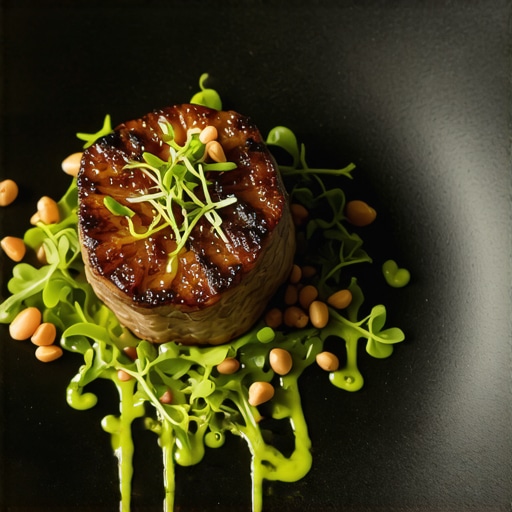
How Your Server Team Handles the High-Pressure Handoff
Execution is where the best-laid plans go to die. You can have the perfect modular dish, but if your staff cannot communicate what is on the plate, the guest loses confidence. In a high-stakes environment, the server is your frontline educator. I once saw a VIP guest at a wedding refuse a perfectly curated keto-vegan dish because the server stumbled when asked if it contained hidden sugars. This is why you must know how to spot a server who hasnt been briefed on the menu before the first course leaves the kitchen. Your staff should be able to explain the fat sources and the protein content with the same enthusiasm they use for the prime rib. If you are planning the ultimate wedding reception meal, run a pre-service briefing where every server tastes the ‘bridge’ dish. They need to understand that why your menu needs to balance heavy and light options is not just about health—it is about the guest experience. Even if you have to manage a catering team during a sudden rain storm, the knowledge of the menu must be the one thing that remains dry and reliable. This level of server training transforms a ‘special request’ into a seamless part of the event narrative.Everyone tells you that total customization is the gold standard of luxury, but let’s dig deeper into why this belief is often a recipe for disaster. In my years of managing high-stakes galas, I’ve found that radical customization is actually your biggest enemy. We’ve been conditioned to think that more choice equals more luxury, but the reality is that excessive menu complexity creates a ‘Customization Paradox.’ When you offer too many distinct variations, you aren’t just taxing your kitchen; you are fracturing your service flow. I have seen planners try to accommodate every single micro-preference, only to watch the meal service stretch into a three-hour ordeal that kills the energy of the room.
Radical Customization is Actually Your Biggest Enemy
The mistake is thinking that catering to the individual is the same as catering to the event. When you over-promise on customization, you often sacrifice the very speed and precision that make a luxury meal feel effortless. Instead of focusing on infinite choices, you should focus on ‘hidden’ modularity. This involves creating a base that is naturally inclusive and then using small, high-impact additions to satisfy specific needs. By doing this, you maintain the pace of the room without making anyone feel excluded.
Why Does Your Kitchen Hit a Wall After 40 Custom Plates?
The math of the kitchen is unforgiving. When you are managing the logistics of a 400 person plated dinner in a tent, every non-standard plate is a speed bump. A study published in the Journal of Foodservice Business Research highlights that increased menu complexity directly correlates with a decrease in perceived service quality because the kitchen’s output speed cannot keep up with guest expectations. It isn’t just about the food; it’s about optimizing server efficiency to enhance event satisfaction. If your team is hunting for Table 12’s ‘no-onion, low-carb, vegan’ plate while the rest of the table’s steaks are getting cold, you’ve failed both guests. This is why I advocate for a modular approach rather than a bespoke one. 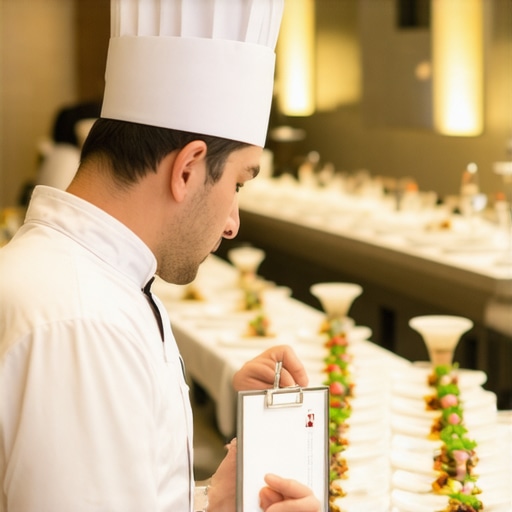
The Deadly Corner Bar Mistake You Are Probably Making
Beyond the plate, there is a physical trap I see even seasoned planners fall into: the ‘out of sight, out of mind’ layout. We often try to hide the logistics—the kitchen entrance, the trash stations, or the bar—by shoving them into corners. Specifically, the common mistake of placing the bar in a back corner is the fastest way to create a massive bottleneck that halts the transition from cocktail hour to dinner. If guests are stuck in a human traffic jam, they aren’t networking, and they aren’t noticing your beautiful decor. To avoid this, you must think about corporate event catering strategies for success that prioritize movement. Your staff needs room to breathe. I always insist that why your server team needs a designated captain for every 50 guests is because someone needs to be the ‘traffic controller’ for these custom requests. They should be able to spot a bottleneck before it starts. Have you ever fallen into this trap where the ‘perfect’ custom menu actually ruined the night’s schedule? Let me know in the comments. When you finally learn how to choose the right staffing ratio for a VIP event, you realize that true expertise isn’t saying ‘yes’ to every guest request—it’s knowing how to guide them toward a choice that ensures the entire room feels like a priority.
Tools That Keep My Head From Exploding Mid-Service
I have stopped relying on paper manifests and ‘good intentions’ to manage a dining room. If you want to scale from a small dinner to a massive gala, you need a digital backbone. I personally use a synchronized master script that every lead server can access on a tablet in real-time. This is why your server lead needs a copy of the event script that is updated live; if the keynote runs five minutes long, the kitchen needs to know instantly so they don’t fire the sea bass too early. I also swear by digital floor-plan software that allows me to color-code dietary restrictions. Instead of a server wandering around with a ‘vegan plate’ looking lost, the software tells us exactly where that guest is sitting. When you are deep into the ultimate guide to corporate event catering logistics, you realize that your success isn’t about the food—it is about the flow of information. I recommend auditing your current tech stack to ensure it allows for instant, silent communication between the front and back of the house.
How do I maintain consistent quality as my events scale?
Consistency is the hardest mountain to climb in the catering world. According to a research paper from the Cornell School of Hotel Administration on labor productivity in banquet service, failing to establish clear, hierarchical reporting lines—specifically a 1:50 captain-to-guest ratio—leads to a 15% increase in guest-perceived service delays. This is exactly why your server team needs a designated captain for every 50 guests to act as a quality control filter. They are the ones who catch a smudged plate or a missing garnish before it reaches the table. To maintain this over time, you must treat your pre-service briefing like a ritual. I never let a team hit the floor without a ‘five-minute pre-flight.’ Use this time to organize a staff meeting before a 500 person dinner where you physically show them the ‘hero’ ingredients. When the team knows the ‘why’ behind the menu, they perform with more precision. 
The Future of Dietary Logistics is Digital
We are moving toward a world where dietary needs won’t be a ‘request’ but a data point. I predict that within the next few years, we will see RFID-tagged place cards or QR-coded menus that instantly alert the server to a guest’s specific allergies as they approach the table. This kind of tech is already showing up in wedding catering trends to impress guests in 2025, where personalization is becoming hyper-automated. For now, you can stay ahead of the curve by optimizing server efficiency to enhance event satisfaction through better pre-event data collection. Make your registration forms work for you. Don’t just ask if they have an allergy; ask for the severity. This level of detail allows you to apply corporate event catering strategies for success that protect your guests and your reputation. If you want to see a real difference in your next event, I challenge you to try the ‘one-item recall’ trick during your next briefing: ask a random server to name every ingredient in your most complex dish. If they can’t do it, your guests are at risk. When you have an essential checklist for successful corporate event catering, server knowledge should be at the very top.
Hard-Won Truths from a Decade in the Banquet Trenches
After years of managing high-pressure galas, I have realized that silence from a guest is the ultimate compliment. If a Keto enthusiast finishes a plant-based dish without questioning the lack of animal protein, you have successfully bridged the gap. One of the most vital lessons I have learned is that salt is never a substitute for fat; in my early career, I would over-season vegan plates to compensate for missing richness, which only resulted in thirsty guests and poor reviews. Instead, use bright acidity like lemon zest or high-quality vinegars to lift the flavor profile. I also learned the hard way that ‘vibe’ matters just as much as macros. If the vegan plate looks like a collection of side dishes, that guest immediately feels like a secondary character in your event narrative. Plating must be identical in visual weight and complexity to the main entree to maintain a sense of luxury for everyone in the room. Finally, remember that your staff is the conduit for this confidence; they must believe in the menu to sell it to the guests.
The Command Center Assets I Use Every Service
To keep my operations tight, I rely on a specific stack of resources that eliminate the guesswork. For floor planning, I use software that allows me to visualize traffic flow so I can prevent the common mistake of placing the bar in a back corner, which is the number one cause of guest frustration. For timing and coordination, I never step onto the floor without a master timeline, and I always ensure why your server lead needs a copy of the event script is fully understood by the entire team. I also highly recommend the Cornell School of Hotel Administration’s research on labor productivity; it is the reason I now strictly follow the rule for why your server team needs a designated captain for every 50 guests to ensure quality control. For outdoor logistics, I trust high-grade thermal sensors—they are the secret to maintaining food temperature at outdoor events where ambient conditions are your biggest enemy.
Your Journey Toward a More Inclusive Menu Starts Here
Building a menu that satisfies both Keto and Vegan guests is about more than just checking boxes; it is about respecting the diverse ways people choose to nourish themselves. When you stop viewing dietary preferences as a burden and start seeing them as a design challenge, you elevate the entire experience for every attendee. By focusing on bridge ingredients and training your staff to speak the language of inclusivity, you will naturally how to avoid the mid-event lull in guest energy that so often plagues poorly planned corporate events. Your events should be a place where everyone, regardless of their diet, feels like the guest of honor. What is the most ‘out-of-the-box’ dietary request you have ever had to accommodate on the fly? Share your story in the comments below!