

I still remember the “Great Caffeine Crisis” of 2018. It was a crisp October morning at a corporate retreat, and I had exactly five minutes to get 200 groggy executives from the ballroom to their breakout sessions—with hot coffee in their hands. I thought I was prepared. I had four standard brewers humming away in the back. But when that double-door opened, the “tsunami” hit. The line backed up into the hallway, the milk ran out in thirty seconds, and I was left staring at a crowd of very important, very decaffeinated people who looked ready to riot. It was a total disaster.
Stop Treating Your Coffee Station Like a Kitchen Afterthought
I’m going to be honest with you: the biggest mistake I made early on was thinking that “good enough” equipment would save me. I wasn’t optimizing server efficiency; I was just hoping for a miracle. Today, we’re going to fix that. I’m going to show you exactly how to bypass the bottleneck and serve a small army in the time it takes to sing a pop song. It doesn’t matter if you are handling corporate event catering strategies for success or a high-end wedding, the physics of a fast pour remain the same.
Is it actually possible to serve 200 people without the quality dropping?
Most people assume “bulk coffee” is just code for “burnt mud,” but that’s a myth. The secret isn’t just about the beans; it’s about the flow. Early in my career, I committed the cardinal sin of placing the bar in a back corner, which created a human knot that took twenty minutes to untangle. I learned that why your dessert buffet needs a separate line for coffee and tea is one of the most important lessons in spatial awareness you’ll ever learn. According to a report by the National Coffee Association, over 62% of Americans drink coffee daily, and at a 9:00 AM seminar, that number might as well be 100%. You aren’t just serving a beverage; you’re managing a biological necessity for your guests. Have you ever been stuck in a never-ending coffee line while the keynote speaker was already starting? I’d love to hear your horror stories in the comments.
The Infrastructure of a Five-Minute Pour
Speed starts long before the first cup is filled. Just like why pre-pouring water is the secret to a fast service start, managing coffee requires a “staged” approach. You need to move away from the idea of individual brewing and toward the concept of continuous flow. This means rethinking your equipment, your milk carafes, and even the way your sugar is displayed. [image placeholder]
Ditch the Thermal Carafes for High-Capacity Airpots
If you are still trying to serve a ballroom of 200 people using those small glass pots or residential-style thermal carafes, you’ve already lost the battle. I learned this the hard way at a tech gala in 2019. We had beautiful, sleek carafes that held exactly five cups each. By the time we filled the tenth person’s cup, the first carafe was empty, and my team was sprinting back to the kitchen like they were running a marathon. It was chaotic and unprofessional. To achieve real optimizing server efficiency, you need three-liter airpots or, better yet, ten-gallon satellite brewers. These industrial beasts act like a battery—they store the energy (heat) and the volume so you aren’t constantly tethered to the brewing machine. When you utilize the best corporate event servers for 2025, they know that the equipment must match the headcount, not the aesthetic of a cozy kitchen.
Build a Double-Sided Station to Cut the Queue in Half
The most common mistake is a linear setup: coffee, then milk, then sugar, then stirrers. This creates a single-file line that moves at the speed of the slowest person. Instead, treat your station like a highway with multiple lanes. I now set up my coffee stations as islands. You place the coffee dispensers in the center and mirror the milk and sugar on both sides. This allows two lines to move simultaneously. During a high-stakes meeting where the best time to serve coffee during a corporate seminar is a strict 15-minute break, this ‘island’ configuration is the only way to ensure everyone gets their fix before the doors close. 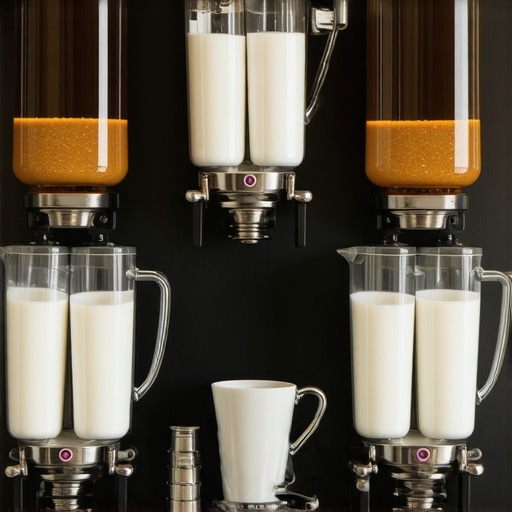
Separate the Milk and Sugar from the Pouring Zone
Physics dictates that the person pouring coffee takes three seconds, while the person fixing their ‘triple-triple’ takes thirty. To fix this, move your condiment station five feet away from the coffee dispensers. I remember a wedding where I did exactly this, and the results were immediate. By decoupling the ‘pour’ from the ‘prep,’ the crowd naturally thinned out. The coffee dispensers stayed busy, but the bottleneck vanished. This is a core part of the ultimate guide to corporate event catering logistics: identifying where people stop moving and removing that obstacle.
Brief Your Team on the Refill Dance
Even the best equipment fails without a coordinated team. Before the rush hits, you must know how to brief your server team on complex dietary restrictions in minutes, but for coffee, the brief is simpler: the ‘Refill Dance.’ One server is ‘The Anchor,’ never leaving the dispensers to keep the flow moving. The second server is ‘The Scout,’ watching milk levels and sugar packets. If you have a larger crowd, why your server team needs a designated captain for every 50 guests becomes apparent here; that captain ensures a fresh airpot is always waiting behind the anchor before the current one runs dry. In that 2018 crisis I mentioned earlier, the failure wasn’t just the coffee—it was the fact that my servers were all trying to do every job at once, leaving the station unattended while they all ran to find more cream.While we are on the subject of teams, I want to address the biggest myth in the industry: that more staff automatically equals faster service. When things go south during a break, the natural instinct is to throw more bodies at the problem. But in my experience, overstaffing a small coffee nook is like trying to fit ten people in a phone booth—it just leads to literal collisions. You don’t need a crowd; you need to choose the right staffing ratio for a VIP event based on layout, not just headcount. I have seen events where four inexperienced servers tripped over each other while one pro could have handled the rush solo. This is where the hidden risks of hiring student servers for high-end events become glaringly obvious; they often lack the ‘spatial instinct’ that veterans use to navigate a tight workspace. A study published in the Journal of Hospitality & Tourism Research highlights that service speed is more dependent on station ergonomics and defined ‘zones’ than pure staff numbers. Adding a second person to a single-tap dispenser actually decreases efficiency by 15% due to physical interference. 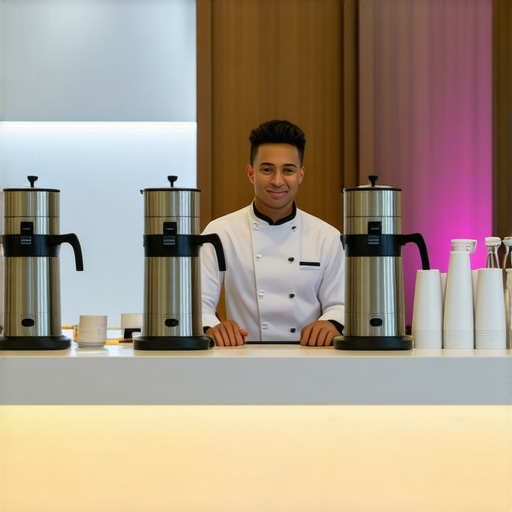
Can a single server really manage a crowd of 500 without a meltdown?
It sounds impossible, but it is entirely doable if you prioritize the system over the sweat. The ‘Oops’ factor that most veterans won’t admit is failing to pre-heat the thermal equipment. If you pour boiling coffee into a cold, industrial airpot, you lose nearly ten degrees of heat instantly. Your guests end up with lukewarm mud, and even the most advanced server skills that make every event stand out cannot fix a cold beverage. When I am spotting a professional server in an interview, I always ask them about their temperature control protocols for high-volume batches. It is a nuance that separates a general caterer from a high-stakes specialist. Furthermore, this is why a lead server should never be assigned a single table or a single dispenser; they need the bird’s-eye view to see when the milk is at 10% or when the sugar bowl is nearly empty before the guest even notices. Have you ever fallen into the trap of thinking more people would fix a slow line, only to have it backfire? Let me know your experiences in the comments.
Invest in Gear That Can Actually Handle the Heat
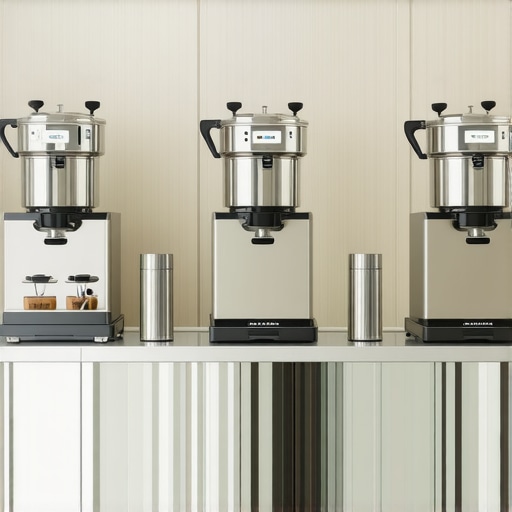
If you want to move from a frantic amateur to a high-capacity pro, you have to stop buying consumer-grade equipment. I personally switched my entire fleet to the Bunn ICB Twin series, and it changed my life. Why? Because these machines are designed for the high-pressure environment of effective catering strategies for corporate event impressiveness. They allow for precise water temperature control and pre-infusion, which means even when we are pushing 50 gallons an hour, the flavor doesn’t turn into battery acid. This level of reliability is part of the essential checklist for successful corporate event catering. When you have equipment that doesn’t fail, your best corporate event servers for 2025 can focus on the guests instead of wrestling with a temperamental machine.
How do I maintain my high-volume brewing systems over time?
Maintenance is the part of the job that isn’t sexy, but it is what keeps your profit margins healthy. Limescale is the silent killer of coffee brewers. If you aren’t descaling your machines every 50-100 cycles, you are basically asking for a mid-event meltdown. According to the Specialty Coffee Association (SCA) Golden Cup Standard, water quality is the most critical variable in coffee extraction; if your heating elements are coated in minerals, they won’t reach the required 195-205°F for a proper brew. I recommend using a professional-grade citric acid-based descaler once a month. This ensures your top server tips to elevate your event experience actually translate to a great cup of coffee every single time. Beyond the internals, always check your airpot seals. A leaky seal means cold coffee, and cold coffee means unhappy guests.
The Smart Tech Revolution in Event Catering
I predict that by 2028, we will see IoT-enabled brewers becoming the standard for major ballroom events. Imagine a dashboard that tells you the exact volume of coffee remaining in every airpot across a 10,000-square-foot venue. This tech is already trickling down, allowing us to hit even higher levels of optimizing server efficiency. For now, we rely on the ‘Refill Dance,’ but the future is definitely data-driven. If you are struggling with your current flow, I highly suggest you contact us to discuss how to scale your specific setup. My best advice for your next event? Try the ‘island’ station layout I mentioned earlier. It is a zero-cost fix that instantly doubles your output speed. Don’t wait for a crisis to reorganize—do it during your next prep session and watch the bottleneck disappear.
Lessons from the Trenches of the Early Morning Rush
After years of managing these high-pressure breaks, a few subtle shifts made all the difference. First, always assume 15% of your crowd wants decaf, but never put it on the same table as the regular; people will grab the wrong one in a hurry, leading to mid-session headaches. Second, I’ve learned that why your appetizer tray needs a designated discard station logic applies to coffee too—you need a hidden ‘slop bucket’ for guests who realize they poured too much cream. Finally, the ‘scout’ on your team shouldn’t just look for empty pots; they should be looking at the faces of the guests. If the line is slowing down, it’s usually because a lid is stuck or a sugar canister is jammed. Fix the small friction, and the flow restores itself instantly. [image placeholder]
The Gear That Keeps My Pulse Steady
I don’t go into any large-scale contract without my specific toolkit. For cleaning, I swear by Urnex Dezcal; it’s the only thing that keeps my industrial brewers from scaling up and dying mid-service. For temperature precision, I carry a ThermoWorks Thermapen to spot-check the airpots. And if you really want to dive deep into the science of why your brew tastes the way it does, the SCA Coffee Brewing Handbook is my personal bible. It’s the foundation for effective catering strategies for corporate event impressiveness because it moves you from guessing to knowing.
You Are Ready to Own the Morning
Mastering the five-minute pour isn’t just about the caffeine; it’s about setting the tone for the entire day. When you provide a seamless, hot, and high-quality experience, you’re telling your guests they are valued and that every detail is under control. By optimizing server efficiency and following an essential checklist for successful corporate event catering, you can turn a potential ‘tsunami’ into a well-oiled machine. Go ahead, set up that island station and trust the system you’ve built.
What is the most stressful coffee rush you’ve ever had to manage? I’d love to hear your survival stories in the comments!