

I was standing in the back of a gorgeously renovated 1920s train station, holding a glass of lukewarm champagne, when I realized I had made a massive mistake. The bride’s father was halfway through his toast, but to the 200 guests sitting there, it sounded like he was shouting from the bottom of a well. The soaring, forty-foot marble ceilings were stunning to look at, but they were a nightmare for the ears. Every laugh, every clink of a fork, and every word of that heartfelt speech was bouncing around like a pinball. It was then I realized that most of us spend so much time planning the ultimate wedding reception meal that we completely ignore the physics of the room itself.
Why the Air Above You Can Break Your Event
It’s easy to get distracted by floor plans and floral arrangements. I’ve done it myself. But the distance between the floor and the ceiling dictates the reverberation time, and if that time is too long, your guests will leave with a headache. When I first started out, I thought high ceilings always equaled luxury. I was wrong. Luxury is being able to hear the person sitting across from you without straining. If you don’t spot a venue with bad acoustics before you book, you’re fighting an uphill battle from day one. High ceilings create a cavernous effect where sound waves have too much room to play, while low ceilings can make a space feel oppressive and boxy if the frequency isn’t managed. Today, we are going to fix that by looking at how volume and height dictate the guest experience.
Is acoustic quality really worth the extra stress?
You might be thinking, Can’t the DJ just turn it up? That is the most common—and dangerous—assumption I hear. Turning up the volume in a room with poor acoustic properties just creates louder noise, not clearer speech. According to research from the Acoustical Society of America, speech intelligibility is drastically reduced when the reverberation time exceeds 1.5 seconds, a common issue in high-ceilinged spaces without sound-absorbing materials. I learned this the hard way during a corporate gala where we forgot to always do a sound check before the CEO speaks, only to find out the mic was useless against the rafters. We’ll explore how to balance these heights, including how heavy linens actually reduce noise to save your ears. Have you ever been to a wedding where you couldn’t understand a single word of the ceremony because the room was too echoey? Let’s dive into how we stop that from happening.
Turn Down the Echo Without Touching the Volume
To fix a room that sounds like a cavern, you have to stop thinking about the speakers and start thinking about the surfaces. Sound is lazy; it takes the path of least resistance, bouncing off hard marble, glass, and polished wood until it loses energy. In that Chicago warehouse wedding I mentioned earlier, the air was vibrating so much you could feel it in your teeth. We solved it by treating the room like a recording studio rather than a ballroom. The key is to introduce ‘friction’ for those sound waves.
Kill the Bounce with Fabric and Texture
The easiest way to absorb errant noise is through your decor choices. Hardwood floors are a dream for dancing but a nightmare for toasts. If you are stuck with a high-ceilinged venue, you need to maximize soft surface area. This is where heavy linens actually reduce noise by acting as a muffler for every clink of a glass or scrape of a chair. I always recommend floor-length velvet or heavy polyester over thin cotton. When we worked a gala in a glass-walled atrium, we even went as far as adding thick padding under the tablecloths. It transformed the room from a shouting match into a sophisticated dinner party. 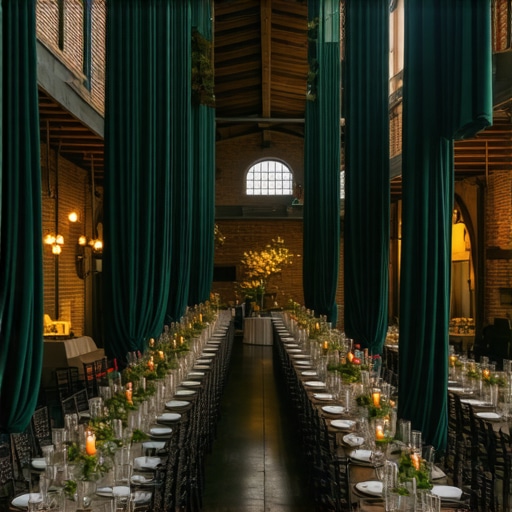
Train Your Team to Move Like Ghosts
People forget that the service staff is a significant source of ambient noise. The sound of a silver tray hitting a stone countertop can echo for three seconds in the wrong room. You need to implement top server tips to elevate your event experience, specifically focusing on ‘silent service’ techniques. During a high-stakes corporate dinner, I had my team use rubber-lined trays and soft-soled shoes to ensure they didn’t compete with the keynote speaker. You also need to coordinate server movements to prevent hallway traffic jams near the kitchen doors, as that’s often where the most ‘clatter’ originates. If your staff is chaotic, your acoustics will be too.
Keep the Bar and the Speakers on Opposite Sides
One of the biggest mistakes I see is a lack of spatial logic. If you place the bar right next to the speakers, the bartender will have to shout to hear drink orders, and guests will congregate in a high-decibel ‘dead zone.’ You should never put the bar next to the speakers if you want people to actually enjoy their cocktails. Instead, spread the energy out. If you are using a narrow floor plan, learn how to style a long kings table without blocking sightlines, which naturally helps channel sound down the length of the room rather than letting it bounce side-to-side. For the technical side, remind your AV crew that your video team needs a wireless audio feed to capture clear sound directly from the source, bypassing the room’s messy acoustics entirely.Most planners will tell you that sticking to a venue’s ‘Preferred Vendor’ list is the safest way to ensure a smooth event. I’m going to tell you the opposite: it can be a recipe for mediocrity. While these vendors know the service hallways, they often become complacent with the space’s flaws. I’ve seen ‘preferred’ AV teams ignore a room’s standing waves simply because they’ve set up the same way for five years. The hidden cost of only using preferred vendors at popular venues is often a lack of innovation in solving unique spatial challenges. If you want a truly bespoke soundscape, you have to look beyond the list and find specialists who understand how to fight a room’s natural reverb.
Why your 5-star venue’s house speakers might fail you
One of the most expensive ‘oops’ factors I see in high-end corporate bookings is the assumption that a luxury price tag includes a functional sound system. It doesn’t. In fact, why your venues in-house AV might be ruining your presentation often comes down to maintenance; these systems are used and abused daily. According to a study by the Journal of the Audio Engineering Society, even a 10dB increase in background noise—like a buzzing house speaker or a nearby kitchen—can reduce speech comprehension by 40% in older adults. Before you sign that contract, you need to why you should audit the venues ice machine before the gala and check the proximity of the service doors. A loud compressor kicking on during the CEO’s keynote is an acoustic disaster no amount of velvet linens can fix.
Is a high server-to-guest ratio actually hurting your event?
It sounds counterintuitive, but throwing more bodies at a room doesn’t always result in better service. In a space with challenging acoustics, 20 servers chatting in the wings create a ‘white noise’ floor that forces guests to shout. This is where the difference between a staffing agency and a service partner becomes clear. A partner understands the flow of the room. Instead of just adding more people, you should how to vet your caterers server to guest ratio before you book to ensure they are trained in silent service. For high-stakes environments, why you should audit your server to guest ratio for vip dinners is less about the number of plates and more about the synchronized precision of the movement. 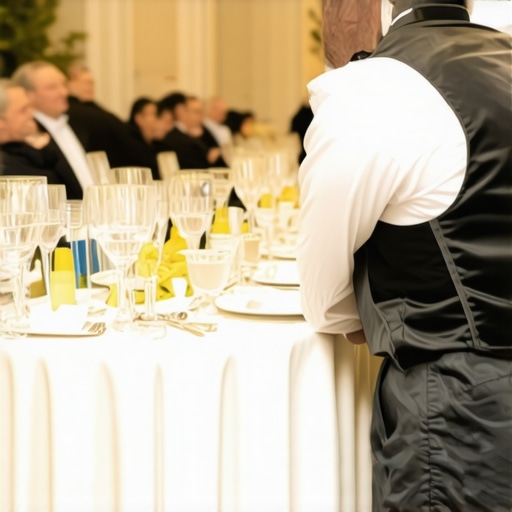
The service trap most planners fall into
The biggest mistake isn’t just about the noise; it’s about the energy. When you how to staff a 200 person reception with only 12 professionals, every movement must be calculated. I once worked an event where the lead server was also trying to manage the kitchen, which led to a total breakdown in floor timing. This is why your lead server should never be the one managing the kitchen; they need to be the ‘conductor’ of the room, sensing the acoustic and emotional shifts of the guests. If they are stuck behind a swinging door, the guest experience suffers. Have you ever fallen into this trap where you thought more resources would solve a fundamental planning flaw? Let me know in the comments.To keep that ‘perfect’ sound from drifting into chaos as the night progresses, I have started carrying a specialized tool that most planners ignore: a handheld digital sound level meter. My personal favorite is the Reed R8050, which allows me to track decibel levels in real-time without relying on my tired ears. This isn’t just about being a tech geek; it’s about data. When the room hits that 85dB threshold, I know it’s time to signal the servers to slow down their clearing or to adjust the dampers. You need to learn how to keep your event sound system from humming before the first guest even walks in, because once that buzz starts, it’s nearly impossible to find the ground loop mid-toast. Scaling this level of precision across multiple events requires a move toward the ultimate guide to corporate event catering logistics, where acoustics are treated with the same weight as the menu.
The Tech Stack That Saves Your Reputation
Beyond sound meters, I swear by wireless intercom systems for my lead servers. In a large, cavernous venue, shouting or hand signals look unprofessional and add to the noise floor. Using a discrete EarTec system allows the team to boost your corporate event with expert server techniques by coordinating plate drops in silence. This kind of mastering corporate event planning secrets to seamless success is what separates a high-end gala from a chaotic banquet hall. If you can’t communicate silently, you aren’t controlling the room; the room is controlling you.
How do I maintain acoustic quality across every event?
Maintenance is really about the ‘pre-flight’ checklist. I follow the standards set by the International Well Building Institute (IWBI), specifically their ‘Sound’ concept which focuses on managing internal noise. Before the doors open, I perform a ‘clap test’ in the four corners of the room. If I hear a flutter echo, I know I need to reposition a floral hedge or a draped partition. You should also optimize server efficiency to enhance event satisfaction by ensuring they aren’t stacking dishes in the event space. #IMAGE_PLACE_HOLDER_D# Looking ahead to 2026, I predict we will see the rise of ‘Acoustic Zoning’ using directional ultrasonic speakers that can play music for the dance floor while leaving the dining tables in a pocket of relative silence. It’s an exciting leap that will finally end the war between the DJ and the guests who just want to talk. If you want to elevate your next event immediately, try this: Run a ‘silence drill’ with your catering team 15 minutes before guest arrival to identify every squeaky floorboard or humming refrigerator—it’s a game changer.
Hard Truths About Echoes and Enormous Rooms
After a decade in the field, I’ve realized that the most expensive decor in the world can’t hide the sound of a bad room. The ‘vibe’ of a party is actually a delicate balance of frequencies. One of my biggest lightbulb moments was realizing that silence isn’t an absence of noise, but a presence of control. When you recognize the difference between a staffing agency and a service partner, you stop hiring bodies and start hiring a team that understands acoustic etiquette. Another lesson? Never trust a venue’s ‘good acoustics’ claim during an empty tour; 150 bodies change everything. Finally, remember that your catering team is your most mobile ‘sound dampener.’ If they are trained well, they become ghosts who ensure the focus remains on the planning the ultimate wedding reception meal without the clatter of silverware interfering.
My Secret Arsenal for Silent Service
To keep my sanity and the room’s decibels in check, I rely on a few specific tools. I always cross-reference my planning with an essential checklist for successful corporate event catering that includes a dedicated sound-check phase. For gear, the Reed R8050 sound meter is non-negotiable for monitoring peak noise levels. I also recommend studying the Sound standards from the International Well Building Institute; they provide a scientific framework for managing ambient noise that most planners ignore. For team communication, EarTec wireless headsets allow us to execute top server tips to elevate your event experience without a single shouted word.
The Sound of Your Success
Don’t let a soaring marble ceiling intimidate you into hosting a loud, chaotic event. By focusing on textures, training your staff in silent service, and auditing the room’s physical layout, you can create an atmosphere where every toast and every whisper is heard perfectly. When you apply the ultimate guide to corporate event catering logistics with an ear for acoustics, you elevate the entire guest experience from standard to extraordinary. It’s time to stop just looking at your venues and start listening to them. Have you ever been at an event where the background noise made it impossible to talk? Let me know in the comments how you handled it!