

I remember standing in a drafty ballroom five years ago, watching a nervous volunteer fill a glass of expensive Cabernet to the very brim—right before it tipped onto a platinum donor’s silk tie. It was a disaster. Not just because of the dry cleaning bill, but because the atmosphere of luxury we had worked so hard to build evaporated in a single, sloppy splash. That night, I realized that at a corporate fundraiser, the wine is never just a beverage. It is a social lubricant, a token of appreciation, and a silent indicator of your organization’s professionalism. If the service is clunky, the whole mission feels a little less stable. Today, I am going to share the exact strategies I learned from that failure so you can ensure your wine service drives donations rather than distractions.
Why Polished Wine Service is Your Best Fundraising Tool
The difference between a mid-level mixer and a high-impact gala often comes down to the details of the pour. When you hire the best-trained corporate event servers for 2025, you aren’t just paying for hands to hold bottles; you are investing in the guest experience. I once made the mistake of thinking ‘anybody can pour wine,’ only to realize that an untrained hand will over-pour, wasting your budget and leaving guests with warm, unappealing glasses. According to a study by the Chronicle of Philanthropy, the physical environment and the quality of hospitality at an event directly influence the ‘perceived value’ of the cause, which can significantly sway on-site pledging decisions. By implementing expert server techniques, you create an effortless flow that allows donors to focus on your keynote instead of flagging down a refill. Have you ever been to a ‘black-tie’ gala only to be served lukewarm wine in a chipped glass? It’s a mood-killer that’s hard to recover from.
Is Professional Service Actually Worth the Extra Budget?
It is easy to look at the line items and wonder if you can trim costs by using volunteers or a basic staffing agency. However, understanding the real cost of open bars vs. drink tickets and high-end service is about more than just the hourly rate. A pro knows the ‘silent’ service cues—how to refill a glass without interrupting a conversation and how to manage the temperature of a delicate Pinot Noir in a crowded room. I’ve found that spotting a professional server in seconds is usually as simple as watching their posture and their bottle grip. When your staff is sharp, your organization looks sharp. We are going to dive into the logistics of glassware, temperature, and the psychology of the pour to make sure your next event is remembered for its mission, not its messy bar service.
Control the Logistics Before the First Bottle Opens
Nothing ruins a $500-a-plate experience faster than a lukewarm Chardonnay. I remember a tech launch in 2019 where the catering team pre-poured sixty glasses of white wine and left them on a tray under stage lights for twenty minutes. By the time the CEO finished her intro, the wine looked and tasted like flat apple juice. To avoid this, your team must treat temperature like a non-negotiable contract. White wines need to be pulled from the ice no more than five minutes before service, and red wines should never be stored near the heat of a kitchen pass. This is where corporate event catering logistics come into play; you need a dedicated cooling station hidden from guest view but accessible enough for quick swaps.
Stop the Tray Chaos with Zoned Service
Imagine a game of Tetris where the blocks are expensive crystal and the floor is a minefield of silk dresses. That is what a poorly managed wine service looks like. Instead of having servers wander aimlessly, divide the room into zones. Each server should ‘own’ a specific set of tables. This creates a sense of accountability and allows them to anticipate needs before the guest even realizes their glass is low. I once saw a lead server try to manage the entire floor and the kitchen at the same time—it was a disaster. It is a fundamental rule that your lead server should never be the one managing the kitchen. Their eyes must be on the donors, spotting the subtle tilts of a glass that signal a refill is needed.
Calculate Your Glassware to Avoid the Mid-Event Panic
There is a specific, sinking feeling that happens when you realize the dishwasher is backed up and you have 200 thirsty guests waiting for a toast. I always use a 2.5 glass-per-person ratio for a standard two-hour mixer. Why? Because people set glasses down, forget which one is theirs, and grab a fresh one. If you are aiming for a luxury atmosphere, you cannot ask a guest to reuse a glass. This level of detail is part of the server skills that make every event stand out. A pro will clear abandoned glasses instantly, keeping the room looking sharp and the donation cards visible on the table.
Audit the Staffing Ratio for Seamless Pours
If you want the service to be ‘invisible’—meaning the wine simply appears without a conversation being interrupted—you cannot skimp on the headcount. For a high-impact VIP dinner, you should audit your server-to-guest ratio to ensure you have at least one server for every ten to twelve guests. Anything higher and you move from ‘proactive service’ to ‘reactive survival.’ I have managed events where we tried to stretch a 1:20 ratio, and the result was guests standing up to find the bar—a cardinal sin in fundraising because every moment a guest is out of their seat is a moment they are not engaged with your mission. Implementing expert server techniques like the silent refill ensures the focus stays on the stage, not the beverage.Most event planners believe that a ‘heavy pour’ is a sign of generosity that makes donors feel valued. In my experience, it is exactly the opposite. When a server fills a wine glass to the brim, they are not being generous; they are being amateur. A glass filled past its widest point prevents the wine from oxidizing properly, meaning the expensive bouquet you paid for never reaches the guest’s nose. A study published in the Cornell Hospitality Quarterly highlights that precision in service—what we call ‘the art of the measured pour’—is a significant driver of ‘perceived luxury.’ Guests are more likely to donate to an organization that demonstrates mastery over small details. This is precisely where the advantage of hiring servers who specialize in French service becomes clear; it is a style that prioritizes the guest’s sensory experience over mere volume. By utilizing corporate event catering strategies for success, you shift the focus from ‘getting everyone a drink’ to ‘curating an atmosphere of excellence.’ 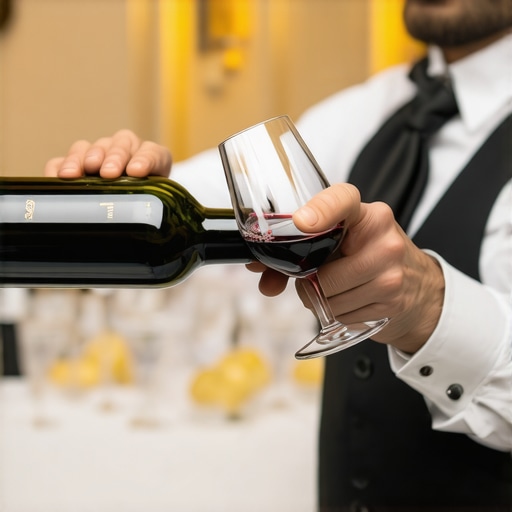
Why does your server lead need to stay out of the kitchen?
The most common mistake I see at high-level galas is a ‘missing’ lead server. You will often find them in the back, arguing with the chef or checking plate counts. This is a fatal tactical error. Why your lead server should never be the one managing the kitchen is because they are your eyes on the floor. They should be identifying which donor looks frustrated, which table is waiting too long for water, and which glass is nearing the ‘danger zone’ of emptiness. When you audit your server-to-guest ratio for VIP dinners, the goal is not just to have more hands; it is to ensure your lead has the freedom to provide anticipatory service—solving problems before the guest even notices them.
The hidden scent trap that destroys your premium wine selection
I have seen $50,000 floral budgets wasted because the planner did not account for the ‘aroma environment.’ The hidden danger of using scented candles at the dinner table is that they act as a sensory wall, blocking the guests’ ability to enjoy the nuances of the meal and the wine. If the room smells like pumpkin spice, that delicate Pinot Noir you selected will taste like nothing. Similarly, why you should never use tall centerpieces for networking mixers is not just about sightlines; it is about physical and sensory barriers. Professional server skills that make every event stand out include the ability to read the room and mitigate these distractions. Service should be a seamless backdrop to your mission, not a series of hurdles for your guests to jump over. Have you ever fallen into this trap? Let me know in the comments.
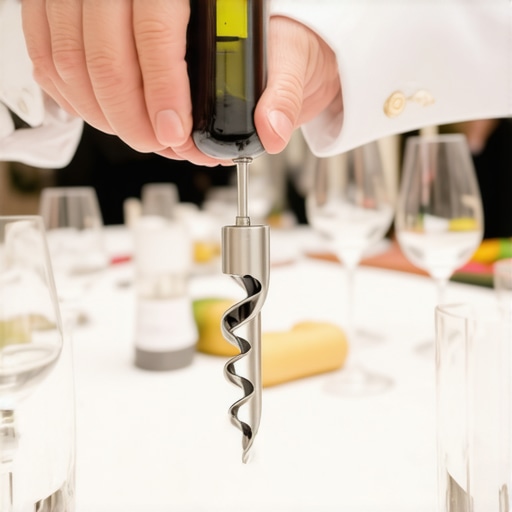
I’ve learned the hard way that even the best servers lose their edge without the right gear. I never let a team hit the floor without a high-quality ‘Waiter’s Friend’—the double-hinged corkscrew is non-negotiable for speed and elegance. In fact, why your event server should always carry a lighter and a proper corkscrew is about more than just utility; it is about preparedness for any guest request. For me, the ‘tool’ that changed everything was a simple shared digital inventory sheet. By tracking bottle counts in real-time on a mobile device, we stopped ‘losing’ cases in the transition from the loading dock to the bar, which is a critical part of an essential checklist for successful corporate event catering.
The physical tools that make a $20 bottle taste like $200
Beyond the corkscrew, I swear by rapid-chill sleeves and laser thermometers. According to the Wine & Spirit Education Trust (WSET) Level 2 technical standards, serving a red wine just five degrees too warm can over-emphasize the alcohol and mask the fruit. I’ve started using handheld laser thermometers to spot-check bottle temperatures before they leave the prep station. This level of precision is how you start optimizing server efficiency to enhance event satisfaction. When you have 500 guests, you can’t touch every bottle, but you can audit the zones. If you are aiming for mastering corporate event planning secrets to seamless success, you have to treat your bar equipment with the same reverence a chef treats their knives.
How do I keep my service standards consistent year after year?
Consistency isn’t a result of luck; it’s a result of a repeatable ‘pre-flight’ ritual. Before every gala, I host a mandatory 15-minute briefing. I make sure your server lead has a copy of the event script and that every staff member knows the exact pour line for the evening’s glassware. Knowing how to organize a staff meeting before a 500-person dinner ensures that the ‘invisible service’ we strive for doesn’t break down by the third hour. We use a ‘shadow training’ system where new hires are paired with veterans for the first two hours of a mixer to absorb the subtle cues of high-end hospitality. This long-term investment in training is what builds a reputation for excellence that carries you through the busy season.
Expect tech and sustainability to redefine the gala bar by 2026
Looking ahead, I predict a massive shift toward ‘smart’ inventory and ultra-personalized service. We are already seeing wine dispensers that use RFID technology to track guest preferences at high-end corporate retreats. While some fear this replaces the human touch, I believe it empowers servers to spend less time pouring and more time engaging with donors. Furthermore, sustainability is becoming a major factor in guest perception. I recommend switching to lightweight glass or high-end recycled crystal to align with the values of modern donors. If you want to impress your board members immediately, try the ’15-minute chill’ rule: put your Pinot Noirs in the cooler for 15 minutes before the doors open. It tightens the structure and shows you actually care about the product. Give it a shot at your next mixer and watch how much faster those bottles disappear.
Hard-Won Lessons from the Bottom of a Wine Glass
Reflecting on a decade of events, I’ve realized that donors don’t just give to a cause; they give to a feeling. If that feeling is interrupted by a clumsy server or a warm glass of Chardonnay, the magic of the evening starts to fray. One of my biggest lightbulb moments was realizing that service is silent marketing. When a donor never has to look for a server, they feel cared for, which subconsciously increases their trust in your organization. I’ve also learned that the the difference between a staffing agency and a service partner is often measured in how they handle a mistake before you even see it.
Another hard truth? Volunteers are for the registration desk, not for the wine service. I once tried to save $1,000 by using student volunteers, only to lose three times that in wasted wine and broken glassware. Professional servers understand the ‘theatre’ of the event. They know that top server tips to elevate your event experience aren’t just suggestions—they are the blueprints for a high-yield night.
The Toolkit I Use to Guarantee a Flawless Pour
I never walk into a venue without a few specific resources that keep the team sharp. First, I recommend The Wine Bible by Karen MacNeil for any lead server; it’s the most comprehensive way to understand what you are pouring. For physical tools, I swear by the Pulltap’s Double-Hinged Waiter’s Friend because its leverage prevents the embarrassing ‘pop’ or broken cork in a quiet room. I also keep a handheld laser thermometer in my bag to spot-check bottle temps. These tools, combined with corporate event catering strategies for success, ensure that every guest has a premium experience from the first sip to the last toast.
Service is the Heartbeat of Your Mission
As you plan your next event, remember that the wine service is not a background detail—it is the foundation of your guest’s comfort. By focusing on temperature, timing, and the psychology of the pour, you are telling your donors that their experience matters as much as their contribution. Don’t be afraid to demand excellence from your catering team. When you know how to spot a bad lead server in the first 10 minutes of an event, you can pivot quickly and protect the integrity of your night. Your mission deserves a service that matches its importance. What is the one service detail that usually stresses you out the most during a high-stakes fundraiser? Let me know in the comments below.