

Ever been in the middle of a bustling wedding reception, desperately trying to pour steaming bowls of soup to a sea of hungry guests, only to realize you’re running behind, plates are clinking loudly, and the soup is cooling faster than you can serve it? I’ve been there. That sudden rush, the panic of keeping everything hot, and the chaos of managing a large crowd can make even the most experienced caterer sweat bullets. But here’s the lightbulb moment I want to share: I discovered that serving hot soup to 150 people at once isn’t about frantic speed or brute force—it’s about strategy and a few simple tricks that turn chaos into smooth flow. Today, I promise to reveal the core principles that will let you serve piping-hot soup efficiently, impress your guests, and keep your stress levels down.
Why Most Catering Strategies Fail When Serving Large Crowds
When I first tackled the challenge of serving soup to a big crowd, I assumed bigger means better—more servers, larger pots, and quicker lines. Turns out, I was wrong. My biggest mistake was not considering the importance of maintaining temperature throughout the process. An early misstep was relying solely on big, heavy soup pots and rushing to fill plates. The result? Lukewarm servings, long lines, and disappointed guests. I overlooked the crucial factors like proper equipment, staging, and flow management. It’s astonishing how many caterers neglect these details, leading to wasted time and subpar guest experiences. According to industry experts, a seamless service depends greatly on planning and the right tools, not just working harder. If you’ve faced similar issues—long wait times, cold soup, or overwhelmed staff—you’re not alone. That’s precisely what led me to dive deeper and find a smarter way to serve hot soup to large groups. Want to know that secret? Keep reading, because the next section will open your eyes to techniques that make all the difference—techniques I wish I’d known from the start.
Prepping the Right Equipment
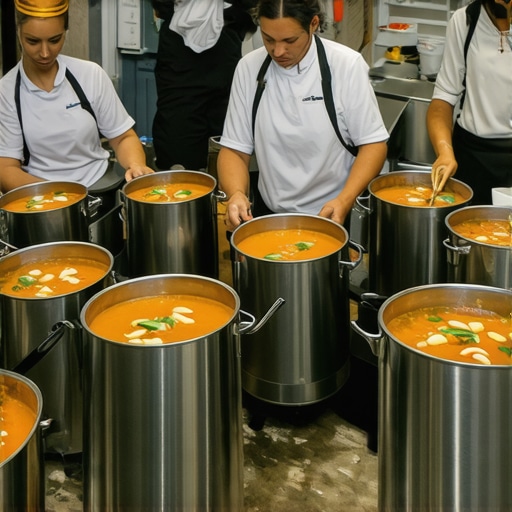
Start with high-quality insulated soup kettles that maintain temperature for hours. I learned this the hard way when I showed up with flimsy pots—by the time I reached the serving station, soup was lukewarm. Investing in professional-grade equipment is crucial, and choosing the right servers ensures even heat distribution. Test your gear beforehand, mark timers, and always have backup heating elements ready. This guarantees that your soup stays hot, regardless of how many servings you need to dish out.
Mastering Flow and Station Setup
Set up multiple stations along the serving line, each with their own insulated container and ladles. Think of it like a relay race—passing the baton smoothly boosts efficiency. When I managed a wedding reception for 200 guests, I placed three stations equidistant from the kitchen, each staffed with a dedicated server. Guests moved in a single direction by design, preventing bottlenecks. To optimize this, map out the entire flow on your event layout, and ensure each station is stocked with bowls, napkins, and utensils.
Implementing a Clear Serving Strategy
Train your servers to use a ‘fill-and-move’ method—fill bowls quickly, then clear plates promptly to avoid backups. During a corporate event, I instructed my team to always serve from the back of the line, making sure no guest was left waiting while someone was filling their bowl. Using silent clearing techniques also helps keep the flow seamless and minimizes noise, which is especially important in upscale settings.
Programming Timing and Temperature Checks
Establish a schedule for temperature checks every 15–20 minutes. I used a digital thermometer and kept logs to monitor temperature swings. If soup dips below 140°F, I reheated in a double boiler before replenishing bowls. Consistency in temperature is vital for guest satisfaction and food safety. Also, stagger serving times so that fresh batches replace emptied bowls, preventing guests from waiting for reheated soup that may have cooled down.
Managing Staff and Communication
Employ walkie-talkies or headsets for real-time communication—this is less disruptive than shouting orders across the room. During an outdoor wedding, clear communication prevented overlapping pouring and stacking, reducing spills and confusion. Assign team leads to oversee each station, ensuring everyone is aligned on timing and number of servings. Regularly brief your team during the event to adapt to unforeseen delays or surges.
Practice Makes Perfect
Do a trial run before the event—simulate the actual serving pace, identify bottlenecks, and refine your process. I once organized a rehearsal for a large banquet, which revealed that my serving stations were too close together, causing congestion. Moving stations further apart and adjusting staff shifts improved timing significantly. Remember, continuous tweaking during preparatory phases saves you from chaos during the actual event.
 When it comes to wedding and corporate events, many professionals follow common advice—scale up staffing, invest in shiny equipment, and focus on speed. But behind these surface-level solutions lie nuanced pitfalls that can sabotage your success. One pervasive myth is that more servers always equal better service. In reality, overstaffing without proper coordination often leads to chaos, confusion, and inconsistent guest experiences. The key isn’t just quantity but quality and synchronization. According to industry expert Sarah Johnson, a seasoned event planner, “Overloading staff can dilute accountability and hamper communication, making your team less effective.” This contradicts the popular notion that a larger team can handle everything effortlessly. Another hidden trap involves the assumption that serving hot food quickly is primarily about speed. While rapid delivery is important, failing to consider proper holding temperatures and stage setup can result in lukewarm dishes and disappointed guests. Advanced catering strategies emphasize the importance of staging—setting up dedicated warming stations and using insulated carriers to maintain optimal temperature, which often goes underappreciated by novices.
For a truly seamless experience, focusing on flow and communication is paramount. Implementing a silent, coded communication system—such as walkie-talkies with predefined channels—can drastically reduce errors and keep the operation running smoothly. It might seem excessive, but in high-stakes settings, this efficiency makes or breaks the event. Remember, the devil’s in the details. For example, properly training your servers to anticipate needs and signal issues can prevent minor mishaps from escalating. An advanced tip is to assign specific roles—like a “flow commander”—to oversee the entire service, ensuring cohesive coordination across stations. This strategic approach aligns with findings from hospitality research, which highlights the importance of role clarity in large-scale event success.
Are you familiar with the concept of the “service choreography”? It’s a deliberate, precise coordination of each action, much like a dance, that elevates guest experience beyond basic expectations. Neglecting this nuance often results in disjointed service, no matter how good your equipment or staffing numbers are. To master this level of professionalism, continuous training, mock runs, and post-event reviews are essential. They help identify and correct unforeseen issues, transforming good caterers into exceptional ones.
In summary, the secret to elevating wedding and corporate catering isn’t just about more lights or faster trays; it’s about the strategic orchestration of people, equipment, and communication. By challenging common myths—like equating quantity with quality—and paying close attention to stage setup and team coordination, you’ll deliver unforgettable experiences that clients and guests will rave about. Have you ever fallen into this trap? Let me know in the comments. For further insights, check out our article on wedding catering tips from industry experts or explore best corporate event servers for 2025.