

I’ll never forget the time I stood in a gorgeous, sun-drenched ballroom on a Tuesday morning, thinking I had it all figured out. It was quiet. It was serene. It was perfect. Fast forward to the actual event—a high-stakes corporate launch at 7:00 PM on a Friday. Suddenly, the ‘serene’ space was vibrating from a bass-heavy club next door that I hadn’t realized shared a wall, and the ‘soft lighting’ I’d planned was fighting against a massive neon sign across the street that flickered right into the CEO’s eyes during the keynote. I felt like a total rookie, even though I’d been in the game for years. That night, I learned a lesson that changed my entire workflow: your venue simply isn’t the same place at noon as it is at night. If you want to avoid these heart-stopping surprises, you need to sync your site visits with your actual event clock.
Stop Touring Empty Rooms at 10 AM
Most of us fall into the trap of scheduling site visits when it’s convenient for our work day. We pop in after coffee, check the outlets, and sign the contract. But a venue is a living, breathing ecosystem that shifts with the clock. When I made that mistake early in my career, I ignored how the neighborhood traffic patterns would affect my detailed load-in schedule. At 10:00 AM, the loading dock was empty; at 5:00 PM, it was a war zone of delivery trucks and double-parked cars. By insisting on a walkthrough at the same time as your event, you catch the ‘ghosts’ of the building. You see where the sun creates a blinding glare on the presentation screen or how the air conditioning struggles once the sun hits the west-facing windows. You should always follow a 5-step process for vetting a new event venue, but the timing is the secret sauce that makes that checklist actually work.
Is a Syncing Your Walkthrough Really Worth the Extra Effort?
I know what you’re thinking. Getting a venue manager to meet you at 8:00 PM on a Saturday is like pulling teeth. You might feel like you’re being ‘difficult.’ But let me tell you, being the ‘difficult’ planner is much better than being the planner whose guest of honor can’t be heard over a nearby train. Research published in the Journal of Environmental Psychology suggests that environmental stressors like unexpected noise or poor lighting don’t just annoy guests; they actively diminish social interaction and cognitive performance. If you don’t spot a venue with bad acoustics during the peak noise hours of the day, you’re setting your speakers up for failure. Have you ever walked into a space you thought was perfect, only to realize the vibe was completely different once the sun went down? I want to hear your horror stories. Today, I’m going to show you how to audit everything from the sound check to the shadows so your next event goes off without a hitch.
Audit Your Venue Like a Forensic Investigator
To move from a passive observer to an active planner, you need to treat your site visit like a crime scene investigation—except you’re trying to prevent the “crime” of a failed event. This isn’t just about walking around and checking the bathroom cleanliness; it’s about pressure-testing every square inch of the property during the specific hours your guests will actually be present. This level of forensic scrutiny is what separates a standard organizer from someone mastering corporate event planning secrets to seamless success. You aren’t just looking at what is there; you are looking for the failures that haven’t happened yet but are lurking in the shadows.
Watch How the Light Changes the Mood
Lighting is the most powerful tool in your kit, but it’s also the most volatile. A room that feels airy and open at noon can feel like a hospital cafeteria by 6 PM if you’re relying on the wrong fixtures. I recall a tech launch in an industrial warehouse where I failed to account for the setting sun. At exactly 5:15 PM, a beam of light sliced through the room, hitting the main LED screen and completely washing out the product reveal animation. We spent twenty minutes frantically taping cardboard over a clerestory window while the client watched. It was messy, and it looked amateur. If we had visited at 5 PM during the site visit, we would have seen that ‘laser beam’ coming. Now, I always use 4 lighting tricks to make a concrete warehouse look warm while ensuring the sun doesn’t sabotage the visuals. If you’re in a more traditional space, you need to know how to light a hotel ballroom without that yellow glow that makes everyone look tired in photos.
Map the Path of Least Resistance for Staff
Think of your venue’s service corridors as the vital arteries of your entire event. If these pathways are narrow, cluttered, or shared with guests, the whole ‘body’ of the party slows down significantly. You need to coordinate server movements to prevent hallway traffic jams long before the first appetizer tray leaves the kitchen. During your walkthrough, don’t just stand in the center of the room. Go to the kitchen exit. Is there enough room for two servers carrying large trays to pass each other without a collision? If not, you’re looking at a logistical bottleneck that will inevitably lead to cold food, shattered glass, and frustrated guests. This logistical audit is a non-negotiable part of the ultimate guide to corporate event catering logistics. An analogy I use with my team: a venue is like a computer’s motherboard, and your staff is the RAM. If the physical infrastructure is too limited, your processing power will max out and the whole experience will lag.
Test Your Audio Under Real-World Stress
A room that sounds perfectly fine when it’s empty often develops a maddening ‘hum’ once the high-voltage catering equipment and stage lights are fully powered up for the show. I’ve seen million-dollar galas ruined by a persistent buzz in the speakers that simply wasn’t audible during the morning walkthrough. To protect your program, you must learn how to keep your event sound system from humming by testing the exact power circuits you’ll be using. This also means checking for external noise leaks that a silent morning visit would miss—like a nearby kitchen’s industrial ice maker or a neighboring suite’s sound system—that might kick on right in the middle of the CEO’s keynote. This forensic approach ensures the environment supports your message rather than distracting from it.
But forensic auditing goes beyond the walls and the wires; it extends to the very people who will be executing your vision. We often assume that hiring a reputable catering company means the service will be flawless, but I’ve learned that the structure of the team is just as important as the quality of the appetizers. One of the most common myths in our industry is that more staff always equals better service. In reality, an overstaffed room creates a frantic energy that guests can feel. Instead of blindly increasing numbers, you need to vet your caterer’s server-to-guest ratio before you book to ensure the team is lean, efficient, and well-managed.
Why Throwing More Servers at a VIP Dinner Often Backfires
Everyone says a 1:10 ratio is the gold standard for high-end events, but in my experience, a massive, uncoordinated team is just a recipe for chaos. I once managed a gala where the client insisted on double the recommended staff. The result? Servers were literally bumping into each other, and the ‘invisible service’ we aimed for became a constant, distracting presence. A 2022 study published in the International Journal of Hospitality Management highlights that “invisible service”—where needs are met without guest interruption—is the highest-rated metric for luxury event satisfaction. This is why auditing your server-to-guest ratio for VIP dinners is less about the headcount and more about the precision of the team. You want pros who know how to move like a shadow, not a crowd. Have you ever fallen into this trap of overstaffing? Let me know in the comments.
How Many Professionals Do You Actually Need for a 200-Person Reception?
The secret isn’t just in the total number of bodies; it’s in the leadership hierarchy. A common mistake is letting the person in charge of the floor also try to manage the kitchen. This is a fatal flaw. You need a clear division of labor, which is why your lead server should never be the one managing the kitchen. When the floor lead is stuck behind the swinging doors arguing about garnish, there is no one to spot the guest with the empty water glass or the subtle cues of a brewing logistical bottleneck. If you can staff a 200-person reception with only 12 professionals, you’re operating at a level of efficiency that most planners never reach. It’s about quality over quantity every single time.
The Trap of Being Too Efficient with Clean-Up
Here is a nuance that even veterans miss: being too efficient can actually ruin the guest experience. I call this the “vulture effect.” This happens when you don’t train your team on how to keep your event servers from clearing plates too early. We’ve all been there—you put your fork down for one second to make a point in a conversation, and *whoosh*, your half-eaten steak is gone. It makes guests feel rushed and signals that the party is over before they’re ready. To avoid this, look for 3 signs your event server is a pro within seconds of meeting, such as their ability to read body language rather than just looking for empty ceramic. This is also why I’ve pivoted toward the small plate trend, which naturally reduces the pressure of clearing large, half-finished entrees. By focusing on smaller, high-quality portions, you can prevent the empty plate look at minimalist buffets while maintaining a steady, relaxed flow of service throughout the night.
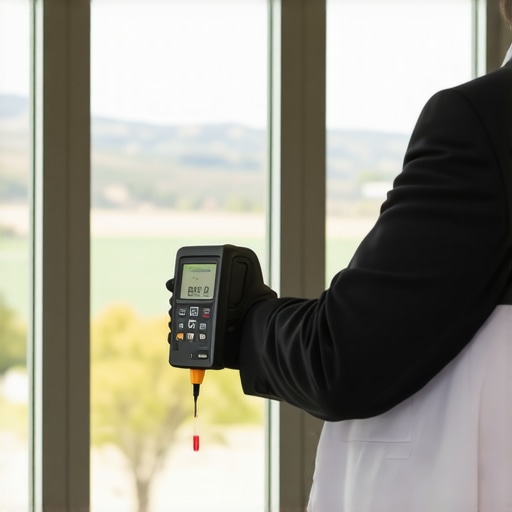
Maintaining that high-level polish isn’t just about the first hour of the party; it is about having the right tools to monitor the environment as it evolves. I’ve seen many planners rely on their ‘gut feeling,’ but I prefer data. I never step into a venue without a handheld LUX meter and a dedicated decibel tracking app. Why? Because your eyes and ears adjust to the environment, making you a poor judge of creeping noise levels or fading light. If you want to be optimizing server efficiency to enhance event satisfaction, you need to provide your team with an environment that doesn’t force them to shout over the music or squint to find a guest’s bread plate.
Stop Guessing and Start Measuring with These Pro Tools
The most important tool in my kit isn’t a fancy iPad—it’s a physical roll of gaffer tape and a laser distance measurer. I use the laser to verify the floor plan dimensions myself because, believe it or not, venue PDFs are notoriously inaccurate. If a hallway is six inches narrower than the drawing shows, your plan to coordinate server movements to prevent hallway traffic jams goes right out the window. For lighting, I follow the standards set by the Illuminating Engineering Society (IES) in the ANSI/IES RP-1-20 documentation. If my LUX meter shows the ambient light in the dining area is dipping below the recommended levels for safety and comfort, I know I need to adjust the dimmers before the first course is even served. This technical precision is one of the biggest mastering corporate event planning secrets to seamless success that I can share with you.
How do I maintain a consistent guest experience across every event?
Consistency is the hallmark of a pro, and it comes down to a rigorous post-event audit. Every single time I finish a gala or a wedding, I review my essential checklist for successful corporate event catering and mark where the friction points occurred. Did the bar get congested? Was the trash visible? I’ve found that using cloud-based project management tools like Asana or Trello to build a ‘Living SOP’ (Standard Operating Procedure) for each recurring venue is the only way to scale. You shouldn’t have to remember that ‘Outlet 4 in the North Ballroom’ is finicky every year; your system should tell you that automatically during the planning phase. This is how you implement effective catering strategies for corporate event impressiveness without burning out your internal team.
The Future of Planning Involves Heat Maps and Data
Looking ahead, I predict we are going to see a massive shift toward real-time guest analytics. I’m already experimenting with low-energy Bluetooth beacons to track guest density during cocktail hours. Imagine knowing exactly when to open the second bar because a heat map on your phone shows a bottleneck forming in the corner. This kind of data-driven approach will soon be the standard for corporate event catering strategies for success. It removes the guesswork and allows you to be proactive rather than reactive. If you see a crowd gathering, you can deploy your best corporate event servers for 2025 to that specific area before the guests even realize they’re waiting too long. I challenge you to pick one technical metric—whether it’s light levels or hallway width—and measure it at your very next site visit. You’ll be shocked at what your eyes were missing.
Lessons That Only a 3:00 AM Pack-Out Can Teach You
After twenty years in the trenches, I’ve realized that the most important thing you bring to a venue isn’t your clipboard—it’s your peripheral vision. You have to learn to see the things that aren’t on the floor plan. For instance, I’ve learned that the energy of your team is contagious; if you focus on optimizing server efficiency to enhance event satisfaction, you create a calm environment where guests feel cared for rather than processed. Another hard-won truth: your ‘gut feeling’ is usually just your subconscious recalling a previous disaster. By keeping a digital log of every venue quirk, you stop making the same mistakes and start mastering corporate event planning secrets to seamless success that others simply miss. Lastly, the sound of the kitchen is the heartbeat of the party—if it’s silent ten minutes before service, something is very wrong.
The Kit I Never Leave the Office Without
To achieve forensic-level detail, I rely on a few specific pieces of gear that take the guesswork out of the equation. First, a handheld LUX Light Meter is my go-to for ensuring the mood is consistent throughout the night. Second, Asana serves as my ‘Living SOP’ for venue-specific quirks, such as which outlets share a circuit with the kitchen’s industrial fridge. Lastly, I always keep a laser distance measurer in my pocket—because if a hallway is six inches narrower than the CAD drawing, your server flow is compromised. These tools are the backbone of my corporate event catering strategies for success and give me the confidence to handle any surprise.
Turning Your Vision Into a Flawless Reality
Stepping into a venue with a critical eye might feel like extra work, but it’s actually the ultimate gift you give to your clients and yourself. It’s the difference between a night spent ‘putting out fires’ and a night spent watching your hard work come to life exactly as you imagined it. You now have the tools, the tech, and the forensic mindset to make your next event truly legendary. If you’re ever in doubt about the logistics or need a team that shares this level of obsession with detail, don’t hesitate to contact us to discuss your next big project. What’s the one ‘ghost’ in a venue that nearly ruined your event? Share your story in the comments below!