

I’ll never forget the cold sweat that broke out across my forehead during a 300-person wedding in 2018. I was slammed, the music was deafening, and I’d just handed a vibrant, salt-rimmed margarita to a kid who looked about fourteen. My heart stopped. I’d made the classic rookie mistake: I assumed the adults at the table would police themselves. They didn’t. That moment of panic—realizing I had just risked my career and the venue’s reputation—changed how I look at bar service forever. We all want our events to be joyous and carefree, but a single lapse in judgment at the bar can turn a dream night into a legal nightmare. Today, I’m going to show you how to maintain a high-energy atmosphere while keeping things strictly legal, drawing from years of trial, error, and some very close calls. [IMAGE_PLACEHOLDER]
Your Professional Reputation Relies on a Solid ID Strategy
Early in my career, I was too embarrassed to ask for ID if someone looked “close enough.” I thought it was rude or that I was interrupting the flow of the party. I was wrong. Relying on your “gut feeling” is the fastest way to get hit with a massive fine or lose your license entirely. When you are trying to calculate the real cost of an open bar, you have to factor in the liability that comes with every single pour. It’s not just about the inventory; it’s about the safety of every guest in the room. I’ve seen teenagers get incredibly creative, using everything from “my mom said it’s okay” to elaborate distractions during peak service hours. To counter this, your team needs to be unified. You can’t have one server being the “cool one” while the others follow the rules. This is where top server tips to elevate your event experience come into play—consistency is actually a form of premium service. It shows you care about the guests’ well-being more than a quick tip.
Does being strict make you the bad guy?
I used to worry that being the “ID police” would kill the mood, especially at fancy weddings or corporate galas. But here’s the truth: most guests actually appreciate seeing a professional bar. It signals that the event is well-managed and safe. In fact, according to the CDC, underage drinking is responsible for more than 3,900 deaths annually in the U.S., making our role at the bar a literal matter of life and death. If you set up a bar to avoid congestion in small rooms, you give your servers the physical space and the mental clarity to actually look at the people they are serving. Have you ever had that heart-stopping moment where you realized an underage guest was sipping a cocktail on your watch? Tell me I’m not the only one who’s had to sprint across a dance floor to snatch a drink back!
Make the ID Check Your Mandatory Ritual
When you are looking to boost your corporate event with expert server techniques, you have to treat the ID check like a pre-flight checklist. A pilot doesn’t skip the safety check because they’ve flown a thousand times; they do it because they know exactly what can go wrong if they don’t. In the heat of a busy reception, it is easy to let your guard down, but consistency is your only real protection. I tell my staff to card everyone who doesn’t look clearly over 40, but many of the best best corporate event servers for 2025 are moving toward a ‘universal carding’ policy. It removes the guesswork and the potential for bias. When a guest sees that every person in line is being asked for identification, they stop taking it personally. It becomes part of the event’s professional rhythm, much like the precision found in server skills that make every event stand out.
Lighting and Layout are Your Best Defense
Visibility is the enemy of underage drinking. I’ve seen so many planners fall into the common mistake of placing the bar in a back corner where the lighting is dim and the oversight is minimal. If a server is squinting at a driver’s license using their phone’s flashlight, the system has already failed. You need a dedicated light source at the pouring station specifically for verifying documents. This isn’t just about legality; it’s about speed. When you set up a bar to avoid congestion in small rooms, you create a clear line of sight between the server and the guests. This allows the team to scan the crowd and identify potential ‘pass-offs’—where an adult buys a drink and immediately hands it to a minor by the dance floor. 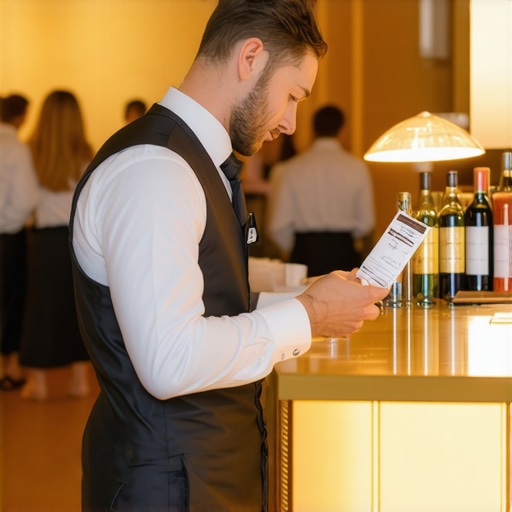
Don’t Fall for the Group Order Distraction
I learned this lesson the hard way at a high-stakes corporate gala in downtown Chicago. A group of five young-looking men approached the bar while I was slammed. One ‘alpha’ character did all the talking, ordering a round of complex cocktails and cracking jokes to distract me. It was a classic pincer move. While I was focused on his complicated order, the others were trying to blend into the background. I had to stop, put the shaker down, and firmly state that I needed to see all five IDs before I could even start the pour. The ‘alpha’ got annoyed, claiming they were all senior analysts, but I didn’t budge. It turned out two of them were interns who weren’t even twenty. Staying firm in that moment of high pressure is what separates a rookie from a professional. This level of discipline is essential when you manage corporate event catering strategies for success.
Why Your Lead Needs a View of the Whole Room
A common error is keeping your most experienced person stuck behind the bar pouring drinks. Instead, why a lead server should never be assigned a single table or a single station becomes clear during alcohol service. The lead needs to be a ‘floater.’ They should be the eyes and ears of the room, watching for signs of intoxication or suspicious behavior that a busy bartender might miss. This is a core part of optimizing server efficiency to enhance event satisfaction. When the staff knows a lead is watching the perimeter, they can focus on the technical side of the pour, knowing they have backup if they need to cut someone off or question a suspicious ID.
Why throwing more bodies at a service problem usually backfires
Most planners assume that a higher staff-to-guest ratio automatically equals better service. It sounds logical, right? But in my experience, overstaffing is often where the ‘bystander effect’ takes hold. When too many servers are hovering, they start to rely on each other to catch the details, and suddenly, no one is noticing the empty water glass at table twelve. This is why you must audit your server-to-guest ratio for VIP dinners with surgical precision. A lean, highly-trained team will always outperform a bloated, confused one. According to research from the Cornell School of Hotel Administration, guest satisfaction is more closely tied to the speed of the initial interaction than the sheer number of staff present. Efficiency is a byproduct of clear zones, not just more hands on deck.
The lukewarm water trap that kills first impressions
Here is a specific ‘oops’ factor I see even at high-end galas: the water service. You might think pre-pouring water is the secret to a fast service start, but if it is done thirty minutes before doors open, your guests are greeted by ‘sweating’ glasses and room-temperature water. It feels stagnant and neglected. A real pro knows that timing the pre-pour is a delicate dance. If you miss that window, you have lost the premium feel before the first course even arrives. This attention to detail is one of the primary signs your event server is a pro within seconds of meeting them. Have you ever fallen into this trap or seen it happen? Let me know in the comments! 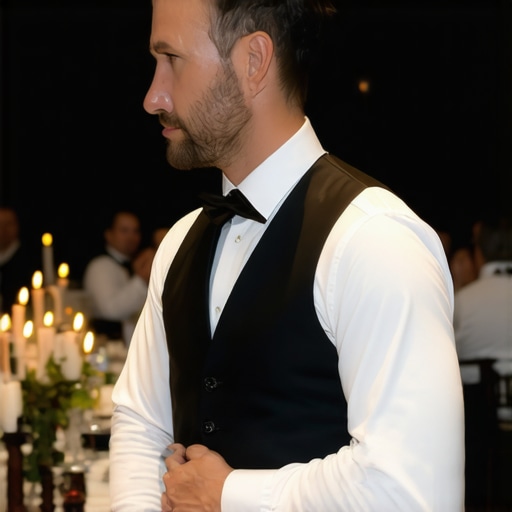
Should you ditch the standard 1:20 server ratio for something more aggressive?
For most events, 1:20 is the industry standard, but if you are looking to truly boost your corporate event with expert server techniques, you might need to move to 1:12 or even 1:10 for plated service. The nuance here isn’t just about speed; it is about anticipation. At a 1:10 ratio, a server can practically read a guest’s mind, noticing they have finished their bread before they even look for the butter. This level of synchronization requires a deep dive into your guide to corporate event catering logistics to ensure the kitchen can actually keep up with a staff that is moving that fast. If your back-of-house is not scaled to match your front-of-house speed, you will just create a massive bottleneck at the kitchen doors.
Scaling a business from small birthday parties to 500-person galas isn’t just about hiring more people; it’s about refining the infrastructure they stand on. I used to think a verbal briefing was enough, but I quickly learned that words disappear the moment the first tray of appetizers hits the floor. Now, I never start a shift without ensuring that why your server lead needs a copy of the event script is addressed. This document isn’t just a timeline; it’s a playbook that includes everything from the CEO’s favorite drink to the exact moment the kitchen needs to fire the main course. It is the backbone of mastering corporate event planning secrets to seamless success.
Stop Guessing and Start Scripting Your Events
I’ve found that the biggest drain on efficiency is “the huddle”—those tiny, unplanned meetings between servers asking “what happens next?” By giving everyone a clear script, you eliminate the mental load of uncertainty. This allows your team to focus on the high-level details, like how to choose the right staffing ratio for a vip event and sticking to it. In my experience, even the most seasoned pro can get flustered if the schedule is only in the lead’s head. According to the National Restaurant Association’s 2024 State of the Industry report, nearly half of all operators are now leaning into tech and standardized systems to combat labor shortages and maintain service quality. If you aren’t systematizing your communication, you’re leaving your reputation to chance.
The Pocket Gear That Saves Every Reception
You can tell a lot about a server by what’s in their pockets. I require my leads to carry what I call an “Event EDC” (Every Day Carry). This includes a high-quality wine key, a small notepad, and, crucially, a reliable flame. There is a specific reason why your event server should always carry a lighter—it’s not just for birthday candles. It’s for the centerpieces that went out, the guest who needs a light on the patio, or even the sternos that failed under the buffet. These small tools prevent the “I’ll be right back” walk of shame, which is the ultimate momentum killer. #IMAGE_PLACE_HOLDER_D#
How do I keep my team sharp for the 50th event of the season?
Maintaining high standards over a long wedding season is a marathon, not a sprint. The “burnout wall” usually hits in late October. To scale long-term, you have to build in a safety net. This is why I always insist that why your event budget needs a 10 percent contingency fund is a non-negotiable conversation with clients. That fund isn’t just for broken plates; it’s for the extra server you need to bring in when the team is exhausted, or the emergency ice delivery when the venue’s machine dies. For my wedding planners, I call it the why your wedding budget needs a 10 expect the unexpected fund. It buys you the peace of mind to make quick decisions when things go sideways. Try this at your next event: Give every staff member a 3×5 index card with the “top three priorities” for that specific night—like checking IDs at the satellite bar or clearing bread plates before toasts. You’ll be amazed at how much more focused the room feels when the goals are physical and present rather than abstract.
The Brutal Lesson I Learned About Saying No
Looking back at that 2018 wedding, I realized my biggest mistake wasn’t just the ID check; it was my mindset. I thought of myself as a ‘fun provider’ instead of a professional gatekeeper. Here is the shift that changed everything for me: You aren’t ‘ruining’ a guest’s night by asking for ID; you are protecting the venue, the host, and the guest themselves. One of the biggest myths about high-volume hospitality is that being strict makes you unpopular. In reality, the most respected pros are those who command the room with quiet, firm authority. My lightbulb moment happened when I realized that every drink served is a legal contract of trust. When you learn mastering corporate event planning secrets to seamless success, you see that safety isn’t a hurdle—it is the foundation of a truly premium experience.
The Field-Tested Tools I Swear By
If you want to stay sharp and legal, you need more than just a good memory. I always recommend new leads dive into an essential checklist for successful corporate event catering to ensure no legal detail or staffing requirement is missed. Beyond checklists, I trust the ‘Intellicheck’ platform for high-stakes bars where fake IDs are a sophisticated risk; it takes the guesswork out of a server’s hands. I also highly recommend ‘Setting the Table’ by Danny Meyer—it’s the book that taught me how to handle the most difficult ‘cut-offs’ with grace and empathy. Finally, you must understand the difference between a staffing agency and a service partner. A true partner will train their team on these specific legal nuances so you aren’t the only one watching the gate.
Take the Lead on Guest Safety
Safety is not a static checkbox; it is an ongoing conversation you have with your team and your clients before the first bottle is even opened. As you refine your approach to bar service, remember that the most successful events are the ones where every guest gets home safely. It takes courage to stand your ground when a VIP is pushing for ‘one last round’ after the bar has closed, but your professional integrity and the venue’s license are worth more than any single drink. Make sure why your catering contract needs a firm headcount deadline is a conversation you have early, ensuring you have enough staff to maintain oversight without burnout. You have the skills to run a high-energy bar—now go lead your team with the confidence of a true professional. Have you ever had a guest try to pull a fast one with a fake ID or a distraction tactic at the bar? How did you handle the situation without causing a scene? Let’s swap stories in the comments!