

I will never forget the look of sheer panic on a junior server’s face at a high-stakes corporate gala three years ago. I had spent weeks meticulously color-coding a spreadsheet of guest allergies, only to watch that same server offer a tray of walnut-encrusted prawns to a guest with a severe nut allergy. My heart skipped a beat, and in that moment of frantic intervention, I realized my ‘foolproof’ system was actually a clunky, over-complicated mess. The information existed, but it hadn’t traveled the final six feet from the paper to the person actually holding the tray. We dodged a literal medical emergency that night, but it changed how I approach team management forever. If you have ever felt that cold dread while watching a plate hit the table, you know that knowing the restrictions isn’t the same as communicating them effectively under pressure.
Stop Writing Manuals and Start Briefing for Retention
The biggest mistake I made early in my career was thinking that more information meant better service. I used to hand out ten-page packets that servers inevitably left in the breakroom. Today, I’m going to show you how to distill complex dietary needs into a punchy, five-minute briefing that actually sticks. We are going to solve the disconnect between the kitchen’s knowledge and the server’s execution so you can stop micromanaging every plate. When you master server skills that make every event stand out, you shift from being a firefighter to a conductor. It’s about creating a culture where every staff member feels personally responsible for guest safety, not just someone checking a box on a list. Have you ever had a moment where a dietary mix-up almost ruined a perfectly planned evening? I’d love to hear how you handled it.
Can you really cover everything in under five minutes?
It sounds impossible, especially when you have a guest list that looks like a chemistry textbook, but brevity is actually your best friend. Humans can only hold about four or five pieces of new information in their short-term memory at once. If you drone on for twenty minutes, they’ll remember the first thing you said and the fact that they need a coffee. By using a streamlined system, you ensure that the high-risk items—like anaphylactic allergies—don’t get lost in a sea of ‘prefers no onions.’ According to Food Allergy Research & Education (FARE), nearly 33 million Americans have food allergies, making this a high-stakes game every single time you open the doors. To keep things moving, why your event needs a dedicated staff member for dietary requests becomes a conversation about efficiency, not just extra payroll. You need to know how to spot a server who hasn’t been briefed on the menu before they ever reach a guest, which starts with a verbal ‘quiz’ during your huddle. If they can’t tell you what’s in the signature sauce in ten seconds, they aren’t ready to hit the floor. In the next section, I’ll walk you through the specific ‘Zone Method’ I use to categorize restrictions instantly.
Categorize Chaos with the Zone Method
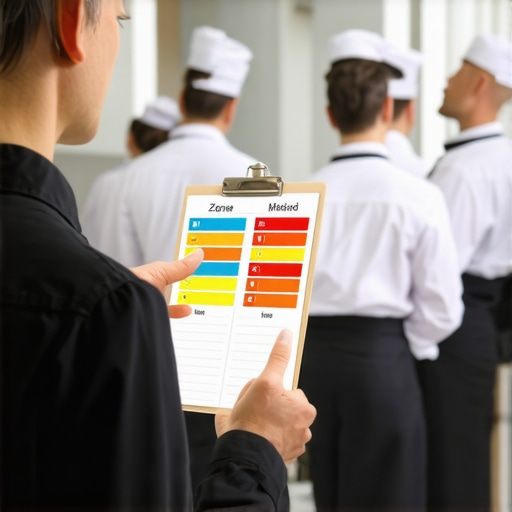
The Zone Method is my secret weapon for managing 400-person dinners without losing my mind. Instead of treating every restriction as a generic ‘special meal,’ you must triage them like an emergency room. I divide the kitchen and the floor into three distinct categories based on risk. Zone Red is for life-threatening allergies—think anaphylactic reactions to peanuts or shellfish. Zone Yellow covers intolerances like Celiac disease or dairy sensitivity, while Zone Green is for lifestyle choices like veganism or keto. When you apply effective catering strategies for corporate event impressiveness, your servers stop seeing a list of names and start seeing a tactical map. I remember a gala where a kitchen error led to a nut-based oil being used in a ‘safe’ salad. Because we had a literal Red Zone on our seating chart, I was able to intercept the plates in under fifteen seconds. It was a messy, high-adrenaline moment, but it proved that a visual map beats a ten-page packet every time.
Build Your High-Risk Map
Your team needs a visual anchor, not a lecture. I use a ‘Hot Sheet’—a single, bright neon page that stays at the pass. This sheet lists table numbers and the specific ‘Zone Red’ seat numbers. If you are optimizing server efficiency to enhance event satisfaction, you cannot expect a server to flip through a binder while carrying a tray of drinks. The Hot Sheet ensures that the server knows exactly where the danger lies before they even pick up a plate. This is especially vital when you have to how to design a menu that works for both keto and vegan guests, as these plates often look identical but carry different risks. Why your server lead needs a copy of the event script becomes clear here; they need to know when the lights will dim for a keynote so they can clear the ‘Red Zone’ plates before the room goes dark. You can read more about why your server lead needs a copy of the event script to understand the timing of these movements.
The Thirty-Second Stress Test
Before any server touches the floor, I perform what I call the ‘Rapid-Fire Audit.’ I don’t ask if they read the notes; I point to a dish and ask, ‘What are the three hidden allergens in the reduction?’ If they hesitate, they don’t go out. This isn’t about being a drill sergeant; it’s about guest safety. When you how to organize a staff meeting before a 500-person dinner, this audit should take up at least two minutes of your total huddle time. I’ve found that verbalizing the ingredients out loud cements the knowledge better than any printed manual ever could. If a server can’t identify a Zone Red ingredient in thirty seconds, they are a liability, not an asset. By the time the first guest sits down, your team should be so well-versed that they can spot a potential cross-contamination issue before it even leaves the kitchen galley.
I’ve seen it a hundred times: a planner spends thousands on custom menus, only to have the entire guest experience collapse because they relied on a piece of paper instead of a process. There is a persistent myth in our industry that as long as the ‘dietary cards’ are on the table, the job is done. I’m here to tell you that relying on those cards is one of the most dangerous things you can do. Icons on place cards are a secondary backup, not a primary strategy. In my experience, guests move. They swap seats to talk to a long-lost cousin or a business lead, and suddenly that ‘Vegan/Nut-Free’ icon is sitting in front of a guest who just ordered the 14-ounce ribeye. If your team isn’t trained in server skills that make every event stand out, they will drop that plate without a second thought. Have you ever fallen into this trap where you trusted the stationery more than the staff? Let me know in the comments.
The Danger of the ‘Silent Swap’
One of the most frequent ‘oops’ factors I witness is what I call the ‘Silent Swap.’ This happens when the kitchen sends out a modified dish—let’s say, a dairy-free risotto—and a well-meaning server swaps it with a standard plate at the pass because they think the kitchen made a mistake. They see a plate without the cheese garnish and think they are ‘fixing’ the presentation. This is why how to spot a fake luxury server team before they ruin your gala is such a vital skill; a professional team knows that a ‘plain’ looking plate is often a life-saving plate. To combat this, I implement a ‘double-stamp’ rule: the kitchen lead and the server lead must both verbally confirm the modification before the plate leaves the galley. According to a study published in the Journal of Food Protection, nearly 25% of food allergy reactions in commercial settings are caused by cross-contact or communication failures between the front and back of the house. This isn’t just about service; it’s about liability and safety.
How do you handle a guest who ‘discovers’ a severe allergy mid-way through the meal?
We’ve all been there. The guest who didn’t mention their shellfish allergy on the RSVP but suddenly mentions it as the lobster bisque is being poured. This is where the true experts separate themselves from the amateurs. Most people panic or, worse, try to ‘scrape off’ the offending ingredient. Never do this. The moment a high-risk allergy is identified on the floor, service for that entire table should pause for thirty seconds while you recalibrate. You need to know how to choose the right staffing ratio for a VIP event so that a captain can stay with that guest while the other servers continue the flow. If your staff is spread too thin, they will rush, and rushing leads to cross-contamination. I always tell my team: ‘A late safe meal is better than a fast hospital visit.’ When you are optimizing server efficiency to enhance event satisfaction, you must build in a time-buffer for these exact scenarios.
The Hidden Cost of Shorthand Communication
Another common mistake is using generic shorthand like ‘No Nuts’ when the guest actually has a ‘Legume’ allergy. To a busy chef, ‘No Nuts’ might mean skipping the walnuts but keeping the chickpeas. This nuance is why why your server team needs a designated captain for every 50 guests is non-negotiable for high-stakes events. A captain acts as the linguistic bridge, ensuring the specific nature of the allergy is understood. You also have to watch out for the trap of assuming ‘Vegan’ automatically covers other restrictions. Many vegan dishes rely heavily on nuts for texture and creaminess; assuming a vegan plate is safe for a nut-allergy guest is a rookie mistake that can have dire consequences. By moving away from generic labels and toward specific, verbal verification, you elevate your service from standard catering to elite hospitality. In our final section, we will look at the post-event debrief—the one step almost everyone skips, but the one that ensures your next event is even safer.
Digital Sheets Don’t Smudge in the Kitchen
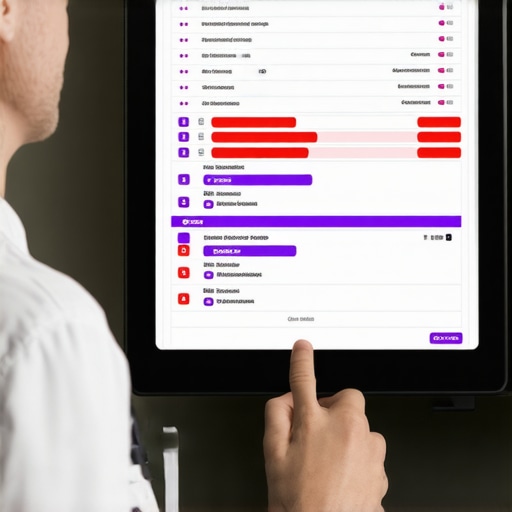
I learned the hard way that a paper log is only as good as the person who isn’t sweating over a hot grill. After a particularly humid August wedding where the ‘No Shellfish’ list became a blurry ink stain on a clipboard, I moved our entire dietary tracking system to a cloud-synced tablet interface. If you are serious about optimizing server efficiency to enhance event satisfaction, you need a single source of truth that updates in real-time. We now use dedicated Kitchen Display Systems (KDS) that flash a high-contrast violet whenever a modification ticket is entered. This isn’t just about being tech-savvy; it’s about removing the ‘human whisper’ factor from the equation. According to the 2024 Event Safety Alliance (ESA) Operations Guide, real-time digital logging reduces communication-based incidents by over 40% in high-pressure environments. When you boost your corporate event with expert server techniques, you aren’t just teaching them how to carry a tray; you’re teaching them to be data-entry specialists who save lives in a room full of 500 people.
How can you keep these strict safety protocols from falling apart after the first hour?
Maintenance is the part of catering that everyone forgets about once the wine starts flowing and the guest energy peaks. The adrenaline at the start of an event is high, but by hour three, fatigue sets in and attention to detail begins to erode. This is when the most dangerous mistakes happen. To combat this, I implement a mandatory ‘Mid-Service Huddle.’ It’s a sixty-second tactical touchbase at the two-hour mark where the captain identifies any new allergies that popped up and confirms that every ‘Zone Red’ guest has been safely fed. You should include this in your essential checklist for successful corporate event catering to ensure the standard doesn’t slip as the night goes on. I’ve found that corporate event catering strategies for success rely heavily on this second wind of focus. If you treat your briefing as a ‘one and done’ event, you are essentially inviting disaster to join you for the dessert course.
The Future of Precision Catering
Looking ahead, the industry is moving toward RFID-enabled place cards and localized proximity alerts. Imagine a world where a server’s handheld device vibrates when they are within two feet of a guest with a severe nut allergy—it’s not science fiction; it’s the next step in liability management. Even as we adopt more advanced tech, the foundational how to organize a staff meeting before a 500-person dinner remains the most important hour of your entire production day. Technology is a powerful tool, but a culture of accountability is the real solution. My challenge to you is this: at your next event, perform a ‘Rapid-Fire Audit’ on your most senior server mid-way through service. If they can’t name the hidden allergens in your signature reduction sauce in under ten seconds, it’s time to rethink your briefing process. Try it tonight and watch how it sharpens the focus of the entire floor team.
Why Your Best Servers Might Still Be Your Biggest Risks
Over the years, I’ve realized that even the most charismatic server can become a liability if they prioritize charm over technical accuracy. I once had a lead server who was beloved by every guest, yet he consistently forgot to mention the secondary allergens in our signature dressings because he was too focused on the ‘vibe’ of the table. This taught me that service isn’t just about a smile; it’s about the clinical precision of information. You must foster an environment where a server feels more proud of catching a dietary error than they do of getting a high tip. My lightbulb moment was realizing that safety is the highest form of luxury. When a guest with a life-threatening allergy feels truly seen and protected, you’ve won a client for life. Never assume that ‘seniority’ equals ‘safety’—every event requires a fresh reset of the basics.
The Gear That Keeps My Kitchen Calm
To run a truly seamless floor, you need more than just good intentions. I personally rely on a few specific resources and tools to maintain the standard. First, I always keep the latest FARE (Food Allergy Research & Education) guidelines printed in the staff breakroom; their research is the gold standard for high-volume safety. For digital organization, I recommend using cloud-based tablets for the kitchen pass so that updates to the guest list happen in real-time, preventing the ‘outdated paper’ disaster. I also suggest that every lead should carry a physical copy of the event script to ensure timing and dietary delivery are perfectly synchronized. These tools, combined with essential checklist for successful corporate event catering, create a safety net that catches the errors humans naturally make when tired.
Elevate Your Next Event Beyond the Checklist
At the end of the night, the success of your event comes down to the trust you build with the people sitting at your tables. Managing complex dietary needs isn’t a burden; it’s an opportunity to show your guests that you value their well-being as much as their business. When you invest time in boost your corporate event with expert server techniques, you are building a reputation for excellence that transcends the menu itself. Don’t be afraid to be the ‘strict’ manager during the briefing—your team will thank you when the night goes off without a single medical emergency. You have the tools, the strategy, and the mindset to make mastering corporate event planning secrets to seamless success your new reality. Go out there and lead your team with the confidence that comes from being truly prepared. Have you ever had a guest change their dietary needs halfway through a multi-course meal? Let me know how you handled the pivot in the comments below!