

I’ll never forget the look on the bride’s face when a tray of champagne flutes tilted precariously over her grandmother’s vintage lace. It was a high-stakes wedding, the kind where every detail was curated to perfection, yet I’d made the rookie mistake of hiring a group of local college students to round out the service team. They were polite and energetic, sure, but they lacked the ‘hospitality DNA’ that only comes with professional training. By the end of the night, we had broken glass in the kitchen, confused guests, and a very stressed-out event manager. That moment was my wake-up call: in the world of luxury hospitality, there is no such thing as a small role. Today, I’m pulling back the curtain on why hiring untrained students for high-end gigs is a gamble you probably shouldn’t take if you want to protect your reputation and your sanity.
Stop treating staffing like an afterthought
In my early days, I honestly thought that carrying a tray was a skill anyone could pick up in five minutes. I was so wrong. High-end events require a level of intuition that students, no matter how bright, simply haven’t developed yet. When you’re managing a complex evening, you need people who can anticipate a guest’s needs before they even voice them. It’s the difference between someone who just ‘works a shift’ and someone who understands the advantage of hiring servers who specialize in french service. A professional knows how to move through a crowded room like a shadow, while an amateur often becomes an obstacle. If you aren’t careful, you’ll spend your entire night micromanaging the staff instead of hosting your guests. Trust me, I’ve been there, and it’s an exhausting way to run a gala. Have you ever hosted an event where the staff felt more like a liability than an asset?
Is professional service really worth the extra cost?
Many hosts get sticker shock when they see the rates for seasoned pros. They think, ‘I can just hire five students for the price of two professionals.’ But here’s the reality: one professional server can often do the work of three amateurs because they are efficient, calm under pressure, and rarely make the kind of mistakes that require expensive fixes. In fact, according to research from the Cornell School of Hotel Administration, service quality is the single most significant factor in guest satisfaction, often outweighing the quality of the food itself. This is why knowing how to spot a professional server in an interview is a skill every planner needs to master. You aren’t just paying for someone to set down a plate; you’re paying for the insurance that your event will run flawlessly. When you hire pros, you’re also ensuring proper oversight, because why a lead server should never be assigned a single table becomes painfully obvious the moment a crisis hits the floor and your ‘captain’ is stuck pouring water for Table 4.
Mastering the logistical dance before the doors open
Once you’ve secured the right team, the real work begins. Professionals are like high-performance engines; they run beautifully, but they need the right fuel—information—to perform at peak capacity. I treat every event like a mission briefing. You cannot expect excellence if the team is guessing where the dessert forks are located or who the vegan at Table 12 is. Think of a server team like a Formula 1 pit crew. Every mechanic has a specific lug nut to turn, and they do it in seconds without speaking a word because they’ve been briefed on the exact sequence of events. If you see a server wandering around the room looking for a tray stand, your logistical system has already failed.
Stop winging it and start briefing
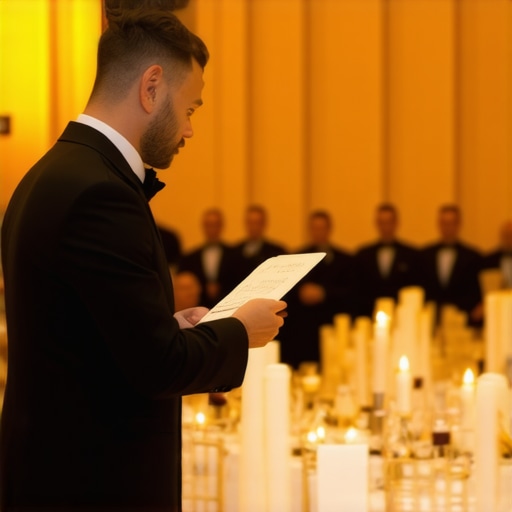
I learned this lesson the hard way at a black-tie gala three years ago. I thought my seasoned team could ‘just handle it.’ Ten minutes into the first course, a guest with a severe shellfish allergy was served a shrimp garnish. My lead server caught it just in time, but the panic in the kitchen was palpable and entirely preventable. Now, I never skip the pre-shift meeting. You need to know how to brief your server team on complex dietary restrictions in minutes. This is the time to go over the essential checklist for successful corporate event catering, ensuring every player knows their zone. Think of it as a huddle before a big play—if the quarterback hasn’t called the snap, everyone is just running in circles.
Establish a clear chain of command on the floor
In a room of 300 people, a single event manager cannot be everywhere at once. This is why your server team needs a designated captain for every 50 guests. These captains act as your eyes and ears on the ground. At a recent high-stakes board dinner, my ‘Table 1 Captain’ noticed that the CEO’s water glass was never more than half empty—a tiny detail, but one that signaled high-level attentiveness. These captains apply top server tips to elevate your event experience without you having to whisper in their ears every five seconds. Without this structure, the service floor becomes a chaotic game of ‘telephone’ where requests get lost between the guest and the kitchen.
Protect the atmosphere from behind-the-scenes chaos
One of the most overlooked parts of event flow is the literal sound of service. Professional teams understand that luxury is as much about what the guest *doesn’t* hear as what they do. I’ve seen incredible speeches ruined by the clattering of silverware in a nearby prep area or the heavy footsteps of an untrained server. You must train your team on how to keep the kitchen noise from ruining your keynote speech. It is about ‘silent service’—the ability to clear plates and refill wine with the stealth of a ninja. This level of finesse is what separates a chaotic banquet from a curated experience. When you’re mastering corporate event planning secrets to seamless success, you realize that the staff’s movements are the heartbeat of the room. If that heart beats too loudly, the whole body feels the stress. Professional servers are trained in spatial awareness; they know how to pivot in tight corners and time their movements to the rhythm of the speakers, ensuring the guest remains the center of attention.
Let’s dig deeper into the actual floor plan, because that is where most planners lose the battle before it starts. While the industry standard suggests that round tables are the ‘safest’ bet for social gatherings, I’ve found that the round table trap is one of the quickest ways to stall an event. I’ve written before about why round tables kill the energy at corporate networking mixers. When you seat eight strangers in a closed circle, you create a psychological ‘pod’ that guests are hesitant to leave. A study published in the Journal of Environmental Psychology confirms that physical barriers and circular seating can actually inhibit new social connections by increasing the ‘social cost’ of exiting a conversation. For a high-energy mixer, you need linear flow and standing stations that encourage movement. 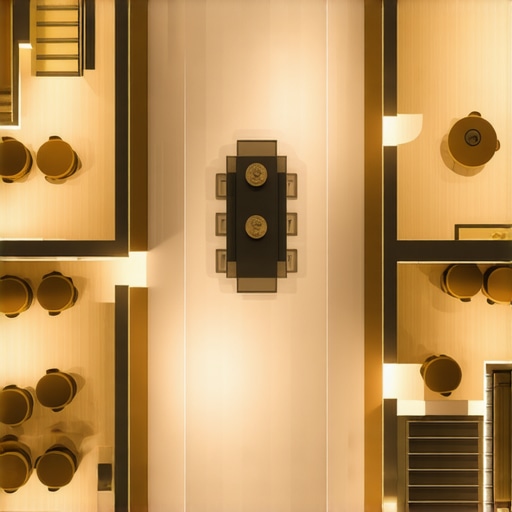
Don’t let your bar become a bottleneck
One of the most common ‘oops’ factors I see is the placement of the beverage station. It’s tempting to tuck the bar away into a corner to keep the aesthetic clean, but the common mistake of placing the bar in a back corner creates a dead-end that guarantees a traffic jam. You must also consider the ‘service lane’—this is why your ballroom floor plan needs a three-foot safety buffer between the back of the chairs and the wall. Professionals need that space to maneuver. Without it, even an elite team will spend half the night apologizing as they squeeze past guests, which instantly lowers the perceived luxury of the experience.
Why can’t the venue manager just coordinate the day?
This is a nuance that even seasoned corporate planners often miss. They assume the person who sold them the space will manage the minute-by-minute flow. However, understanding why your venue manager should not be your day-of-coordinator is a distinction worth the investment. The venue manager’s priority is the facility—the HVAC, the loading dock, and the kitchen equipment. Your coordinator’s priority is your guest experience. You need someone focused exclusively on whether the server skills that make every event stand out are actually being executed correctly on the floor, not someone who is distracted by a technical issue in the back of the house. Finally, always protect your peace of mind with a financial cushion; why your event budget needs a 10 percent contingency fund becomes painfully clear the moment a last-minute VIP list expansion happens. Have you ever fallen into this floor-plan trap? Let me know in the comments.I used to walk into a ballroom with a three-ring binder that looked like a relic from the nineties. It was my security blanket, but it was also my biggest bottleneck. If a guest switched seats at Table 15, I had to find a pen, cross it out, and hope my lead server saw the chicken scratch during the rush. Today, my ‘bible’ is entirely digital. I swear by collaborative floor-mapping software because it allows the kitchen, the floor lead, and the event planner to see changes in real-time. This level of synchronization is the backbone of the ultimate guide to corporate event catering logistics. When the floor plan syncs across all devices, you stop the frantic shouting and start the kind of seamless execution that guests actually notice.
How do I keep my team sharp for every single event?
The secret isn’t just in the hiring; it’s in the ‘post-game’ analysis. Every single event I run ends with a mandatory 15-minute debrief. We don’t just talk about what went right; we dissect the friction points with total honesty. If a server tripped on a loose rug or a wine bottle was opened too slowly at a VIP table, we address it then and there. I’ve found that optimizing server efficiency to enhance event satisfaction is a continuous loop, not a one-time training session. We use these candid meetings to refine our essential checklist for successful corporate event catering, ensuring that yesterday’s minor oversight becomes tomorrow’s standard operating procedure. Beyond the digital maps, I’ve become obsessed with the physical tools of ‘silent service.’ I now require my team to use non-slip, high-impact trays that significantly reduce the ‘clink’ of glassware during high-stakes speeches. We also utilize discrete, ear-worn communication devices for the captains. This allows us to adjust the timing of the main course without a single server having to physically run back to the kitchen to check on the chef. It’s all about creating an invisible infrastructure. When you use effective catering strategies for corporate event impressiveness, the tools should be as invisible as the effort. You want the guest to feel the result, not see the machinery. I’m also a massive advocate for using high-quality temperature-controlled transport. There is nothing more embarrassing than a lukewarm soup or a melting sorbet at a gala. According to technical reports from the North American Association of Food Equipment Manufacturers (NAFEM), modern insulated carriers can maintain food temperatures within a tight two-degree margin for up to four hours without active power. This technology is a total game-changer for off-site garden weddings or industrial warehouse parties. If you aren’t investing in the latest warming cabinets, you’re essentially gambling with your guest’s dinner quality. 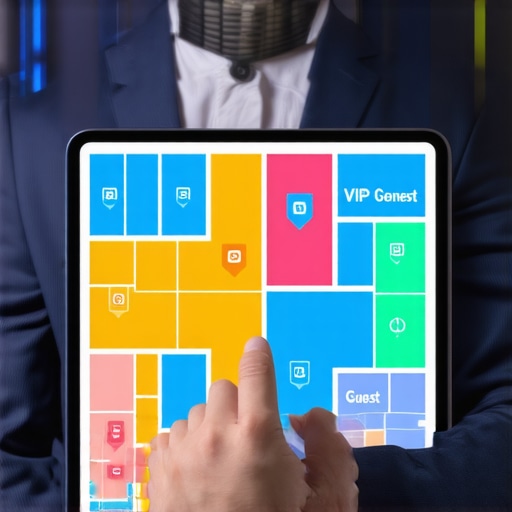 Looking ahead, I predict that ‘hyper-personalization’ driven by guest data will be the next big frontier in hospitality. By 2025, we won’t just see innovative catering ideas for modern weddings; we’ll see server tablets that ping them with a guest’s favorite cocktail the moment they sit down at their assigned seat. It sounds like science fiction, but it’s already happening in high-end private clubs. If you want to boost your corporate event with expert server techniques, you need to start thinking about how data can serve your hospitality mission. I challenge you to try this for your next event: implement a mandatory digital floor plan that every lead server can access on their own device. Stop the paper trail and watch how much faster your team reacts to changes. It’s a small shift that yields massive results in the perceived luxury of your brand.
The Invisible Red Flags I Never Ignore Anymore
After years in the trenches, I’ve learned that the most telling signs of a professional server happen before the first guest even arrives. First, look at their footwear; a pro knows that high-quality, polished, non-slip shoes are a tool of the trade, not a fashion choice. Second, observe how they handle a mistake during setup. An amateur hides it; a professional brings it to the captain immediately. This is how to spot a server who hasnt been briefed on the menu before the service starts to wobble. I also stopped trying to save money by cutting the lead roles. Having a dedicated person who does nothing but watch the floor is the greatest luxury you can afford yourself. Finally, remember that hospitality isn’t just about the food; it’s about making people feel seen without making them feel watched.
The Gear That Separates Amateurs from Professionals
To truly scale your success, you need more than just a good eye—you need a toolkit that removes the guesswork. I always recommend AllSeated for collaborative floor mapping because it prevents the ‘too many cooks’ syndrome in the planning phase. For training, I constantly revisit Setting the Table by Danny Meyer; it’s the hospitality bible for a reason. When I’m looking for wedding catering tips from industry experts, I look for those who emphasize the ‘silent service’ philosophy. I also rely on high-impact, non-slip trays from Cambro—they are the unsung heroes of a quiet ballroom. These tools allow your team to focus on the guests rather than the mechanics of the job.
Your Path to Mastering the Art of the Invisible Host
At the end of the day, your event’s success isn’t measured by the lack of problems, but by how your team handles them without the guests ever knowing they existed. When you elevate your wedding with professional servers, you aren’t just buying labor; you’re buying the freedom to actually be present at your own event. Whether you are aiming for luxury wedding catering ideas for a fairytale atmosphere or a high-stakes corporate summit, the backbone is always the people on the floor. Take the leap, invest in the pros, and watch your reputation soar. Have you ever had a staffing disaster that taught you a lesson you’ll never forget? Let me know in the comments below.