

I was standing in the back of a sweltering canvas tent, exactly three minutes away from a massive wedding reception toast, when I realized my biggest mistake of the night. The rental company had delivered the glass racks significantly later than promised, and the stems were still radiating heat from an industrial dishwasher. In the catering world, pouring a crisp, vintage Sauvignon Blanc into a glass that feels like it’s been sitting under a heat lamp is a cardinal sin. I’ve been there—sweating through my starched server whites, watching the bridal party line up for their grand entrance, and knowing my server skills were about to be tested by a physical impossibility. If you’ve ever felt that cold pit in your stomach during a high-stakes corporate gala or a wedding, this guide is your lifeline.
Forget the Freezer and Embrace the Salted Ice Bath
When you have hundreds of glasses and the clock is ticking, the walk-in freezer is your enemy. It is simply too slow and consumes far too much precious real estate that should be reserved for the chilled seafood towers. Instead, we rely on a high-speed technique borrowed from master bartenders and refined through years of professional catering strategies. You need what I call a “thermal kill zone”—usually a clean, insulated beverage tub or a series of heavy-duty bus tubs. The secret isn’t just the volume of ice; it’s a massive, unapologetic dose of rock salt. According to the laws of thermodynamics and freezing point depression, as documented by the American Chemical Society, adding salt to ice water allows the liquid to drop significantly below the standard 32°F freezing point. This creates a super-chilled slurry that pulls heat from the glass almost instantly. I remember one corporate event logistics nightmare where we didn’t have enough tubs and had to improvise with plastic-lined wine crates. It was chaotic and wet, but it worked. Today, I’m going to show you how to scale this method so your team can move through 500 stems without a single crack or a single lukewarm pour.
Can you actually chill that much glass without a breakage disaster?
The most common skepticism I face from new event planners is about thermal shock. They ask, “Won’t the glass shatter into a million pieces?” In my experience, unless you are moving glass directly from a 200-degree oven into a 20-degree brine, the answer is no. High-quality tempered glass is remarkably resilient to these shifts. The real danger isn’t the cold; it’s the math behind hiring extra servers. If you don’t have enough hands on deck to meticulously dry each stem after the dip, you’ll end up with unsightly water spots that look terrible under your event lighting. Have you ever found yourself staring at a mountain of warm glassware while the guests are literally banging on the doors of the ballroom? It is a rite of passage for every caterer, but it doesn’t have to be your story tonight. Let’s walk through the exact setup you need to pull off this minor miracle.
Build a High-Speed Brine Station in Minutes
To turn a chaotic kitchen into a precision assembly line, you need a tactical setup. I learned this the hard way during a 500-person holiday gala in 2022. The venue’s heating system was stuck on high, and the glassware was coming off the industrial dishwasher racks at a temperature that would have turned a fine Riesling into tea. We set up three heavy-duty bus tubs on a standard six-foot banquet table—what I call the ‘chilling line.’ This is where optimizing server efficiency becomes a physical science. You need one person dedicated to the ‘dip,’ one to the ‘rinse’ (essential when using salt), and two people for the ‘polish.’
Get the Salt-to-Ice Ratio Right the First Time
A few sprinkles of table salt won’t cut it. You need a ratio of roughly one part rock salt to five parts crushed ice. Think of it like a professional ice cream maker: the salt forces the ice to melt, but to do so, it must absorb heat from its surroundings—in this case, your warm wine stems. Fill your tub halfway with ice, dump a generous layer of salt, and then add just enough cold water to create a slushy consistency. If you use too much water, the ice floats and loses contact surface; if you use too little, the glass won’t submerge properly. When managing corporate event catering logistics, I always over-order ice by 20% just to account for these emergency ‘thermal kill zones.’ 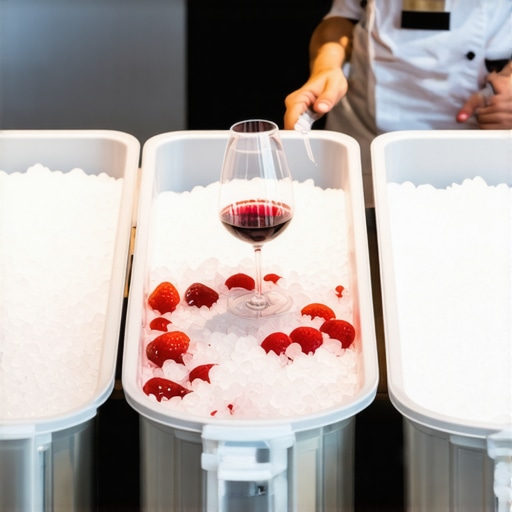
Submerge Without Shattering Your Inventory
Once your slurry is ready, grab the glass by the base or the lower stem—never the rim. Submerge the bowl entirely for exactly ten seconds. This isn’t a guess; it’s the sweet spot for most standard glassware. During that messy 2022 gala, we found that rotating the glass slightly while submerged accelerated the cooling by another two seconds. This is a critical move when you are trying to keep champagne bubbles alive for a large toast, as a warm glass causes CO2 to release prematurely, leaving your guests with a flat, disappointing sip.
Eliminate Water Spots Before They Dry
The brine is incredibly effective, but it is also sticky. If you don’t have a clean water rinse station immediately following the salt bath, you are in trouble. Every glass must be dipped in a second tub of plain, ice-cold water and immediately handed to a polisher. Use high-quality microfiber cloths—never polyester or cotton napkins, which leave unsightly lint. This is one of those top server tips that separate the amateurs from the pros. If you spot a server who hasn’t been briefed on the importance of the polish, you’ll see them trying to ‘air dry’ the stems, which is a recipe for white crusty rings that look terrible under spotlights.
Coordinate the Flow to Avoid Bottlenecks
The biggest risk here isn’t the temperature; it’s the ‘log-jam.’ If the polishers can’t keep up with the dippers, you end up with a table full of wet, dripping glass that eventually warms back up. I like to keep a 2:1 ratio of polishers to dippers. This ensures that every stem is dry, crystal clear, and frost-touched before it ever reaches the server’s tray. It is a vital part of the essential checklist for successful corporate event catering that I give every lead captain. We once saved a wedding where the rental order audit revealed thick, heavy goblets that held heat like bricks. The brine station was the only reason the first course didn’t start with lukewarm water.
While the physical mechanics of a brine station solve the immediate crisis of warm glass, the deeper expertise of high-end hospitality lies in managing the human flow. Most event planners believe that throwing more bodies at a problem will fix a slow service, but in my experience, a bloated team without a clear structure actually creates a ‘service collision.’ This is where I see most mid-tier companies fail. They hire twenty extra people but don’t account for the physical footprint those people take up in a cramped staging area. If you want to optimize server efficiency, you have to move away from the ‘more is better’ mentality and toward a rigid, military-style hierarchy. This is one of those wedding catering tips from industry experts that rarely makes it into the glossy brochures.
Why throwing more bodies at a service problem actually slows you down
It sounds counterintuitive, but the ‘Ringelmann Effect’—a psychological phenomenon where individual productivity decreases as group size increases—is rampant in large-scale catering. When you have too many unmanaged servers, they begin to rely on each other to catch mistakes, which means nobody is actually looking for them. This is why your server team needs a designated captain for every 50 guests. Without this 50:1 ratio, the communication chain snaps. I’ve seen 1,000-person conferences devolve into chaos because there were 100 servers but only two managers. The result? Half the room gets their entrées while the other half hasn’t even seen a bread basket. This is also one of the hidden risks of hiring student servers who haven’t been trained in the nuances of ‘silent service’ and spatial awareness.

The real ‘trap’ that catches even seasoned pros is the dietary restriction bottleneck. You can have the fastest glass-chilling line in the world, but if a guest at table 12 asks for a nut-free, vegan, gluten-free option and your server doesn’t know the protocol, the entire kitchen line halts. To avoid this, you must brief your server team on complex dietary restrictions before the doors even open. I’ve seen the problem with serving steak at a business lunch magnified tenfold simply because the staff wasn’t prepared for the five people who suddenly decided they were paleo. Expertise isn’t just about knowing how to fix a problem; it’s about anticipating the friction points before they become fires.
How to spot a structural collapse before the first course is served
If you see your staff ‘clumping’ near the kitchen doors or if you spot a server who hasn’t been briefed wandering the floor with an empty tray, your chain of command has failed. Every person on that floor must have a ‘zone’ and a specific task that does not overlap with their neighbor. This is why your server team needs a clear chain of command that is visible to everyone. When the pressure is on and the bride is waiting for her champagne, there is no time for a committee meeting. You need a captain who can make a call and a team that can execute it instantly. Have you ever fallen into the trap of thinking a bigger team would make things easier, only to watch it backfire? Let me know in the comments. If you’re currently planning a high-stakes event and need a team that understands these nuances, feel free to contact us to discuss your strategy.
Once the adrenaline of the ’emergency chill’ fades, you’re left with the reality of the aftermath: 500 wet glasses, damp microfiber cloths, and a crew that’s ready to collapse. But this is where the real best corporate event servers for 2025 distinguish themselves. Maintenance isn’t just a chore; it’s the insurance policy for your next five-star review. If you don’t treat your tools with the same respect as your menu, your inventory will look like it belongs in a dive bar within six months. I’ve seen beautiful stems ruined by ‘dish-washing haze’ because the lead captain didn’t understand the chemistry of the rinse cycle.
Why I Throw Away 20% of My Polishing Cloths Every Month
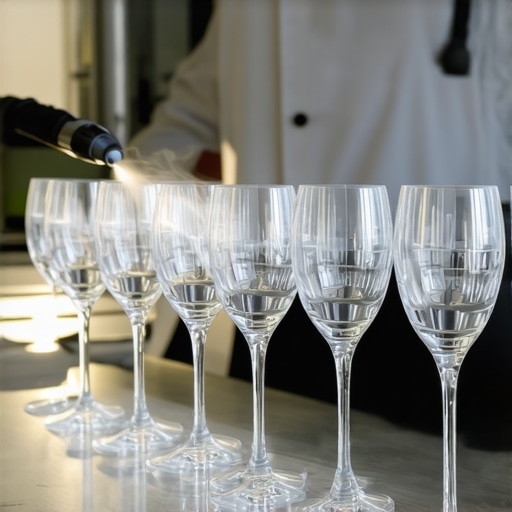
Amateurs think a polishing cloth is a lifetime investment. It’s not. It’s a consumable. The second a cloth touches a tray of appetizers or gets a drop of red wine on it, its days as a high-end polishing tool are numbered. I personally swear by the oversized 100% microfiber cloths used by professional detailers, but specifically the 300 GSM (grams per square meter) weight. As noted in the technical cleaning protocols by Riedel Crystal, the only way to avoid microscopic scratches that dull lead-free crystal over time is a strictly controlled steam polish followed by a circular motion with a 100% lint-free microfiber cloth. Any less, and you’re just moving dirt around. When you elevate your wedding with professional servers, you are paying for that diamond-like sparkle under the chandeliers, not just someone to pour the wine.
How do I keep my glassware from looking cloudy after a year of service?
The secret isn’t a better soap; it’s a better water softener. If you are operating in a city with hard water, your glasses are destined for a slow, foggy death. I recommend a portable deionization system for any caterer doing off-site work in rural venues or older estates. It sounds like overkill until you see the difference it makes in optimizing server efficiency. When the glass comes out of the machine without a single mineral deposit, your ‘polishers’ spend three seconds per glass instead of thirty. This is the math that allows you to execute effective catering strategies for corporate event impressiveness without doubling your labor costs.
The Future of High-Volume Service isn’t More Hands
Looking ahead, I predict a massive shift toward RFID-integrated inventory management. We are already testing racks that ‘ping’ a dashboard when they are removed from the truck, allowing us to see exactly how many glasses are ‘in play’ versus ‘in the wash’ in real-time. This level of mastering corporate event planning removes the guesswork and the frantic ‘where are the water glasses?’ moments that plague large galas. To stay ahead, you need to stop thinking like a cook and start thinking like a logistics officer. Start by auditing your current toolkit—if your polishing cloths aren’t pristine, throw them out today. If you’re ready to see how a truly technical team handles a high-stakes environment, I encourage you to contact us and let’s talk about your next event strategy.
What the Floor Taught Me About Perfection Under Pressure
Over the years, I have learned that great service is a lot like an iceberg; the guests should only see the beautiful, polished surface, never the frantic paddling happening beneath the waterline. One of my biggest lightbulb moments was realizing that speed is the enemy of quality if you haven’t mastered the logistics first. If you want to truly optimize server efficiency, you have to stop rewarding the person who runs and start rewarding the person who plans. I once saw a server drop an entire tray of chilled flutes because they were rushing to beat a clock they hadn’t actually timed. Precision saves more time than speed ever will.
Another hard truth: your team is only as good as their briefing. You can have the best corporate event servers for 2025 on your roster, but if they don’t know where the service entrance is or who the point of contact for dietary needs is, they will flounder. I now spend the first twenty minutes of every gig doing a ‘physical walk-through’ of the flow, from the dishwasher to the furthest table in the ballroom. It’s about creating a mental map so no one is ever caught standing still.
The Gear That Makes Me Look Like a Genius
If you want to maintain a five-star reputation, you need tools that can survive the heat of a 500-person gala. I never arrive at a venue without a fresh pack of 300 GSM microfiber polishing cloths. These are essential when you need to elevate your wedding with professional servers who can handle high-intensity lighting. Standard linen napkins are fine for bread baskets, but for crystal, they are a liability. I also highly recommend keeping a copy of the ultimate guide to corporate event catering logistics in your kit for those moments when a rental order goes sideways and you need a quick calculation on glassware ratios.
#IMAGE_PLACEHOLDER_E#
Take the Leap into Seamless Service
You now have the technical blueprint to handle everything from a thermal-shock glassware emergency to a dietary restriction bottleneck. High-stakes hospitality is challenging, but when you see a room full of guests sipping perfectly chilled wine from crystal-clear glasses, you know the effort was worth it. Go out there and lead your team with the confidence that only comes from deep preparation. You aren’t just serving food; you are protecting the integrity of the event’s most important moments. Have you ever had a rental disaster that forced you to improvise a chilling station on the fly? Let me know your survival stories in the comments below.