

I’ll never forget the sinking feeling I had during a high-stakes wedding reception a few years back. We had three hundred glasses of premium vintage Brut lined up on silver trays, looking absolutely magnificent under the soft glow of the chandeliers. But by the time the maid of honor actually stood up to deliver her speech—which started a full fifteen minutes late—those glasses were as still as a morning pond. I watched the guests take a hesitant sip, pull a disappointed face, and quietly set the glass back down. It was a failure of physics, and honestly, a failure of my own planning. Since that night, I have been obsessed with the science of the bubble. I learned the hard way that in the world of high-end events, timing isn’t just a suggestion; it is the difference between a celebration and a flat disappointment. Today, I am going to show you exactly how to coordinate a massive toast so that the last guest served has just as much fizz as the first, using a method I’ve perfected over hundreds of events.
[image_placeholder_1]
Why Temperature is Your Only Real Ally
In my early days, I used to think that being ‘prepared’ meant having every glass filled and ready to go twenty minutes before the first guest entered the room. That was my biggest mistake. Champagne is a volatile beauty. According to research from the University of Reims, the heart of the Champagne region, a glass at room temperature loses its carbonation nearly twice as fast as one that has been properly chilled. When the glass is warm, the CO2 escapes in a frantic rush. I’ve found that wedding catering tips from industry experts always emphasize the ‘vessel temperature’ for a reason. If you pour cold wine into a room-temperature glass, you’ve already lost the battle. Now, I insist on flash-chilling the flutes in a walk-in cooler or using a CO2 glass froster right before the pour. It creates a thermal barrier that keeps the bubbles trapped in the liquid longer. This is especially crucial when you are dealing with the math behind hiring extra servers, because even the fastest team can’t outrun the laws of thermodynamics if the environment is working against them. Have you ever faced the ‘flat glass’ nightmare at an event you planned?
Does the glass shape really change the fizz?
You might be skeptical and think a bubble is a bubble regardless of where it sits, but the surface area is your enemy. The wider the rim, the faster the gas escapes. While the trendy wide-mouthed coupes look stunning in photos, they are the absolute worst choice for a long-winded corporate keynote. I always steer my clients toward narrow tulips rather than traditional flutes; they provide enough room for the aroma to develop while keeping the opening small enough to preserve that precious carbonation. When you are looking at top server tips to elevate your event experience, you’ll find that the way the wine is hit against the side of the glass—the ‘beer pour’—is actually much better for bubble retention than pouring directly into the center. We want to minimize the turbulence. By reducing the distance the wine falls and keeping the glass tilted, we preserve the dissolved CO2 that makes the toast feel alive. It sounds like a small detail, but when you’re standing in a room with five hundred people, those small details are the only things that scale.
Stop Pouring Too Early
To keep the fizz alive, you have to treat the pour like a military operation. I use the ‘Four-Minute Rule.’ If your team cannot get every glass into a guest’s hand within four minutes of the first bottle being popped, your system is broken. This requires a staging area as close to the ‘front lines’ as possible. I once worked a high-stakes gala where we set up hidden satellite bars behind the pipe-and-drape just to shave thirty seconds off the walk time. It felt like overkill until I saw the guest list—CEOs don’t like waiting for their bubbles. By optimizing server efficiency to enhance event satisfaction, we ensured that the vintage Brut stayed prickly and cold. Most caterers fail here because they value ‘order’ over ‘speed,’ letting the glasses sit while they check the alignment of the napkins. Don’t do that. Pour, plate, and pass. The trick is to use an assembly line: one person handles the towels to dry the condensation off the bottles, another pours a consistent three-ounce measure, and a third arranges them on the tray. This eliminates the ‘fumble factor’ that kills time. When you are rushing to serve hundreds, even the five seconds spent looking for a clean napkin adds up to minutes of lost carbonation across the whole team.
Assign a Captain to Every Fifty Guests
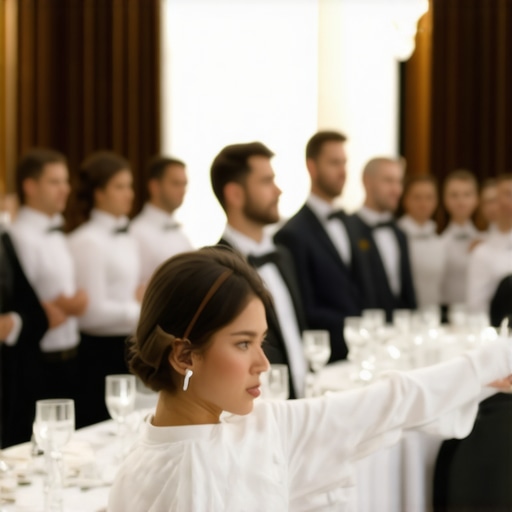
When you’re dealing with hundreds of guests, the chain of command is what prevents a stampede of servers from colliding in the kitchen doorway. This is exactly why your server team needs a designated captain for every 50 guests. Each captain acts as the ‘eyes and ears’ for their specific section, signaling exactly when the toast is about to begin so the corks pop in unison. At a tech summit last year, I saw a team of twenty servers wander aimlessly because nobody was ‘the boss’ of the north quadrant. The result? Half the room had wine, the other half had empty hands when the CEO raised his glass. It was embarrassing. Now, I use the ‘Zone Method’ where captains communicate via earpieces to stay in sync with the program flow. This hierarchy allows for real-time adjustments if a guest spills a drink or if a table needs an extra bottle at the last second. #IMAGE_PLACE_B#
Sync Your Pour with the Soundboard
I remember a 400-person event where we had to manage the logistics of a 400-person plated dinner in a tent. The humidity was thick enough to cut with a knife. I had my team wait for the ‘trigger word’ from the MC before even touching the corks. We used a two-man-per-table system: one to pour, one to place. It was a chaotic dance, but because we had a direct line to the sound booth, we knew exactly when the speaker was finishing their intro. This is also why your videographer needs a soundboard patch for the toasts; if the audio is clear, the servers can hear their cues perfectly from the back of the room. This synergy prevents that awkward ‘clinking’ sound of bottles during a silent moment of a speech. Additionally, knowing the exact timing helps in how to keep the kitchen noise from ruining your keynote speech, as the team knows exactly when to go ‘silent’ for the most impactful moments of the evening. We actually timed the uncorking to happen during the loudest applause break, masking the sound of fifty bottles popping simultaneously, which made the final reveal of the glasses feel like a magic trick to the guests. I also tell my captains to watch for the speaker’s body language; most speakers look down at their notes right before they deliver the ‘closing’ line, which is the gold-standard cue for the servers to move from the staging area into the room.
A common mantra in high-end hospitality is that ‘good service is invisible.’ I’m here to tell you that’s a dangerous myth for large-scale events. In reality, truly elite service is anticipatory, not invisible. When you aim for invisibility, you often end up with servers who are too timid to break through a crowd or too quiet to lead a guest to their seat. I’ve seen planners fall into the trap of hiring dozens of bodies just to fill a floor, but without the right server skills that make every event stand out, you just have a crowded room of people in vests looking confused. The hidden nuance here is ‘controlled presence.’ Your team should be a visible, reassuring force that guides the energy of the room, rather than a ghost that disappears when the wine runs dry.
The dangerous myth of the invisible server
One of the biggest mistakes I see at the executive level is the ‘over-staffing’ reflex. You might think that doubling your headcount will double your speed, but the physics of a ballroom don’t work that way. According to research from the Cornell School of Hotel Administration, there is a specific ‘service plateau’ where adding more personnel actually creates logistical friction. Once you hit a certain density, servers spend more time navigating around each other than they do interacting with guests. This is why I always warn against the hidden risks of hiring student servers for high-end events; without the spatial awareness of a pro, an amateur team creates a bottleneck that slows down everything from the first course to the final toast. It’s better to have thirty elite, well-briefed captains than sixty uncoordinated bodies who don’t know the room’s flow.
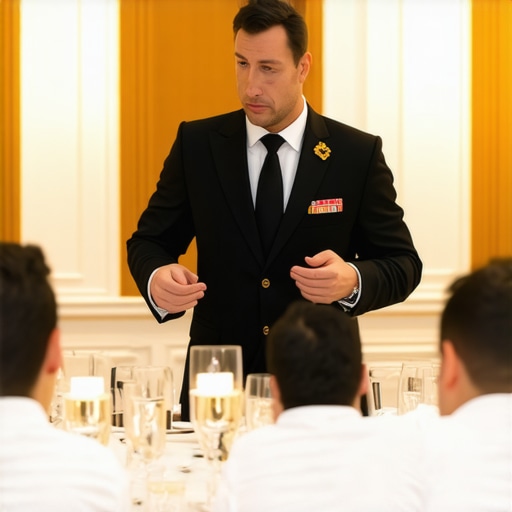
Does a 1:10 server ratio actually guarantee a luxury experience?
Many clients insist on a 1:10 ratio, thinking it’s the gold standard for luxury. But here is the advanced truth: the ratio matters far less than the ‘zone intelligence’ of the team. I’ve managed galas where a 1:15 ratio felt like royalty because the servers were trained in ‘sweep patterns,’ ensuring no glass was ever less than half full. Conversely, I’ve seen 1:8 ratios fail because the staff wasn’t briefed on the menu. If you want to know how to spot a fake luxury server team before they ruin your gala, watch their eyes. A pro is always looking ‘long’—scanning the entire horizon of their zone—while an amateur is ‘looking short,’ focused only on the plate in their hands. This lack of peripheral vision is the ‘oops factor’ that leads to missed dietary cues and empty champagne flutes during the most important speech of the night. Have you ever fallen into this trap? Let me know in the comments.
Beyond the physical grace of a server, the secret to scaling these high-pressure moments lies in the unglamorous world of backend logistics. I used to rely on paper charts and gut feelings, but that is a recipe for a 500-person disaster. Now, I swear by digital floor-planning tools like AllSeated or Social Tables. These aren’t just for architects; they allow me to visualize exactly why your event floor plan needs wider aisles for mobility access and server flow. If my team can’t move, the champagne can’t flow. I personally use these tools to map out ‘dead zones’ where service usually lags, ensuring every guest feels attended to. When you combine this with an essential checklist for successful corporate event catering, you move from reactive chaos to proactive precision.
The Tech That Keeps My Team in Sync
Communication is where most luxury teams fall apart. I’ve transitioned my captains to discrete, bone-conduction earpieces. Unlike traditional walkie-talkies that hiss and pop, these allow for a constant, quiet stream of data. This is vital for optimizing server efficiency to enhance event satisfaction because it lets me call for a ‘full floor sweep’ without a single guest hearing the command. According to the National Restaurant Association’s 2024 State of the Restaurant Industry report, over 40% of operators are now prioritizing tech that streamlines backend communication to combat labor shortages. It’s not about replacing people; it’s about giving the people you have the super-powers they need to succeed in a crowded room. If you’re still shouting across a kitchen, you’re already behind the curve.
How do I maintain elite service standards over several years?
Consistency is the hardest part of this business. The only way to keep the quality from dipping is to treat every event like a clinical trial. I maintain a ‘Post-Event Post-Mortem’ log for every gala and wedding. We review what worked, what bottle-necked, and which server skills that make every event stand out were actually utilized. This long-term data collection allows me to predict exactly why your server team needs a clear chain of command on-site for specific venue types. Looking forward, I predict we will see AI-driven ‘heat mapping’ in ballrooms, where sensors track staff movement to identify service gaps in real-time. It sounds like science fiction, but for a $100,000 gala, that level of data is the next frontier of luxury.
I want you to try one thing at your next major event: the ‘Pre-Shift Blind Test.’ Before the guests arrive, have your captain grill the servers on one specific, obscure detail of the menu or the evening’s timeline. If they can’t answer instantly, they aren’t ready for the floor. This simple drill sharpens the mind and sets the tone for the level of excellence required for a truly seamless night. Ready to see the difference it makes?
What Experts Won’t Tell You About High-Volume Service
After years in the trenches, I’ve realized that the ‘perfect’ toast isn’t about the wine at all; it’s about the psychology of the guest. When a glass is handed to someone, they immediately judge the temperature and the level of the pour. If it’s uneven, the luxury illusion breaks. This is why I always tell my team that choosing the best corporate event servers is about finding people who care as much about the napkin fold as they do the vintage. Another lightbulb moment for me was realizing that guests don’t remember the silence, but they definitely remember the clatter. If your team isn’t trained on how to spot a professional server during the hiring phase, you’ll spend your whole event managing noise instead of guest experience. Finally, remember that the most expensive bottle in the world tastes like vinegar if it’s served in a warm glass—temperature is the one variable you can never compromise on.
My Personal Toolkit for Flawless Events
I don’t leave things to chance, and neither should you. My ‘go-bag’ for every major gala includes a few non-negotiables. First, I rely heavily on an essential checklist for successful corporate event catering that we iterate on after every single shift. For floor planning, I use Social Tables to ensure my team has the ‘flight paths’ they need to move fast. I also recommend the book ‘Setting the Table’ by Danny Meyer; it’s the bible for understanding the hospitality mindset. Lastly, never underestimate a high-quality infrared thermometer—it’s the only way to prove to a nervous client that their champagne is sitting at exactly 45 degrees Fahrenheit.
The Future of Your Corporate Event Catering Success
Stepping up to manage hundreds of guests can feel like a daunting task, but it is also where the most rewarding magic happens. When you see a room of five hundred people raise their glasses in perfect unison, and you know every single one of those glasses is crisp, cold, and bubbling, you’ve achieved something truly rare. Don’t be afraid to demand more from your team and your logistics. Whether you are implementing luxury wedding catering ideas for a fairytale atmosphere or a high-stakes board meeting, the principles of precision remain the same. Go out there, trust your preparation, and let the bubbles do the talking. What is the one thing that always seems to go wrong during your event toasts? Let me know in the comments below!