

I’ll never forget the wedding where I thought I was being a absolute genius. I’d placed “Midnight Rose” candles all over the long, farm-style tables, thinking the atmosphere would be unmatched. It looked like a dream in the fading golden hour light. But the second the braised short ribs hit the table, the dream became a sensory nightmare. The heavy floral scent mixed with the rich, savory gravy to create something that smelled remarkably like old perfume spilled on a BBQ. It was a total disaster. I watched guests visibly recoil and push their plates away after only a few bites. That was the day I realized that in my quest for the perfect “vibe,” I’d completely sabotaged the actual flavor of the evening. We spend so much time studying wedding catering tips from industry experts to get the menu right, only to let a cheap candle ruin the whole experience. Today, I’m going to show you exactly why scented candles are the enemy of your dinner party and how to create a high-end atmosphere without assaulting your guests’ nostrils.
Why My Love for Aromatherapy Almost Cost Me a Client
Early in my career, I made the mistake of thinking every sense needed to be “maximized” to provide a luxury experience. I thought more scent meant more sophistication. I was wrong. It’s one of those hard lessons you learn the hard way, like when you see a CEO coughing through a keynote because of a patchouli-scented votive on the head table. Even the most polished top server tips to elevate your event experience can’t save a meal if the guests are physically unable to enjoy the food. I’ve since become a bit of an evangelist about the problem with using scented candles on dining tables because I don’t want you to make the same expensive mistakes I did. Think about it: you’ve spent hours—or paid a professional to spend hours—perfecting a sauce. You’ve balanced the acid, the salt, and the fat. Then, you light a candle that smells like “Fresh Linen.” Suddenly, that sauce doesn’t taste like heirloom tomatoes and basil; it tastes like a dryer sheet. It’s a tragedy! I’ve seen this happen at high-stakes corporate dinners where even the best effective catering strategies for corporate event impressiveness were totally undermined by a well-meaning designer who just wanted the room to “smell nice.” [IMAGE_PLACEHOLDER]
Does a bit of perfume really change how food tastes?
You might be thinking I’m being a bit dramatic. It’s just a candle, right? Well, science says otherwise. According to researchers at the University of Oxford and findings published in the Flavour Journal, our sense of smell is responsible for up to 80% of what we actually perceive as flavor. When you fill the air with synthetic lavender or heavy cinnamon, you aren’t just adding a background note; you are literally rewriting the chemistry of the meal for every person at the table. Have you ever had a beautiful meal ruined by a “Vanilla Cupcake” candle flickering right under your nose? If so, you know exactly what I mean. It’s time we stop letting our décor fight our dinner and start planning our ambiance with as much care as our appetizers.To fix the atmosphere, you have to separate illumination from fragrance. It sounds simple, but you’d be surprised how often planners grab the most expensive candle in the store without checking the label. I once coordinated a high-stakes fundraiser where the client insisted on ‘Midnight Jasmine’ candles. I had to pivot at the last minute because the smell was so thick it felt like we were eating in a perfume factory. We swapped them for unscented beeswax, and the difference was night and day. Guests weren’t distracted; they were finally focused on the artisanal menu we had worked so hard to curate.
Ditch the Fragrance Without Losing the Glow
The first rule of thumb is that your lighting should never compete with your kitchen. When you’re managing the ultimate guide to corporate event catering logistics, you realize that every sensory input is a variable you must control. If you want that flicker, buy high-quality, unscented paraffin or beeswax. They provide the warmth without the chemical warfare.
Choose the Right Lighting for the Table
You don’t need a scent to make a statement. I’ve found that focusing on the visual temperature of the room does more for the ‘vibe’ than any candle ever could. When you learn how to choose the right lighting for a high stakes board dinner, you’re looking for a warm, amber glow that makes the food look vibrant. Use tiered unscented pillars or floating candles in glass cylinders. This adds height and drama without the sensory headache. 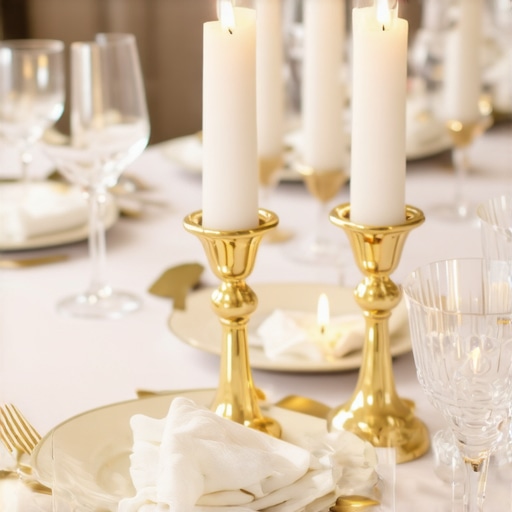
Let the Kitchen Provide the Natural Aroma
The best scent for a dining room is the one coming off the plates. If you have a professional team following top server tips to elevate your event experience, the timing of the dish reveal is everything. The moment a cloche is lifted or a plate is set down, the aroma of fresh herbs or seared protein should be the star. Adding a candle is like playing heavy metal music over a live string quartet—it’s just noise that ruins the harmony.
Move Your Aromatics to the Lobby
If you are truly committed to a signature scent, keep it in the transition zones. I recently worked on the logistics of a 400 person plated dinner in a tent where we placed scented diffusers in the coat check and the restrooms. It created a luxury ‘scent memory’ the moment guests arrived, but by the time they sat down for the first course, their palates were clean and ready for the menu.
Brief Your Staff on Sensory Management
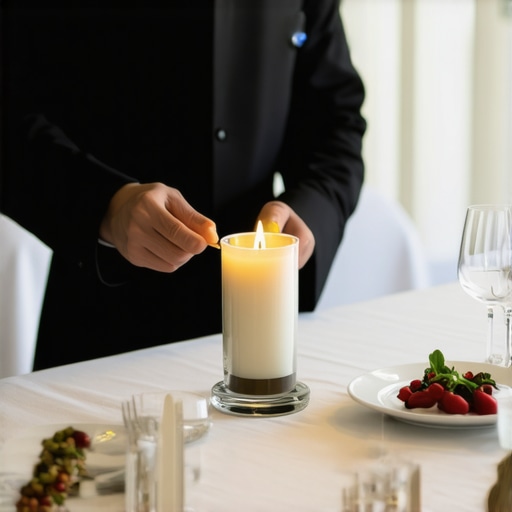
Your team needs to be your eyes, ears, and noses. Ensure that your lead staff knows that no scented items, including heavy perfumes or cleaning agents, should be near the service line. It’s why why your server team needs a clear chain of command on site is so vital; if a server notices a rogue scented candle lit by a decorator, they need the authority to extinguish it before the first appetizer hits the table. I’ve seen events saved by a quick-thinking captain who replaced a ‘Cinnamon Spice’ pillar with an unscented version five minutes before the doors opened.
Stop Equating Expensive Fragrance with Luxury
The most common myth in high-end event planning is that “luxury” is a specific scent. Planners and hosts often believe that the more they spend on a candle—think $80 hand-poured soy wax from a heritage brand—the more sophisticated the evening will feel. In reality, this is the most expensive mistake you can make. These high-end candles are designed with multi-layered fragrance notes meant to fill expansive living rooms, which is exactly why they are so dangerous at a dining table. While a cheap candle might just smell like basic vanilla, a luxury candle often has complex base notes of musk, cedar, or patchouli that cling to the palate and the interior of wine glasses. When you are paying for the nuance of a vintage Bordeaux, the last thing you want is for it to taste like a forest floor because of a nearby pillar candle. The contrarian truth is that the more expensive the candle, the more likely it is to sabotage your culinary investment.
Can you actually trust your venue to protect the menu?
Many clients assume the venue’s default setup is optimized for the dining experience, but this is a dangerous “oops” factor that I see even seasoned planners overlook. This is exactly why your venue manager should not be your day-of coordinator. A venue manager’s primary responsibility is the property and the general aesthetic of the room; they aren’t necessarily thinking about how the scent of the lobby’s “Signature Fragrance” is wafting through the HVAC system into the dining area. Research from the Monell Chemical Senses Center, specifically studies led by Dr. Pamela Dalton, demonstrates that our olfactory and gustatory systems are so tightly linked that a strong scent can literally suppress our ability to taste specific flavor profiles. You could be serving the finest dry-aged Wagyu, but if the room is saturated with a heavy floral aroma, your guests are only experiencing a fraction of the flavor. Have you ever fallen into this trap? Let me know in the comments.
Spot the Small Errors Before They Scale
Establishing real expertise in this field means looking beyond the floor plan and into the specific behaviors of the staff on the floor. Identifying how to spot a fake luxury server team before they ruin your gala involves watching how they interact with the environment when no one is looking. An elite server knows that a candle is a tool for illumination, not a source of perfume. The hidden risks of hiring student servers for high-end events become glaringly obvious when a well-meaning but untrained staffer decides to relight a scented candle that you specifically asked to be extinguished. When you are executing complex corporate event catering strategies for success, every person on the floor must be a sensory guardian. You must know how to spot a server who hasn’t been briefed on the menu, because they will be the ones oblivious to the fact that the dessert course’s delicate citrus notes are being strangled by a nearby decorative arrangement. High-stakes events require more than just good food; they require a meticulously controlled environment where the kitchen’s hard work isn’t undermined by a single piece of fragrant decor.
To move beyond the ‘scented candle trap,’ I’ve had to invest in tools that take the guesswork out of the atmosphere. When I’m mastering corporate event planning secrets to seamless success, I don’t rely on my eyes alone; I use a digital lux meter. I’ve found that the human eye is remarkably bad at judging light consistency across a large room. I personally use the Dr. Meter Digital Light Meter to ensure that the amber glow on the VIP head table matches the perimeter exactly. If the light is too bright, the food looks clinical; too dim, and your guests can’t appreciate the plating you spent thousands on. It’s a vital part of optimizing server efficiency to enhance event satisfaction because it prevents staff from squinting at order tickets or stumbling in shadows.
Stop Guessing and Start Measuring with These Technical Tools
I also swear by a shared digital briefing board, like Trello or Monday.com, but customized for sensory markers. We don’t just list the menu; we list the ‘forbidden smells’ and ‘lighting presets.’ This ensures that even if I’m not in the room, the captain knows exactly why we aren’t using the venue’s default air fresheners. According to the International Live Events Association (ILEA), technical site audits that include HVAC and airflow analysis are becoming a standard requirement for high-end galas to prevent kitchen odors from bleeding into the ballroom. It’s an essential checklist for successful corporate event catering that separates the amateurs from the pros. 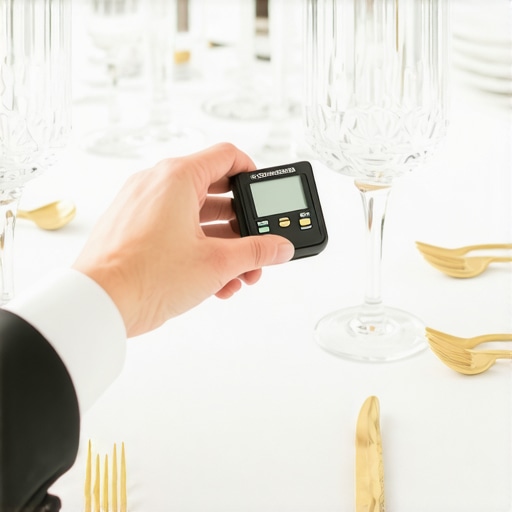
How do I keep my sensory standards high on every single gig?
Maintenance is about discipline and documentation. Every event I lead starts with a ‘Sensory Walk-Through’ thirty minutes before doors open. I literally walk the path of the guest, from the coat check to the seat, sniffing for rogue cleaning chemicals and checking that the background music is at a frequency that doesn’t compete with human speech. I’ve learned that why you should test your event lighting during the day and night is because the sun is your biggest variable; what looks intimate at 7 PM looks like a cave by 9 PM. If you want to scale your business, you need to turn these instincts into a repeatable SOP. I predict that by 2026, we will see ‘Sensory Architects’ as a standard line item in wedding catering trends to impress guests in 2025 and beyond. We are moving toward an era where the ‘feel’ of the room is as engineered as the sound system. If you want to elevate your next dinner, I challenge you to download a lux meter app on your phone tonight and check your own dining room. You’ll be surprised how much detail you’ve been missing in the dark.
Hard Lessons I Learned While Sabotaging My Own Tablescapes
After a decade in the field, I’ve realized that the problem with using scented candles on dining tables isn’t just about the smell; it’s about respect for the craft. I’ve learned that a guest will rarely complain to your face about a scent, but they will subtly leave half their plate untouched. My lightbulb moment came when a Michelin-starred chef pulled me aside and whispered, ‘You’re killing my fish with that gardenia.’ From that day on, I made sensory neutrality a non-negotiable part of my essential checklist for successful corporate event catering. You have to be willing to be the ‘bad guy’ who blows out the candles if it means saving the meal.
- Chef collaboration is key. Always ask your catering lead if the décor competes with the menu’s primary aromatics.
- Neutral doesn’t mean boring. You can still create a visual masterpiece using textures and light without relying on synthetic fragrances.
- Train your team to smell the room. Incorporate sensory checks into your server skills that make every event stand out.
The Atmosphere Toolkit Every Professional Needs
If you want to move from ‘decorator’ to ‘experience architect,’ you need the right gear. I never step onto a floor without my Dr. Meter Digital Light Meter to ensure the amber glow is consistent across the room. For inspiration on how to blend these technical elements into a cohesive look, I often look at innovative wedding themes that wow guests in 2025, which favor natural elements over artificial additives. I also highly recommend the book The Art of Gathering by Priya Parker; it changed how I view the purpose of every item on a table. Finally, keep a stash of high-quality, unscented beeswax pillars in your emergency kit—they burn cleaner and longer than anything you’ll find at a big-box store.
Crafting a Legacy of Flavor and Light
At the end of the night, your guests won’t remember the brand of candle you used, but they will remember how the food made them feel. By removing the distraction of artificial fragrance, you allow the true artistry of the kitchen to shine. Whether you are planning a gala or an intimate reception, remember that silence—both auditory and olfactory—is a luxury in its own right. Don’t be afraid to strip back the fluff to let the quality of your event speak for itself. Addressing the problem with using scented candles on dining tables is the first step toward true mastery of the guest experience. It’s time to lead the way in creating events that are as delicious as they are beautiful.
Have you ever been to a dinner where a strong perfume or candle made it impossible to taste your meal? I’d love to hear your experiences in the comments below!