

I’ll never forget the first time I really flopped with a catering spread. I had spent nearly four hours—and a terrifying amount of my client’s budget—meticulously folding prosciutto into tiny ribbons and creating a ‘river’ of aged cheddar that looked like it belonged in a gallery. It was beautiful. It was expensive. And it was a total disaster. When I looked back ten minutes into the event, the only thing people had touched was the bowl of salted almonds in the corner. Why? Because my board was so perfectly styled that it felt off-limits. It was intimidating, impractical, and frankly, a bit too precious.
Why Most Grazing Tables Fail the Functionality Test
If you are following the latest wedding catering trends that will delight guests, you’ve probably seen those massive, sprawling tables of food. They look great on a screen, but in person, they often fall flat. One of the biggest mistakes I made early on was prioritizing the ‘look’ over the ‘eat.’ I would put wet items, like marinated artichokes, right next to crispy crackers, resulting in a soggy mess that no one wanted. We have to remember that corporate event catering strategies for success aren’t just about the visual—it’s about the logistics of someone holding a drink in one hand and trying to grab a snack with the other. Today, I’m going to show you how to ditch the museum-style plating and build a board that actually gets cleared. We are going to solve the ‘soggy cracker’ dilemma, figure out exactly how much cheese you actually need, and ensure your guests don’t feel like they’re vandalizing a painting just to get a bite of brie. We also need to talk about the ‘trash’ problem; specifically, why your appetizer tray needs a designated discard station for those olive pits and toothpicks.
Is Expensive Artisan Cheese Actually Worth the Hype?
There is a common fear that if you don’t spend $40 a pound on cave-aged Gruyère, your board will look ‘cheap.’ I used to believe that too, until I realized that most people can’t tell the difference between a mid-range sharp cheddar and an ultra-premium one when it’s buried under a mound of grapes and honey. In fact, research published in the Journal of Culinary Science & Technology suggests that the perceived quality of a food spread is often tied more to the variety of textures and colors than the literal cost of the ingredients. You don’t need a mortgage-sized budget to make people happy; you just need a smart layout that accounts for the danger of serving finger foods that require two hands. The goal here is ‘accessible abundance.’ You want it to look full, but you also want it to look like it’s already been started. A slightly messy, ‘lived-in’ board is actually much more inviting than a sterile, untouched one. Have you ever been that guest who was too afraid to take the first piece of cheese from a perfect-looking platter? I certainly have, and it’s my mission to make sure your guests never feel that way again. Let’s get into the nitty-gritty of how to layer your flavors without creating a structural nightmare.
Build Your Board Like an Architect, Not an Artist
Think of your board or table as a blueprint rather than a canvas. When I started, I would just start throwing things down wherever there was a gap. Big mistake. Now, I follow a strict ‘Inside-Out’ method. I remember a high-stakes law firm mixer where I thought I’d be clever and put three different types of hummus directly on a marble slab for a ‘deconstructed’ look. Within fifteen minutes, the oils had separated, the crackers nearby were sponges, and the whole thing looked like an oil slick. I had to scramble to hide the mess with parsley. That’s why we start with the ‘anchors.’
Use Ramekins as Your Structural Anchors
Before a single piece of cheese touches the surface, place your bowls and ramekins. These are for your wet and ‘runny’ items—honey, mustards, olives, and marinated vegetables. By placing these first, you create a physical barrier between moisture and your dry goods. It’s a simple trick, but it’s the difference between a crisp cracker and a sad, soggy wafer. If you’re managing a massive crowd, the secret to managing a 1000-person conference buffet without a stampede often starts with these fixed points that dictate where guests gather and how they move. 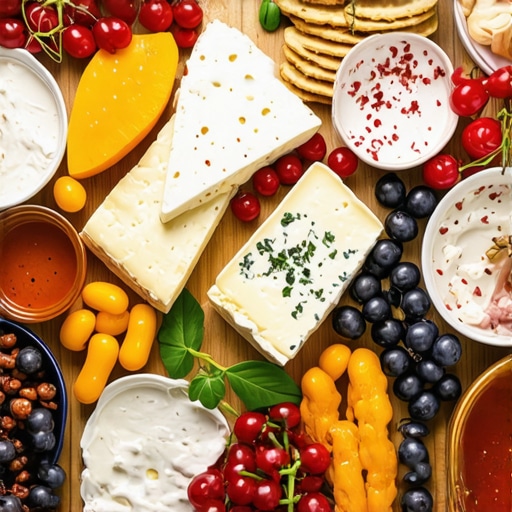
Create Zones That Make Culinary Sense
Grouping is your best friend. Don’t scatter your cheddar on one side and your grapes on the other. Place them together. Imagine you are the guest: if you have a slice of prosciutto, you want the fig jam and the crostini within arm’s reach. I call this ‘culinary proximity.’ This is especially vital when considering the danger of serving finger foods that require two hands; if everything is logically grouped, your guests won’t have to juggle a plate, a drink, and a search mission for a pairing.
Keep the Flow Moving When the Crowd Hits
A grazing table is a living thing, not a still-life painting. It needs constant maintenance to stay appetizing. This is where server skills that make every event stand out come into play. A great server knows when to ‘refresh’ a cluster by moving the remaining cheese to a smaller plate to maintain that look of abundance. If the board is part of a larger setup, why your server team needs a designated captain for every 50 guests becomes clear—you need someone whose entire job is to scan for gaps, soggy crackers, and empty ramekins.
Optimize for Real-Time Refills
When you are optimizing server efficiency to enhance event satisfaction, you should never be bringing a whole new board from the kitchen mid-party. Instead, have ‘refill kits’ ready behind the scenes. These are pre-cut portions of meats and cheeses stored in the back, ready to be slid onto the board in seconds. It keeps the energy high and ensures no guest ever encounters a picked-over carcass of a Brie wheel.Wait, before you go and buy twelve different types of artisanal jam, let’s talk about a mistake I see professionals make just as often as beginners: the Paradox of Choice. Most people assume that a truly high-end event requires an endless sea of options. In my experience, that’s a recipe for decision fatigue. When a guest is confronted with twenty different cheeses and fifteen types of crackers, they don’t feel pampered; they feel pressured. According to psychologist Barry Schwartz, author of The Paradox of Choice, an overabundance of options can lead to anxiety rather than satisfaction. You aren’t building a grocery store; you’re building a curated experience. I’ve seen 400-person galas nearly grind to a halt because people were standing in front of a grazing table, paralyzed by too many choices. This is where effective catering strategies for corporate event impressiveness come into play—less is often significantly more.
Ditch the Decision Fatigue for a Better Guest Experience
By limiting your selection to three or four distinct profiles—say, a sharp, a creamy, and a funky option—you actually guide your guests toward success. You are the curator. When you narrow the field, you can focus on quality and better pairings. I used to think a sparse-looking board was a failure, but a board with breathing room is actually a board that invites interaction.
Can You Really Get Away With Fewer Servers at a Buffet?
This is the ultimate ‘oops’ factor and the most common trap for budget-conscious planners. There is a persistent myth that grazing tables or buffets allow you to skimp on labor. The truth is the exact opposite. A high-volume food station requires active, professional management to stay sanitary and visually appealing. I’ve seen gorgeous spreads turn into total ‘crime scenes’ because there wasn’t a dedicated staff member to clear away the debris or wipe down the marble. If you aren’t careful, you’ll run into the hidden risks of hiring student servers for high-end events who might not realize a seafood tower has reached a dangerous temperature or that a spill has become a slip hazard. #IMAGE_PLACE_HOLDER_C# You need someone who can spot a ‘picked-over’ board from across the room and step in before it looks like a disaster. This is why the math behind hiring extra servers for a flowing champagne reception applies to food stations too; you aren’t just paying for plates to be moved, you’re paying for visual and safety insurance. I once saw a wedding where the planner tried to save a few hundred dollars by having one server manage two hundred guests at a raw oyster station. By 9:00 PM, the ice had melted, the oysters were lukewarm, and the experience was ruined. It was a classic case of the danger of serving raw oysters at a high volume wedding without adequate oversight. When you are learning how to choose the perfect servers for your wedding, look for teams that prioritize proactive maintenance over reactive cleaning. Don’t fall into the trap of thinking a table can take care of itself just because it’s ‘self-service.’ Have you ever been to an event where the food looked great but the service felt like an afterthought? Let me know in the comments below—I’d love to hear your horror stories or your wins!
Don’t Let Your Expensive Marble Boards Turn Into Discolored Relics
I am a total gear nerd because I have seen cheap equipment fail at the absolute worst possible moments. If you are investing in high-end presentation pieces like reclaimed wood or marble slabs, you have to treat them like the assets they are. For example, if you use wooden boards, you must treat them with food-grade mineral oil every few weeks, or they will crack and harbor bacteria. I use a specific blend of beeswax and oil that creates a waterproof seal—this isn’t just about aesthetics; it is about not having your $200 walnut board ruined by a spill of balsamic glaze. For my tech-savvy friends, I swear by using an infrared thermometer like the ThermoWorks FoodPro Plus. According to the Journal of Food Protection, maintaining cold-holding temperatures below 41°F is non-negotiable for safety, and an infrared gun lets you check the surface temp of a cheese platter from three feet away without touching the food. It is a game-changer for optimizing server efficiency to enhance event satisfaction because it takes seconds to audit the whole table without disrupting the guest experience.
How do I keep this operation running smoothly after the initial rush?
It starts with a rigorous briefing. You need to ensure your crew knows the ‘invisible’ tasks that keep a board looking fresh. It is not just about refilling the crackers; it is about rotating the stock so the older items get eaten first. This is where how to brief your server team on complex dietary restrictions in minutes saves lives. If your lead server knows exactly which cheese contains animal rennet or which nut-free cracker is truly safe, the whole event feels significantly more professional. 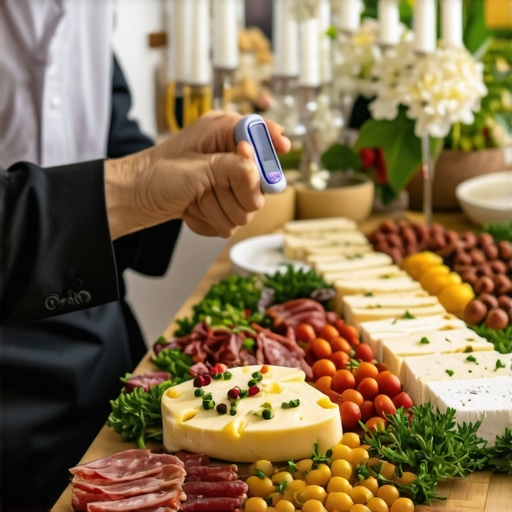
Why a Digital Blueprint Beats a Hand-Drawn Sketch
Scaling your catering business requires moving away from the ‘I will just wing it’ mentality. I personally use digital floor planning software to map out every single station before we even load the truck. This allows me to share the exact vision with my team so they aren’t asking me where the Brie goes while I’m trying to manage a client. In my experience, best corporate event servers for 2025 will be those who can navigate a digital event map as easily as they can carry a tray. This level of preparation is essential for corporate event catering strategies for success because it minimizes the ‘wait time’ that kills the energy of a room.
The Future of Functional Minimalism in 2025
Looking ahead, the ‘messy abundance’ look of the 2010s is evolving into what I call ‘functional minimalism.’ We are moving away from single-use plastics and toward reusable, high-end stone and glass. I am already seeing a shift where the focus is on sustainability and zero-waste logistics. If you want to stay ahead of the curve, invest in high-quality linens and ditch the paper napkins. It is a higher upfront cost, but top server tips to elevate your event experience always include the tactile feel of a heavy cloth napkin. For your next event, I challenge you to try this: give your server lead an infrared thermometer and a digital floor plan. It might seem like overkill, but that level of detail is what separates a standard buffet from a world-class gala. Get out there and build something that doesn’t just look good, but works perfectly under pressure.
Hard Truths from a Thousand Grazing Gigs
Over the years, I have realized that the most Instagrammable moments are often the most fragile. If you want to survive a high-volume event, you have to stop thinking about the food as a still life and start thinking about it as a living, breathing ecosystem. One of the biggest shifts in my perspective came when I stopped trying to fill every square inch of a board. A crowded board is a messy board within ten minutes of the first guest arriving. I also learned that you can easily how to spot a server who hasn’t been briefed on the menu just by watching how they handle a cheese knife; if they aren’t guiding guests, the board will be decimated in no time. Lastly, never underestimate the power of a kill switch—have a plan to pull the entire board if the temperature rises or the crowd gets too chaotic. This level of oversight is why why your server team needs a clear chain of command on site to make those split-second calls.
Tools That Earn Their Spot in My Kit
I don’t leave for a gig without these four essentials. First, the ThermoWorks FoodPro Plus is my secret weapon for food safety; it is an infrared thermometer that ensures everything stays at a safe temperature without me having to touch a single grape. Second, I highly recommend The Paradox of Choice by Barry Schwartz; it completely changed how I curate menus to prevent guest anxiety. Third, I use digital floor planning software for all my station layouts to ensure the traffic flow is perfect before the first table is even set. Finally, I swear by food-grade mineral oil blends for board maintenance; without it, your high-end wood becomes a porous mess that looks terrible in photos. These are the small details that align with the best top server tips to elevate your event experience.
Elevate Your Next Spread Beyond the Visuals
Transitioning from a decorator to a functional caterer is the moment your business truly scales. It is about more than just food; it is about the psychology of the room and the efficiency of the service. By focusing on flow, temperature, and curated choices, you are implementing the most effective corporate event catering strategies for success. Don’t be afraid to leave some empty space or to limit the cheese selection—your guests will thank you for the clarity and the quality. Now, get out there and build something that stays beautiful from the first bite to the very last. What is the one ingredient or structural tool you will never leave behind for a major catering event? Let me know in the comments below!