

I’ll never forget the ‘Gravy Incident of 2018.’ I had booked this gorgeous, exposed-brick loft—stunning, really—but it was narrow. I insisted on a massive, double-sided buffet for 150 people because I wanted variety. Within twenty minutes of the dinner bell, the room felt less like a celebration and more like a crowded subway car at 5:00 PM. Guests were shoulder-to-shoulder, trying to balance plates while dodging elbows. I watched in slow motion as a guest bumped a bridesmaid, and well, let’s just say silk and brown gravy don’t mix. It was a classic case of a great menu meeting the wrong room. My ego told me I could fit it all, but the floor plan told a different story.
Why Square Footage Dictates Your Dinner Service
People usually pick their favorite foods first and the service style second. It should be the other way around. If you are [planning the ultimate wedding reception meal](https://gourmetcateringsco.com/planning-the-ultimate-wedding-reception-meal), the logistics of the room are your silent partner. I learned the hard way that a buffet in a tiny room is a disaster, but a plated meal in a massive warehouse can feel cold and distant. Matching the two is an art form. Today, I’m going to share exactly how I stopped making these mistakes and started [optimizing server efficiency](https://gourmetcateringsco.com/optimizing-server-efficiency-to-enhance-event-satisfaction) to make every event flow like a dream.
Does the room size actually change how much people enjoy the food?
You might think a steak is a steak whether it’s served at a table or picked up at a station. But when guests are cramped, they get frustrated, and that frustration kills the vibe. My early mistake was thinking I could cram a full buffet into a space designed for a cocktail mixer. I didn’t account for the ‘buffer zone’ people need to move. According to the Events Industry Council, proper spatial planning is a top factor in attendee satisfaction, yet it’s often the last thing on the checklist. Have you ever been to an event where the line for food felt like it was never going to end? It’s miserable. By the time you get your food, it’s cold, and your legs are tired. We want to avoid that. We’re going to look at how to [set up a bar to avoid congestion](https://gourmetcateringsco.com/how-to-set-up-a-bar-to-avoid-congestion-in-small-rooms) and choose a service that fits your specific walls. Whether you are following [wedding catering tips from industry experts](https://gourmetcateringsco.com/wedding-catering-tips-from-industry-experts) or trying to figure out [how to staff a 200-person reception](https://gourmetcateringsco.com/how-to-staff-a-200-person-reception-with-only-12-professionals-4), the venue is your starting point. It is all about balance.
Ditch the Wishlist and Study the Blueprint
Before you even look at a menu, you need to look at the fire exit map. I know, it sounds incredibly boring compared to tasting short ribs, but it is the foundation of flawless execution. Think of your venue like a circuit board; if you try to push too much power through a thin wire, you get a short circuit. In event terms, that’s a guest waiting twenty minutes for a glass of water. When I’m analyzing a space, I look for the ‘pinch points’—those narrow hallways or awkward corners where people naturally clump together. If you’re deep into the ultimate guide to corporate event catering logistics, you know that flow is more important than the actual flavor. If the flow is broken, the guest’s perception of the food is already tarnished.
Identify the Pressure Points in Your Room
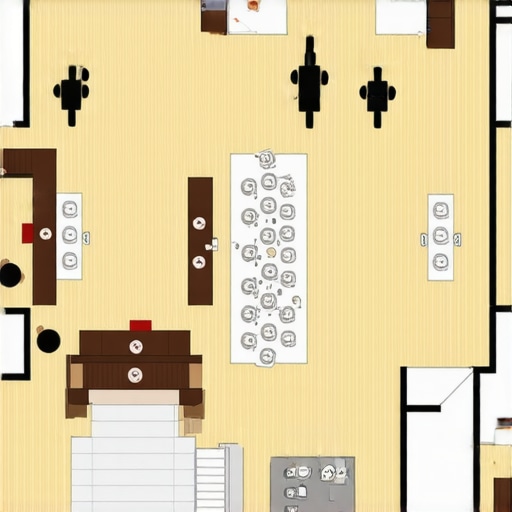
I once worked a product launch in a repurposed shipping container gallery. It was sleek, industrial, and about twelve feet wide. My client wanted three large food stations. I had to tell them no. Instead, we pivoted to the small plate trend why less food often means more trust 3 because it allowed guests to keep moving without needing a landing pad for a massive ceramic plate. We identified that the ‘pressure point’ was the entrance where the coat check was. By moving the food to the very back, we pulled the crowd through the space, effectively using the appetizers as a carrot on a stick to prevent a pile-up at the door. To keep things moving, we had to how to coordinate server movements to prevent hallway traffic jams, ensuring our team wasn’t swimming upstream against a wave of guests.
Choose a Service Style That Mimics Natural Movement
If you have high ceilings and wide-open floors, go for the buffet. It fills the space and creates a sense of abundance. But if you are in a historic home with small, segmented rooms, a buffet is your worst enemy. In those cases, I always recommend a seated, plated service or a ‘rolling’ cocktail service. This is where server skills that make every event stand out really shine. Servers become the delivery system that prevents guests from ever having to stand in a line. It’s the difference between a self-service gas station and a full-service valet. One requires effort; the other feels like luxury. When you how to staff a 200-person reception with only 12 professionals 4, you have to be surgical about where those people stand. You aren’t just serving food; you are managing traffic.
Balance the Staffing Numbers Against the Tight Corners
Staffing isn’t just about the guest count; it’s about the distance between the kitchen and the furthest table. I’ve seen planners try to save money by cutting two servers, only to realize the kitchen was in the basement and the dining room was on the third floor. Those extra minutes spent in the elevator mean the food is getting cold and the guests are getting restless. By optimizing server efficiency to enhance event satisfaction, you account for these physical hurdles. Also, never underestimate the impact of decor on movement; I’ve seen many a tray wobble because of the impact of floor length linens on server safety in tight quarters. If the room is small, keep the linens short and the walkways wide. Finally, remember the logic behind placing the bar far from the wedding buffet 3. You want to split the two main attractions to bifurcate the crowd. If you’re struggling with a tiny footprint, you must learn how to set up a bar to avoid congestion in small rooms to keep the energy from stalling out in a corner.
I often hear that variety is the ultimate gift to a guest. Conventional wisdom suggests that the more options you pack onto a buffet, the higher the luxury level. But in my experience, that is a total myth that often leads to a logistics nightmare. Too many choices create a bottleneck of indecision. When you present twelve different side dishes, every guest pauses for an extra few seconds per item. Multiply that by two hundred guests, and you have just added nearly an hour to your dinner service. According to research on ‘Choice Overload’ by experts like Sheena Iyengar at Columbia University, excessive options actually lead to anxiety and lower satisfaction levels. To keep the energy high and the lines moving, you must learn how to prevent decision fatigue when selecting your wedding decor and apply that same logic of curation to your plate.
Stop Overloading Your Guests With Infinite Choices
Instead of a sprawling, chaotic buffet, I advocate for a tightly curated selection where every dish serves a specific purpose. It is about more than just flavor; it is about the tempo of the evening. You want a menu that moves guests through the experience without stalling. This is why your menu needs to balance heavy and light options to ensure that by 9:00 PM, your guests are ready to hit the dance floor rather than sinking into a food coma. I have seen events completely stall because the caterer served five different heavy starches, and the room lost all its momentum before the first toast was even finished. Have you ever fallen into this trap? Let me know in the comments.
Why the Lead Server Must Stay Out of the Kitchen
One of the most dangerous traps in event management is the ‘hands-on’ lead server. It sounds counterintuitive—shouldn’t the leader be where the hardest work is? Absolutely not. If your lead is plating salads in the back, nobody is watching the floor. I have seen VIP tables go without water for twenty minutes because the lead server was stuck in the kitchen. This is why your lead server should never be the one managing the kitchen. They are the essential eyes and ears of the event. For things to run with surgical precision, why your server lead needs a copy of the event script becomes a non-negotiable rule. They need to know exactly when the CEO is standing up or when the couple is moving toward the cake so they can clear the path thirty seconds ahead of time. Without that high-level perspective, you are just reacting to chaos rather than controlling the flow. #IMAGE_PLACE_HOLDER_C#
Can you actually spot a pro server in under thirty seconds?
Yes, and it is usually found in how they handle a ‘dead’ moment. A true professional does not wait for a manager to give instructions; they anticipate the needs of the room through proactive scanning. There are 3 signs your event server is a pro within seconds of meeting 3, and one of the biggest is their peripheral vision. Are they observing the guests’ needs or staring at their own feet? Beyond just physical movement, there are subtle sensory ‘red flags’ an expert will catch instantly. For example, the hidden danger of using scented candles at the dinner table can ruin a high-end wine pairing, and a pro will extinguish them before the first course arrives. Similarly, they understand why you should avoid smelly foods at professional mixers to maintain a polished atmosphere. If you are planning an outdoor gala, they will even know how to avoid the soggy salad trap at large outdoor weddings 3 by managing the timing of the dressing to the exact minute of service. It is these tiny, hidden nuances that separate a mere ‘staffed event’ from a true luxury experience.
Experience has taught me that the difference between a good caterer and a legendary one isn’t just the seasoning on the chicken; it is the infrastructure backing up the team. Once you move past the ‘Gravy Incident’ phase of your career, you realize that you need a system that doesn’t rely on your memory alone. I personally swear by integrated staffing platforms like 7shifts, which I use to manage everything from allergy alerts to optimizing server efficiency to enhance event satisfaction. If I can’t see the entire team’s certifications and past performance ratings on one dashboard, I feel like I’m flying blind. This digital backbone allows me to scale from a private ten-person dinner to a massive gala without losing that personal touch.
The Digital Backbone That Saves My Sanity
In the world of high-stakes events, your software needs to be as nimble as your servers. I’ve integrated mobile-first communication tools because the old-school way of yelling across a kitchen just doesn’t work in a 10,000-square-foot warehouse. For every corporate event catering strategies for success session I run, I insist on a real-time ‘push’ notification system. If the guest of honor arrives ten minutes early, my team knows it before the car door even closes. This level of synchronization is exactly how to staff a high-security meeting without disrupting the flow. You aren’t reacting to the event; you are anticipating it through a shared digital consciousness.
Why the Paper Script Still Wins the Day
Despite my love for tech, I will never walk into a venue without a physical, laminated event script. Tech can fail, batteries die, and Wi-Fi in historic basements is notoriously flaky. This is why your server lead needs a copy of the event script tucked into their pocket at all times. It contains the ‘DNA’ of the night—the exact timing of the first dance, the specific table where the vegan guest is sitting, and the emergency contact for the florist. I follow the technical staffing guidelines from the National Association for Catering and Events (NACE), which suggests a 1:15 server-to-guest ratio for plated dinners to maintain elite standards. Having that ratio documented on paper helps me hold everyone accountable when the room gets loud.

How do I maintain service standards across different teams?
Consistency is the hardest thing to buy in this industry. To keep the quality high, I’ve moved toward a ‘Modular Training’ system. Every new hire, regardless of their resume, goes through a 15-minute briefing on our specific ‘house style’—from the way we pour wine to how we clear bread plates. We utilize top server tips to elevate your event experience as a checklist for every pre-shift meeting. Looking toward the future, I predict we will soon see AI-driven floor mapping that uses heat sensors to tell us exactly where guests are congregating in real-time, allowing us to deploy more staff to those ‘pinch points’ instantly. Until then, we rely on eagle-eyed leads and robust training. If you want to see an immediate improvement in your flow, I challenge you to try a ‘360-degree audit’ during your next dinner: stand in the center of the room for exactly sixty seconds and just listen—you’ll hear the bottlenecks before you see them. It’s time to start how to choose the perfect servers for your wedding or gala by looking at their ability to handle these invisible pressures.
Hard Truths from the Buffet Line
If there is one thing that years of spilled gravy and cramped hallways have taught me, it is that a beautiful menu cannot save a broken room. I used to think that the food was the star, but I eventually realized that the guest experience is actually shaped by the space between the tables. One lightbulb moment for me was realizing how much the simple trick for keeping buffet labels legible and clean can speed up a line; it’s not just about aesthetics, it is about removing the friction that makes guests stop moving. Another hard lesson? You can learn how to spot a bad lead server in the first 10 minutes of an event simply by watching if they are looking at the doors or the floor. True pros are always looking ahead to the next transition, ensuring the flow never stutters.
The Tech and Paper Toolkit I Never Leave Home Without
I don’t leave success to chance anymore. My toolkit relies heavily on a few non-negotiables that I recommend to anyone entering the high-stakes world of innovative catering ideas for modern weddings. First, I never sign a contract without using the 5 step process for vetting a new event venue checklist. It forces me to look at power outlets and kitchen access before I fall in love with a chandelier. Second, I rely on the National Association for Catering and Events (NACE) for their industry-standard staffing ratios to ensure my team is never overwhelmed. Finally, software like 7shifts has become my digital brain for managing complex schedules across multiple venues without losing my mind.
Crafting a Legacy One Plate at a Time
At the end of the day, your event isn’t just a series of logistical puzzles; it is a memory you are building for your clients and their guests. When you focus on optimizing server efficiency to enhance event satisfaction, you aren’t just cutting costs—you are creating a sense of ease that allows people to actually enjoy the celebration. Don’t be afraid to say no to a client if their dream layout will result in a logistical nightmare. They will thank you when the night flows perfectly and every plate arrives at the right temperature. Have you ever seen a floor plan completely ruin a great meal? Let me know your horror stories in the comments!