

I’ll never forget the cold sweat that broke out on my forehead during the 2018 Winter Gala. Everything looked perfect—the linens were crisp, the band was swinging, and the guest of honor was about to start their speech. Then, my lead bartender caught my eye and gave me ‘the look.’ It wasn’t a ‘we need more ice’ look; it was a ‘the vodka is gone’ look. We were only ninety minutes into a five-hour event. My heart sank. I stood there in my tuxedo, staring at three empty bottles while a line of thirsty donors began to form. I had made the classic rookie mistake: I underestimated the crowd’s thirst and didn’t account for the heavy pours of an open bar. Since that night, I’ve learned that a liquor shortage isn’t just a logistical hiccup; it’s a potential brand disaster for a corporate host or a mood-killer for a wedding. But here’s the good news—you can actually fix it without anyone ever knowing there was a crisis in the first place. I’m going to show you how to navigate this nightmare with the poise of a pro. We’re going to cover how to audit your stock in real-time, how to re-direct guest choices, and when it’s time to make a quiet run for more supplies.
That Moment the Gin Just Disappears
When you realize the supply is dwindling, panic is your worst enemy. I’ve seen planners literally run to their cars to find a liquor store, which usually ends in disaster. Early on, I thought I could just ‘wing it’ by buying based on a generic calculator, but I learned the hard way that how to choose the right staffing ratio for a VIP event often dictates how fast your liquor disappears. If you have too many bartenders and not enough oversight, those heavy pours will drain your inventory faster than a leaky bucket. You also have to consider the truth about corkage fees and large-scale events, because if you’re bringing in your own supply, you need a rock-solid replenishment plan. According to data from the National Association of Catering and Events, the average guest consumes roughly 1.5 to 2 drinks per hour, but high-energy galas can see that number spike by 30% depending on the success of the auction or the tempo of the music. Today, I’m going to share my field-tested strategies for pivoting mid-stream, from ‘stretching’ the remaining supply to the art of the ‘soft swap’ at the bar. We aren’t just managing bottles; we are managing the guest experience.
Is a Bar Shortage Really the End of the Night?
Have you ever had that sinking feeling when a guest asks for a Scotch on the rocks and you know you’re down to the last drop? It feels like the whole event is about to come crashing down. You worry about the Yelp reviews, the client’s anger, and the awkward whispers. But honestly, most guests won’t notice a shift if you handle it with grace. One trick I love is the logic of placing the bar as far from the entrance as possible to control the initial flow of guests and prevent a massive rush that drains your premium spirits early. It buys you time to assess. So, let’s talk about how to keep your reputation intact when the bottles are empty. Have you ever faced a total bar blackout at one of your events? It’s a rite of passage for every great coordinator, and once you survive it, you’ll never look at a case of wine the same way again.
Stop the Bleeding with a Real-Time Bar Audit
Managing a bar during a crisis is like flying a plane with a fuel leak; you need to know exactly how much time you have before you hit the ground. The first thing I do is pull my lead server or bar captain away from the noise. This is mastering corporate event planning secrets to seamless success in action: you don’t panic in public. I remember a tech launch in 2021 where our ‘Tech-Tonic’ was flying off the shelves. I realized we had four bottles of gin left for 300 people. Instead of sprinting to the store, I did a 60-second sweep to see what was actually left in the well.
The Quickest Way to Get an Honest Bottle Count
You need a headcount of unopened bottles right now. Don’t trust the bartenders’ instincts—they are busy and usually over-optimistic about how long a bottle lasts. I personally walk behind the bar and count ‘dead soldiers’ versus ‘full recruits.’ This audit tells me if I’m facing a 20-minute problem or a two-hour disaster. It’s also the perfect time to ensure you have the right leadership on the floor; why your server team needs a designated captain for every 50 guests becomes crystal clear in these moments, because that captain is the only person who can give you an accurate count while the bartenders keep pouring. 
Pivot Your Signature Drink on the Fly
If you’re out of gin but have a mountain of vodka, it’s time for the ‘soft swap.’ We don’t cross out the menu with a Sharpie; we simply stop pushing the gin drink. I instruct my team to lead with a question: ‘Have you tried our Seasonal Mule?’ which happens to be vodka-based. This isn’t deceptive; it’s professional resource management. You have to how to brief your server team on complex dietary restrictions in minutes to make this work, because your staff needs to know the new ‘priority’ drink immediately. In that 2021 launch, we switched the featured cocktail from gin to vodka in under three minutes. Not a single guest complained because the presentation stayed identical.
Kill the Heavy Pour Without Killing the Mood
When supplies are low, the free-pour is your enemy. I’ve seen rookie bartenders try to be the ‘cool guy’ by over-pouring to make up for a slow line, but that’s a fast track to an early shut-down. I quietly implement a strict jigger-only policy. Using top server tips to elevate your event experience, we focus on the garnish and the glassware to keep the perceived value high even if the spirit count is standard. A beautifully placed sprig of rosemary or a perfectly clear ice cube makes a standard 1.5oz pour look like a masterpiece. This buys you the 45 minutes you need for your runner to get back from the local distributor with the emergency restock without the guests feeling like the party is tapering off.Everyone tells you to just ‘add more staff’ when lines get long, but in my experience, that’s exactly how you run out of the good stuff by 9 PM. When you have four bartenders working the same station without a lead, accountability vanishes. Each one wants to be the ‘cool’ bartender, leading to heavy pours that skip the jigger. This is why how to choose the right staffing ratio for a VIP event is so critical; it’s not about quantity, it is about control. A study from the Cornell School of Hotel Administration highlights that beverage waste in open-bar settings can spike by 20% without direct floor supervision. You need someone watching the ‘burn rate’ of your premium bottles, not just pouring them. You also need a clear hierarchy; why your server team needs a designated captain for every 50 guests is a rule I live by because that captain acts as the inventory’s gatekeeper.
Can You Really Trust a Generic Liquor Calculator?
The short answer is no. Most online calculators assume a polite 1.5 drinks per hour, but they don’t account for ‘The Celebration Spike.’ If a corporate team just hit their quarterly goals, that number easily doubles. Relying on basic math is one of the biggest essential checklist for successful corporate event catering oversights. You have to look at the demographics—is it a high-energy sales team or a formal legal seminar? I’ve seen 200 salespeople consume more spirits than a 500-person charity gala. Understanding these the ultimate guide to corporate event catering logistics nuances allows you to over-buy on the right things while saving budget on the fluff.
The Glassware Shortage Nobody Sees Coming
Sometimes the liquor isn’t the problem; it’s the glass it goes in. I once worked a wedding where the bar had plenty of bourbon, but we ran out of rocks glasses because the busing team wasn’t fast enough. This is where how to audit your rental order for missing water glasses and cocktail rounds becomes a life-saver. If your server skills that make every event stand out include proactive clearing and washing, you can keep the bar moving even with a smaller rental order. 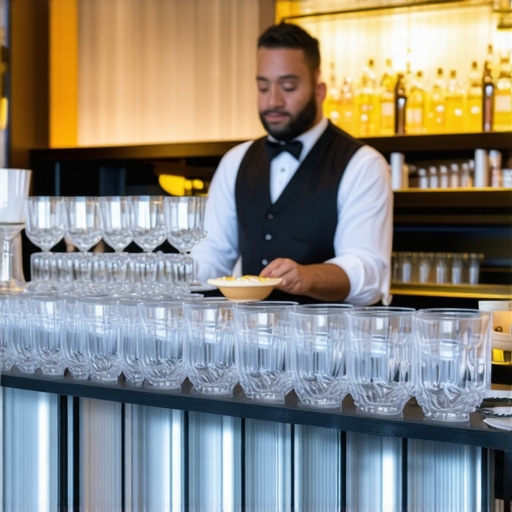
Don’t Let the Venue Manager Call the Shots
Here is the ultimate ‘oops’ factor: assuming the person who sold you the room is the person who will save the bar during a rush. They have a hundred other things to worry about, from the HVAC to the parking lot. This is exactly why your venue manager should not be your day-of-coordinator. You need a dedicated point of contact whose only job is the logistics of your specific party. If you are relying on the venue’s house staff without your own dedicated captain, you’re essentially flying blind. Have you ever fallen into the trap of thinking ‘more staff equals better service’ only to watch your premium inventory vanish in an hour? Let me know in the comments how you handled your last bar crisis.After you have survived a few near-disasters, you realize that grit alone is not a scaling strategy. I eventually stopped relying on my gut feeling and moved toward a tech-stack that does the worrying for me. I personally use BevSpot for all my high-stakes galas because it integrates directly with sales data to show me exactly where the shrinkage is happening. When you are mastering corporate event planning secrets to seamless success, you need to know if that missing liter of bourbon was poured into glasses or lost to spills. According to a recent report by the hospitality tech firm SevenRooms, 73% of guests now expect personalized drink recommendations based on past preferences—data you simply cannot track on a damp cocktail napkin without a digital system in place.
Throw Away Your Free-Pour Spouts
If you want to keep your margins healthy and your supply intact, you have to standardize the equipment. I transitioned every one of my bars to weighted precision jiggers and high-viscosity speed pourers. Why? Because consistency is the foundation of corporate event catering strategies for success. When every drink is exactly 1.5 ounces, your inventory stays predictable and your cocktails taste identical from the first pour to the last. This level of detail is a hallmark of top server tips to elevate your event experience. It might feel less flashy than flair bartending, but your bottom line and your client’s peace of mind will thank you for the precision. 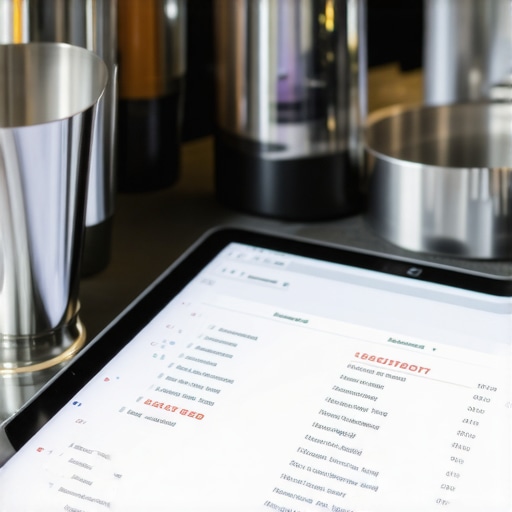
How Do I Keep My Bar Team Consistent for Every Single Event?
Maintenance is not just about the bottles; it is about the muscle memory of your crew. I run a mandatory fifteen-minute dry-pour drill before the doors open at every major wedding. We check for server skills that make every event stand out, like the perfect garnish placement and synchronized bottle handling. This is also the time to drill how to train temporary server staff on high-end table manners, ensuring that even the seasonal hires act like ten-year veterans. By optimizing server efficiency to enhance event satisfaction, you reduce the chaotic rush energy that leads to inventory mistakes and waste. Looking ahead to wedding catering trends to impress guests in 2025, I predict we will see smart bars equipped with integrated scales under the bottle wells. These will communicate directly with the POS system to flag inventory drops in real-time, eliminating the need for the manual counts I used to do. Try this at your next event: Audit your bar waste by weighing your empty bottles. You will be shocked at how much revenue is literally being thrown in the trash due to poor pouring habits.
Hard Truths from the Bottom of the Bottle
Reflecting on years in the trenches, I’ve realized that the ‘panic’ phase of a shortage is usually when the most money is lost. One thing experts rarely discuss is the ‘Phantom Guest’—the unseen inventory drain caused by staff taste-testing or improper storage. I now treat my bar like a high-security vault during the first hour. Another lightbulb moment was realizing that effective catering strategies for corporate event impressiveness aren’t just about the menu; they’re about the ‘invisible’ back-end logistics that keep the front-of-house looking effortless. I’ve also learned that a guest will forgive a missing brand of scotch, but they will never forgive a lukewarm cocktail. If you’re running low on spirits, double down on the ice and garnish to maintain the perception of luxury.
My Secret Arsenal for Flawless Bar Management
To prevent these disasters before they start, I rely on a few non-negotiables. First, BevSpot is my go-to for real-time inventory tracking; it takes the guesswork out of the ‘burn rate.’ For service philosophy, I swear by Danny Meyer’s Setting the Table—it teaches you how to handle the human element when things go wrong. I also never run a high-stakes bar without weighted precision jiggers; they are the single best tool for optimizing server efficiency to enhance event satisfaction because they remove the human error of a heavy pour. Finally, check out the latest wedding catering trends to impress guests in 2025 to see how interactive, low-ABV stations are helping planners stretch their budgets further without sacrificing the ‘wow’ factor.
Becoming the Calm in the Middle of the Storm
At the end of the night, a liquor shortage is just a puzzle waiting to be solved. Don’t let the fear of ‘running out’ stop you from taking on bigger, more ambitious projects. Every crisis I’ve faced has actually sharpened my corporate event catering strategies for success and made me a more resilient planner. You have the tools, the tech, and now the tactics to handle whatever the guest list throws at you. Go into your next event with the confidence that you can pivot on a dime and keep the glasses full. Have you ever had to pull off a ‘miracle restock’ in the middle of a wedding? Let me know your craziest bar stories in the comments below!