

I was standing at the edge of a dimly lit ballroom three years ago, sweat prickling my neck while I balanced a tray of seared sea bass that was rapidly losing its luster. The bride’s father had decided that the exact moment the kitchen fired the mains was the perfect time to visit Table 12 for a ten-minute catch-up about his golf game. I watched the steam vanish from the plates. I felt the collective heartbeat of the kitchen staff skip a beat as the chef’s face turned a shade of red that matched the pimento garnish. Table-hopping is the silent killer of event pacing. I learned the hard way that if you do not have a plan to corral those social butterflies, your beautiful, expensive meal is going to end up lukewarm and uninspired. Today, I am going to share exactly how I stopped letting the ‘mingle factor’ dictate the timing of the kitchen. We are going to look at the logistical dance required for planning the ultimate wedding reception meal without making it feel like a forced march or a military operation.
Stop Letting Your Guests’ Social Lives Ruin the Entrée
The problem usually starts with a single guest. They stand up to hug a cousin, and suddenly, like a domino effect, three other tables are empty. In my early days, I made the massive mistake of thinking my team could just ‘wait it out.’ I thought being polite meant letting the guests dictate the flow. I was wrong. We ended up with a massive bottleneck in the kitchen and frustrated chefs who had timed every steak to perfection. You need professional servers who know how to read a room, but more importantly, you need a strategy that begins before the first plate even leaves the heat. Successful service is about subtle cues and knowing how to keep your event schedule on track without rushing guests. It is a delicate balance of hospitality and firm logistics that I had to fail at several times before I finally got it right.
Does Controlling Guest Movement Feel Too Bossy?
I get it. You want your wedding or gala to feel natural and fluid, not like a boarding call at the airport. But here is the reality: according to the USDA Food Safety and Inspection Service, hot food must be maintained at 140°F or higher to stay out of the ‘danger zone’ where bacteria thrive and quality nosedives. Every minute your guests spend chatting in the aisle is a minute your food loses its premium texture. It is not about being a drill sergeant; it is about protecting the investment you made in the menu. If you have ever sat at a wedding table waiting for that one ‘runner’ to sit down so you could finally eat your dinner, you know that frustration. Have you ever been at an event where the food service felt like it took forever because the room was too chaotic? I would love to hear your horror stories in the comments. One of the biggest lessons I learned was that why a lead server should never be assigned a single table comes down to oversight; when your leadership is stuck pouring wine for one VIP, they can’t see the social bottleneck forming at the other end of the room.
Get Everyone Seated Before the Sauce Breaks
The transition from the bar to the dinner table is where most schedules die a slow death. You need a clear signal that the social hour is over and the culinary experience is beginning. In my experience, the best way to transition guests from cocktail hour to dinner is not a loud, jarring announcement over a microphone. Instead, use a change in the room’s energy. Dimming the lights in the bar area while slowly increasing the house lights over the dining tables acts like a silent shepherd. It cues the subconscious that the ‘action’ has moved. Once they start moving, you need structure to prevent a bottleneck at the seating chart.
Build a Human Perimeter with Your Captains
Once guests are in motion, you need a chain of command that operates independently of the kitchen. I realized early on that why your server team needs a designated captain for every 50 guests is the only way to maintain operational sanity. These captains act as local governors of their zones. They shouldn’t be the ones carrying the heavy trays; they should be the ‘eyes’ looking for that one guest who has wandered off to the balcony just as their sea bass is arriving. This level of oversight is one of the top server tips to elevate your event experience because it ensures no plate hits a table without a diner present to enjoy it.
Design Your Floor Plan for Speed Not Just Beauty
Your floor plan is often your biggest hidden enemy. I once worked a wedding where the planner insisted on 72-inch round tables squeezed together like sardines to create an ‘intimate’ feel. It was a logistical nightmare. Servers were constantly bumping into chairs, and the heat from the plates dissipated before they could navigate the maze. This is exactly why your ballroom floor plan needs a three-foot safety buffer behind every chair. Without that clearance, your professional servers are essentially running an obstacle course while carrying twenty pounds of porcelain. 
The Hidden Physics of 400 Plated Meals
I also learned that tiny ‘pre-game’ wins can buy you precious minutes. At a high-stakes corporate gala in 2022, we were facing a tight 45-minute window for a three-course service. We discovered that why pre-pouring water is the secret to a fast-service-start can save your team nearly twenty minutes of repetitive movement. By pre-pouring and pre-setting the first cold course, you allow the kitchen to focus entirely on the entrée transition. Managing the logistics of a 400-person plated dinner in a tent or a large hall requires you to stop guessing on numbers. Knowing how to choose the right staffing ratio for a VIP event is a science, not a suggestion. If you are serving a multi-course meal, a 1:10 ratio is your absolute baseline for optimizing server efficiency to enhance event satisfaction. Anything less, and you are simply asking for lukewarm soup and frustrated guests who feel ignored while their table-mates are already eating.Everyone tells you that a high staff-to-guest ratio is the ultimate sign of luxury. If you are planning a high-stakes corporate gala or a black-tie wedding, the common advice is to simply hire more bodies. But in my years on the floor, I have seen overstaffing become a logistical anchor that drags the whole event down. When the service aisle is crowded with extra personnel, plates move slower, and the ‘diffusion of responsibility’ kicks in—suddenly, everyone thinks someone else is refilling the water at Table 4. According to research from the Cornell University School of Hotel Administration, increasing labor levels beyond an optimal point leads to diminishing returns in service quality due to physical congestion and a breakdown in clear communication. You do not just need a high count; you need to know how to choose the right staffing ratio for a VIP event that balances presence with agility.
The Staffing Myth That Drowns Your Service
It is a counterintuitive truth: twenty mediocre servers will always provide worse service than twelve elite ones. The ‘more is better’ philosophy ignores the physical reality of the venue. I once worked a luxury tented event where the client insisted on two servers per table. It looked impressive for the first ten minutes, but as soon as the entrée service began, the ‘service-way’ became a literal parking lot of servers waiting for space to pass each other. This is where optimizing server efficiency to enhance event satisfaction becomes a game of subtraction rather than addition. High-quality service requires room for the ‘dance’ to happen. If you are hiring, focus on quality; knowing how to spot a professional server in an interview is far more valuable than a deep bench of warm bodies who do not understand the flow.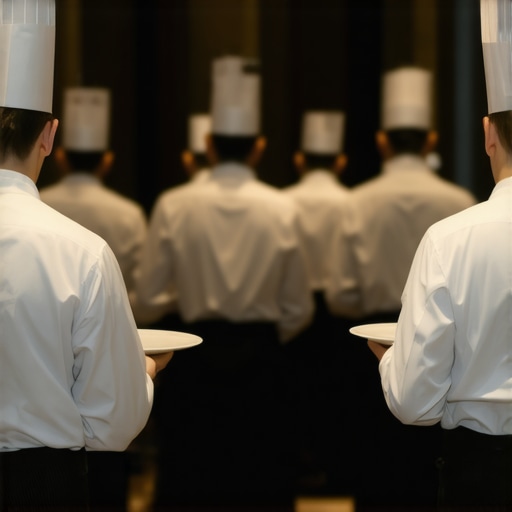
Can a Huge Staff Actually Slow Down Your Dinner?
The answer is a resounding yes if they are not managed with surgical precision. One of the biggest ‘oops’ factors I see is the mismanagement of the lead server. People often think the lead should be the ‘best’ server who takes care of the most important guests. Wrong. If your lead is stuck pouring wine for the Mother of the Bride, they cannot see that Table 15 has not received their appetizers yet. This is exactly why your lead server should never be the one managing the kitchen and why a lead server should never be assigned a single table. They are your eyes and ears on the ground. When they are tethered to a specific task, the entire system loses its captain.
Don’t Let Your High-End Vision Become a Logistical Nightmare
Another common mistake is neglecting the ‘brief.’ I have seen expensive menus served with ‘I think this is beef’ because the team was not given a pre-shift walkthrough. Sophisticated service requires that every person on the floor knows the ingredients, the allergens, and the exact timing of the speeches. Have you ever fallen into this trap where you thought more people would solve the chaos, only to have it get worse? Let me know in the comments. Transitioning from a ‘worker’ mindset to an ‘architect’ mindset is the only way to ensure your corporate event catering strategies for success actually yield a seamless night. It is about the silent cues, the empty aisles, and the lead server who is free to spot a problem before it even begins.To move from being a reactive manager to a proactive architect, you need more than just a loud voice; you need a tech stack that handles the cognitive load for you. In my early days, I relied on memory and frantic scribbles on cocktail napkins, but as the volume of my events grew, so did the complexity of the errors. Now, I swear by cloud-based event scripts that synchronize across the team in real-time. When you are deep in the weeds, having a shared digital timeline prevents the ‘who-was-supposed-to-do-that’ syndrome that kills momentum. I have found that why your server lead needs a copy of the event script is the single most important factor in keeping a 300-person plated service from descending into chaos.
How can I maintain service standards when the night gets long?
It is easy to be perfect at 6:00 PM; it is the 10:00 PM standards that define your reputation. I use a ‘mid-event reset’ strategy where captains perform a five-minute sweep of their zones specifically looking for debris, stray glassware, and table posture. This is not just about cleaning; it is about mental recalibration for the staff. According to a study published in the International Journal of Hospitality Management, the implementation of structured, short-interval checklists in banquet settings can reduce service errors caused by cognitive fatigue by over 20%. This is why I insist on how to audit your rental order for missing water glasses before the first guest even walks in—it sets a tone of precision that carries through the final toast.
Tools That End the Guesswork in the Kitchen
One of my secret weapons is a dedicated ‘Kitchen-to-Floor’ communications channel, usually via a lightweight radio or a private digital thread. If a keynote speaker goes off-script or a wedding guest starts an impromptu toast, the floor lead pings the kitchen immediately. The chef pauses the fire. The sea bass stays in the oven, not on a cold tray. This level of real-time adjustment is one of the top server tips to elevate your event experience because it protects the integrity of the food. Looking ahead, I see a shift toward AI-integrated floor plans that predict guest movement patterns based on past data, a topic I explore in my analysis of wedding catering trends to impress guests in 2025. 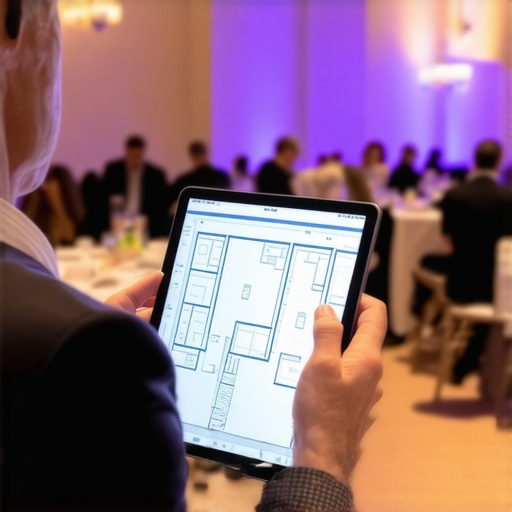
Scaling Success Beyond One Big Night
If you want to scale your catering business or just ensure your annual corporate gala keeps improving, you have to embrace the post-mortem. We use a digital feedback loop where servers log ‘friction points’ immediately after their shift. This data helps us refine how to organize a staff meeting before a 500 person dinner for the next cycle. If a table was too close to a high-traffic entrance, it gets flagged in the master floor plan. This meticulous tracking is the difference between an amateur who survives an event and a professional who masters the corporate event catering strategies for success. I challenge you: for your next event, do not just rely on a verbal briefing. Create a digital ‘one-sheet’ that includes the three most likely logistical bottlenecks and the specific plan to solve them. You will be amazed at how much quieter the room feels when every server already knows the answer to a problem that hasn’t happened yet.
Why Your Servers Need to Think Like Air Traffic Controllers
After years in the weeds, I’ve realized that the most dangerous phrase in catering is ‘it will probably be fine.’ It never is. One major lightbulb moment was realizing that a server’s primary job isn’t actually carrying plates; it is managing the visual flow of the room. If a server isn’t looking three tables ahead, they are already behind. You have to know how to spot a server who hasn’t been briefed on the menu before the first course because that lack of knowledge creates a hesitation that ripples through the entire timeline. I also learned that your venue manager is a powerful ally, but they are not your logistics lead. This is why your venue manager should not be your day-of coordinator. Their focus is the physical building and facilities; your focus is the heartbeat of the service. Separating those roles was the single best decision I ever made for my operational sanity.
The Gear That Saved My Reputation
If you want to move from chaos to choreography, you need more than just good intentions. I always keep an essential checklist for successful corporate event catering on a shared digital tablet so every captain is looking at the same version of the truth in real-time. For research and data, I constantly return to the industry studies from the Cornell School of Hotel Administration to validate my staffing ratios against peak service times. I also swear by using lightweight, push-to-talk headsets for lead staff; they eliminate the need for shouting and keep the ballroom atmosphere refined while you are mastering corporate event planning secrets to seamless success.
Take Back Control of Your Service Floor
The transition from a chaotic dinner to a legendary event does not happen by accident. It happens when you stop being a passenger in your own logistics and start being the architect of the experience. By applying these corporate event catering strategies for success, you are not just serving a meal; you are protecting a core memory for your clients. Go out there and lead your team with the confidence that every plate will be hot, every guest will be seen, and every movement will be intentional. Have you ever had a ‘butterfly’ guest who refused to sit down while the food was getting cold? Let me know in the comments how you handled that social bottleneck!