

I remember a wedding back in 2018 where I caught myself looking at my watch more than the happy couple. I was so obsessed with a strict 7:15 PM cake cutting that I physically started nudging guests toward the dance floor while they were still savoring their prime rib. The bride caught my eye, and the look she gave me—part confusion, part annoyance—is burned into my brain. I realized then that I wasn’t behaving like a host; I was acting like a drill sergeant. Since that day, I’ve spent years figuring out how to keep a timeline moving with the grace of a swan rather than the subtlety of a freight train. Have you ever felt that awkward panic when the main course is running late and the DJ is already cueing the first dance? It’s a nightmare, but it’s one we can avoid. Today, I’m sharing the exact strategies I use to keep things moving without making anyone feel like they’re on a conveyor belt.
Stop acting like a stopwatch and start acting like a host
Managing a room isn’t about barking orders; it’s about shifting energy. One of the biggest mistakes I made early on was thinking that [the ultimate guide to corporate event catering logistics](https://gourmetcateringsco.com/the-ultimate-guide-to-corporate-event-catering-logistics) meant sticking to a spreadsheet regardless of the human element. It doesn’t. Real success comes from knowing [the best way to transition guests from cocktail hour to dinner](https://gourmetcateringsco.com/the-best-way-to-transition-guests-from-cocktail-hour-to-dinner) by using lighting and music rather than a microphone. Whether you are deep into [mastering corporate event planning secrets to seamless success](https://gourmetcateringsco.com/mastering-corporate-event-planning-secrets-to-seamless-success) or just trying to survive your own wedding reception, you have to learn to read the room. If the guests are laughing and the wine is flowing, you don’t cut them off abruptly. You adjust the backend.
Will my guests feel like they are on a conveyor belt?
This is the number one fear I hear from my neighbors and clients alike. They think a “schedule” means a robotic experience. But here is a surprising reality: guests actually crave direction. A study published in the Journal of Consumer Research suggests that when service is perceived as “rushed,” the overall quality rating of the experience drops by nearly 40%, even if the food is perfect. The trick is to be proactive rather than reactive. For example, [why your server lead needs a copy of the event script](https://gourmetcateringsco.com/why-your-server-lead-needs-a-copy-of-the-event-script) is so they can prep the kitchen the moment a speech starts, not after it ends. This prevents that dead air that makes people feel restless.
Master the art of the invisible nudge
To keep things on track, you need a team that understands the rhythm of service. I always tell people that [optimizing server efficiency to enhance event satisfaction](https://gourmetcateringsco.com/optimizing-server-efficiency-to-enhance-event-satisfaction) is the secret weapon of every great party. It’s about [why pre-pouring water is the secret to a fast service start](https://gourmetcateringsco.com/why-pre-pouring-water-is-the-secret-to-a-fast-service-start) so that guests can sit down and immediately feel cared for, rather than waiting for the basics. When the staff is one step ahead, the schedule takes care of itself. If you’ve ever had a keynote speaker go off-script, you know the value of knowing [how to keep your event flowing when the keynote speaker runs late](https://gourmetcateringsco.com/how-to-keep-your-event-flowing-when-the-keynote-speaker-runs-late). It’s all about the pivot.
Stop waiting for the kitchen to tell you it is ready
Effective event management is like conducting an orchestra; you do not wait for the violinist to finish their solo before you signal the cellos to prepare. You anticipate. One of the most vital top-server tips to elevate your event experience is to establish a strict warning system. I tell my team to give the kitchen a ten-minute, five-minute, and two-minute warning before every transition. If you are still figuring out how to choose a catering style based on your venue size, remember that the larger the room, the longer the ‘lag time’ between a command and the actual service. I once ran a 300-guest charity gala where the keynote speaker decided to improvise a 25-minute ‘brief’ history of the foundation. The kitchen was ready to plate the steaks, and every minute they sat under the heat lamps, they were losing moisture. I had to pivot. Instead of waiting for him to finish, we signaled the servers to perform a silent water refill and bread service, ensuring guests felt attended to without interrupting the speaker. By the time he finally sat down, we had already shaved ten minutes off the service time because the tables were cleared and prepped.
Give your lead server wings, not anchors
The biggest bottleneck in any event is a manager who is stuck doing the work of a regular server. This is why a lead server should never be assigned a single table. Their job is to be the ‘floater’ who spots the half-empty wine glass or the guest who looks lost. When your lead is anchored to a specific station, they lose the bird’s-eye view necessary to manage the room’s energy. This oversight is often how you end up with one side of the room finishing their meal while the other side has not even seen a bread basket.
The tactical swap that saves twenty minutes
If you find yourself running behind, do not panic and try to rush the main course. Instead, look at the transition to the end of the night. One of my favorite secret weapons is the logic of serving dessert before the final speech. Most people wait for the speeches to end to bring out the sweets, but that creates a massive ‘dead zone’ where guests are just sitting with empty plates. By serving dessert while the final thank-yous are being said, you satisfy the guests’ sweet tooth and allow the dancing to start the second the microphone is turned off. For weddings, specifically, consider the benefit of using a plated dessert over a cake table. It keeps people in their seats for the important moments and prevents a chaotic rush to a buffet line during a sentimental toast.
Kill the buffet queue before it starts
Nothing kills the ‘vibe’ of a high-end event like a long, stagnant line of people holding empty plates. To prevent this, you must rethink your layout. I always suggest learning how to style a buffet table for maximum visual impact while prioritizing two-sided service. If you have 100 guests, one buffet line is a disaster; two lines make it a breeze. Another pro tip is the simple trick for keeping buffet labels legible and clean so guests do not have to stop and ask the server what every single dish is. Every three seconds a guest spends asking ‘is this gluten-free?’ is another three seconds the line stays still.
Stay ahead of the mid-event energy dip
Every event has a ‘lull’—usually right after the main course is cleared. This is the danger zone where guests start looking for the exit. You must know how to avoid the mid-event lull in guest energy by using sensory shifts. Dim the lights by 20%, increase the music tempo slightly, and have servers circulate with something unexpected—like a late-night snack or a signature cocktail. This physical change tells the brain that the ‘dinner’ phase is over and the ‘party’ phase has begun. It is about psychology as much as it is about logistics. If you can master these small, invisible shifts, your guests will never feel like they are being moved along a conveyor belt, even if you are perfectly on schedule.Most planners will tell you that the best service is the kind you never see. They strive for a ‘silent’ service where plates vanish like magic and water glasses refill themselves as if by ghosts. But in my experience, the ‘ghost’ approach actually backfires. When guests cannot find a human to assist them with a simple request, they feel abandoned rather than pampered. Research from the Cornell University School of Hotel Administration highlights that positive, proactive engagement—even if brief—is a much stronger driver of customer loyalty and satisfaction than mere speed or invisibility. You need to know how to choose the right staffing ratio for a vip event to ensure your team has the mental bandwidth to be present and engaged, not just efficient. Have you ever fallen into this trap where you thought less interaction meant more elegance? Let me know in the comments.
Stop trying to make your servers invisible
One common ‘oops’ factor I see even in high-end planning is the failure to how to spot a bad lead server in the first 10 minutes of an event. If your lead isn’t scanning the room for physical cues and service bottlenecks immediately, the whole night is in jeopardy. This is especially true for complex celebrations where securing top servers for a seamless wedding reception isn’t just about headcounts, it’s about finding staff with high situational awareness. If they aren’t anticipating the guest’s next move, they are already falling behind the schedule.
What happens when your networking flow hits a brick wall?
Many corporate events suffer from ‘huddle syndrome,’ where guests stay in fixed, impenetrable groups. Most organizers think more open floor space is the answer, but the nuance actually lies in furniture placement. Interestingly, why high-top tables are the secret to better networking flows is because they provide a non-committal ‘landing pad’ that encourages natural rotation and easier entry for newcomers. Without these tactical anchors, the room stays stagnant and the energy dies before the first speaker even takes the stage.
The contract detail that saves your sanity
Finally, do not let the ‘human element’ distract you from the cold, hard logistics. I have seen planners lose thousands of dollars because they did not realize why your catering contract needs a firm headcount deadline. It is not just a courtesy for the kitchen; it is a financial firewall for you. Understanding these fine-print realities is exactly why your event budget needs a 10 percent contingency fund. When you account for the nuances of human behavior and the strictness of professional catering contracts, you transition from being a stressed coordinator to a true master of the room.
Upgrade your comms before you upgrade your menu
I have learned that a ‘vibe’ isn’t just felt; it is engineered. To scale from a 50-person intimate dinner to a 500-guest gala, you need more than just extra hands; you need a system that does not break under pressure. I personally rely on what I call the ‘Service Bible’—a digital living document that is shared with the entire team. It covers everything from the specific wine vintage being served to the exact sequence of events for effective catering strategies for corporate event impressiveness. But even the best document fails without the right hardware. I use push-to-talk headsets with discreet earpieces because shouting across a ballroom is for amateurs. This allows my lead server to communicate that the CEO is about to wrap up a speech without making it look like a security detail is swarming the room. When you are how to organize a staff meeting before a 500-person dinner, you have to emphasize that radio silence is just as important as the communication itself; we only speak when the timeline shifts.
How do I maintain this level of precision over every event?
Maintaining consistency isn’t about luck; it’s about the post-game analysis. After every major event, I perform a walkthrough that would make a forensic investigator blush. I genuinely believe that why you should audit your venues trash cans after a gala is the single most important habit you can develop. It tells you exactly what guests didn’t like. If you see fifty half-eaten pieces of salmon, you have a menu problem, not a service problem. This kind of data-driven feedback is a staple of wedding catering tips from industry experts who stay at the top of their game for decades. You have to be willing to look at the ‘ugly’ side of the event to make the next one beautiful.
Ditch the paper and embrace digital floor mapping
If you are still using a printed seating chart and a highlighter, you are living in the dark ages. I use digital mapping tools that allow for real-time changes. If a VIP guest arrives with an unexpected plus-one, we update the tablet, and the server for that section sees it instantly. This level of agility is the core of corporate event catering strategies for success. It prevents that awkward moment where a server is frantically looking for a chair while the rest of the table is already eating. I also pay close attention to the technical layout; according to the NFPA 101 Life Safety Code, maintaining clear egress and specific aisle widths isn’t just a safety requirement—it is the literal blueprint for server speed. If your team has to squeeze through narrow gaps, your service will always be slow. 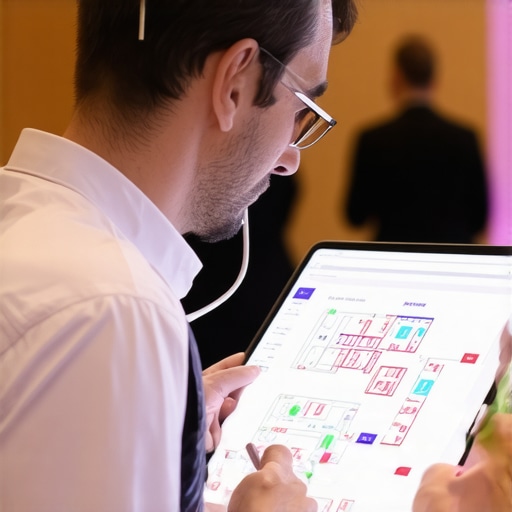
Predicting the end of the accidental bottleneck
Looking forward, I see a major shift toward AI-integrated heat mapping in event venues. Imagine knowing exactly where your guests are clustering in real-time so you can redirect your server team to open a second bar or move the appetizer trays. We are already seeing the early stages of this with RFID-tagged badges at large tech conferences. This tech will eventually trickle down to weddings, allowing us to manage flow with surgical precision. For now, the best tool you have is your own eyes and a team trained in top-server tips to elevate your event experience. My challenge to you: at your next event, perform a ‘trash audit’ at the end of the night. It’s a dirty job, but it will provide more insight than any guest survey ever could.
The Hidden Truths Behind Every Seamless Night
Over the years, I have discovered that the difference between a good event and a legendary one lies in the details that guests never notice. Here are a few lightbulb moments that changed my approach forever. First, silence is your loudest signal. If you notice a sudden drop in the ambient hum of the room, it usually means guests are waiting for something. I have trained my teams to listen for that shift and react before it becomes a lull. Second, the kitchen and the floor must be one heartbeat. I have found that [wedding catering tips from industry experts](https://gourmetcateringsco.com/wedding-catering-tips-from-industry-experts) often overlook the human connection between the chef and the lead server. A simple five-minute check-in can prevent hours of logistical headaches. Finally, trust the energy of the room over the numbers on your watch. If people are genuinely connected and the vibe is peaking, let it ride for five extra minutes—it is the human element that makes it feel special.
My Personal Toolkit for Stress-Free Planning
I am often asked what secret weapons I keep in my bag to ensure everything runs like clockwork. I swear by Social Tables for digital floor mapping; being able to shift a table layout on a tablet while standing in the venue is a game-changer for [corporate event catering strategies for success](https://gourmetcateringsco.com/corporate-event-catering-strategies-for-success). I also recommend everyone read Setting the Table by Danny Meyer. It completely reshaped how I view hospitality as a service rather than just a task. For communication, nothing beats Motorola Discreet Earpieces. They allow for instant pivots without the security detail look that can ruin the intimacy of [top servers for a seamless wedding reception](https://gourmetcateringsco.com/top-servers-for-a-seamless-wedding-reception).
Bring Your Vision to Life with Confidence
At the end of the day, event management is about creating a space where people feel cared for and free to celebrate. Whether you are navigating the complexities of high-end logistics or just starting to experiment with [innovative catering ideas for modern weddings](https://gourmetcateringsco.com/innovative-catering-ideas-for-modern-weddings), remember that your passion is the most important ingredient. Use these strategies as your foundation, but do not be afraid to pivot when your gut tells you to. You have the knowledge to make your next gathering absolutely unforgettable. #IMAGE_PLACEHOLDER_E#
Have you ever had a moment where an event schedule completely fell apart? I would love to hear how you handled it in the comments below!