

I remember the sweat trickling down my neck as I watched a line of thirty frustrated executives standing by an empty bar during my first solo corporate gala. I thought I was being smart by sticking to a standard 1:20 ratio, but I quickly realized that VIPs don’t just want food; they want an experience. That night was a disaster of cold hors d’oeuvres and empty wine glasses. I learned the hard way that when the guest list is high-profile, the math changes completely. Today, I’m going to share the exact formulas I’ve refined over a decade so you never have to stand in the corner of a ballroom making frantic phone calls to a temp agency at 7:00 PM. We are going to ensure your next event is remembered for its elegance, not for the time a guest had to flag down a busser just to get a napkin.
Why Your Last Event Felt Like a Fast Food Joint
The biggest mistake I made early on was treating every event like a standard wedding reception. When you are mastering corporate event planning, you realize that VIP guests expect proactive service, which means a server should be anticipating a need before the guest even feels it. If a guest has to look around the room to find a server, you’ve already lost the ‘VIP’ feel. For high-stakes environments, you should audit your server to guest ratio carefully. A standard 1:15 ratio is a recipe for mediocrity at a black-tie gala. According to Hospitality Net, the gold standard for ultra-luxury service often hovers closer to a 1:1 or 1:2 ratio for seated dinners to ensure that every movement—from bread service to the final pour—is synchronized.
Is hiring more people actually worth the extra cost?
It is easy to look at a quote and think that doubling your staff is just throwing money away. However, the difference between a staffing agency and a service partner becomes clear when you see the flow of the room. When you have the right numbers, your lead servers can actually focus on the nuances. For instance, why a lead server should never be assigned a single table is a lesson in logistics; they need to be the eyes and ears of the floor, not tied down to one spot. Have you ever been to a high-end dinner where the service felt so invisible and smooth that you never once had to ask for a refill? That is the magic we are aiming for. If you want to elevate your event experience, you have to stop thinking about staff as a cost and start seeing them as the primary décor of the evening. Before we get into the specific numbers for different styles of service, ask yourself: have you ever had an event ruined by a staffing shortage, or did you manage to pull a rabbit out of a hat at the last second? Setting the stage correctly with the right headcount is the only way to move from ‘functional’ to ‘unforgettable.’I remember a tech launch in 2018 where I made a rookie mistake: I let my lead server stay in the kitchen to manage the plating. While the food looked perfect, the dining room became a ghost town because there was no one to course-correct the floor staff. It was a mess of empty water glasses and confused guests. This is exactly why your lead server should never be the one managing the kitchen. A great lead must be like a conductor, standing at the kitchen ‘pass’ only long enough to ensure quality before returning to the floor to spot the guest who is looking for their wine pairing.
Calculate Your Staffing Like a Pit Crew
Think of your catering team as a Formula 1 pit crew. If one person fumbles the tire, the whole race is lost. When you are optimizing server efficiency to enhance event satisfaction, you have to look beyond the basic guest count. For a high-stakes gala, I always break my staff into ‘zones.’ Instead of one server wandering a vast room, assign them three specific tables. This creates ownership. They aren’t just ‘servers’; they are ‘table ambassadors’ who know exactly who has the shellfish allergy at table four.
The Pre-Shift Briefing That Saves Your Reputation
Five minutes before the doors open, your team needs a huddle. This is not for a generic pep talk. You need to go over the ‘hits’ of the evening. I learned this the hard way when a server once cleared a plate while a CEO was mid-sentence during a keynote. It was awkward and ruined the official photos. Now, I make sure why your server lead needs a copy of the event script is standard operating procedure. If the lights dim for a video, every server freezes. If the CEO stands up to toast, every server should already have the champagne poured and be out of the camera’s line of sight.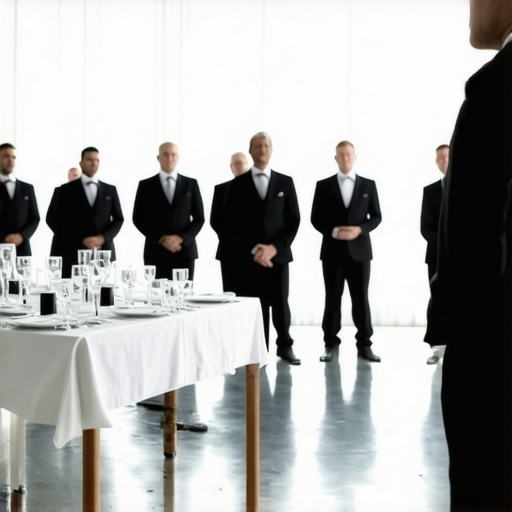
Why French Service Changes the Room Dynamic
If you really want to move from ‘standard’ to ‘extraordinary,’ look at specialized techniques. The advantage of hiring servers who specialize in French service is that it turns a meal into a performance. The server prepares or serves food from a platter directly at the table using a fork and spoon. It is intimate, high-touch, and eliminates the ‘clutter’ of a buffet line. I once switched a 50-person executive dinner to French service at the last minute, and the guests spent more time talking about the elegance of the pour than the actual quarterly earnings report.
Manage the Transitions or Lose the Energy
The most dangerous part of any event is the ‘gap’ between the main course and the speeches. This is often where you find the secret of how to keep your event flowing when the keynote speaker runs late. You need a ‘buffer’ ready to deploy. If the speaker is delayed, your servers should proactively offer a coffee service or a small palate cleanser. If you wait for the speaker to finish before starting service, you’ll have hundreds of people staring at empty cups. It’s about proactive logistics, not reactive scrambling. To ensure every touchpoint is covered, you should always refer to an essential checklist for successful corporate event catering before the first guest arrives.
While everyone focuses on whether the steak is medium-rare or the salmon is wild-caught, the true masters of the industry know that the plate is only 20% of the battle. In my experience, you can serve the most exquisite Wagyu in the world, but if it arrives late or at a table where the guests are already frustrated by a lack of water, it will taste like ash. We need to look beyond the surface-level logistics and understand the psychology of the room.
The Menu Isn’t Actually the Star of Your Show
Here is a contrarian take that usually surprises my clients: the food is secondary to the flow. Most planners believe that more options lead to higher satisfaction, but Cornell Center for Hospitality Research has indicated that guest satisfaction is more closely tied to the responsiveness of the service staff than the variety of the menu. I have seen events with limited, simple menus succeed brilliantly because the service was invisible and perfectly timed, while over-complicated menus often lead to kitchen bottlenecks. When you are gathering wedding catering tips from industry experts, you’ll find that the most seasoned pros prioritize the logistical feasibility of a dish over its culinary complexity. If a dish requires thirty seconds of plating per person and you have 200 guests, that last plate is coming out 100 minutes after the first. That is not a luxury experience; that is a failure of math.
How do you keep the kitchen from crashing when the program runs late?
This is where the real skill comes in. Corporate events are notorious for schedule slippage. When the CEO decides to add an impromptu ten-minute thank-you speech, the kitchen is usually in a state of panic. To handle this, your lead server must have the authority to hold or fire courses without checking with you every three seconds. This is a nuance often missed in server skills that make every event stand out. A pro team knows how to pivot to a ‘holding pattern,’ perhaps by slowing down the bread service or subtly increasing the frequency of water refills to keep guests occupied. This proactive management is essential for how to keep your event flowing when the keynote speaker runs late without the food dying under a heat lamp.

Avoid the common traps that ruin guest perception
One of the most frequent ‘oops’ factors I see is a lack of foresight regarding the sensory environment. For example, a common mistake is serving heavy, aromatic dishes at a high-intensity networking event. This is why you should avoid smelly foods at professional mixers; no one wants to shake hands or pitch a million-dollar idea with garlic breath or fish oil on their fingers. Similarly, in outdoor settings, planners often overlook the humidity’s effect on the first course. Learning how to avoid the soggy salad trap at large outdoor weddings is a technical requirement, not a suggestion. It involves choosing robust greens like kale or radicchio that can withstand dressing without wilting in ten minutes.
Furthermore, don’t underestimate the physical layout. I’ve seen beautiful rooms ruined because the planner didn’t account for ‘dead zones’ where servers couldn’t reach tables comfortably. Reviewing the most common mistakes in corporate event seating charts will show you that if your servers are struggling to navigate the room, your guests are feeling the tension. Have you ever fallen into this trap? Let me know in the comments. Expertise isn’t just about knowing what to do; it’s about anticipating what will go wrong before it happens.
To keep a high-profile event from devolving into chaos, you need more than just a good menu; you need a technical backbone. I have transitioned my teams away from traditional radios to encrypted push-to-talk apps paired with acoustic earpieces. This allows my floor lead to whisper updates about a guest’s allergy or a speaker’s delay without a single ‘crackle’ being heard by a VIP. It is about maintaining the illusion of effortlessness. When you are looking for the best corporate event servers for 2025, you aren’t just hiring muscle; you’re hiring a team that knows how to use tech to stay invisible.
How do I maintain high service standards as my event volume grows?
The secret is in the ‘Standard Operating Procedure’ (SOP) that lives on a shared cloud. I personally use a project management tool specifically to track the essential checklist for successful corporate event catering. Every server has to digitally check off their zone prep before the huddle. This isn’t micromanagement; it is accountability at scale. According to the Catering Institute, companies that implement rigid operational ‘Core 4’ systems see a 15% reduction in mid-event errors.
Digital Systems Are Replacing Old School Handoffs
We have moved past the era of paper schedules taped to a kitchen wall. I now use heat-mapping software to visualize guest flow. If I see that the bar is getting congested on the north side of the ballroom, I can reassign a server to float with a tray of pre-poured signature cocktails to bleed off that pressure. This is a level of optimizing server efficiency to enhance event satisfaction that wasn’t possible five years ago. I also insist that every member of my team knows why your event server should always carry a lighter—it is for those small, high-impact moments like a candle going out or a guest needing a quick fix for a loose thread. 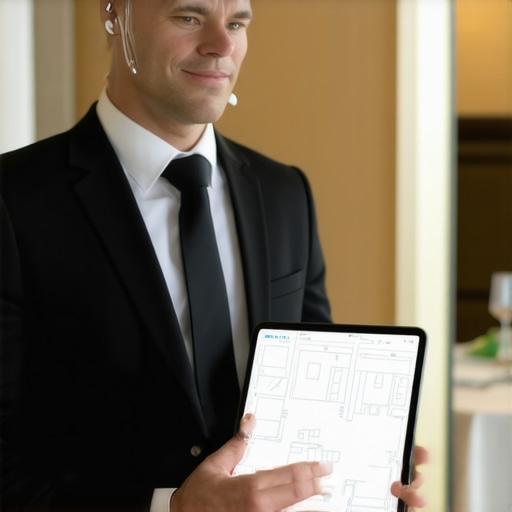
The Future of Catering Logistics is Predictive
Looking ahead, I predict we will see AI-driven staffing apps that analyze historical venue data to tell us exactly when the ‘bar rush’ will happen based on the specific guest demographics. We are already seeing ‘smart’ buffet tags that track food weight in real-time, sending an alert to the kitchen before a tray is even empty. To stay ahead of the curve, you should organize a staff meeting before a 500 person dinner to include a walkthrough of these digital tools. If you want to elevate your next event, I challenge you to try the ‘Silent Radio’ method: equip your lead and kitchen staff with earpieces and watch how the anxiety level in the room drops instantly. It is time to stop shouting across the kitchen and start orchestrating from the shadows.
High-End Service Nuances You Just Can’t Teach
Over the years, I’ve realized that the difference between a good server and a great one isn’t just about speed—it’s about anticipation. One of the most vital server skills that make every event stand out is the ability to read body language. If a guest leans back and looks around, a pro is already there with the water carafe before a hand is even raised. This level of proactive care is the hallmark of mastering corporate event planning at the highest level. I also firmly believe in the ‘ten-foot rule’: if a guest is within ten feet, you acknowledge them with a smile; within five feet, you offer assistance. It sounds simple, but it’s the foundation of true hospitality.
My Secret Weapons for a Flawless Floor
I don’t leave success to chance, and neither should you. My personal toolkit always includes an essential checklist for successful corporate event catering that I share with every team lead. Beyond that, I swear by the book ‘Setting the Table’ by Danny Meyer for teaching the ‘enlightened hospitality’ mindset. For real-time coordination, we use digital communication apps like Zello, which turn smartphones into high-end walkie-talkies with earpieces. This tech allows us to boost your corporate event with expert server techniques without the noisy chatter of old-school radios. Finally, I never walk a floor without a small multi-tool hidden in my apron—you would be amazed how many events are saved by a quick fix to a loose chair leg or a stubborn wine crate.
#IMAGE_PLACEHOLDER_E#
Transform Your Next Event into a Masterpiece
At the end of the day, we aren’t just serving food; we are creating a sanctuary where business can happen, relationships can bloom, and memories can be made. When you implement these corporate event catering strategies for success, you are taking the stress off the client and putting it onto your own capable shoulders. It takes courage to invest in a higher staff count or to insist on a lead server who stays on the floor, but the results speak for themselves in the form of repeat bookings and glowing testimonials. Go into your next gala with confidence, knowing that you have the math and the mindset to handle whatever the night throws at you. What was the one detail at an event that made you feel like a true VIP—or the one mistake that ruined the vibe? Let’s talk about it in the comments below.