

I will never forget the sinking feeling I had sitting at my editor’s desk after my first major wedding shoot. The footage was breathtaking; the lighting hit the bride perfectly during her father’s toast, but the audio was a total disaster. It sounded like they were talking through a tin can submerged in a bathtub. Every time a server moved a plate or a guest laughed, the beautiful words were drowned out by the clatter of professional servers and the general room ambiance. I had made the classic rookie mistake of relying on the microphone attached to my camera rather than plugging directly into the source. That day, I learned that a visual memory is only as good as the sound that accompanies it. We are going to dive into why that little cable makes all the difference for your big day.
Stop Relying on the Tiny Microphone Atop the Camera
If you are currently planning the ultimate wedding reception meal, you probably haven’t spent much time thinking about XLR cables or line levels. But you should. When your videographer asks the DJ for a soundboard patch, they are asking to tap the audio directly from the microphone used for the speeches. This bypasses the room’s echoes, the hum of the air conditioner, and the inevitable noise during the transition from dinner to dancing. It ensures that when your maid of honor tells that hilarious story from college, her voice is crisp, clear, and intimate. Without it, you are just recording the sound of a crowded room that happens to have a voice in the background. It is a gamble you do not want to take with your memories.
Is a Direct Patch Really Worth the Extra Hassle?
You might be thinking that modern software can just fix a noisy recording in post-production. The short answer is no. While AI tools are getting better, they cannot recreate data that was never captured. According to research by the Audio Engineering Society, capturing audio at the source provides a signal-to-noise ratio that is mathematically impossible to replicate with ambient recording in a large hall. It is the difference between a studio recording and a bootleg concert tape. Early on, I thought I could skip this step to save time during the hectic setup. I was wrong. I spent twenty hours trying to clean up audio that was fundamentally broken. Have you ever watched an event video where you had to strain to hear the speaker over the background clinking? It is frustrating for the viewer and heart-wrenching for the couple. Before you finalize your vendors, always do a sound check and ensure your tech team is communicating effectively. Have you checked if your videographer and DJ have talked about their audio plan yet?
Get Your Tech Team Talking Weeks Before the Big Day
Coordination is the invisible backbone of any successful event. You wouldn’t expect a catering team to show up without knowing the menu, so don’t expect your videographer and DJ to sync up perfectly without a prior introduction. In the high-stakes world of live production, the importance of having a dedicated point of contact for vendors cannot be overstated. I remember a corporate gala in 2021 where the videographer assumed there would be a standard XLR output, but the venue’s house system was so antiquated it only used proprietary connections. Because they hadn’t talked beforehand, we spent forty-five minutes of the cocktail hour scrambling for rare adapters. Start by sending a three-way email between yourself, the DJ, and the videographer at least two weeks out. Ask specifically: ‘What outputs are available on the board, and do we need a line-to-mic attenuator?’ This simple step ensures that the ‘service entrance’ for your audio is unlocked and ready for the first toast.
Bridge the Gap Between the DJ Booth and the Camera
Think of the audio cable as a private highway. When you rely on the camera mic, you’re stuck in traffic with every guest’s cough and the clink of silverware. A direct patch is your HOV lane. However, the physical distance of the venue can be a nightmare. This is why your event venue selection impacts your AV budget—larger ballrooms require longer cable runs or more expensive wireless transmitters to maintain signal integrity. If the DJ is positioned fifty feet from your primary camera angle, you’ll need a high-quality shielded XLR cable to prevent radio interference. I’ve seen cheap cables act like antennas, picking up local taxi dispatches right in the middle of a heartfelt vow. If you want to keep the signal clean, invest in ‘balanced’ cables. They are designed to cancel out noise over long distances, much like how an essential checklist for successful corporate event catering keeps a kitchen from descending into chaos during the peak dinner rush. 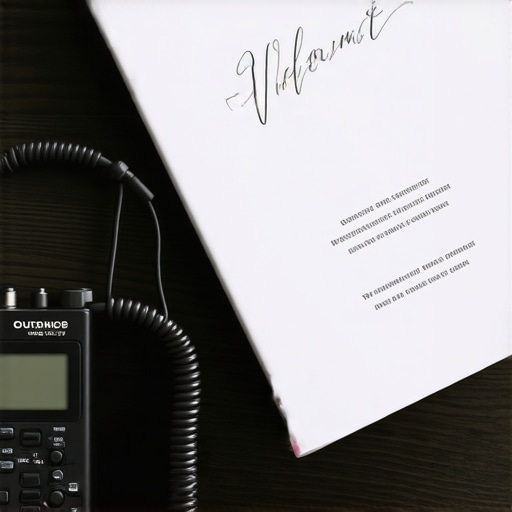
Protect Your Recording With a Redundancy Layer
Even with the best patch, things can go wrong. A DJ might accidentally bump a gain knob, or a cable might get stepped on by an enthusiastic guest. This is where a secondary recorder becomes your best friend. I never shoot an event without a small field recorder plugged into the back of the soundboard and a separate lavalier mic on the groom or the officiant. This ‘belt and suspenders’ approach is the same reason the advantage of using a wireless microphone for speeches is so significant—it provides a clean source that isn’t tethered to a single point of failure. During a recent product launch, a server accidentally tripped over the main audio feed cable. In many cases, this would have ruined the keynote, but because I had a redundant field recorder tucked safely under the DJ’s skirted table, the final video didn’t skip a single word.
Keep Your Levels in the Sweet Spot
Recording audio is a delicate balancing act. If the signal is too low, you’ll hear a constant ‘hiss’ when you try to boost the volume in editing; if it’s too high, the sound ‘clips’ and becomes a distorted, crunchy mess. To get this right, why your lead server should have a copy of the event script serves as a great parallel—your tech team needs to know exactly when the loud moments (like a cheering crowd) and soft moments (like a whispered thank you) are coming to adjust accordingly. I always ask the DJ for a ‘real-world’ sound check level. Don’t let them just play a low-volume track; have them speak into the mic as if they are introducing the couple to a room of 200 people. Aim for your meters to hit around -12dB to -6dB. This provides enough ‘headroom’ so that if someone suddenly screams into the microphone during a funny story, the digital file won’t shatter into unfixable noise.Just as a clear audio patch is the invisible backbone of your ceremony, the way your floor staff moves is the invisible pulse of the reception. Most planners make the mistake of thinking if they just hire enough people, the service will be flawless. In my experience, this is the quickest way to create a crowded, chaotic room where nobody knows who is in charge.
Stop Thinking More Staff Means Better Service
Everyone says you need a 1:10 ratio for a formal dinner, but I have seen events with a 1:8 ratio fall apart because the team lacked ‘functional synchronization.’ A paper from the Cornell School of Hotel Administration highlights that labor productivity in high-volume banquets hinges on specific task-based roles rather than generalist numbers. When you have too many bodies on the floor without clear direction, they get in each other’s way, block the aisles, and create visual noise that distracts from the celebration. Instead of focusing on raw numbers, focus on optimizing server efficiency to enhance event satisfaction by ensuring every person has a specific zone and a specific task. I once worked a gala where the planner insisted on 30 servers for 150 guests, and the resulting traffic jam in the kitchen doorway delayed the main course by twenty minutes.
Can You Spot an Unbriefed Team Before the First Course?
The easiest way to identify a looming disaster is to watch how the staff interacts with the guests during the first ten minutes. It is a classic ‘oops’ factor: how to spot a server who hasn’t been briefed on the menu usually comes down to their eyes. If they are constantly looking back toward the kitchen or avoiding eye contact with guests because they can’t answer questions about allergens, you have a problem. This lack of prep work ruins the guest experience faster than cold soup. Expert server skills that make every event stand out are built during the pre-shift meeting, not on the fly during service. 
The Critical Mistake of the Working Lead Server
Here is the nuance most people get wrong: they think the ‘Lead Server’ should be the most hardworking person with a tray in their hand. This is a massive trap. In reality, why a lead server should never be assigned a single table is because their job is to be the air traffic controller of the room. When the lead server gets bogged down clearing a specific table, they lose sight of the bigger picture—like a guest at table twelve who just spilled a drink or the DJ who is about to start the toasts early. You need a captain who can see the whole board. When vetting your team, ask about the difference between a staffing agency and a service partner. An agency just sends warm bodies; a service partner sends a structured hierarchy designed to handle the unexpected. I have learned the hard way that a silent, well-coordinated team is far more luxury than a loud, oversized one. Have you ever fallen into this trap where more staff actually made things worse? Let me know in the comments.Once you move past the basics of staffing, you have to look at the hardware that protects your reputation. I’ve seen $50,000 weddings ruined by a $5 cable. That is why I never walk into a venue without my Zoom H6. It isn’t just about recording; it’s about having four independent physical knobs for gain. When a speaker suddenly starts yelling during a toast, you can react in milliseconds. This level of control is essential for mastering corporate event planning secrets to seamless success because it removes the ‘hope’ factor from your audio. I also keep a stash of high-grade Mogami cables. Most people think a cable is a cable, but the shielding on a Mogami prevents the electromagnetic interference often found in large hotel ballrooms filled with LED walls. This attention to detail is what separates a hobbyist from someone providing top server tips to elevate your event experience in every aspect of the production.
How do I keep this level of quality consistent?
Maintenance isn’t just about wiping down lenses or testing batteries; it’s about a rigorous post-event audit. Every Monday morning, I review the raw files and the server logs. If a specific microphone channel had intermittent floor noise, it gets replaced immediately—no questions asked. This same philosophy applies to your human capital. You should boost your corporate event with expert server techniques by running a ‘hot wash’ meeting after every gala. We discuss exactly where the bottlenecks happened. Did the coffee service stall? Why? Often, it’s a logistics issue you can solve with the ultimate guide to corporate event catering logistics. As noted in Shure’s technical documentation on wireless signal integrity, even minor frequency interference can degrade a 24-bit recording into unusable static if your receiver isn’t properly placed. I always position my receivers at least six feet above the ground to maintain a clear line of sight over the guests’ heads. 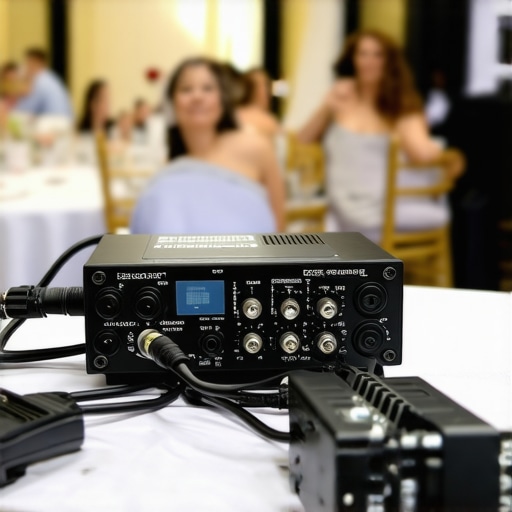
Scale Your Success with Predictive Planning
As we look toward 2025, the industry is moving away from reactive management toward predictive logistics. I’m already seeing AI tools that analyze guest counts and menu complexity to predict exactly when a kitchen will hit its peak ‘stress point.’ This allows you to implement strategies on how to keep your event schedule on track without rushing guests by adjusting the pacing of the toasts before the food even leaves the warming drawers. For those of you looking to level up, I highly recommend adopting a ‘dual-mono’ recording strategy: record one track at your target volume and a second track on the same device at -12dB. It’s the ultimate safety net for when things get loud. Give this a try at your next big event and see how much stress it removes from your post-production workflow.
What One Decibel Taught Me About High-Stakes Production
In over a decade of documenting celebrations, I’ve realized that the most expensive decor can’t fix a disconnected guest. If people can’t hear the emotional core of the day, they check out. Here are a few wedding catering tips from industry experts that apply equally to sound and service: first, silence is a tool. Just as a server should never interrupt a punchline, your audio feed shouldn’t hum. Second, always assume the primary system will fail—redundancy isn’t paranoia; it’s professional maturity. Finally, the energy of the room follows the staff. If your team is frantic, your guests will be tense. I’ve found that how to choose the right staffing ratio for a VIP event is as much about psychological comfort as it is about plate counts.
#IMAGE_PLACEHOLDER_E#
The Toolkit for Those Who Refuse to Fail
When you are serious about your craft, you stop using good enough equipment. I personally rely on the Zoom H-Series for its bulletproof pre-amps; it’s saved more ceremonies than I can count. For cabling, Mogami Gold is the only way to ensure radio frequencies from a crowded kitchen don’t bleed into your recording. For the service side, I always keep a copy of corporate event catering strategies for success in my digital binder to share with venue managers who are struggling with flow. I also recommend following the AES (Audio Engineering Society) journals—staying updated on signal-to-noise ratios will change how you set up your microphones forever.
Build the Atmosphere Your Guests Deserve
Great events are felt before they are remembered. When the audio is crisp and the service is synchronized, the technology and the logistics disappear, leaving only the emotion. Creating unforgettable wedding catering ideas for a magical celebration requires a foundation of technical excellence that allows the magic to happen. Don’t be afraid to demand more from your vendors and your gear—your memories are worth the extra effort. If you need help refining your next big production, feel free to contact us for expert guidance. Have you ever had a brilliant moment ruined by bad sound or a server who didn’t know the plan? Share your story below!