

I remember standing in the middle of a stunning, glass-walled rooftop garden, thinking I had finally nailed the perfect corporate gala location. The view was breathtaking. But two hours later, my lead AV technician looked at me with that specific expression that usually means my credit card is about to take a hit. Because of the glass reflections and a complete lack of floor power boxes, our modest sound and lighting budget tripled before we had even served the first appetizer. I learned the hard way that a venue isn’t just a backdrop; it is a living component of your technical infrastructure. Today, I am going to show you how to look at a room through the lens of a budget-savvy pro so you do not get slapped with a massive invoice for things like acoustic treatment and extra labor.
Stop Paying for the Venues Architectural Mistakes
Most people pick a venue because it looks good in a brochure or offers a killer all-inclusive package. I did the same thing. I fell for the aesthetic and completely ignored the bones of the room. When you choose a space with twenty-foot ceilings and zero carpeting, you are not just getting a grand feel. You are buying a one-way ticket to an echo chamber. You will end up spending thousands on pipe and drape or specialized line-array speakers just so your guests can hear the keynote. I once made the massive mistake of ignoring the impact of ceiling height on event acoustic quality, and we spent the entire setup day trying to stop microphones from screeching. According to the Engineering Toolbox, a typical concrete room can have a reverberation time four times higher than a treated studio, which fundamentally requires more expensive audio processing to fix.
Does the room actually work against your wallet?
You might be wondering if I am being a bit dramatic. I am not. If you do not spot a venue with bad acoustics before you book, you pay the acoustic tax. If the room has poor power distribution, you pay the cabling tax. Before you sign that contract, you need to realize that the price is a lie if the venue requires you to hide unsightly power cables across a massive floor. I want you to keep that money for better things, like impressing your guests with better catering. Have you ever been blindsided by a rigging fee or a power drop charge that was not in the initial walkthrough? Let me know, because we have all been there. It is time we start looking at these spaces with a more critical eye before the contracts are signed.
Audit the Room Before You Audit the Contract
To move from a dreamer to a doer, you need a system. I rely on a 5-step process for vetting a new event venue that prioritizes infrastructure over aesthetics. If the ‘bones’ of the room are weak, your budget will break. You need to approach the walkthrough like a building inspector, not a guest.
Walk the Floor While an Event is Actually Happening
Never book a room based on an empty walkthrough. An empty ballroom is a lie; it is quiet, cool, and spacious. You need to see how the space handles a crowd. I highly recommend that venue walkthroughs should happen at the same time as your event. If your gala is at 7:00 PM, do not visit at 10:00 AM. You need to see where the shadows fall, how the HVAC system hums when it is working overtime, and whether the service staff has enough room to move. I once visited a gorgeous historical library for a potential 500-person dinner. In the quiet morning, it felt like a cathedral. But when I returned during a small cocktail hour, I realized the ‘natural’ echoes made a simple conversation sound like a shouting match. 
Trace the Power Like a Plumber Traces Pipes
Think of your venue’s power as its circulatory system. If the veins are too thin, the heart—your AV and catering—will fail. Most older venues were never built to handle modern LED walls or industrial coffee makers. I learned this the hard way when I failed to organize a staff meeting to discuss load requirements. We plugged in three commercial warming ovens, and the entire east wing went dark. Now, I demand to see the breaker box. You must plan how to hide unsightly power cables before you even think about the floral arrangements. If the power drops are only on the perimeter, you are going to have cables snaking across the floor like high-voltage tripping hazards.
Use Fabric to Fix a Noisy Room
If you have already fallen in love with a space that has ‘challenging’ acoustics, do not panic, but do prepare to spend. You can mitigate a lot of the bounce by choosing the right materials for your tables. Believe it or not, heavy linens actually reduce noise in loud ballrooms by absorbing mid-range frequencies that would otherwise ricochet off the hardwood. It is the difference between a room that feels energetic and one that feels chaotic.
Position the Bar to Control the Chaos
Your layout dictates behavior. One of the most common mistakes is placing the entertainment too close to the ‘recharge’ zones. You should never put the bar next to the speakers. Why? Because people go to the bar to talk, and if they have to scream over a bass bin, they will migrate to the hallways, effectively killing the energy of your main room. There is a specific logic behind placing the bar far from the wedding buffet; it forces a natural flow of movement and prevents a ‘logjam’ of guests in a single corner of the room. Think of it like a grocery store layout—put the milk and the bread on opposite sides so people have to see the whole store.Everyone tells you to hire more staff to ensure ‘premium’ service, but in my experience, overstaffing is the fastest way to kill the mood of a high-end gala. When you have too many bodies on the floor, the staff starts talking to each other instead of watching the guests, creating what I call ‘staffing friction.’ According to hospitality research from the Cornell University School of Hotel Administration, service quality peaks at a specific labor-to-guest ratio; beyond that, efficiency actually drops because of communication bottlenecks and physical overcrowding. If you want to avoid this, you need to audit your server-to-guest ratio for VIP dinners based on the room’s physical constraints, not just a generic formula.
Why the ‘More is Better’ Staffing Myth is Costing You Money
Most planners think a 1:10 ratio is a safe bet for a wedding, but that is a rookie mistake that ignores the architecture of the service. If your kitchen is a 50-yard hike from the ballroom, your ratio is irrelevant because half your staff is always in transit. You should be optimizing server efficiency by creating ‘satellite’ clearing stations that are hidden from view but accessible to the team. I once worked a corporate launch where the client insisted on 50 servers for 200 guests. The result? The servers spent more time apologizing for bumping into guests than they did pouring wine. You must learn how to choose the perfect servers who understand the choreography of a room, rather than just filling a headcount.
Is your staff actually invisible or just in the way?
This is the ultimate test of a professional service partner. Sophisticated guests should never see a server ‘waiting’ for a job; they should only see the result of the work. This is why a lead server should never be assigned a single table. They need to be the ‘air traffic controller’ of the section, spotting an empty water glass from ten feet away before the guest even notices. If your lead server is stuck doing the heavy lifting, the entire chain of command breaks down. 
The ‘Oops’ Factor: The Service Lead Trap
I once saw an entire CEO’s keynote ruined because the lead server decided to help clear dessert plates instead of managing the team’s exit. The noise of clinking silverware drowned out the first three minutes of the speech. This is a classic trap: the person in charge gets into the weeds and loses the big picture. When you are planning corporate event catering, your contract must specify a dedicated lead who does not touch a tray. They are there to watch the rhythm of the room. This level of mastering corporate event planning is what separates a chaotic party from a seamless production. Have you ever fallen into this trap where the staff became the center of attention instead of the background? Let me know in the comments. It is better to have ten elite professionals than twenty amateurs who do not know where to stand. For more advanced techniques, check out these top server tips to elevate your event and ensure your next gala is remembered for the right reasons.
The Digital Toolkit That Keeps My Sanity
To stop being a fire-extinguisher and start being a strategist, you need to digitize your workflow long before the first guest arrives. I don’t go anywhere without a cloud-based floor plan tool like AllSeated or Social Tables. Why? Because manual measurements lead to ‘oops’ moments where the buffet blocks an emergency exit. When you use these, you can precisely choose a catering style based on your venue size and see exactly where the bottlenecks will happen in 3D. Beyond floor plans, I’ve started carrying a handheld frequency scanner. If you’re running six wireless mics for a panel, you need to know if the local TV station is going to bleed into your signal. It is these small, technical investments that separate the hobbyists from the pros. These tools allow me to follow an essential checklist for successful corporate event catering without guessing if the gear will fit or the signal will hold. 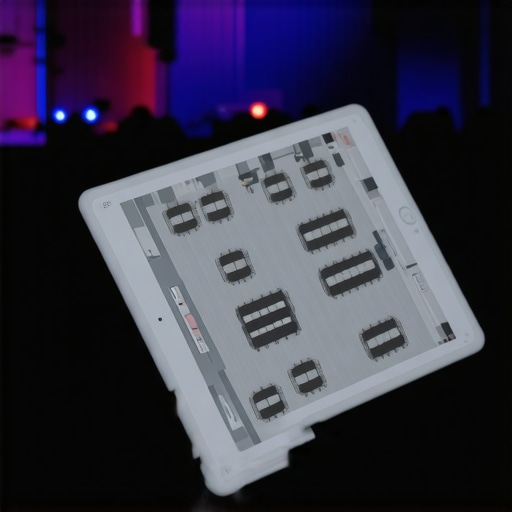
How can I keep my event systems running for years?
Maintenance isn’t just about cleaning your chafing dishes; it is about auditing your processes after every single strike. Every Tuesday following a major gala, I sit down for a ‘Post-Mortem’ where we look at the data. One of the most effective, albeit gross, methods I use is to audit your venues trash cans after a gala. If you see hundreds of half-eaten expensive appetizers, your menu was a failure, no matter how good it looked on Instagram. This data informs your next buy. To keep the staff sharp, I ensure that your server lead needs a copy of the event script. If they don’t know the CEO is going to pivot to a surprise award, they will start clearing water glasses right as the spotlight hits, and you will lose that ‘wow’ moment. According to the Events Industry Council (EIC) APEX standards, standardized communication protocols can reduce on-site errors by up to 30%, which is why I treat my event scripts like a flight manual.
What the future holds for event logistics
I predict we are moving toward a world of real-time crowd analytics. Within the next three to five years, I expect high-end venues to use heat-mapping sensors to tell us when a bar line is getting too long or when a room is getting too hot before a guest even complains. This is why you should always hire the best corporate event servers for 2025 who are comfortable working alongside tech-integrated systems. We are moving away from ‘gut feelings’ and toward data-driven hospitality. Even with all this tech, don’t forget the human buffer; your event budget needs a 10 percent contingency fund to handle the inevitable human errors that even AI can’t predict. My challenge to you: for your next event, perform a ‘Trash Can Audit’ at the end of the night. It will hurt your pride to see the waste, but it will save your budget on the next contract.
Hard-Won Secrets from My Most Challenging Venues
Looking back at years of floor plans and load-in sheets, I have realized that the most successful events aren’t the ones with the biggest budgets, but the ones with the most foresight. First, never mistake ‘character’ for ‘capability.’ A historic barn might have soul, but if it lacks a dedicated circuit for the industrial coffee urns, it will quickly become a logistical nightmare. Second, I’ve learned that 3 signs your event server is a pro within seconds of meeting involve their immediate awareness of the room’s sightlines and guest flow, not just their posture. Finally, always trust your lead AV technician over the venue’s shiny sales brochure. If they say the reflections in a glass-walled room will destroy the audio quality, believe them the first time and budget for the extra dampening.
The Resources That Keep My Sanity Intact
To stay ahead of the chaos, I rely on a few specific resources that I’ve personally vetted over hundreds of high-pressure productions. I always keep the ultimate guide to corporate event catering logistics bookmarked for a quick sanity check on load-in timelines and kitchen prep requirements. For precise spatial planning, I use software like AllSeated to visualize guest flow before any furniture is touched. I also recommend a basic decibel meter app on your phone to test ambient noise during your walkthrough, ensuring you aren’t fighting a losing battle against a loud HVAC system.
#IMAGE_PLACEHOLDER_E#
Build an Event That People Actually Talk About
At the end of the day, your guests won’t remember the exact wattage of the speakers, but they will remember how they felt in the space. They will remember that they could hear the speeches clearly, that the service felt invisible yet attentive, and that the flow of the evening felt natural. By focusing on the underlying infrastructure and mastering corporate event planning from the foundation up, you create an environment where those magical moments can actually happen. Don’t be afraid to ask the tough technical questions during your next site visit. What is the one “hidden” venue flaw that almost ruined your event? Let me know in the comments below so we can all share our best troubleshooting tips!