

I will never forget the Great Oyster Crisis of 2018. Picture a stunning garden estate, a bride in Vera Wang, and a three-tier seafood tower that was slowly becoming a lukewarm puddle under the relentless July sun. I was frantic. I had followed the usual advice, but the regular ice was melting faster than a popsicle in a microwave. My big mistake was relying on standard party cubes that looked pretty but lacked the density to survive a humid afternoon. This experience changed how I approach summer menus forever.
Stop Your Seafood Display from Melting Away
If you are dreaming of a raw bar, you probably already know your summer menu needs more than just grilled chicken to truly impress. However, the logistics of keeping shellfish at the right temperature can keep even the calmest host awake at night. I have spent a decade troubleshooting these exact scenarios so you do not have to. We are going to dive into the exact double-buffer method I use to ensure every prawn remains crisp and every oyster stays bracingly cold, even in 95-degree heat.
Is a raw bar actually safe for a humid outdoor wedding?
Many couples fear the danger of serving raw oysters when the sun is blazing. It is a valid concern; the FDA warns that seafood should never sit out for more than an hour when temperatures exceed 90 degrees Fahrenheit. But here is the secret: you do not necessarily need more ice, you need better insulation. I have seen many wedding catering tips from industry experts, but few talk about the saltwater slurry and dry ice foundations that keep temperatures below freezing for hours. Have you ever felt that moment of panic when you realized the catering ice was disappearing too fast? I want to hear your horror stories. Today, we are ending that stress for good by using professional strategies to protect your luxury wedding catering ideas.
Build a Cooling Engine Not Just a Tray
Creating a high-performance raw bar is more like building a radiator than setting a table. The mistake most DIY hosts or inexperienced planners make is putting ice directly onto a metal tray and hoping for the best. Metal conducts heat, and once the sun hits that tray, the ice melts from the bottom up. Instead, I use what I call the foundation method. This involves a deep-well vessel, preferably stone or heavy-duty insulated plastic, lined with a thin layer of dry ice at the absolute bottom. On top of the dry ice, we add a thick barrier of rock salt followed by four inches of hard-frozen cube ice. This creates a thermal barrier that prevents the top layer of display ice from ever seeing a temperature above 32 degrees. 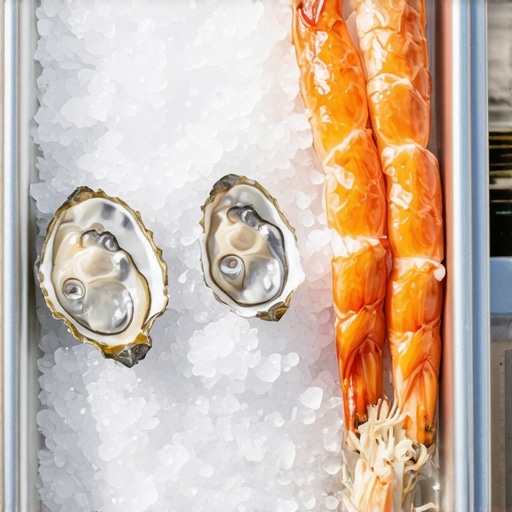
The Chemistry of the Saltwater Slurry
To get that bone-chilling temperature that makes a raw oyster truly sing, you need a slurry. Pure ice has air gaps; a slurry has none. In 2021, at a vineyard wedding where the humidity was so thick you could feel it, we didn’t just use ice; we mixed crushed ice with sea salt and just enough cold water to create a thick paste. We nested the serving platters directly into this mixture. Because salt lowers the freezing point of water, that slurry was actually sitting at about 28 degrees Fahrenheit. Guests were amazed that the prawns stayed firm and snapped when bitten, rather than getting that mealy texture that happens the moment they hit room temperature. This is the secret to maintaining food temperature at outdoor events when the environment is working against you.
Train Your Team to Spot the Melt Early
Even the best setup will fail if your staff is not vigilant. You cannot treat a raw bar like a ‘set it and forget it’ station. I always insist on top server tips to elevate your event experience, which includes a dedicated ‘Ice Captain.’ At high-volume events, why your server team needs a designated captain for every 50 guests becomes very clear at the seafood station. This person’s sole job is to drain the melt-water every twenty minutes and top off the display with fresh, dry ice. If you let the seafood sit in a pool of lukewarm water, you are inviting a health department nightmare.
Briefing the Team on Presentation and Safety
Before the first guest arrives, you must how to brief your server team on complex dietary restrictions in minutes to ensure they can identify exactly which shellfish are on the tray. They should also be trained to rotate the product. Do not just keep adding new oysters on top of the old ones. Use the ‘first-in, first-out’ method even on the ice. This ensures no single piece of seafood sits out longer than the safety window. Much like the trick to serving cold salads on a humid summer afternoon, the goal is small batches. We keep the majority of the seafood in a refrigerated truck or high-end coolers, only bringing out what will be consumed in the next fifteen minutes. It requires more labor, but the results are visible in every crisp, cold bite your guests take.I’ve noticed a curious trend: people often look at me like I’ve lost my mind when I suggest that frozen is actually better for a high-volume event. But here is a hard truth: when you are staging a 200-person wedding in July, ‘fresh-from-the-boat’ is often a gamble, whereas ‘flash-frozen at sea’ is a biological guarantee of quality. According to the CDC, proper freezing is a critical step in making seafood safe for raw consumption by destroying potential parasites. Beyond the safety aspect, ultra-low temperature flash-freezing prevents large ice crystals from forming, which means the texture remains pristine rather than becoming mushy when thawed. This is one of those corporate event catering strategies for success that separates the amateurs from the veterans.
Stop Obsessing Over ‘Never Frozen’ Seafood
The real mistake isn’t the temperature of the fish at the dock; it’s the temperature of the plate when it hits the guest’s hand. I often see hosts insist on ‘local’ oysters that have sat in a warm truck for four hours, rather than choosing a premium product that was stabilized immediately. Professional chefs know that ‘sushi-grade’ isn’t just a marketing term; it implies the fish was frozen to at least -4°F for several days. This isn’t just about safety; it’s about controlling the enzyme activity that leads to spoilage. When you’re at a high-stakes event, consistency is your best friend. A flash-frozen product allows for a uniform thaw, ensuring that the first oyster served at 6:00 PM tastes exactly like the last one served at 7:30 PM. If you are aiming for unforgettable wedding catering ideas for a magical celebration, you have to prioritize the physics of the plate over the romance of the source.
Why does your luxury service feel so disorganized?
Many planners fall into the ‘headcount fallacy.’ They assume that hiring a small army of servers automatically equates to high-end service. This is rarely the case. You need to know how to spot a fake luxury server team before they ruin your gala. A group of well-dressed but inexperienced staff will always struggle with the hidden risks of hiring student servers for high-end events. They look the part, but they lack the ‘peripheral vision’ required for an elite experience. In my experience, the biggest logistical failure is why a lead server should never be assigned a single table. The moment a captain starts performing the duties of a standard server, they stop managing the room’s tempo. #IMAGE_PLACE_HOLDER_C#
The Danger of the Working Captain
When a lead server gets ‘into the weeds’ by serving a specific table, they lose their ability to communicate with the kitchen. This results in the dreaded ‘service gap’ where half the room has their entrée and the other half is staring at empty wine glasses. It is much more effective to have a dedicated conductor who can how to spot a server who hasn’t been briefed on the menu and correct them in real-time. This level of oversight is what creates that seamless, ‘invisible’ service guests rave about. Have you ever fallen into this trap where the staff looked the part but the timing was a total disaster? Let me know in the comments.I stopped relying on visual checks for food safety years ago. Now, I use the SensorPush Wireless Thermometer with a dedicated gateway. I tuck the probe right into the center of the oyster bed, and it sends a push notification to my phone the second the internal temperature hits 35 degrees. This level of precision is non-negotiable and is a core component of the ultimate guide to corporate event catering logistics that I have refined over hundreds of weddings. If you are managing a high-stakes gala, you need more than just eyes; you need real-time data. When I am scouting for the best corporate event servers for 2025, I look for professionals who are comfortable operating these digital monitoring tools. We aren’t just carrying trays; we are managing a complex, temperature-sensitive biological environment. 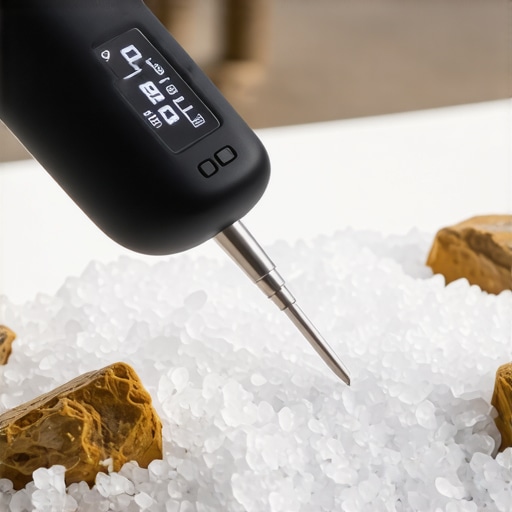
How can you scale these luxury standards without losing your mind?
Scaling these standards across a large-scale event starts with how to organize a staff meeting before a 500 person dinner. You have to treat the logistics of a raw bar like a military operation. I personally use Caterease software to map out every server zone and specific dietary requirement. This ensures optimizing server efficiency to enhance event satisfaction is a measurable result rather than a vague hope. You also need a rigid why your catering contract needs a firm headcount deadline policy. Without a locked number, your equipment ratios—and more importantly, your ice and cooling calculations—will be fundamentally flawed from the start.
Forget Ice and Embrace Thermoelectric Serving Platters
The industry is moving toward a tech-heavy future. I am already seeing the emergence of ‘Smart Trays’ that utilize thermoelectric cooling instead of traditional ice. We are rapidly approaching a time when the essential checklist for successful corporate event catering will include charging stations for your serving platters rather than extra ice delivery trucks. However, until those become the affordable standard, the ‘low-tech’ physics of a saltwater slurry monitored by high-tech sensors remains the gold standard for luxury. According to technical documentation from the Safe Food Alliance, maintaining a documented HACCP (Hazard Analysis and Critical Control Point) log is the only definitive way to prove compliance and safety during high-volume outdoor service. If you want to elevate your reputation, I challenge you to try this: at your next large event, don’t just ask your lead server to ‘watch the ice.’ Give them a digital probe and a log sheet; the shift in staff accountability and guest confidence is immediate.
The Brutal Truth About Hosting a Summer Seafood Station
I used to think a raw bar was just about the quality of the fish, but I quickly learned it is actually a test of your operational maturity. One of my biggest lightbulb moments was realizing that guests don’t remember the specific bay the oyster came from as much as they remember the temperature; if it is not bone-chillingly cold, the luxury experience vanishes instantly. I have learned that wedding catering tips from industry experts often gloss over the sheer amount of physical labor required to move hundreds of pounds of ice in the background while keeping a smile for the guests. Success in these high-stakes environments requires a shift from being a food person to being a logistics person.
Tools That Saved My Reputation on 100 Degree Days
To pull this off without a nervous breakdown, you need a specialized kit that goes beyond the kitchen. I rely heavily on the SensorPush system for real-time monitoring, but the human element is just as critical. Finding top servers for a seamless wedding reception is my number one priority because they are the ones who notice when the slurry is thinning. I also keep the ultimate guide to corporate event catering logistics as a mandatory reference for every lead server to review before we go live. For those of you looking into innovative catering ideas for modern weddings, remember that the most impressive innovation is often a perfectly executed, safe, and freezing-cold classic.
Bring Your Vision to Life with Total Confidence
You now have the exact blueprint to navigate the thermal challenges of outdoor hosting and ensure your unforgettable wedding catering ideas for a magical celebration actually translate into a great guest experience. Don’t be afraid to demand higher standards from your staff or to invest in the technology that guarantees safety. When you master the logistics, you buy yourself the freedom to actually enjoy the event you worked so hard to plan. Have you ever had a catering catastrophe where the weather tried to ruin your menu? Let me know your stories in the comments below!