

I still remember the feeling of cold sweat prickling my neck as I watched 50 people at Table 12 simultaneously reach for their salt shakers. I had spent months planning the annual Executive Pinnacle lunch, and I was determined to impress the 500 guests with a perfectly seared, center-cut filet mignon. I thought I was being sophisticated, choosing the most expensive option on the menu. In reality, I was setting myself up for a logistical disaster that nearly ended my catering career. By the time the runners reached the back of the room, those steaks weren’t just cold; they were gray, sweating, and had the structural integrity of a tire. My mistake wasn’t the quality of the meat—it was the physics of the plate and the limitations of high-volume service. We are going to solve this today by looking at why steak is the most dangerous choice for a large crowd and what you can do to ensure your next event is remembered for the right reasons. [IMAGE_PLACEHOLDER]
Your Guests Deserve Better Than Rubberized Beef
Large-scale corporate catering isn’t just cooking; it’s a logistical war. When you are looking over an essential checklist for successful corporate event catering, the protein choice is your most critical decision. The hard truth is that most hotel and convention center kitchens are built for speed, not the surgical precision required for 500 individual medium-rare requests. If you don’t have optimizing server efficiency to enhance event satisfaction down to a fine art, the time between the steak leaving the grill and hitting the table is a death zone for flavor. I once ignored the distance from the service elevator to the far corner of the ballroom—a three-minute walk that essentially turned every plate into a lukewarm disappointment. I was so focused on the ‘prestige’ of the menu that I forgot that a hot, delicious chicken dish beats a cold, tough steak every single time.
Is it actually possible to keep 500 steaks at the right temperature?
The science says: probably not without a miracle or a massive budget for specialized equipment. Early in my journey, I failed to realize why cold plates are the enemy of a perfect filet mignon. Even if the meat is hot, a room-temperature porcelain plate will suck the life out of a steak in under sixty seconds. According to research from the National Restaurant Association, the ‘safe zone’ for holding hot food is 140°F or higher, but the ‘delicious zone’ for steak is much narrower, and mass production often pushes the meat into a state of ‘carry-over cooking’ where it continues to toughen under heat lamps. To avoid this, you need to understand why a lead server should never be assigned a single table and instead must manage the flow of the entire section to keep runners moving. I remember standing in the wings, watching line cooks frantically plate 50 portions at a time into ‘hot boxes’ that were already over capacity. I’d missed a key part of mastering corporate event planning secrets to seamless success: knowing your venue’s specific electrical and logistical load. Have you ever been the guest who got their plate twenty minutes after everyone else? Share your catering horror stories with me below! This is why how to organize a staff meeting before a 500-person dinner is your best defense against the ‘steak trap.’ We are setting the stage for a menu that actually works at scale, focusing on proteins that hold their moisture and temperature without needing a miracle.
Tactics to Defeat the Cold Plate Curse
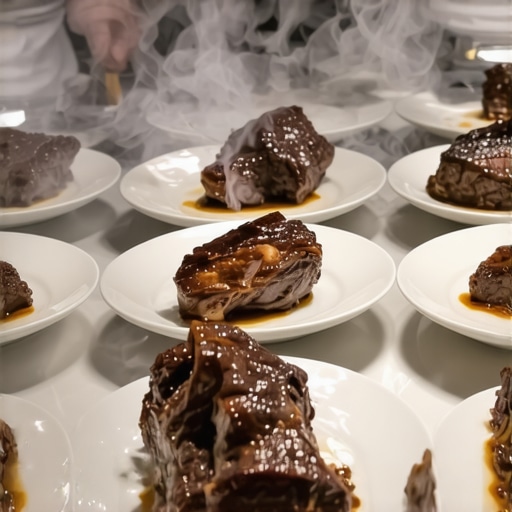
The secret to surviving a 500-person dinner isn’t just about how fast the chefs can cook; it’s about how well the menu tolerates the inevitable delays of a large room. If you want to avoid the ‘gray steak’ disaster, you have to choose proteins that actually thrive in a warming environment. I learned this lesson the hard way at a high-end charity gala where we swapped out the traditional filet for a red-wine braised short rib. While a steak loses its soul every second it sits on a runner’s tray, a braised dish is like a sponge—it holds heat and moisture even if the keynote speaker goes five minutes over schedule. This is a cornerstone of luxury wedding catering ideas for a fairytale atmosphere where the focus is on quality over a risky ‘wow’ factor that fails on the plate.
Ditch the Delicate Cuts for Forgiving Proteins
When you are managing the logistics of a 400 person plated dinner in a tent, the environment is your primary enemy. You need a ‘bulletproof’ menu. High-volume success usually involves the case for seasonal vegetables in high-volume catering because they retain their texture better than a piece of rare beef ever will. I once watched a server struggle to balance a tray of steaks in a sudden downpour during an outdoor event. If we hadn’t switched to a more resilient menu, that rain would have been the least of our problems. Proper corporate event catering strategies for success involve selecting items that can sit in a hot box for ten minutes without turning into leather.
The Pre-Service Blitz Saves Your Sanity
Before the first plate even touches a table, the war is won or lost in the thirty minutes prior. You must ensure that why pre-pouring water is the secret to a fast service start is a non-negotiable standard. If your servers are busy filling water glasses while the main course is coming out, you’ve already lost the momentum. Use top server tips to elevate your event experience to streamline the floor movement. I remember a wedding where I failed to how to brief your server team on complex dietary restrictions in minutes. A single vegan request at Table 4 stopped the entire service line for six minutes. That’s an eternity in the catering world. Now, I always have a designated staff member for dietary requests so the main flow never stops.
Master the Flow of the Service Elevator
The physical distance from the kitchen to the table is the ‘death zone’ for food temperature. To manage this, you need to know why your venue needs more than one service entrance and how to use them effectively to prevent bottlenecks. I once worked in a ballroom where we only had one elevator for 500 guests. We had to time the plating in ‘waves’ to match the elevator’s cycle exactly. It was like a choreographed ballet, and it only worked because we knew how to choose the right staffing ratio for a VIP event. If your runners aren’t waiting for the plates, the plates are waiting for the runners—and that’s when the food quality dies.
The most common myth I encounter in high-end catering is the ‘More is Better’ staffing fallacy. Planners often think that if they hire fifty people, the service will be twice as fast as twenty-five. In reality, without a strict hierarchy, you just end up with fifty people bumping into each other in the kitchen doorway. You need to know how to choose the right staffing ratio for a VIP event, but more importantly, you need a chain of command. I’ve seen events with a 1:10 ratio fall apart because there was no ‘Captain’ to call the shots. This is why your server team needs a designated captain for every 50 guests—they act as the air traffic controllers of the ballroom floor, ensuring that the ‘hot’ window for a meal isn’t wasted on confusion. 
Can a single missing server captain really derail a gala?
Absolutely. According to research from the Cornell School of Hotel Administration on service failures, the ‘recovery time’ for a service error in a large group is exponentially longer than in a small restaurant setting. If a guest at Table 40 has a spill and there’s no captain nearby to redirect a runner, that runner stops, three other tables get cold food, and the ‘synchronized’ service is dead. Most people think they are saving money by hiring cheaper, less experienced help, but the hidden risks of hiring student servers for high-end events usually manifest as a total breakdown in the ‘flow’ that professional teams maintain instinctively. You must learn how to spot a professional server in an interview long before the first plate is fired.
Stop Letting Your Venue Manager Play Coordinator
Another massive trap is assuming the person provided by the venue is there to run your event. They aren’t. They are there to protect the building, manage the HVAC, and ensure the fire exits are clear. This is why your venue manager should not be your day-of coordinator. While they are worried about the facility, your caterer is worried about the food quality, and your guests might be stuck in a dead zone because of the common mistake of placing the bar in a back corner. This placement creates a massive bottleneck that prevents servers from moving through the room with trays of delicate appetizers or hot entrees. If you’ve ever waited thirty minutes for a glass of water while the person at the next table was on their third, you’ve experienced this logistical failure first-hand. Have you ever fallen into this trap or seen a catering disaster that could have been avoided with better planning? Let me know in the comments below! I want to hear your stories so we can all learn how to keep the ‘steak’—and the service—from turning into a logistical catastrophe.My secret weapon for keeping things running isn’t just a sharp knife; it’s the digital infrastructure I’ve built to support every server on the floor. In a high-stakes environment, paper schedules are the first thing to get lost or soaked in gravy. I now rely exclusively on cloud-based management systems that allow me to update the essential checklist for successful corporate event catering in real-time. If the kitchen falls five minutes behind, I can push an alert to every server’s smartwatch. This isn’t just about being tech-forward; it’s about eliminating the ‘whisper down the lane’ effect that ruins grand galas. When you have 500 guests, clear communication is the difference between a synchronized service and total chaos. 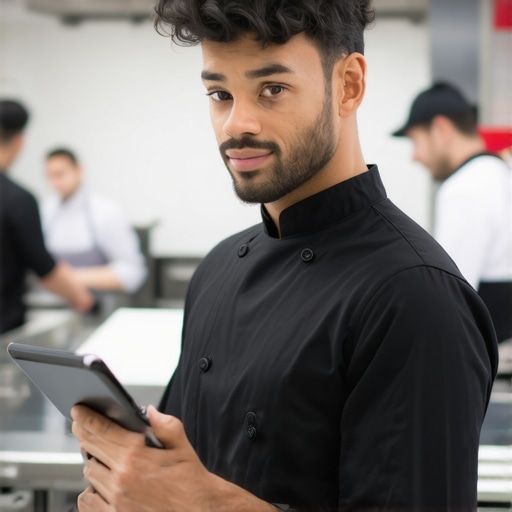
The Heavy-Duty Tools of the Trade
Beyond software, your hardware must be industrial-grade. I’ve seen too many planners try to save money by using consumer-grade warming trays. I personally swear by the Cambro Ultra Pan Carrier series. According to technical specifications from the Food Safety and Inspection Service (FSIS) regarding thermal mass and insulation, professional units are designed to lose less than 3 degrees of heat per hour without using any electricity. This is the secret to maintaining food temperature at outdoor events where you can’t rely on the venue’s power grid. Using high-end insulated transporters ensures that the protein remains succulent, rather than drying out in a cheap, leaky alternative.
How can you maintain elite service standards over time?
Consistency isn’t a fluke; it’s the result of rigorous systems. I treat every event like a flight mission, conducting a pre-flight briefing and a post-flight debrief. You have to learn how to train temporary server staff on high-end table manners within a 15-minute window because, in this industry, you won’t always have your A-team. I use a ‘Quick-Reference Deck’—a set of laminated cards that visualize the exact plate placement and wine pouring technique for that specific night. By standardizing these corporate event catering strategies for success, I can ensure that a server hired four hours ago performs like a seasoned veteran.
Why Smart Kitchens are the Future of Hospitality
Looking ahead, I predict we are moving toward a ‘smart’ kitchen era. We are already seeing wedding catering trends to impress guests in 2025 that include RFID-tagged plates. Imagine a dashboard that tells the kitchen exactly which guests haven’t received their main course yet, or flags a plate that has sat at a table for too long. This level of data-driven hospitality will soon be the standard for luxury events. If you want to elevate your next event immediately, I recommend implementing a ‘Ten-Minute Hot Wash’—gather your leads immediately after the event while the details are fresh to document every friction point. It’s the single most effective way to ensure the next 500-person dinner is even smoother than the last.
The Invisible Risks You Haven’t Considered Yet
Over the years, my biggest ‘lightbulb moment’ wasn’t about the seasoning—it was about the ego. When you are planning the ultimate wedding reception meal or a massive gala, the urge to choose the most ‘impressive’ dish on paper is overwhelming. However, a true expert knows that a perfectly executed braised short rib is far more impressive than a gray, lukewarm filet. I also learned that sound is just as important as taste; knowing how to keep the kitchen noise from ruining your keynote speech is a logistical detail that separates the amateurs from the masters. Finally, remember that your servers are your eyes and ears. If they aren’t empowered to flag a cooling plate, your expensive menu is essentially worthless.
My Personal Vault of High-Volume Essentials
If you want to survive a 500-person service, you need a toolkit that doesn’t fail under pressure. I rely heavily on the ultimate guide to corporate event catering logistics to map out the ‘death zone’ between the kitchen and the ballroom. For hardware, I never step onto a floor without my heavy-duty insulated carriers; they are the only reason food stays hot in drafty convention centers. I also recommend following the Cornell School of Hotel Administration’s research on service flow—it changed how I view the ‘synchronized’ service entirely. Lastly, keeping an eye on corporate event catering strategies for success helps me stay updated on new temperature-retention technology that keeps food at its peak longer.
Stop Fearing the Big Room
Stepping into a ballroom with hundreds of expectant faces is daunting, but it’s also where the magic of hospitality truly shines. You have the tools, the tactics, and the mindset to move past the ‘steak trap’ and deliver a meal that people actually enjoy eating. Don’t be afraid to push back against ‘prestige’ in favor of quality. When you prioritize the guest experience over the menu’s price tag, your corporate event catering transitions from a logistical hurdle into a memorable triumph. What is the one dish you have seen fail spectacularly at a large-scale event? Let me know in the comments below!