

I remember standing in the corner of a dimly lit ballroom, watching a CEO’s face turn a very specific shade of purple because his water glass hadn’t been refilled in twenty minutes. It was my third year in the business, and I had made the classic amateur mistake: I hired enough servers to meet the ratio, but I forgot to give them a brain. I had fifteen people running around like headless chickens, all trying to clear plates while no one was actually watching the guests. That night, I realized that a crowd isn’t just a number; it’s a collection of small, intimate groups that each need their own captain. If you want to avoid that cold sweat when a VIP looks around for help, you need to understand why a 1:10 lead ratio is the secret sauce of high-end events.
Your Event Needs a Brain Not Just More Hands
When I first started out, I thought more people solved every problem. If the service was slow, I’d just throw two more staff members into the mix. I was wrong. What I actually did was create a crowded floor where everyone thought someone else was handling the bread service. This is exactly why your server team needs a clear chain of command on site. Without a lead server for every ten guests—basically one leader for every large round table—the service becomes reactive rather than proactive. You want a server who notices a guest is left-handed before the first course arrives, not one who just drops a plate and disappears.
Is this just a fancy way to inflate the catering bill?
I get it. You’re looking at the budget and thinking that adding specialized leads sounds like an expensive luxury. But let me be the helpful neighbor here: the cost of a lead server is pennies compared to the cost of a ruined reputation or a disgruntled client. When you are optimizing server efficiency, you aren’t just paying for a body; you’re paying for a micro-manager who ensures that no guest ever has to look for a server. Early in my career, I tried to save a few hundred dollars by skipping these leads at a luxury gala, and the result was a chaotic mess of half-cleared tables and missed dietary restrictions. I learned the hard way that you have to know how to spot a server who has not been trained in high-level oversight versus someone who is just there to carry a tray.
According to research from the Cornell School of Hotel Administration, a guest’s perception of service quality is tied more to the attentiveness of the staff than the actual speed of the food delivery. When a lead server is responsible for only ten people, they become an advocate for those guests. They see the empty wine glass before the guest even realizes they want another sip. They catch the guest with a shellfish allergy before the appetizer hits the table. It is the simple math behind hiring extra servers for leadership roles that separates a standard dinner from a legendary experience. Have you ever felt ignored at a major event despite there being dozens of staff members walking around? That is exactly the frustration we are going to solve today by looking at the logistical magic of the 1:10 lead ratio.
Divide the Ballroom into Micro-Zones
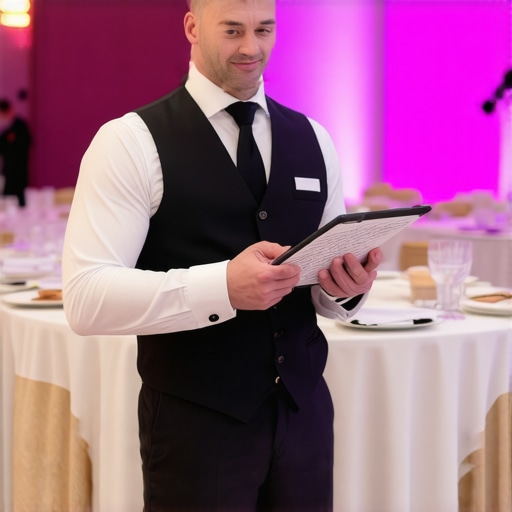
To make this work, you have to treat your event floor like a chessboard. If you have 100 guests, you don’t have one big room; you have ten tiny, private dinner parties happening simultaneously. Each of these ‘micro-zones’ needs its own sovereign leader. This is the core of top server tips to elevate your event experience. When you assign one lead server to a specific cluster of ten guests, you eliminate the ‘it’s not my job’ syndrome. That lead is responsible for the vibe, the water levels, and the pace of that specific table. They aren’t just carrying heavy trays; they are the air traffic controllers of the dining room. If a guest stands up to use the restroom, the lead signals the team to hold the next course for that table. It’s about surgical precision rather than blunt force labor.
Who is actually watching Table 4?
I remember a donor gala where I thought the captain system was overkill. I figured my general floor manager could see everything. Five minutes into the first course, a guest at Table 12 realized their soup had a garnish they were allergic to. Because I had no designated lead for that specific cluster, the server who took the plate back to the kitchen got caught in a bottleneck at the swinging doors. While they were gone, the other nine people at that table sat with empty water glasses and no bread. I was the one who eventually had to apologize to the event chair while they stared at a dry table. Now, I never start a service without knowing exactly which lead is the guardian of which ten seats. It ensures that even when handling plate clearing during a seated executive presentation, the movement is invisible and synchronized.
The Five-Minute Briefing that Saves Your Reputation
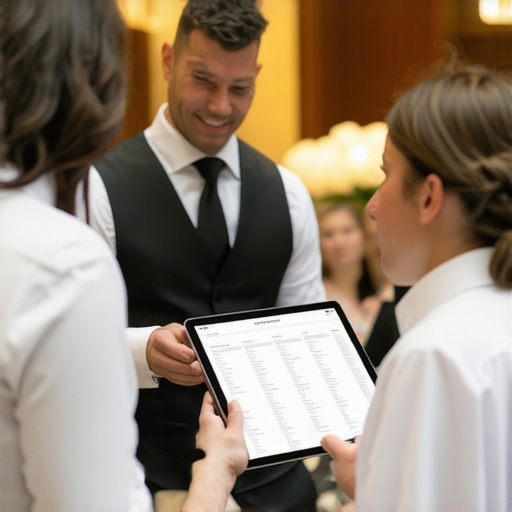
You cannot expect a lead server to perform if they are walking into the room blind. The ‘meat’ of the 1:10 ratio is the data transfer. Before the doors open, every lead needs a cheat sheet for their ten guests. This is a non-negotiable part of the essential checklist for successful corporate event catering. They need to know that seat three at Table 4 hates sparkling water, and seat seven is the CEO of the sponsoring company who needs his coffee black and boiling hot. When you learn how to brief your server team on complex dietary restrictions in minutes, you empower those leads to be proactive. Instead of a guest asking, ‘Does this have nuts?’, the lead should be able to lean in and say, ‘Chef prepared yours specially without the walnuts, Mr. Smith.’ That is the transition from catering to hospitality.
How to spot the difference between a lead and a tray-carrier
If you are hiring an outside team, you have to be careful. Some agencies will tell you they are providing ‘captains’ when they are really just providing servers in slightly better-pressed shirts. You have to know how to spot a server who hasnt been briefed on the menu before the first guest arrives. A real lead server is looking at the guests’ eyes, not the floor. They are scanning for the slight tilt of a head that signals a guest is looking for something. This level of oversight is why your server team needs a designated captain for every 50 guests to manage the smaller 1:10 leads. It creates a hierarchy of excellence. When you layout a corporate ballroom for maximum networking, this staff structure ensures that the logistics never get in the way of the conversation.
I’ve seen it a hundred times: a planner hires a small army of servers and assumes the sheer volume of bodies will guarantee a flawless night. However, there is a dangerous psychological trap here known as the Ringelmann effect, or ‘social loafing.’ Research from the International Journal of Hospitality Management indicates that as team size increases, individual effort often decreases unless there is a clear, small-group hierarchy. This is why a massive, unmanaged team often feels slower and less attentive than a lean, led one. You might think you’re being thorough by overstaffing, but without those 1:10 leads, you’re just inviting your staff to hide in plain sight. In my experience, throwing bodies at a problem only creates more bodies for you to manage.
Why does your high-end gala still feel like a frantic cafeteria?
The answer usually lies in the ‘invisible’ vs. ‘available’ debate. Beginners think a great server should never be seen, almost like a ghost. Experts know that a great server should be a reassuring, available presence. If your guests are constantly scanning the room for a water carafe, you’ve already lost the battle for optimizing server efficiency to enhance event satisfaction. A lead server isn’t just a boss; they are the emotional anchor for their ten guests. They are the ones who realize that why your venue manager should not be your day-of-coordinator is because the venue manager is focused on the building’s HVAC and the loading dock, not whether Seat 4 has a fresh napkin or a dietary-safe appetizer. When the ratio is right, the service is a dance; when it’s wrong, it’s a collision.
One of the biggest ‘oops’ factors I see in high-stakes planning is the disconnect between menu choice and staff structure. For instance, the problem with serving steak at a 500-person business lunch isn’t just about the kitchen’s capacity; it’s about the fact that if you don’t have a 1:10 lead ratio, half those plates will be lukewarm before the team even finishes the first rotation of the room. This is where you have to learn how to spot a fake luxury server team before they ruin your gala. If the agency you hired can’t explain their internal chain of command or how their leads manage micro-zones, they are providing ‘tray carriers,’ not hospitality professionals.
Stop Trusting Raw Numbers Over Leadership Structure
Always remember that the goal of the 1:10 ratio is surgical precision. When you are looking for wedding catering tips from industry experts, the most consistent advice is to prioritize the management layer over the raw staff count. I once saw an event with 40 servers and zero designated leads descend into absolute chaos because no one was authorized to make a decision when the champagne ran low. The servers just stood there waiting for an order that never came. Have you ever fallen into this ‘more staff equals better’ trap only to have it backfire? Let me know in the comments below. It’s a common mistake, but one that is easily fixed with a hierarchical approach. By investing in that specific leadership tier, you aren’t just buying labor; you are buying the ability to actually be a guest at your own event while the leads handle the heavy lifting behind the scenes.
Ditch the Spreadsheets for Real Time Staffing Tools
Once you commit to the 1:10 lead ratio, the logistics of managing forty or fifty people in a ballroom becomes a nightmare if you are still using paper printed the night before. I personally moved all my staffing operations to Deputy because it allows me to assign micro-zones digitally. When I am optimizing server efficiency to enhance event satisfaction, I need my lead servers to have the digital floor plan on their phones, showing exactly which ten seats are theirs. This tool also prevents the ‘where is my lead?’ panic because I can see their GPS-verified location within the venue. If you want to master the ultimate guide to corporate event catering logistics, you have to stop relying on memory and start relying on live data.
How can I keep this leadership standard from slipping over time?
Maintenance of high standards isn’t about one big training session; it is about the ‘feedback loop.’ After every event, I spend ten minutes with my leads to discuss what guests in their zones asked for most. This is how you develop the server skills that make every event stand out. We treat every gala like a post-game film review. If a lead noticed that guests at Table 4 were consistently looking for the salt, we don’t just fix it for that night; we update our essential checklist for successful corporate event catering to include salt-and-pepper audits for every micro-zone lead. This constant iteration is what Danny Meyer, the legendary restaurateur and author of Setting the Table, refers to as ‘Enlightened Hospitality’—the idea that taking care of your staff’s clarity and leadership capacity is the only way they can truly take care of the guest.

The Future of Invisible Service
Looking ahead to 2025 and beyond, I predict we will see the rise of ‘haptic hospitality.’ Imagine a lead server wearing a discreet smartwatch that vibrates when a guest at their specific table presses a hidden button or when the kitchen is thirty seconds out with a dietary-specific plate. This isn’t science fiction; it is the next step for the best corporate event servers for 2025. We are moving away from servers standing against walls and toward a tech-enabled, highly mobile management tier. This allows for even more discretion when you are how to train temporary server staff on high-end table manners, as the ‘leads’ act as the silent conductors of a very high-tech orchestra. If you want to stay ahead, I challenge you to try one thing at your next event: give your lead servers a digital cheat sheet of their ten guests’ names and one specific preference for each. Watch how that small injection of data transforms the ‘waiter’ into a ‘host.’ It’s the simplest way to move from a basic meal to a world-class experience.
The Hardest Lessons I Learned After 500 Events
Experience is a brutal teacher, but it is the only one that shows you why choosing the perfect servers matters more than the linens. One thing I learned early is that motion does not equal progress; a server running across the room usually means they forgot something, while a lead standing still is likely scanning for a guest’s needs before they even arise. I also discovered that the Lead acts as a psychological safety net for the junior staff, preventing the social loafing that happens when teams get too large without direction. If you want to avoid the common pitfalls, you must learn how to spot a fake luxury server team before they even step onto your floor.
#IMAGE_PLACEHOLDER_E#
Another lightbulb moment was realizing that your team’s energy is contagious. If a lead server is calm and informed, the guests at their ten seats will feel relaxed. If the lead is frantic, the guests will feel like a burden. This is why I always focus on optimizing server efficiency to enhance event satisfaction through high-level micro-leadership, not just adding more bodies to the room.
The Toolkit I Use to Keep My Teams Sharp
You cannot manage a high-stakes ballroom with just a pen and a prayer. I rely on a few specific resources to maintain these standards across every gala. First, Setting the Table by Danny Meyer is my hospitality bible; it teaches that service is a technical delivery, but hospitality is how you make people feel. For the technical side, I use Deputy to manage my best corporate event servers for 2025, ensuring every micro-zone has a digital footprint and a clear owner.
I also keep a master copy of an essential checklist for successful corporate event catering that includes a lead-specific section. This ensures every captain knows the three unbreakables for their table: water always full, napkins folded when a guest stands, and dietary triggers verified before service. Finally, I recommend Social Tables for creating those surgical floor plans that make the 1:10 ratio actually visible to the staff. This is the foundation of the ultimate guide to corporate event catering logistics.
Your Next Event Deserves Better Service
Moving to a hierarchical leadership model is not just a logistics change; it is a commitment to a higher level of care. When you implement a 1:10 lead ratio, you are telling your guests that their experience is worth more than the bare minimum. It turns a standard meal into a series of perfectly timed, thoughtful interactions that define server skills that make every event stand out. Don’t be afraid to demand this structure from your catering partners or to build it into your own internal teams. The results—the smiles, the relaxed atmosphere, and the lack of frantic waving for a check—will speak for themselves. Have you ever been at an event where you felt like you were part of a crowd rather than a guest? What was the one thing that server could have done differently? Let me know in the comments below!