

I was standing in the back of a mahogany-paneled boardroom during a high-stakes Q3 review when it happened. The CEO reached for a drink, and the room was suddenly filled with the sharp, aggressive *crinkle-pop* of a thin plastic water bottle being squeezed. It felt like a gunshot in a library. Every head turned. The momentum of the presentation died right there. In that moment, I realized that those cheap, single-use bottles aren’t just an environmental eyesore; they are a direct insult to the atmosphere of a serious executive meeting. I’ve spent years learning how to keep executive board members focused during a catered lunch, and I can tell you that nothing breaks a flow faster than clutter that looks like it belongs at a middle school soccer practice. Today, I’m going to show you why ditching the plastic is the easiest way to immediately command more respect in the room and how you can transition to more sophisticated hydration without breaking your logistics chain.
Your Table is a Reflection of Your Brand Standards
Early in my career, I made the classic mistake of thinking efficiency meant buying in bulk. I showed up to a venture capital pitch with two cases of store-brand spring water, thinking I was being ‘prepared.’ The lead investor didn’t even touch one; he just stared at the pile of plastic in the center of the table like it was a heap of laundry. It was a painful lesson in effective catering strategies for corporate event impressiveness. When you place a plastic bottle in front of a board member, you are signaling that you prioritize convenience over quality and sustainability. These are individuals who often live in a world of high-touch service and intentional design. Beyond the aesthetics, there is the undeniable ‘sustainability tax.’ According to a report by the Harvard Office for Sustainability, the life cycle of bottled water uses significantly more energy and resources than filtered alternatives, a fact that many modern directors—who are often tasked with overseeing ESG (Environmental, Social, and Governance) goals—find hypocritical. If your company claims to be forward-thinking but still litters its most important tables with PET plastic, the contradiction is glaring. Have you ever felt like your high-stakes meetings were missing that final polish of professionalism?
Is a glass pitcher really worth the extra effort?
I get the hesitation. Plastic is easy. You hand it out, they drink it, you toss it. But that ‘easy’ workflow is exactly what makes it feel cheap. Switching to glass carafes or high-end reusable bottles does require more coordination from your team, but the payoff in perceived value is massive. It’s the same logic behind how to choose the right lighting for a high-stakes board dinner; it’s about creating an environment where the focus remains on the discussion, not the distractions. When you serve chilled water from a heavy glass vessel, you aren’t just providing hydration—you’re providing a hospitality experience. This small shift forces you to consider the finer details of corporate event catering logistics, ensuring that your staff is attentive and that the table remains clear of half-empty plastic husks. It’s time to stop treating your boardroom like a breakroom and start treating it like the theater of decision-making that it actually is.
Choose Hardware That Doesn’t Scream ‘Office Supply Store’
Transitioning away from plastic starts with your vessel selection. You want weight and clarity. I remember a particular executive retreat in a drafty mountain lodge where we swapped out plastic bottles for heavy-bottomed lead-free crystal carafes. The shift in tone was instantaneous. The sheer weight of the glass made every person at the table move more deliberately. When selecting your hardware, avoid anything with a plastic lid or a flip-top that might snap or click. You are looking for a seamless glass-on-glass or glass-on-wood experience. This isn’t just about the water; it is about the physical interaction with the objects on the table. If you are also managing larger groups, you should consider the best way to chill 500 wine glasses in 20 minutes to ensure that even the glassware feels premium to the touch. High-end hydration is a sensory experience, and temperature is the first thing a guest notices. 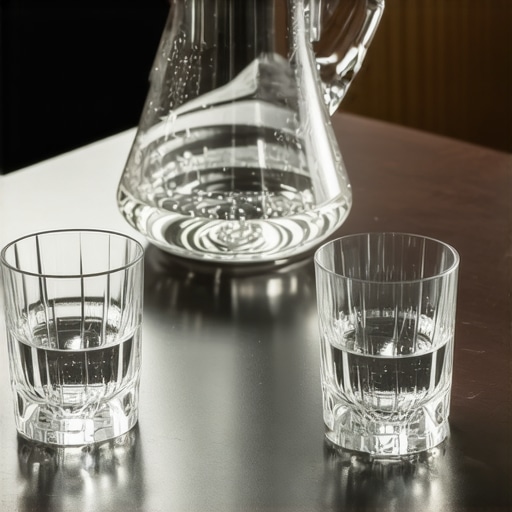
The Logistics of Chilled Perfection Without the Mess
The biggest hurdle most planners face is the ‘sweat’ factor. Cold glass on a polished mahogany table leads to rings, and rings lead to damage or a cluttered look of napkins being used as coasters. You need a system. I once worked a three-day summit where we used double-walled glass carafes. They maintain the internal temperature for hours without a single drop of condensation forming on the exterior. It’s a masterclass in corporate event catering logistics. If double-walled isn’t in the budget, leather or high-end felt coasters are mandatory. Never use paper. Beyond the vessel, your refill strategy must be surgically precise. You don’t wait for a carafe to be empty; you replace it when it hits the 25% mark. This prevents that awkward moment where a board member is tilting a bottle vertically trying to get the last drop.
Train Your Team for the ‘Silent Swap’
The most disruptive part of water service is the server. If your staff walks in like they are clearing a cafeteria, the momentum is gone. You need to how to train temporary server staff on high-end table manners to ensure they understand the ‘Silent Swap.’ This involves entering the room during a natural transition in conversation and replacing carafes from the perimeter without ever crossing the line of sight between the speaker and the audience. It’s very similar to how to handle plate clearing during a seated executive presentation. The goal is for the water to simply ‘appear’ as if by magic. I’ve seen meetings where the CEO didn’t even realize his glass had been topped off three times because the server moved with the grace of a shadow. When you have the best corporate event servers for 2025, they know that their success is measured by how little they are noticed. This level of service transforms a basic necessity into a silent pillar of your corporate brand.Let’s dig deeper into the invisible architecture of a high-end event. There is a persistent myth in the industry that the secret to a flawless evening is simply a ‘great menu.’ I’ve seen world-class chefs have their reputations ruined by a server team that didn’t know how to navigate a room. The most common mistake I see planners make is throwing bodies at a problem. They think that hiring 40 servers for 100 guests will guarantee speed, but without a rigorous hierarchy, it just creates a bottleneck. If you don’t grasp why your server team needs a clear chain of command on site, you’re just paying for a crowd. True luxury service is about the ratio of eyes-on-the-room to hands-on-the-plate. This is where optimizing server efficiency to enhance event satisfaction shifts from a management task to an art form. 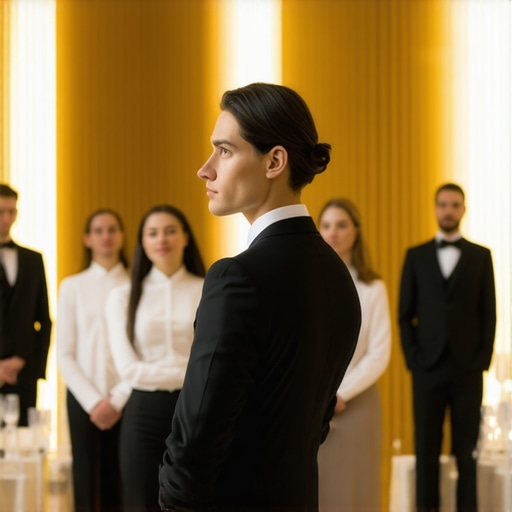
How can you tell if your servers are actually professionals?
It goes far beyond the ability to carry a tray. An elite server understands the nuances of ‘positioning.’ For instance, do they know how to spot a server who has not been trained in French service? A trained professional knows that service from the left and clearing from the right isn’t just a stuffy rule—it’s a logistical system designed to prevent collisions. According to a landmark study by the Cornell School of Hotel Administration, service quality is a primary driver of ‘return intent’ and brand prestige, often outweighing the quality of the physical product. This is why the ‘Student Server Trap’ is so dangerous. Planners often succumb to the hidden risks of hiring student servers for high-end events because the lower hourly rate is tempting. But when a server forgets a gluten-free request or clangs silver during a keynote, the ‘savings’ evaporate instantly. You also have to consider the technical logistics of the meal itself. I’ve seen beautiful events fail because the team didn’t understand why cold plates are the enemy of a perfect filet mignon. Heat transfer is science, and if your team isn’t trained to manage the ‘plate-to-table’ window, the food is dead on arrival. To avoid this, I always look for the hidden benefit of hiring a lead server for every ten guests. This ensures that every tiny detail—from the water carafe level to the complex dietary needs—is monitored by a dedicated set of eyes. It also allows you to how to brief your server team on complex dietary restrictions in minutes rather than hours. When the hierarchy is clear, the service becomes a silent, synchronized performance. Have you ever fallen into this trap of prioritizing the headcount over the hierarchy? Let me know in the comments.
Scale Your Impact Without Losing the Personal Touch
Moving from managing a single boardroom to overseeing a multi-city executive tour is where most planners hit a wall. The level of detail I’ve described—the silent water swaps and the perfect plate temperatures—is easy to execute when you are standing right there, but scaling it requires a shift from personal oversight to a rigorous system of mastering corporate event planning secrets to seamless success. I personally rely on a ‘Standard Operating Procedure’ (SOP) that is less about a checklist and more about a sensory map. For instance, my lead servers aren’t just looking for empty glasses; they are trained to listen for the specific ‘tone’ of a room. If the volume of conversation dips, it’s often a sign that the energy is flagging, and it’s time to subtly introduce a refreshing element. To keep these corporate event catering strategies for success consistent, I use a digital floor-plan tool like Social Tables to map out every single service station, ensuring that no server ever has to walk more than 20 feet to find a fresh carafe or a clean napkin. This isn’t just about efficiency; it’s about reducing the physical ‘noise’ of movement in a high-stakes environment.
Investment Pieces That Save Your Reputation
If you are tired of renting gear that arrives scratched or dull, it is time to build your own ‘Executive Kit.’ I recommend investing in professional-grade transport systems like the Cambro Pro Cart Ultra. In the catering world, heat retention is everything, and these units are the industry standard for maintaining food safety and quality without relying on erratic venue ovens. According to the ‘Three Steps of Service’ established by the Ritz-Carlton Leadership Center, the most critical phase is the ‘Anticipation and Fulfillment of each guest’s needs.’ You cannot anticipate a need if your team is struggling with broken equipment or lukewarm food. This is why I also insist on my teams using essential checklist for successful corporate event catering protocols every 30 minutes. It turns a chaotic service into a predictable, high-output machine. 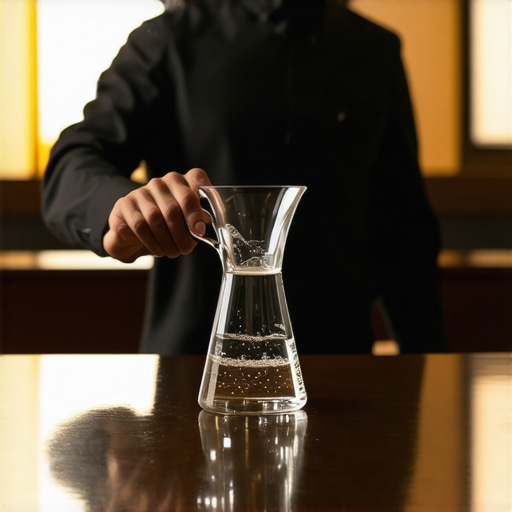
How do I keep the staff consistent month after month?
The secret to long-term success isn’t just hiring better people; it’s about creating a culture where ‘good enough’ is considered a failure. I implement a ‘Post-Event De-brief’ where the server team reviews the ‘Silent Swap’ performance. We look at the timing—did we move during the keynote? Did we wait for the Q&A? This keeps the team engaged in the craft of service rather than just the labor of it. To really boost your corporate event with expert server techniques, you have to treat your staff like the professionals they are, providing them with the tools and the feedback loop they need to excel. Looking ahead, I predict that the ‘High-Touch’ hospitality model will become even more valuable as AI begins to handle more of the backend logistics. In 2025 and beyond, the human element—the server who knows exactly when to pour the water without being asked—will be the ultimate status symbol of a corporate brand. If you want to elevate your next meeting, I challenge you to try this: appoint one ‘Service Captain’ whose only job is to watch the water levels. Don’t let them touch a plate or a chair. Watch how much more focused your executives become when their hydration is handled with invisible precision.
Hard Truths I Discovered in the Back of the Room
Reflecting on a decade of boardrooms, I’ve realized that the greatest service is often the one that goes entirely unremarked upon. If an executive has to stop talking to ask for water, you’ve already lost the battle. I learned that the water carafe is actually a barometer for the entire event’s health; if it’s sweating or empty, other larger cracks in your effective catering strategies for corporate event impressiveness are likely forming elsewhere. Another lightbulb moment was realizing that ‘efficient’ often feels ‘hostile’ to a VIP. Taking the slower, more deliberate path—like hand-polishing glass—signals a level of care that breeds trust before a single word of the presentation is spoken. This is where optimizing server efficiency to enhance event satisfaction becomes the bridge between a good meeting and a great one.
My Go-To Toolkit for Perfect Executive Coordination
To keep my standards consistent across different venues, I rely on a few non-negotiables. First, I always use digital mapping to visualize the flow; if a server’s path crosses a speaker’s line of sight, the floor plan is wrong. For actual service standards, I treat the Ritz-Carlton Leadership Center materials as my bible—they define the ‘Anticipation’ of needs better than anyone else. When it comes to the physical gear, I don’t move without a professional-grade transport unit to ensure that every meal arrives at the exact temperature it left the kitchen, because lukewarm food is the fastest way to undermine a high-end atmosphere. Finally, I follow sustainability guidelines to keep my environmental impact as low as possible while maintaining a luxury feel. #IMAGE_PLACEHOLDER_E#
Take the Leap Toward a Higher Standard
Transitioning from the convenience of plastic to the elegance of glass isn’t just an aesthetic choice; it’s a strategic one. When you invest in the details, you are telling your guests that their time and their focus are your highest priorities. It takes more effort to implement mastering corporate event planning secrets to seamless success, but the return on investment comes in the form of deeper engagement and a bulletproof professional reputation. Don’t be afraid to demand more from your team and your equipment. The boardroom is your stage—make sure the props are worthy of the performance. Have you ever seen a high-stakes board meeting lose its momentum over a small, avoidable logistical detail? Let me know in the comments.