

I remember sitting in the back of a wood-paneled boardroom three years ago, watching our Chairman’s face turn a concerning shade of crimson. He was mid-sentence—about to reveal a pivot that would save the company—when a server accidentally dropped a stack of porcelain bread plates. The clatter was deafening. The momentum didn’t just stumble; it died right there on the carpet. That was the day I realized that a catered lunch is either a silent engine for productivity or a loud, clanking distraction that eats your ROI for breakfast. Most people think the food is the star of the show. It isn’t. The star is the conversation, and the food is merely the supporting cast that needs to know its cues and stay out of the spotlight. Today, I am going to show you how to choreograph this delicate dance so your leadership stays sharp, fed, and, most importantly, awake.
The Boardroom is Not a Restaurant
I made a massive mistake early in my career that I still cringe about today. I thought ‘more is better’ and ordered a heavy, three-course steak dinner for a high-stakes strategy session. By 1:45 PM, the room felt like a nap pod. Half the board was glazing over, and the other half was too busy wrestling with their knives to look at the slide deck. I learned the hard way that you have to handle plate clearing during a seated executive presentation with surgical precision. If your servers are hovering or clinking silver while the CFO is talking numbers, you’ve already lost. You need to keep the kitchen noise from ruining your keynote speech by setting clear boundaries with your catering team. Have you ever looked around a boardroom and realized half the room is staring at their salad instead of the agenda? It is a frustrating feeling, but it is entirely avoidable if you shift your focus from ‘feeding’ to ‘fueling.’ [IMAGE_PLACEHOLDER]
Is a Fancy Meal Just a Distraction?
Some skeptics argue that we should just skip the food entirely to keep things lean. However, science says otherwise. According to a study published by the World Health Organization, adequate nutrition can raise productivity levels by an average of 20%. The trick isn’t skipping the meal; it’s about effective catering strategies for corporate event impressiveness that prioritize brain power over belly fullness. We aren’t here for a food coma; we are here for a breakthrough. By choosing the right textures, temperatures, and service styles, you can keep the energy in the room high from the first bite to the final vote. In the following sections, I will break down the specific menu tweaks and staffing secrets that keep the room locked in on the mission.The difference between a successful board meeting and a total write-off often comes down to the clock. If your catering staff doesn’t have a synchronized watch with your moderator, you’re inviting chaos. I always tell my clients that why your corporate lunch needs a clear end time for the catering staff is about more than just cleaning up—it’s about signaling to the room that the ‘break’ is over and the ‘work’ has resumed. Think of your catering team like a Formula 1 pit crew. They should be fast, invisible, and gone before the driver even realizes they were there.
Make the Service Disappear into the Background
To achieve this, you need to treat your event like a military operation. It starts with the ratio. For a standard wedding, you might get away with one server for every twenty guests, but in a high-stakes corporate environment, that is a recipe for delay. You need to know how to choose the right staffing ratio for a VIP event to ensure that no one is left waiting for a refill while the CEO is making a point. One server for every ten guests is my golden rule for boardrooms. This allows for ‘silent refills’—where a glass is topped off without a single word being exchanged. If a server has to interrupt a conversation to ask if someone wants more water, they have failed. The goal is total situational awareness.
Why a Five-Minute Huddle Changes Everything
I remember a tech launch in 2022 where the menu was incredibly complex—lots of allergies and keto preferences. We were behind schedule by twenty minutes before the first course even hit the table. I pulled the catering lead aside and we did a rapid-fire reset. I learned that knowing how to organize a staff meeting before a 500-person dinner (or even a small executive one) is the only way to prevent mid-service confusion. During that huddle, we identified the ‘hot spots’ in the room where the most senior executives sat and prioritized their service flow. We assigned specific zones so no two servers were crossing paths like a pair of tangled headphones. 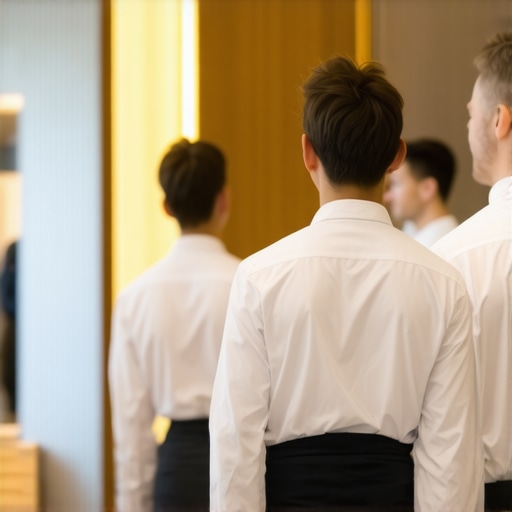
Speed Hacks for the Modern Host
If you want to keep things moving, you have to eliminate the ‘startup lag’ of a meal. This is where why pre-pouring water is the secret to a fast service start comes into play. When guests sit down, their basic needs should already be met. No one should be looking around for a server to get a simple glass of water. Furthermore, you must empower your team with the right information ahead of time. You need to how to brief your server team on complex dietary restrictions in minutes so that when the vegan guest asks a question, the server doesn’t have to run back to the kitchen to ask the chef. They should have the answer ready, keeping the rhythm of the conversation intact. This level of preparation turns a meal into a seamless extension of the meeting rather than a jarring interruption.It is a common trap to believe that the menu is the ultimate driver of event success. I’ve seen planners spend months agonizing over the origin of the sea salt while neglecting the human element entirely. In my experience, even the finest wagyu becomes forgettable if the person serving it is disorganized or lacks basic etiquette. This is why I advocate for shifting your budget from the kitchen to the floor. If you want a truly seamless experience, you need to understand that the advantage of hiring servers who specialize in French service isn’t about snobbery—it’s about a level of attention that ensures no guest ever has to look for a waiter.
Your Floor Captain is More Important Than the Executive Chef
One of the biggest ‘oops’ moments I see in high-end galas is the reliance on unvetted labor. People often try to save a few dollars by bringing in temporary help, but the hidden risks of hiring student servers for high-end events are immense. They lack the muscle memory of a seasoned professional. A professional knows how to read the room—they know when a guest is about to stand for a toast and will wait to clear the plate. They understand that why your server team needs a designated captain for every 50 guests is the only way to maintain a clear line of communication. Without that captain, the flow breaks, and suddenly you have three servers in the same corner while the VIP table is ignored. 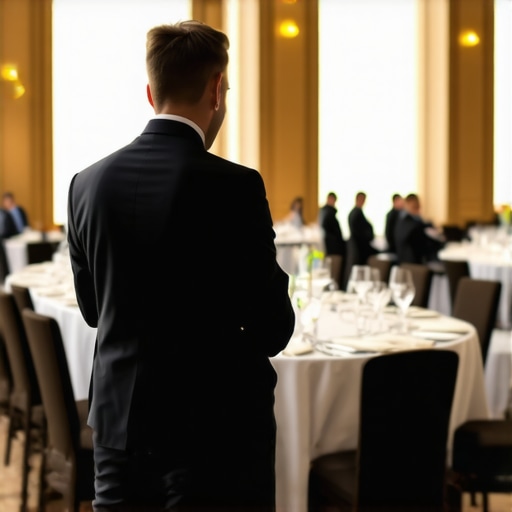
Is White Glove Service Actually Necessary for Your Brand?
A study by the Cornell University School of Hotel Administration suggests that guest satisfaction is tied more closely to the ‘responsiveness’ of staff than the actual amenities provided. This ‘perceived quality’ is what separates a good event from an unforgettable one. Interestingly, why white glove service is making a comeback in luxury galas isn’t just about aesthetics; it’s about a psychological signal of care and precision. However, you have to be careful. You need to know how to spot a fake luxury server team before they ruin your gala. If they aren’t moving in unison, or if they lack a ‘lead’ who is constantly auditing the room, the ‘white glove’ is just a costume.
Stop Ignoring the Intelligence of Your Staff
I once saw a $100,000 corporate dinner nearly derailed because a server couldn’t identify which appetizer contained nuts. It took four minutes for them to find an answer, and in those four minutes, the CEO’s guest felt unsafe. This is why you must learn how to spot a professional server in an interview—you’re looking for high emotional intelligence and quick recall. If your staff isn’t an extension of your hospitality, they are a liability. Have you ever fallen into this trap where the service didn’t match the quality of the food? Let me know in the comments.It’s one thing to hire a great team for a one-off gala; it’s an entirely different beast to maintain that level of excellence across a whole season of high-stakes events. I’ve found that the secret isn’t just ‘better people’—it’s better systems. My go-to weapon is a rigorous digital audit. Before any event, I personally go through the manifests with the lead server. You have to learn how to audit your rental order for missing water glasses because, trust me, discovering a missing rack of stemware at 6:00 PM is a crisis you simply cannot afford. I use platforms like Allseated to map out the service flow down to the inch. This allows my team to visualize the ‘dead zones’ and traffic bottlenecks before we even step onto the floor. It is a non-negotiable part of the essential checklist for successful corporate event catering that I never skip, regardless of the event size.
How do I keep my team performing at this level every single time?
Consistency is born in the debrief. After every event, we spend fifteen minutes discussing exactly what did and didn’t work. Was the kitchen too far from the VIP tables? Did our strategy for optimizing server efficiency to enhance event satisfaction actually hold up during the main course rush? We treat every minor hiccup as a data point for the next training session. To scale this quality, I rely on a ‘Lead Server Playbook’ that I’ve refined over a decade. It’s about mastering corporate event planning secrets to seamless success by creating a culture where the staff feels like stakeholders in the brand’s reputation. According to research published in the Journal of Foodservice Business Research, the ‘moment of truth’ in hospitality occurs within the first few seconds of guest interaction, which means your tools must support immediate readiness. Looking ahead, I see a massive shift toward hyper-personalized service data. We are moving toward a world where your head server knows a guest’s specific allergy or preferred vintage before they even sit down, thanks to integrated CRM systems. This is why your event needs a dedicated staff member for dietary requests who can manage that data flow in real-time. My challenge to you for your next function is this: implement a ‘silent audit’—walk the floor thirty minutes before doors open and try to find three missing details that only a professional would notice. You will be amazed at the gaps you can close when you shift your perspective.
The Unspoken Rules of Boardroom Stealth
Over the years, I have learned that the best service is felt, not seen. Silence is a specialized skill in high-stakes environments. I once watched a server clear an entire table of twelve during a sensitive merger discussion without making a single decibel of noise. That level of focus is what separates a standard lunch from a professional triumph. If you want to truly boost your corporate event with expert server techniques, you have to train for the quiet. Anticipation is your greatest weapon; if a guest has to pause their sentence to ask for a napkin or a refill, the rhythm of the deal has been interrupted. I always look for servers who exhibit ‘peripheral awareness’—the ability to see a low water glass from across the room without ever staring. [IMAGE_PLACEHOLDER_E]
My Go-To Toolkit for Flawless Execution
Success in this industry isn’t just about talent; it is about the systems you have in place to catch human error. I never walk into a venue without my ‘Event Bible,’ which includes these essential resources:
- Allseated: This is my non-negotiable tool for floor plans. It helps me visualize traffic flow so servers never collide during a critical keynote.
- Setting the Table by Danny Meyer: This book is the foundation of my philosophy. It teaches you that hospitality is how you make people feel, while service is just the technical delivery of the food.
- Digital Manifests: I use real-time digital checklists to ensure we are following corporate event catering strategies for success without missing a single dietary restriction.
- Laser Temperature Probes: We never rely on the kitchen’s word alone; we check every plate at the pass to ensure the executive’s meal is exactly the right temperature upon arrival.
Take the Reins of Your Next Big Event
Hosting a high-stakes gathering can feel like walking a tightrope, but it doesn’t have to be a source of anxiety. When you implement these top server tips to elevate your event experience, you are doing more than just providing a meal; you are creating a sanctuary where business can happen without friction. You have the power to turn a simple lunch into a catalyst for your company’s next big breakthrough. Start with the small details—the silent refills, the synchronized clearing, and the expert briefing—and watch how the atmosphere in the room shifts from tense to productive. It is your turn to lead the way and show your board what true hospitality looks like. What’s the one catering disaster you’ve witnessed that could have been fixed with a better server ratio? Let me know below.