

I was standing in the shadows of a massive ballroom, watching the CEO of a major non-profit prepare to announce a record-breaking donation. The atmosphere was electric. We had planned for a triumphant swell of orchestral music the second she finished her sentence. I had my finger on the play button of a carefully curated Spotify playlist. She spoke. She smiled. I clicked. Nothing happened. The Wi-Fi had chosen that exact microsecond to stutter, and for six agonizing seconds, the only sound in the room was the hum of the HVAC system and a stray fork hitting a china plate. It was a nightmare. That one tiny technical glitch sucked the air right out of the room, turning a victory lap into a polite, confused golf clap. If we had the best corporate event servers for 2025 and a professional team, they would have felt the tension, but the music? That was on me and my efficient playlist.
The Dangerous Illusion of the Set-and-Forget Playlist
I used to believe that as long as I had a good speaker system and a solid list of tracks, I could save my client a few thousand dollars. I was wrong. A playlist is a static thing in a dynamic environment. It does not know when a speaker is running long or when your corporate event catering strategies for success require a sudden shift in tempo to get guests back to their seats. When you rely on a pre-recorded loop, you lose the ability to react in real-time. This is why I now tell everyone that why your corporate gala needs a professional stage manager and a live DJ is not a luxury—it is an insurance policy for your event’s momentum.
Can an Algorithm Truly Read a Room’s Energy?
I get it; the temptation to cut costs is real. You might be wondering if a human is actually worth the premium when technology is so smart now. But here is the catch: an algorithm does not have eyes. It does not see the donor who is still chatting at the bar or the keynote speaker who is walking slower than expected to the podium. According to research from the EventMB group, live musical intervention can increase guest emotional resonance by nearly 30% compared to static background tracks, primarily because of the human-in-the-loop timing. When you learn how to pick corporate entertainment that does not feel forced, you are paying for someone to manage the silence, not just the noise. Have you ever been to an event where the silence between segments felt longer than the speeches themselves?
Sync the Sound with the Silverware
Timing is a physical force at a gala, not just a suggestion on a printed itinerary. When you align your audio cues with your service beats, you create a seamless psychological bridge for your guests. I remember a chaotic 800-person dinner in midtown where the keynote speaker finished early. The servers weren’t ready. The music was still in its ‘quiet background’ phase. The silence was deafening. I had to sprint to the soundboard and ramp up the BPM to 120 just to signal to the room that it was time to talk. It worked—the energy rebounded instantly. This is why you must how to vet a venue for corporate wifi stability and speed before you even think about your Spotify login. If your connection drops while the first course is being served, you lose the narrative thread of the night.
Drown Out the Echo and Keep the Focus
Physical space dictates sound as much as your speakers do. A cavernous industrial hall with high ceilings is a nightmare for intimacy. If you don’t account for the the impact of table linens on the acoustic quality of a room, your guests will be shouting over their salads. I’ve seen $50,000 events ruined because the reverb made the CEO’s jokes sound like they were coming from a tin can. Use heavy fabrics and strategic placement of soft materials to dampen the bounce. It’s not just decor; it’s acoustic engineering that keeps your audience’s attention on the stage rather than the clatter of the kitchen.
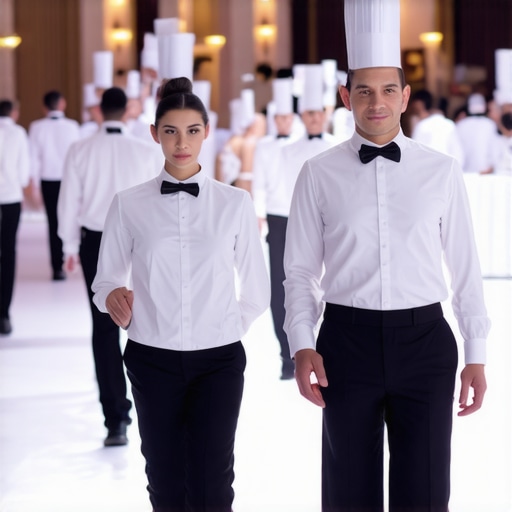
Give Your Team a Clear Chain of Command
In the heat of a high-stakes event, a ‘flat’ management structure is a recipe for disaster. You need a hierarchy that functions like a military unit. Why your server team needs a clear chain of command on site becomes obvious the moment a tray of drinks hits the floor. Without a designated lead server, everyone looks at each other, and nobody grabs a mop. I once saw a 1,000-person conference buffet nearly turn into a riot because there was no one directing the line flow. We eventually used the secret to managing a 1000-person conference buffet without a stampede—using the DJ to announce table numbers—but that only works if the server lead is communicating with the sound booth. Coordination is the difference between a professional gala and a high school cafeteria.
Control the Crowd with Strategic Bar Placement
If you want to prevent a bottleneck at the entrance, you have to play with human psychology. Guests gravitate toward the first source of alcohol they see. By understanding the logic of placing the bar away from the entrance, you pull the crowd into the room, forcing them to distribute themselves naturally. I’ve made the mistake of putting a satellite bar right by the coat check. The result? A thirty-minute wait for a Gin and Tonic while the back half of the ballroom sat empty like a ghost town. Now, I use the bar as a lure, placing it in the furthest corner to ensure every square foot of the venue is utilized and the server skills that make every event stand out are visible to all, not just those stuck at the door.
Let’s pull back the curtain on the most persistent myth in the industry: the idea that more options equal happier guests. In reality, the more complex your menu, the more you dilute the quality of the service. I’ve seen planners insist on five different protein options, thinking they’re being inclusive. What they’re actually doing is creating the-problem-with-serving-steak-at-a-500-person-business-lunch—the kitchen falls behind, the medium-rare becomes well-done, and the server team loses their focus. A curated, high-execution menu beats a scattered buffet every single time. It’s better to serve one perfect dish than three mediocre ones.
The Amateur Trap of the Cold Porcelain Plate
Here is a nuance most beginners overlook: the temperature of the plate itself. You can have a world-class chef in the back, but if those plates aren’t pre-warmed, your meal is dead on arrival. This is exactly why-cold-plates-are-the-enemy-of-a-perfect-filet-mignon. In a large ballroom, the walk from the kitchen to the table can be long. A cold plate acts as a heat sink, sucking the life out of the food before the guest even picks up their fork. Professionals invest in plate warmers; amateurs invest in garnish. If you want to elevate the experience, stop worrying about the micro-greens and start touching the porcelain.
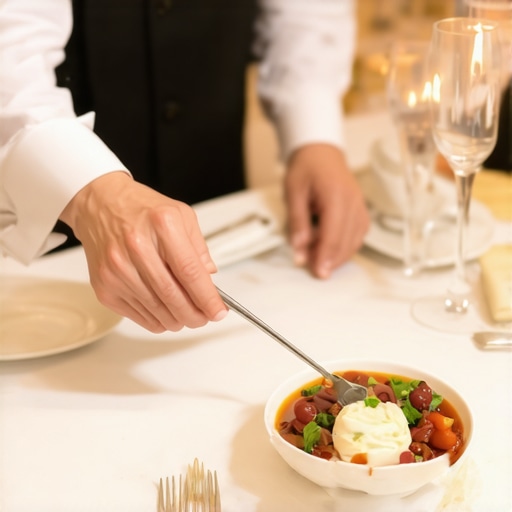
Why Round Tables Might Be Killing Your Networking Vibe
We’ve been conditioned to think round tables are the gold standard for conversation, but for high-energy networking, they are often a hurdle. Large rounds create a physical distance that makes it hard to hear anyone other than the person directly to your left or right. I’ve found that why-round-tables-are-killing-the-vibe-at-your-networking-event is because they encourage static clusters rather than fluid movement. Switching to long banquet tables or high-tops with stools creates a more dynamic ‘flow’ that keeps people mingling rather than feeling trapped in a ten-person silo for three hours.
Is it Possible that Your Service Speed Matters More than the Menu?
It sounds controversial, but the data backs it up. A research paper from the Cornell School of Hotel Administration confirms that guest perception of ‘service attentiveness’ and speed is statistically more significant to overall satisfaction than the actual variety of food offered. This is why you must avoid the-hidden-risks-of-hiring-student-servers-for-high-end-events. An untrained server won’t know how-to-spot-a-server-who-has-not-been-trained-in-french-service, and they certainly won’t understand the pacing required for a 500-person multi-course meal. High-end events are making a shift back to traditional excellence, which is why-white-glove-service-is-making-a-comeback-in-luxury-galas. It’s not just about the show; it’s about the precision of a team that knows how to clear a room in under four minutes without interrupting a single conversation. Have you ever fallen into this trap where a ‘safe’ buffet choice turned into a logistics nightmare? Let me know in the comments.
I’ve learned the hard way that a clipboard is just a piece of wood if you don’t have the right systems behind it. When I talk about mastering corporate event planning secrets to seamless success, I’m talking about the invisible infrastructure. I personally never walk into a ballroom without a set of Motorola CP200D digital radios. Why? Because cheap consumer walkies pick up interference from the industrial microwaves in the kitchen, and in the middle of a 500-person gala, I cannot afford to hear static when I’m trying to boost your corporate event with expert server techniques. You need digital noise cancellation to cut through the ambient roar of a crowded room. According to technical documentation from the Audio Engineering Society (AES) on speech intelligibility, maintaining a high signal-to-noise ratio is critical in environments exceeding 75 decibels. If your communication fails, your essential checklist for successful corporate event catering becomes a list of broken promises. 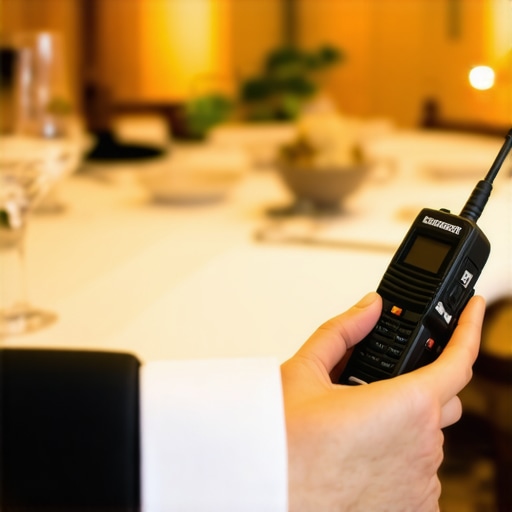
How do I keep my team sharp when the energy starts to dip?
Consistency is the byproduct of physical endurance and mental clarity. I’ve found that the secret to optimizing server efficiency to enhance event satisfaction isn’t just training—it’s the ‘mid-event reset.’ Every four hours, I pull my leads for a sixty-second huddle. We don’t talk about the menu; we talk about the ‘vibe check.’ Are the guests hovering? Is the bar line exceeding two minutes? This keeps the team from falling into a robotic trance. You have to treat your staff like elite athletes. I provide high-protein, low-sugar snacks in the back of house because a server crashing from a sugar high will start making mistakes with the glassware. These wedding catering tips from industry experts are the difference between a team that finishes strong and one that just finishes.
The Era of Predictive Event Logistics
Looking ahead, I see a massive shift toward predictive analytics in our industry. We are moving away from reactive management—where we wait for a problem to solve it—and toward AI-driven logistics. Imagine a system that tracks real-time consumption of spirits to alert the cellar before the gin runs out, or sensors that monitor the temperature of the buffet line to prevent the lukewarm-food disaster. This isn’t science fiction; it’s the logical evolution of top server tips to elevate your event experience. We will soon use thermal mapping to see where guests are congregating, allowing us to shift server density in real-time to prevent bottlenecks before they even form.
If you want to step into the big leagues of event production, I challenge you to try one thing at your next gala: implement a ‘silent’ lead server who does nothing but watch the guests’ eyes. Their only job is to anticipate needs before a hand is ever raised. When you see how much this one shift changes the room’s energy, you’ll never go back to the old way of managing.
Hard Truths I Learned While the Buffet Was Sinking
After a decade in the trenches, I’ve realized that even the most expensive decor cannot hide a team that isn’t communicating effectively. One of my biggest lightbulb moments was realizing that silence is actually a sound—and if you do not fill it correctly, your guests will fill it with awkwardness. I also learned that you should never trust a ‘guaranteed’ Wi-Fi signal; always have a local backup of every single media file on a physical drive. Finally, remember that your staff’s energy is contagious. If the lead server is stressed, the guest at table twelve will feel it before they even taste the appetizer. This is why mastering effective catering strategies for corporate event impressiveness starts with the people and the protocols, not just the plates.
#IMAGE_PLACEHOLDER_E#
The Event Producer’s Secret Weaponry
If you want to move from amateur to professional, you need to stop relying on luck and start relying on a vetted toolkit that works when the pressure is on. I swear by the Motorola CP200D for internal communication because it is the only reliable way to ensure your ‘clear the room’ cue isn’t lost to industrial static. For those just starting their journey, I highly recommend reading ‘Setting the Table’ by Danny Meyer; it completely reframed how I think about hospitality as a high-performance sport. I also keep a digital copy of an essential checklist for successful corporate event catering pinned to my home screen for every site walkthrough. These tools do not just save time; they preserve your professional reputation when the unexpected happens.
The Art of the Unseen Effort
At the end of the night, your success isn’t measured by the lack of mistakes, but by how few of those mistakes the guests actually noticed. True excellence in corporate event catering is found in the quiet, seamless moments—the way a water glass is refilled without a word or how the music swells exactly as the speaker takes their final bow. You have the power to create a flawless world for your guests, even if it feels like controlled chaos behind the kitchen doors. Go out there, trust your preparation, and remember that you are the conductor of the entire experience. If you are planning a more personal milestone, knowing how to choose the perfect servers for your wedding or your charity gala will make all the difference in the world. Use these top server tips to elevate your event experience and watch the room’s energy transform. Have you ever seen a perfectly planned gala derailed by a single technical glitch or a silent room? Let me know your horror stories—or your wins—in the comments below!