

I remember the look on Sarah’s face—not the bride, but my lead photographer—when she saw the cake table tucked directly under a glowing red EXIT sign in a windowless corner. It was a $2,000 masterpiece of sugar and lace, and it looked like a prop in a basement horror movie. I felt like a fool because, as the planner, I’d prioritized getting it out of the way of the dance floor. That one decision meant every single shot of the cake cutting had a neon sign photobombing the couple’s most romantic moment. It is a mistake I only made once, but I see it happening at nearly every wedding I attend. We spend months agonizing over flavors and frosting textures, yet we treat the physical placement of the cake like an afterthought. Your photographer doesn’t hate your cake; they hate the logistics of trying to make a dark, cramped corner look like a fairytale. Today, we are going to fix your floor plan so you don’t end up with flat photos. If you have ever wondered why your professional shots don’t look like the ones in the magazines, the culprit is often the background distractions you didn’t see. Even if you have followed the move that ensures your wedding cake doesn’t lean, a bad location will still ruin the vibe.
Stop Putting Your Cake in the Darkest Corner of the Room
Early in my career, I once placed a gorgeous five-tier lemon chiffon cake directly in front of a fire extinguisher. I thought I was being efficient with space. My photographer spent the whole night sweating, trying to find an angle that didn’t include a bright red tank. It was a disaster. According to a study by The Knot, nearly 80 percent of couples prioritize photography above all other wedding vendors, yet many accidentally sabotage those photos with poor layout choices. The real reason your event photos look washed out and flat often comes down to lighting and backdrop, not just the camera settings. You want that cake to glow, not blend into the industrial wallpaper of a hotel ballroom. I have gathered some wedding catering tips from industry experts that suggest the cake should be treated as a focal point, not a piece of furniture to be hidden. Beyond the lighting, think about the traffic. If your cake is too close to the kitchen doors, you will have servers in the background of every shot. Have you ever looked at a venue and realized there is absolutely nowhere to put the cake that isn’t next to a trash can? Let me know if you are struggling with your floor plan right now!
Can even a five thousand dollar lens save a cake in front of a bathroom door?
No matter how talented your pro is, they cannot delete a bathroom sign or a stack of dirty plates from a candid shot without hours of expensive Photoshop work. It is much easier to just move the table. You should also ensure why your wedding cake should be delivered four hours early to give the photographer time to capture it while the natural light is still hitting the room correctly. If the sun sets and your cake is in a shadow, the details of that expensive frosting will simply disappear into a muddy brown blur. We need to think about the 360-degree view, because once the crowd gathers for the cutting, the photographer will be forced to move around, and you do not want the ‘back’ of the shot to be the DJ’s tangled nest of power cables. Setting the stage for the cake is just as important as the flavor itself.
Hunt for Natural Light Early in the Day
Think of your wedding cake as a high-end fashion model; if the lighting is flat, the cake looks flat. I once worked an event in an old industrial warehouse where the couple insisted on placing the cake against a dark brick wall. We moved it at the last minute to sit perpendicular to a set of massive iron-framed windows. The difference was night and day. By utilizing the benefit of using floor-to-ceiling windows for product shoots, the photographer captured the delicate textures of the lace-patterned icing without needing a harsh, artificial flash that washes out details. You should perform a walk-through during your site visit specifically to see where the light falls at the time of your reception. This is exactly why your wedding photos need a sunset scouting session, as the ‘golden hour’ can transform a simple white cake into a glowing piece of art. If you are in a windowless ballroom, skip the overhead fluorescents and how to light a dark ballroom without using tacky fairy lights by opting for dedicated pin-spotting from the ceiling. 
Keep the Service Traffic at a Distance
The area around your cake needs to be a ‘no-fly zone’ for anyone except the couple and the photographer. I’ve seen countless romantic cake-cutting shots ruined by a well-meaning server clearing a bread plate in the background. It is vital to how to prevent guests from hovering around the kitchen doors, and the same logic applies to your cake table. If the table is too close to the service entrance, your photos will capture the organized chaos of the catering team rather than your floral arrangements. When you elevate your wedding with professional servers, they will know to stay clear of the frame during key moments, but you have to give them the physical space to do so. A good rule of thumb is to keep at least six feet of ‘buffer’ space between the cake and any high-traffic pathways. This ensures that even if you have top servers for a seamless wedding reception, they aren’t accidentally photobombing your legacy shots.
Build a Backdrop That Blocks the Clutter
Unless your venue is a minimalist gallery, there is usually something ugly on the walls—thermostats, light switches, or those dreaded red exit signs. I once managed a wedding where we used a lush boxwood hedge to hide a massive fuse box right behind the dessert display. It turned a utility corner into a garden oasis. You can also how to use drapery to make a massive ballroom feel intimate by creating a soft, fabric wall behind the cake. This provides a clean, neutral canvas that makes the colors of your cake pop. Remember, the camera sees everything. If you don’t create a deliberate background, the ‘background’ will be the back of your guests’ heads or a stack of extra chairs. When planning the ultimate wedding reception meal, we often focus on the table settings, but the vertical space behind the cake table is what actually shows up in the album. Treat it with the same level of detail as your centerpieces.Most planners assume that if a high-stakes gala is failing, they just need to add more hands. In my experience, a ‘crowded’ floor is actually the fastest way to kill an atmosphere. It is a common myth that luxury is defined by the number of bowties in the room. In reality, too many bodies lead to server clustering—that awkward huddle near the kitchen doors where staff gossip while water glasses go empty. According to research from the Cornell School of Hotel Administration, guest satisfaction in fine dining is tied more closely to the ‘attentive but unobtrusive’ nature of service rather than the frequency of staff interaction. When you have too many people on the floor without a mission, they become a distraction rather than a benefit.
Throwing Money at More Staff Won’t Fix a Broken Floor Plan
The ‘Oops’ factor often happens when you hire a massive team but neglect to define a hierarchy. I have seen events where three different people asked the same VIP if they wanted more wine within five minutes, which feels like harassment, not hospitality. This is precisely the hidden benefit of hiring a lead server for every ten guests; it creates a manageable span of control. Without this structure, the floor becomes chaotic, and why your server team needs a clear chain of command on-site becomes painfully obvious as the service pace stutters. Have you ever fallen into this trap of over-staffing? Let me know in the comments!
How do you spot a server who has not been trained in French service?
This is a nuanced question that separates a standard caterer from a luxury one. If you see a server reaching across a guest’s line of sight or clinking heavy silver against delicate china, the technical training has failed. You need to know how to spot a server who has not been trained in French service because those technical gaps are what make a high-end meal feel ‘off’ to sophisticated guests. It is the same subtle discomfort that occurs when a table is improperly set; why the wrong fork can ruin a five-course meal experience is about the psychological break in the ‘spell’ of the evening. #IMAGE_PLACE_HOLDER_C#
The Invisible Waitstaff Secret
True expertise is masterfully executing how to train event servers to refill water without being noticed. I call this ‘The Phantom Refill.’ If a guest has to pause their networking or a CEO has to stop mid-sentence to acknowledge a server, the flow of the event is dead. When the math behind hiring extra servers for a flowing champagne reception is done correctly, the movement should feel like a choreographed dance rather than a traffic jam. High-end service should be felt through a full glass and a cleared plate, never seen through a server’s constant hovering. Focus on the quality of the training, not just the quantity of the staff.Maintaining that ‘phantom’ level of service isn’t an accident; it’s the result of a rigorous maintenance cycle for both your equipment and your team’s headspace. I’ve found that the only way to avoid the mid-season slump is to treat every event like a debut. I swear by AllSeated for real-time collaboration, but the real secret weapon in my kit is a professional communication system. We utilize Clear-Com FreeSpeak II headsets for the leadership team because they operate on the 1.9GHz band, preventing signal drops in crowded ballrooms where guest Wi-Fi usually kills cheaper radios. Communication is the first thing to break under pressure, and having a crystal-clear direct line prevents the frantic ‘server huddle’ that ruins the atmosphere. This is a core part of an essential checklist for successful corporate event catering.
How can I keep my service standards from slipping over a long season?
The answer lies in a ‘Living SOP’ (Standard Operating Procedure). Every time a server makes a mistake, we don’t just fix it in the moment; we update our digital handbook immediately. I use 7shifts to manage this. It is not just for scheduling; it is for optimizing server efficiency to enhance event satisfaction by pushing out ‘Service Nuance’ notifications directly to their phones an hour before their shift starts. As Danny Meyer, author of Setting the Table, famously notes, the best hospitality is 51 percent emotional intelligence and 49 percent technical skill. If you aren’t maintaining that emotional 51 percent through consistent, small-batch training, your luxury event will start to feel like a high-school cafeteria. 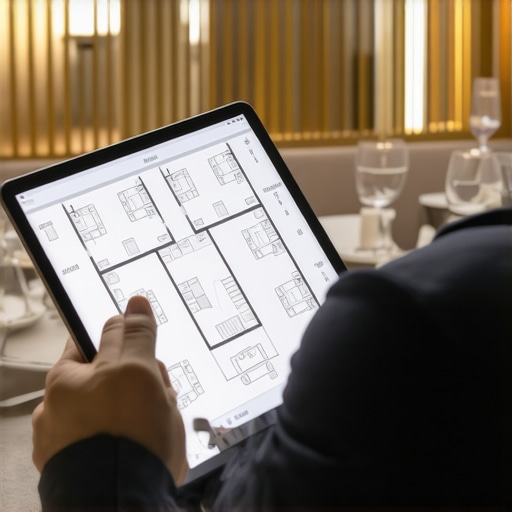
Ditch the Paper and Go Digital with Flowcharts
If you are still using printed floor plans with scribbled notes, you are asking for a service disaster. When you are mastering corporate event planning secrets to seamless success, you need to be able to pivot in seconds. Digital flowcharts allow you to visualize the ‘service path’ and see where bottlenecks will happen before the guests even arrive. This is especially true for the sensory experience of the room; you should understand how to choose the right table linens for acoustic absorption because a noisy room leads to servers having to shout, which shatters the ‘invisible’ vibe we worked so hard to create.
The Future is Heatmaps and Real-Time Feedback
Looking ahead, I predict we will soon see AI-driven ‘heatmapping’ for event floors becoming the industry standard. Imagine sensors in the ceiling tracking where servers are clustering and sending a subtle vibration to the lead server’s watch to remind them to redistribute the team. This might sound like sci-fi, but it is the logical next step in professionalizing the hospitality floor. I highly recommend you try one specific tip for your next gala: record a 30-second time-lapse video of your ‘service alley’—the space between the kitchen and the dining room—during peak dinner service. If it looks like a mosh pit, it’s time to redraw your lines and rethink your hierarchy. If you’re ready to take your logistics to the next level, contact us to see how we can refine your next production.
The Hard Lessons That Taught Me to Value Invisible Logistics
Over the years, I have realized that a truly successful event is like a swan—serene on the surface while the feet are paddling furiously underneath. One of the biggest shifts in my mindset was moving from simply controlling the room to actively curating the experience. If you can master these top server tips to elevate your event experience, you begin to see that the smallest details, like where the dessert forks are placed, dictate the entire rhythm of the meal. I have learned that a cluttered floor is often the sign of a cluttered plan; if the staff does not have a clear path, the guests will feel that tension even if they cannot name it. Always prioritize the ‘white space’ on your floor plan as much as the tables themselves to give your team the room they need to be brilliant.
My Personal Toolkit for High-Stakes Events
To keep everything running without a hitch, I rely on a few non-negotiables that have saved me during high-pressure productions. First, 7shifts has transformed how we communicate with staff before they even step onto the floor, ensuring everyone is aligned. For spatial planning, AllSeated is the gold standard for avoiding those dreaded dark corners for your cake. I also tell every aspiring planner to read Danny Meyer’s Setting the Table; it is the absolute guide for understanding hospitality as a feeling rather than just a service. If you are looking for aesthetic direction that does not sacrifice functionality, I frequently browse elegant wedding venues and catering inspiration for 2025 to stay ahead of layout trends that actually work in real-world lighting conditions. These tools ensure that your logistical foundation is as solid as your menu.
Step Into Your Next Event with Confidence
Transforming a chaotic ballroom into a seamless masterpiece takes practice, but the reward is seeing your vision come to life exactly as you imagined it. By implementing these effective catering strategies for corporate event impressiveness, you are setting the stage for memories that last a lifetime for your clients and guests alike. Don’t be afraid to challenge a venue’s standard layout to find the light and the flow your event deserves. You are the architect of the atmosphere. Have you ever had to move a major décor piece at the last minute to save your photographer’s shots? Let me know in the comments below!