

I’ll never forget the sound of a three-tier lemon-elderflower cake sliding against the side of a delivery van just ten minutes before the bridal party was scheduled to arrive. My heart didn’t just sink; it plummeted into my shoes. Back then, I was convinced that ‘fresh was best,’ so I told the baker that a 4:00 PM delivery for a 5:00 PM reception was perfect. I was wrong. That single hour left zero room for the humidity to settle or for the team to implement [top-server-tips-to-elevate-your-event-experience](https://gourmetcateringsco.com/top-server-tips-to-elevate-your-event-experience). Today, I’m going to show you why that four-hour window is the secret to a stress-free reception and how to ensure your centerpiece doesn’t become a cautionary tale.
Give Your Buttercream Time to Breathe and Brace
When a cake travels, it goes through a lot of physical stress. Between the vibrations of the road and the shifting temperatures, that sugar-and-butter architecture needs time to regain its composure. If it arrives four hours early, it has a chance to acclimate to the venue’s climate. This is especially true if you are following [wedding-catering-trends-to-impress-guests-in-2025](https://gourmetcateringsco.com/wedding-catering-trends-to-impress-guests-in-2025) by using delicate, organic decorations that can wilt in the heat. I once had a cake arrive lopsided because of a frantic, last-minute delivery drive; if we’d had those extra hours, the baker could have easily leveled it on-site before anyone noticed. Early delivery also allows the catering team to focus on [optimizing server efficiency to enhance event satisfaction](https://gourmetcateringsco.com/optimizing-server-efficiency-to-enhance-event-satisfaction) instead of panicking about a missing dessert. Have you ever stood by the venue door, checking your watch every thirty seconds while waiting for a vendor?
Is a Four Hour Wait Actually Going to Dry Out the Sponge?
This is the biggest fear I hear from couples. They worry that ‘sitting out’ means the cake will be dry by the time they learn [how to cut the wedding cake without creating a messy disaster](https://gourmetcateringsco.com/how-to-cut-the-wedding-cake-without-creating-a-messy-disaster). However, professional wedding cakes are surprisingly hardy. According to the International Dairy Foods Association, high-fat content in professional-grade buttercream acts as an effective moisture sealant, keeping the interior fresh for hours at room temperature. In fact, most cakes actually taste better when they aren’t fridge-cold. By getting the delivery out of the way early, you allow the flavors to bloom while giving yourself a massive safety net for any ‘acts of God’ on the highway. We aren’t just planning for the cake; we are planning for peace of mind. Now, let’s look at the specific logistics your baker needs to know before they load the van.Think of your wedding cake delivery as a high-stakes organ transplant. You wouldn’t just show up at the hospital; you need a clear path to the operating room. To make this happen, you must provide your baker with a ‘load-in’ map. I learned this the hard way at a historic hotel in downtown. I assumed the baker knew where the service elevator was. Instead, she arrived at the main marble lobby with a four-tier masterpiece while 200 guests were checking in for a separate convention. We had to weave that cake through a sea of luggage and tourists. It was a miracle it survived the trek. Since then, I’ve realized that [the importance of having a dedicated point of contact for vendors](https://gourmetcateringsco.com/the-importance-of-having-a-dedicated-point-of-contact-for-vendors) is the only way to avoid the ‘lobby lurch’ and ensure the delivery doesn’t become a public spectacle.
Map Out the Route from the Loading Dock to the Display Table
Before the van even starts the engine at the bakery, you need to verify the physical path the cake will take. Is there a service elevator large enough for a 20-inch cake board? Are there ramps to bypass the grand staircase? If your venue is one of those [elegant wedding venues and catering inspiration for 2025](https://gourmetcateringsco.com/elegant-wedding-venues-and-catering-inspiration-for-2025) spots with gravel paths or uneven flagstone, your baker needs to know to bring a heavy-duty trolley or extra hands. The cake shouldn’t just arrive; it should glide into position. Once it’s inside, the temperature control is your next priority. If the ballroom is still being cooled, keep the cake in a back-of-house walk-in, but only if it’s free of pungent odors. Buttercream is a flavor sponge, and no one wants a luxury dessert that tastes like the kitchen’s morning prep work.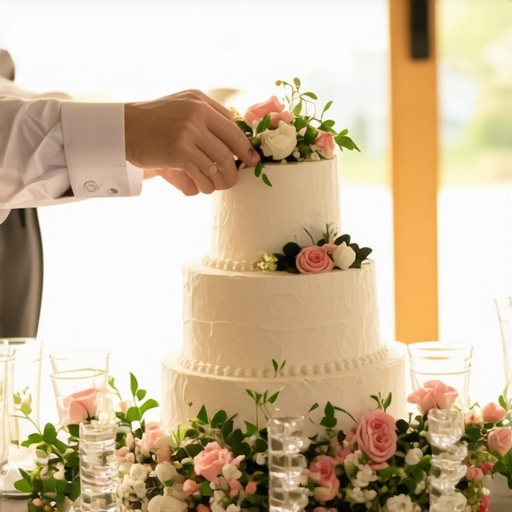
Brief Your Staff So They Don’t Fly Blind
Your catering team is your front line when it comes to maintaining the integrity of the dessert. When the cake arrives, the ‘server captain’ should be the one to sign for it and inspect it. You can’t leave this to a junior staffer who might [how-to-spot-a-server-who-hasnt-been-briefed-on-the-menu](https://gourmetcateringsco.com/how-to-spot-a-server-who-hasnt-been-briefed-on-the-menu) fail to notice a hairline crack in the fondant or a tier that shifted during transport. During the pre-shift meeting, use [wedding-catering-tips-from-industry-experts](https://gourmetcateringsco.com/wedding-catering-tips-from-industry-experts) to explain the cake’s structural nuances—is it exceptionally top-heavy? Does it require a specific silver cake knife that needs to be polished? This is also the crucial moment to [how-to-brief-your-server-team-on-complex-dietary-restrictions-in-minutes](https://gourmetcateringsco.com/how-to-brief-your-server-team-on-complex-dietary-restrictions-in-minutes) regarding the cake ingredients, ensuring they can answer guest questions about gluten or nuts the second the first slice is plated.
Designate a Cake Guardian for the Transition
In the chaos of a busy reception, a cake sitting in the middle of a ballroom is a target for stray elbows or overexcited children. This is why [why-your-server-team-needs-a-designated-captain-for-every-50-guests](https://gourmetcateringsco.com/why-your-server-team-needs-a-designated-captain-for-every-50-guests) is such a vital metric for a smooth event. One of those leads should be specifically tasked with checking the cake’s ‘stability’ every hour. Is it leaning? Is the sun hitting it through a window as the afternoon progresses? At one summer wedding, I watched a beautiful drip cake literally start to melt because we hadn’t accounted for the 3:00 PM sun glare through a west-facing window. Because we had a dedicated captain on the floor who was monitoring the room’s environment, we were able to rotate the table slightly and close a sheer curtain, saving the design before it turned into a sugary disaster. This kind of active management ensures the ‘meat’ of your planning translates into a perfect guest experience.While most couples obsess over the flavor profile of their frosting, the real magic—or mayhem—happens in the invisible layers of service. One of the most common myths I encounter is that ‘fancy’ service is purely for the aesthetic. In reality, why-white-glove-service-is-making-a-comeback-in-luxury-galas because it creates a choreographed flow that prevents bottlenecks. When servers are trained in specific styles, like French service, they aren’t just posing; they are executing a system that ensures 200 people are fed simultaneously. If you’ve ever sat at a wedding where Table 1 is finished and Table 20 hasn’t seen a bread roll, you’ve witnessed a service failure, not a kitchen failure. Have you ever fallen into this trap? Let me know in the comments.
Stop Assuming Your Venue Manager Is Your Coordinator
This is the ‘oops’ factor that ruins more evenings than a rainstorm. I see it all the time: a bride assumes the person who sold her the ballroom is the one who will make sure the cake doesn’t melt. But why-your-venue-manager-should-not-be-your-day-of-coordinator is simple—their priority is the building, not the timeline. You need a dedicated catering lead who knows exactly how-to-spot-a-server-who-hasnt-been-briefed-on-the-menu. If the staff doesn’t know that the third tier is gluten-free, the entire guest experience collapses. Expert-level logistics require a granular focus on the staff-to-guest ratio. According to the National Association for Catering and Events (NACE), a 1:10 ratio is the gold standard for high-end plated service, yet many venues try to stretch this to 1:20. When that happens, you lose the ability to how-to-choose-the-right-staffing-ratio-for-a-vip-event and maintain the quality of the meal.
Why Are Your Plates Always Lukewarm When They Reach the Table?
It’s an advanced nuance that even seasoned planners miss: the distance from the heat lamps to the furthest table. If your layout is sprawling, your staff needs a ‘staging’ station. Without it, why-cold-plates-are-the-enemy-of-a-perfect-filet-mignon becomes your reality. I once worked an event where the kitchen was three hallways away from the ‘romantic’ garden terrace. The solution wasn’t just running faster; it was pre-warming the plates to a specific temperature so they acted as heat reservoirs. This is the kind of detail that separates a ‘nice’ dinner from a luxury experience. Furthermore, you must ensure the staff knows how-to-keep-the-kitchen-noise-from-ruining-your-keynote-speech during those sensitive transitions. If the ‘clink’ of silverware being cleared is louder than the maid of honor’s toast, the logistics haven’t been properly vetted. Professional service is as much about silence as it is about speed.To achieve that silence, I’ve completely overhauled how my team communicates. I walked away from those crackling, high-decibel walkie-talkies years ago. Now, we use low-profile earpieces connected to a private Slack channel or a dedicated app like Voxer. This is how to keep the kitchen noise from ruining your keynote speech—by ensuring the ‘heard’ and ‘copy’ stay in the ears of the staff, not the ears of the guests. If a server needs a backup tray, they don’t shout; they tap a screen. It’s about building a digital infrastructure that supports optimizing server efficiency to enhance event satisfaction without the clatter of a traditional kitchen. When it comes to hardware, my ‘ride or die’ is the Thermapen. In the high-stakes world of off-site catering, you’re fighting wind, ambient temperature, and distance. I don’t trust the built-in thermometers on hot boxes. I trust an instant-read probe that gives me a 0.1-degree accurate reading in under three seconds. This is the secret to maintaining food temperature at outdoor events, especially when you’re serving something as fickle as sea bass or a medium-rare tenderloin. 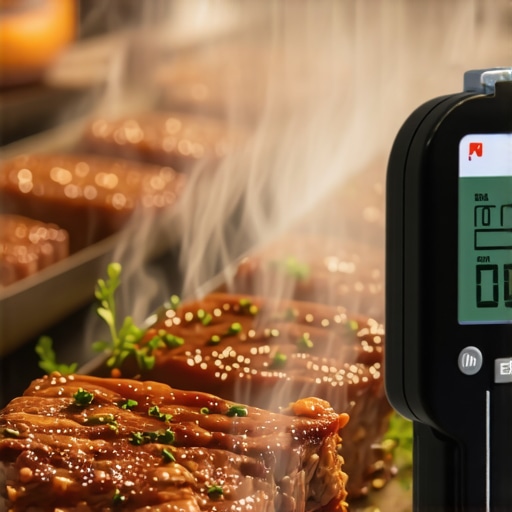
How do I keep my catering gear from falling apart mid-season?
It comes down to a strict ‘Pre-Flight’ and ‘Post-Flight’ audit. We treat our ovens and hot boxes like aircraft. Every Monday morning, my lead technician performs a descaling of our combi-ovens and a seal-check on every insulated carrier. If you’re managing the ultimate guide to corporate event catering logistics, you can’t afford a blown fuse at a gala. We also use Tripleseat for our software backbone to track every rental and dietary tweak. According to the 2024 Event Management Software Trends report by Skift Meetings, the adoption of specialized event CRM tools has reduced logistical errors by nearly 40% for high-volume caterers. I predict that by 2026, we’ll see AI integration here that automatically adjusts order volumes based on real-time guest RSVP data—no more guessing how many extra rolls to bake. For now, focus on effective catering strategies for corporate event impressiveness by investing in high-quality hardware that doesn’t quit when the pressure is on. Try one specific advanced tip: invest in a high-end digital probe thermometer today and make it the ‘law of the kitchen’ for every single event.”
Hard Truths from a Decade in the Ballroom
After years of managing high-stakes events, I’ve realized that the difference between a smooth evening and a disaster usually comes down to things no one talks about. First, if you don’t account for the ‘staff energy’ in your timeline, your service will lag. A tired team cannot maintain a luxury pace. I always make sure to how to organize a staff meeting before a 500 person dinner to ensure everyone is hydrated and briefed before the first guest walks in.
Second, humidity is the silent killer of more than just your hair; it affects the structural integrity of every dessert and the ‘sear’ on your proteins. Finally, never underestimate the math behind hiring extra servers for a flowing champagne reception. If you try to save money by cutting one or two servers, you aren’t just losing hands; you’re losing the ability to pivot when the cake starts to lean or a guest spills a drink.
The Tool Belt Every Planner Needs
I never walk into a venue without my ‘survival kit.’ This includes a high-grade digital thermometer for spot-checking temperatures and a printed copy of the load-in map. For digital infrastructure, I trust Tripleseat to manage the complex moving parts of large-scale events. If you want to understand the soul of service, I highly recommend reading ‘Setting the Table’ by Danny Meyer; it completely changed how I view guest interactions. To keep your own team sharp, I suggest looking into boost your corporate event with expert server techniques as a baseline for training.
Build an Event That Lives Beyond the Menu
Logistics might feel like a series of cold spreadsheets, but in reality, they are the architecture of a memory. When the timing is perfect, the food is hot, and the cake stands tall, your guests don’t see the frantic coordination behind the scenes—they only feel the magic. By implementing effective catering strategies for corporate event impressiveness, you are protecting your investment and your peace of mind. If you ever find yourself overwhelmed by the technical details of a layout, don’t hesitate to contact us for a professional consultation. Have you ever had a delivery mishap or a service ‘close call’ that changed how you plan events? Let me know in the comments below!