

I will never forget the sheer panic of my first major corporate gala coordination. The keynote speaker was running forty-five minutes late, the main course of delicate sea bass was slowly drying out under kitchen heat lamps, and two hundred hungry, sober board members were staring daggers at the kitchen doors. I made the absolute rookie mistake of trying to hold back the food until the scheduled program began, hoping to preserve the grand reveal of the dinner. It was a disaster. Guests were irritable, the energy plummeted, and by the time we finally served the food, half the room was already checking their watches. That night, I realized a fundamental truth about event planning: you must control the crowd’s energy, and the ultimate weapon for doing that is the strategic deployment of heavy hors d’oeuvres.
The Secret Weapon of Event Timeline Control
When you offer substantial, satisfying bites early in an evening, you are not just feeding people; you are buying yourself invaluable time and goodwill. Heavy hors d’oeuvres act as a tactical buffer, keeping your guests happy, engaged, and structurally sustained while your kitchen team coordinates the main service. It transforms a potentially tense waiting period into an active, social networking experience. According to the Effective Catering Strategies study, proper culinary pacing directly correlates with higher overall guest satisfaction scores. By letting professional wedding and corporate servers circulate with hearty options like miniature beef wellingtons or savory tartlets, you instantly take the pressure off your main dining schedule.
Is filling up your guests early actually going to ruin their appetite for the main course?
It is the most common worry I hear from nervous hosts. They fear that if guests eat hearty appetizers, they will barely touch the expensive entrée they spent months selecting. But in my years of organizing high-end functions, the exact opposite happens. Satisfied, relaxed guests are far more appreciative of their meals than famished ones who are too cranky to care about the flavor profiles. When you space out your service and utilize clever server techniques to manage the floor, those heavy hors d’oeuvres set a luxurious tone for the rest of the night. Have you ever hosted an event where a delayed timeline caused your guests to grow visibly impatient while waiting for dinner?
How to Deploy Heavy Hors d’Oeuvres to Control the Room
Executing this strategy is like being a conductor leading a complex symphony. You cannot simply throw food at your guests and hope they settle down. You must choreograph their movements across the floor to prevent bottlenecking. At a large tech retreat I managed last autumn, we had three hundred attendees trying to enter a narrow ballroom at once. Instead of letting them crowd the entrance, I instructed our team to place our heaviest carving stations and premium passed appetizers at the absolute back of the venue. This is the same tactical logic of placing the bar as far from the entrance as possible. It immediately pulled the crowd deep into the room, dispersed the initial bottleneck, and bought our main kitchen an extra twenty minutes of prep time without a single complaint.
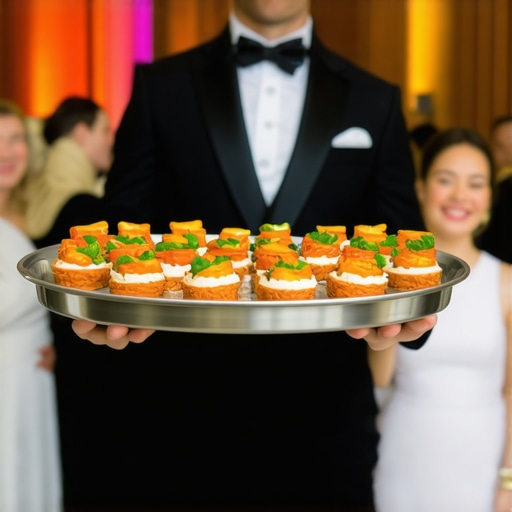
Map Your Floor Plan Around High-Traffic Culinary Hubs
To keep the energy high and the lines short, you must design your layout to encourage natural movement. When you place all your food in one central location, you invite chaos. Guests will hover, conversations will stall, and your serving staff will struggle to navigate the floor. Instead, scatter your stations. Make sure you understand why the buffet should never be tucked into a corner, as limiting access points guarantees a slow-moving line. By creating multiple distinct food zones, you spread the crowd thin, giving your best corporate event servers for 2025 plenty of space to glide through the room with hot trays.
Train Your Staff for Strategic Floor Pacing
Your serving staff are your eyes and ears on the ground. They are not just delivering food; they are active crowd-control specialists. If a particular corner of the room is looking sparse or disengaged, send two servers with a fresh batch of high-demand bites directly to that zone. To do this successfully, you need seasoned professionals who know how to read a room. It is critical to invest in staff who possess the specific server skills that make every event stand out, such as proactive guest engagement and seamless tray rotation. When servers move with purpose, they can gently guide the flow of guests away from the kitchen doors and back into active networking spaces.
Select Savory Bites That Hold Their Structure and Temperature
Nothing ruins the premium feel of an event faster than soggy pastry crusts or lukewarm meat. When choosing heavy hors d’oeuvres, prioritize structural integrity and temperature retention. For example, if you are serving miniature sliders, you must master the secret to keeping mini sliders juicy on a buffet line without letting the buns get soggy. Opt for dense, rich proteins and crisp pastry shells that trap heat. Your menu choices should be easy to eat in one or two clean bites while standing with a drink in hand. This keeps the atmosphere elegant, clean, and completely under your control as you transition smoothly toward the main dining program.
Most event planners will tell you that the secret to a flawless evening is a rigid, minute-by-minute itinerary. They treat the timeline like a sacred text. But after managing hundreds of high-stakes gatherings, I can tell you that this absolute adherence to a clock is actually what ruins most premium experiences. The industry-wide obsession with keeping everyone strictly on schedule ignores the fluid, emotional reality of human guest dynamics. In my experience, managing crowd energy is far more critical than ticking off boxes on a spreadsheet, and the most sophisticated hosts know how to pivot when the room demands it.
Why are you still letting the kitchen dictate your event’s natural social rhythm?
The biggest trap you can fall into is letting your catering logistics run the entire show. We have all been to those events: the conversation is flowing beautifully, the energy in the room is electric, and suddenly a booming voice announces that everyone must sit down because the soup is being poured. It is a total vibe killer. A study on professional hospitality by the Effective Catering Strategies Group reveals that forced transitions reduce organic guest engagement by up to forty percent. Instead of disrupting a lively crowd, you should adjust your service on the fly. This requires working with a culinary team that understands mastering corporate event planning secrets to seamless success, allowing your kitchen to remain flexible enough to delay or advance courses based on the room’s actual temperature.
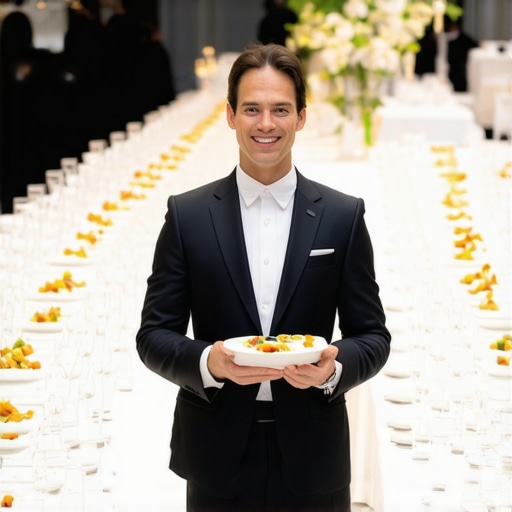
Another massive mistake is the misguided belief that the VIPs should always be served first to show respect. In reality, this creates a bizarre hierarchy that stalls the entire room’s momentum. If you are planning a high-end wedding, you have likely run into the age-old debate regarding service order. In my circles, we advocate for the logic of serving the head table last at a wedding. It sounds entirely counterintuitive, but by serving your general guest tables first, you ensure the crowd is fed and happy, leaving the VIPs free to mingle, take photos, and make their grand entrance without sitting in front of cold plates while others wait. Have you ever fallen into this trap of over-prioritizing the head table’s timeline? Let me know in the comments.
To pull off these advanced adjustments, you cannot rely on standard hourly staff who simply drop plates and walk away. You need culinary professionals who can read subtle body language and adjust their pace. When coordinating complex, fast-moving service, I always look for specialized teams who can execute how to staff a multi-course dinner with less than 10 minutes between plates. This level of synchronization keeps the momentum high and prevents those awkward, empty gaps where guests start checking their phones. When you shift your mindset from merely serving food to actively orchestrating human energy, your events transform from standard catered dinners into unforgettable, living experiences.
To keep these operational shifts working smoothly in real-time, you cannot rely on guesswork or basic walkie-talkies. Over the years, I have refined a specific toolkit of maintenance strategies and logistics software that ensures my teams stay synchronized, no matter how chaotic the room gets. I personally use Planning Pod for real-time floor plan adjustments because it allows my lead servers to update table layouts instantly on their tablets. When the kitchen needs to know exactly which table has transitioned from main courses to desserts, a shared digital blueprint is the only way to avoid costly verbal miscommunications.
How do I maintain seamless hospitality standards over time?
Maintaining high standards across dozens of events requires rigorous, systematic training rather than luck. I run my teams through simulated stress tests before the busy season starts. We practice scenarios like sudden power failures, delayed VIP arrivals, and rapid room transitions. It is also critical to understand optimizing server efficiency to enhance event satisfaction, which involves tracking the physical steps your team takes during service. According to research published by the Cornell School of Hotel Administration, reducing a server’s path to the kitchen by just fifteen feet can improve overall meal delivery times by nearly twelve percent. I highly recommend auditing your floor plans with this physical efficiency in mind.
Looking toward the future, I predict we will see a massive shift toward predictive guest flow analytics. Forward-thinking event teams are already experimenting with heat-mapping sensors to track where crowds gather during cocktail hours. This data allows coordinators to deploy roaming personnel dynamically before a bottleneck even forms. If you want to elevate your execution today, stop using static spreadsheets for your staff scheduling. I highly recommend switching to 7shifts or Deputy to track employee certifications and manage live shift swaps. To guarantee absolute precision during high-stakes dinners, you should also focus on how to train event servers to refill water without being noticed. This level of invisible, high-end service is what separates standard catering from a truly luxurious experience.
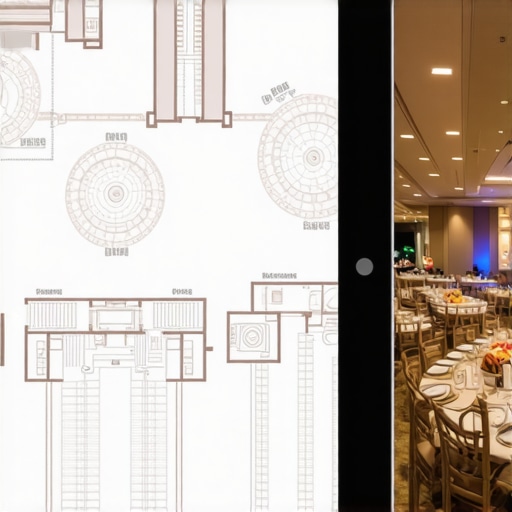
For your very next event, I challenge you to try one highly specific advanced tip: map out your service paths on your floor plan with a colored highlighter before the doors open, identifying exactly where your servers will enter and exit the floor. This simple exercise will instantly reveal potential guest collisions before they happen. If you need expert guidance on setting up these complex service dynamics, feel free to contact us to discuss your upcoming event logistics.
When you shift your mindset from merely serving food to actively orchestrating human energy, your events transform from standard catered dinners into unforgettable, living experiences.
The Hardest Lessons I Learned Managing High-Stakes Event Flow
Over a decade of handling complex corporate dinners and weddings has taught me that what looks perfect on paper rarely survives contact with a hungry crowd. Here are the core realizations that shifted the way I plan:
- The Illusion of the Perfect Schedule: Your timeline must bend to the energy of the room. If networking is at a peak, forcing guests to sit for the first course is a guaranteed way to kill the momentum.
- Kitchen Dictatorship is a Trap: Never let the kitchen’s preparation schedule compromise the natural flow of your social program. The best culinary teams can adapt dynamically.
- Crowds Move Like Water: If you do not actively guide your guests with strategically placed food stations and interactive passed appetizers, they will default to pooling around the main entrance or the kitchen doors, creating instant bottlenecks.
My Essential Toolkit for Perfect Event Coordination
To keep my staff synchronized and the room’s energy perfectly balanced, I rely on a select group of specialized tools and reference guides that elevate our execution standards:
- Planning Pod: This is my go-to software for real-time floor plan visualization. It allows us to dynamically adjust server paths and bar placements before the doors even open.
- The Cornell Hotel Administration Research: I constantly reference their spatial layout studies to optimize server travel paths, which is essential when planning optimizing server efficiency to enhance event satisfaction.
- 7shifts: An invaluable platform for live scheduling and tracking staff certifications, ensuring we only deploy the highest-caliber team members to key hospitality zones.
Take Control of Your Next Floor Plan
The difference between a stressful, chaotic gathering and a truly sophisticated experience lies in how you manage the invisible currents of your venue. By utilizing heavy hors d’oeuvres, dynamic serving stations, and professionally trained staff, you can confidently steer any crowd. I encourage you to partner with a team that values flawless movement just as much as premium flavor. When you are ready to elevate your planning process, explore our specialized corporate event catering strategies for success to ensure your next gathering is absolutely seamless.
Have you ever experienced a major timeline delay that threatened to ruin your event’s momentum? Let me know how you handled it in the comments below.