

I’ll never forget the look on a client’s face at a high-stakes corporate lunch a few years back. I had served what I thought was a decent gluten-free baguette, but as he bit into it, I realized I had essentially handed him a piece of kiln-dried driftwood. He didn’t even swallow; he just politely reached for his napkin and stared at the bread with a mix of confusion and pity. It was a total failure. For too long, I treated gluten-free catering like a checklist of things to remove, rather than an opportunity to create something spectacular. We have all seen it—the ‘special’ meal that turns out to be a pile of steamed vegetables while everyone else enjoys a three-course feast. Today, I am going to show you how to build a menu where the lack of wheat is a complete non-issue. We are moving past the era of sacrifice and into a world where your guests won’t even realize they are eating ‘free-from’ food.
Stop Looking for the Missing Ingredient
When I first started navigating the best way to handle dietary restrictions during a formal gala, I fell into the trap of trying to find the perfect ‘fake’ version of everything. I wanted the fake pasta, the fake bread, and the fake crackers. That was my biggest mistake. Those substitutes are often expensive, crumbly, and frankly, disappointing. Now, my strategy is simple: lean into what is naturally amazing. Think about a perfectly seared scallop over a parsnip purée or a vibrant risotto finished with lemon zest and fresh herbs. These aren’t ‘gluten-free versions’ of something else; they are just incredible dishes. If you are following an essential checklist for successful corporate event catering, your priority should be the guest experience, not just technical compliance. According to the Celiac Disease Foundation, about 1 in 100 people worldwide have Celiac disease, but when you factor in gluten sensitivities, you’re looking at a significant portion of any room. You have to get this right.
Won’t the Food Just Taste Like Cardboard?
This is the fear I hear most often from hosts who are worried that being inclusive means lowering the bar for everyone else. I promise you, it doesn’t have to be that way. The key is in the execution and the communication. I’ve found that why your event needs a dedicated staff member for dietary requests becomes obvious the moment a guest with an allergy feels safe enough to actually enjoy their meal. Have you ever been to an event where you felt like an inconvenience because of what you couldn’t eat? It’s a terrible feeling, and as a host, it’s the last thing you want for your friends or colleagues. We’re going to dive into the specific swaps and flavor profiles that keep the energy high and the plates empty.
Build Your Menu Around Natural Winners
The first rule of elite catering is to stop trying to make wheat-free bread taste like a sourdough baguette. It won’t, and your guests know it. Instead, treat your menu like a blank canvas where flour was never invited. When you are how to design a menu that works for both keto and vegan guests, you’ll find that the overlaps—roasted root vegetables, clean proteins, and acid-driven sauces—are naturally gluten-free anyway. I remember a high-stakes corporate gala where we scrapped the traditional pasta course for a slow-roasted pork belly with a honey-cider glaze and parsnip silk. The guests didn’t ask where the bread was; they were too busy asking for seconds. You want to focus on high-moisture, high-flavor profiles that rely on reduction and fat rather than starch for body. Think of it like building a house with stone instead of wood; the materials change the process, but the structure remains just as grand.
Give Your Staff the Tools to Succeed
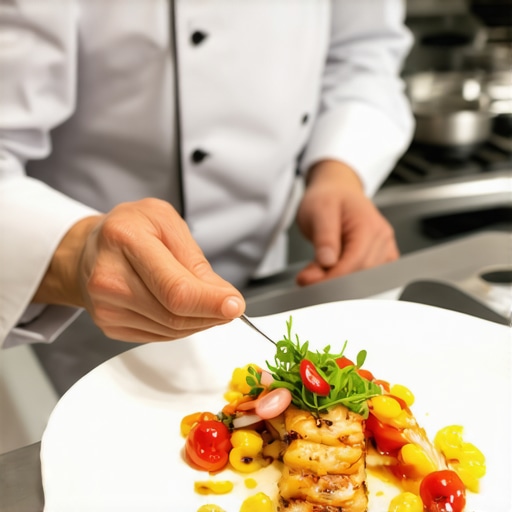
Execution lives or dies with your servers. If a guest asks, “Is the sauce thickened with roux?” and your server has to run to the kitchen to find out, the momentum of the meal is dead. You need to know how to brief your server team on complex dietary restrictions in minutes. I make it a habit to hold a mandatory “line-up” ten minutes before the doors open. We don’t just talk about ingredients; we look at the physical plates. Every server must be able to identify the gluten-free option at a glance, perhaps by the shape of the bowl or a specific micro-green garnish that acts as a silent signal.
Kill the Risk of Cross-Contamination
The kitchen is a battlefield of invisible flour dust. If you are baking rolls in the same convection oven where you are roasting the “gluten-free” salmon, you have already compromised the meal. I learned this the hard way at a small executive board dinner early in my career. I thought keeping the bread on a separate tray was enough, but the shared cutting board used for the garnish was the silent culprit. Now, we implement a strict “Zone System.” One prep table is draped in a specific color of plastic wrap, designated strictly for allergy-safe prep. It is a visual signal that tells the whole team to stay away unless they have just followed a full sanitization protocol. This level of detail is a non-negotiable part of any essential checklist for successful corporate event catering.
Why a Single Point of Contact Saves the Night
On a busy floor, communication signals often get crossed in the chaos. A guest tells server A about an allergy, but server B—who is just helping out with the pass—brings the appetizer. This is why your event needs a dedicated staff member for dietary requests. In my current operations, we designate an “Allergy Captain.” They are the only person authorized to carry a “Special” plate from the kitchen pass to the guest’s table. It sounds like overkill until you realize it eliminates the 1% chance of a human error that could end in a medical emergency. It is the catering equivalent of a pilot checking their gauges before takeoff; it is not about a lack of trust in the crew, but about building redundant systems that guarantee safety.
Master the Art of Secret Swaps
Sometimes you just need that crunch or that thickness. Instead of reaching for a processed GF flour blend that tastes like chalk, look toward the pantry of the world. Use toasted crushed nuts for texture or a cornstarch slurry for a silky finish that actually holds up better under heat lamps than a traditional roux. I once managed a 500-person business lunch where we swapped the standard heavy cream sauce for a cauliflower purée base. It was rich, velvety, and completely safe for those with Celiac disease. Not a single person noticed the swap, but the peace of mind it provided allowed the event to flow without the friction of “special request” delays. This is the goal: a menu so seamlessly inclusive that the restrictions become invisible.
Stop Trusting the Buffet Tongs
Common wisdom suggests that a buffet is the ultimate solution for dietary diversity. Planners often think that by labeling a few dishes ‘GF,’ they have done their due diligence. In my experience, this is the most dangerous assumption you can make. The moment a guest uses the same spoon for the wheat-based pasta and the roasted vegetables, your entire safety protocol has evaporated. This is why why most corporate buffets fail the temperature test and the safety test simultaneously. You aren’t just managing ingredients; you are managing human behavior. A study published in the Journal of Food Protection highlights that cross-contact in self-service environments is a leading cause of accidental allergen exposure in commercial settings. If you want a truly safe event, you must move away from the ‘self-serve’ mindset for sensitive guests and implement a plated, controlled alternative.
Does Your Kitchen Team Know the Truth About Shared Fryers?
One of the most common ‘oops’ factors I see involves the deep fryer. I’ve walked into dozens of kitchens where the chef proudly points to ‘gluten-free’ calamari or fries, only to find they are being cooked in the same oil as the breaded chicken tenders. Heat does not ‘kill’ gluten like it does bacteria. The proteins remain, and for someone with Celiac disease, that shared oil is a direct ticket to a reaction. If you are the secret to keeping mini sliders juicy on a buffet line, you also need to ensure that any fried component is handled in a dedicated, standalone fryer. It is a nuance that separates the professionals from the amateurs.
The High Cost of Cheap Labor on Guest Safety
The success of your dietary strategy relies entirely on the people holding the plates. I’ve seen hosts try to cut costs by hiring unvetted staffing agencies, but the hidden risks of hiring student servers for high-end events become crystal clear the moment an ingredient question is asked. An untrained server might say ‘I think it’s fine’ just to be helpful, and that is where the real danger lies. You need to know how to spot a server who has not been trained in french service or high-end dietary protocols. A professional server doesn’t guess; they verify. They understand that ‘trace amounts’ are not a suggestion but a strict boundary. Have you ever fallen into this trap where a ‘safe’ meal wasn’t actually safe? Let me know in the comments. We need to hold our catering partners to a higher standard of transparency and technical knowledge.
The Gear I Actually Keep in My Prep Bag
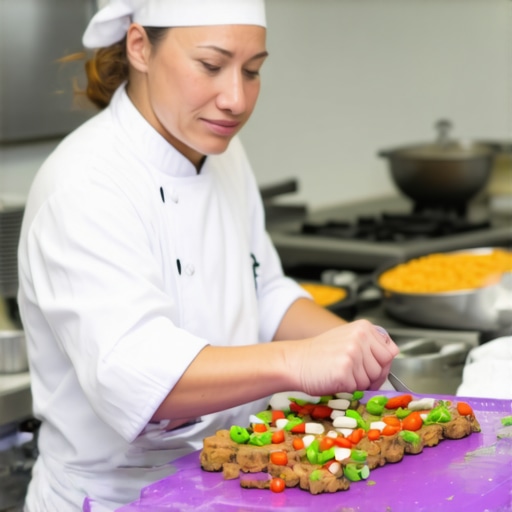
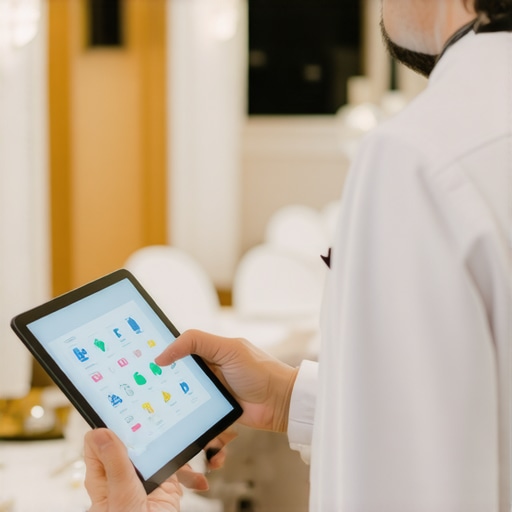
Training your team is only half the battle; you have to give them the physical tools to maintain those standards when the pressure is on. I never walk into a venue without my ‘Allergy Kit.’ This isn’t just a box of gluten-free crackers; it is a specialized set of purple-handled utensils and cutting boards. In the culinary world, purple is the universal signal for allergen-safe equipment. By using a dedicated set of tools, you remove the guesswork for a line cook who is in the weeds. This level of physical separation is exactly what I discuss when optimizing server efficiency to enhance event satisfaction. If the tools are color-coded, the communication happens without a single word being spoken. I also rely heavily on digital floor plans. Tools like Allseated allow us to tag individual chairs with dietary icons. When a server approaches a table, they aren’t asking ‘Who has the Celiac meal?’; they already know because the digital map told them before they left the kitchen pass.
Keep the Momentum When the Room Doubles in Size
Scaling these protocols for a massive gala is where most caterers crumble. It is easy to track one allergy for a ten-person board meeting, but the logistics of running a 3-course dinner for 800 people require a different level of systemic rigor. According to the FDA Food Code 2022, the implementation of a written ‘Allergen Management Plan’ is the gold standard for reducing risk in high-volume environments. I take this literally. We create a ‘Living Menu’ document that is updated in real-time. If a supplier swaps a brand of chicken stock at the last minute, that change is pushed to every server’s mobile device instantly. This prevents the ‘old info’ trap where a server accidentally promises a dish is safe based on yesterday’s ingredient list. We are moving toward a future where QR codes on place cards will allow guests to scan and see a personalized version of the menu that only shows what they can safely eat. It’s about empowering the guest through transparency.
How do I maintain consistent safety protocols across multiple events?
The secret is the ‘Post-Event Audit.’ After every single event, my lead servers and I sit down for ten minutes to discuss ‘near misses.’ Did a guest swap seats without telling us? Did a breadbasket end up too close to the gluten-free station? We treat these as data points to refine our effective catering strategies for corporate event impressiveness. Consistency isn’t about being perfect once; it’s about building a machine that learns from its environment. You also need to ensure you know how to choose the perfect servers for your wedding or corporate gala who value precision over speed. I would rather a meal be three minutes late and 100% safe than on time and a health risk.
My advanced tip for you this week: implement a ‘Double-Check’ sticker system. No special meal leaves the kitchen without two separate sets of eyes—the chef and the Allergy Captain—signing off on the plate. It takes four seconds, but it creates a culture of accountability that guests can sense. Give it a try at your next high-stakes function and watch how much more relaxed your team becomes when the safety net is visible.
Hard Truths Learned in the Heat of the Kitchen
Reflecting on a decade of events, I’ve realized that technical knowledge is only half the battle. The real shift happens when you move from ‘accommodating’ a guest to ‘welcoming’ them. One lightbulb moment for me was realizing that documentation is your only real armor; if a dietary protocol isn’t written into the event’s DNA, it doesn’t exist. I’ve also learned that the ‘breadbasket reflex’—where a server automatically places a roll on every plate—is the hardest habit to break, requiring constant vigilance. Most importantly, never trust a label you haven’t personally verified three times. These effective catering strategies for corporate event impressiveness aren’t just about food; they are about the psychology of safety. When a guest doesn’t have to ask a single question, you’ve won.
The Tools That Actually Keep My Menus Safe
You don’t need a massive budget to implement world-class safety; you just need the right systems. My personal kit always includes purple-handled utensils, which serve as an immediate visual signal for allergen-safe preparation. For digital organization, I swear by software like Allseated to map out dietary needs by chair number, ensuring no server ever has to shout ‘Who’s the Celiac?’ across a quiet room. I also highly recommend the ultimate guide to corporate event catering logistics for anyone looking to scale these protocols to larger crowds. For medical-grade standards, the Celiac Disease Foundation remains my most trusted source for keeping up with evolving health requirements. Integrating these into your essential checklist for successful corporate event catering is how you move from amateur to expert.
Build a Table Where Every Guest Feels Seen
At the end of the day, catering is an act of hospitality, and true hospitality leaves no one behind. When you take the time to implement these rigorous standards, you are doing more than just preventing a reaction; you are giving a guest the gift of relaxation. Whether you are planning the ultimate wedding reception meal or a 500-person gala, the goal remains the same: a seamless experience where the restrictions are invisible and the flavor is front and center. You now have the blueprint for mastering corporate event planning secrets to seamless success. It’s time to stop fearing the ‘special’ request and start using it as your greatest competitive advantage. What’s the one dietary restriction that always makes your kitchen team nervous? Let’s swap solutions in the comments below.