

I will never forget my first big win as an amateur host—or rather, the disaster that preceded it. I had spent days prepping a delicate lemon-herb sea bass for a small corporate gathering, only to serve it alongside a massive, oaky Chardonnay that tasted like a literal tree. The wine was expensive, the fish was fresh, but together? They were a nightmare. My guests were polite, but the metallic aftertaste lingering in the room was impossible to ignore. That ‘lightbulb moment’ taught me that a drink isn’t just a sidekick; it’s a co-star. If they aren’t reading from the same script, the whole performance fails. Today, I am going to show you exactly how to avoid those awkward clashes so your next event feels like a masterpiece of flavor.
Get the Flavor Balance Right Every Single Time
Pairing is about conversation, not competition. When you sit down to plan, you have to think about the ‘weight’ of your food. A heavy, marbled steak needs a drink with enough backbone—usually tannins or high acidity—to cut through that fat. If you go too light, the food simply bullies the beverage into insignificance. This is exactly why your menu needs to balance heavy and light options across the board. Early in my career, I made the rookie mistake of picking drinks I liked personally rather than what the food actually demanded. I once served a sweet Riesling with a spicy barbecue brisket because I loved the wine, but the sugar just made the spice feel aggressive and hot. It was a lesson in humility. Now, I always insist on a trial run. This is why you should always request a tasting before finalizing your menu to ensure the acidity in your glass doesn’t fight the seasoning on your plate.
Is a professional beverage consultant actually worth the hype?
You might be wondering if you really need an expert for this. While you can certainly learn the basics, for high-stakes moments like a fundraiser, the nuances matter. According to a study by the Journal of Culinary Science & Technology, the perceived quality of a meal can increase by 20% when paired with a complementary beverage. That is the difference between a ‘good’ dinner and one people talk about for years. If you are handling the logistics yourself, make sure you understand the proper way to serve wine at a corporate fundraiser to keep the flow seamless. Have you ever had a food and drink pairing that completely changed how you tasted the meal? I’d love to hear your success stories—or your most ‘interesting’ failures—in the comments below. Let’s look at the specific rules for matching spirits and wines to your proteins.
Match the Weight Before You Match the Flavor
Think of your food and drink pairing like a seesaw. If you have a delicate, airy salad on one side and a heavy, high-alcohol bourbon cocktail on the other, the seesaw slams into the dirt. To keep the balance, you must match the ‘weight’ of the beverage to the ‘body’ of the food. I learned this the hard way at a summer gala where I paired a bold, peppery Syrah with a chilled gazpacho. The wine was so massive it made the soup taste like plain water. Now, when I am planning the ultimate wedding reception meal, I look for structural harmony first. Light whites or sparkling wines for crudo and greens; medium-bodied reds for roasted poultry; and those big, tannic beasts only for the heaviest fats.
Let the Sauce Be Your North Star
Protein is often a blank canvas. A piece of chicken can be zesty and light or rich and creamy depending on what it is swimming in. If you are serving a citrus-based glaze, you need a high-acid drink to mirror that brightness. However, if the chef is leaning into cream-based sauces, you need something with ‘cut’—typically bubbles or high acidity—to cleanse the palate between bites. I once managed an event where the main course was a prime cut, but we had to warn the client that why smoked brisket is a risky choice for formal weddings often comes down to the heavy BBQ sauce overpowering even the best malbec. We pivoted to a dry, sparkling cider that cut through the smoke perfectly, proving that sometimes the unconventional choice is the most effective.
Execute Service with Military Precision
Even the most expensive pairing fails if the drink arrives ten minutes after the plate. This is where optimizing server efficiency to enhance event satisfaction becomes the make-or-break factor of your night. During a high-stakes corporate dinner last year, our wine service fell behind because the bar was tucked in a corner too far from the kitchen. The hot plates were sitting in front of guests while the servers were still uncorking bottles. It was a disaster. Now, I always map the floor to ensure the beverage station is an extension of the kitchen line. 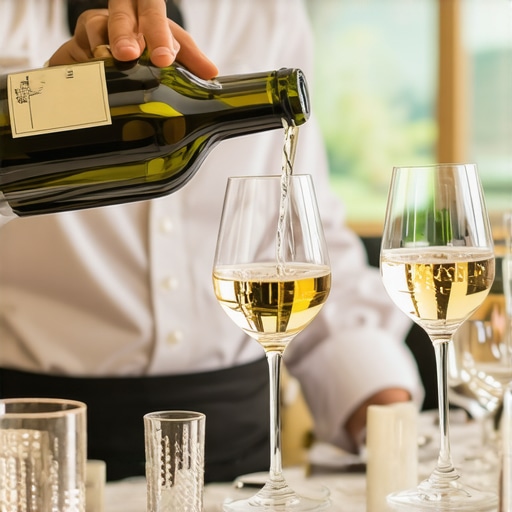
Staffing for High-Complexity Menus
If you are planning a multi-course tasting with specific pairings for every dish, you cannot skimp on personnel. You need to know how to choose the right staffing ratio for a vip event because a standard 1:20 ratio will not cut it for a pairing-heavy menu. You need at least one server for every 8 to 10 guests to ensure pours happen simultaneously with the food drop. You can usually spot the difference in quality immediately; there are 3-signs-your-event-server-is-a-pro-within-seconds-of-meeting-3, but the most obvious is their ability to describe the pairing as they pour it, adding that layer of storytelling that makes a meal feel like an experience rather than just fuel. When the staff knows the ‘why’ behind the wine, the guests feel the value of every sip.People often assume that throwing more bodies at a problem ensures a luxury experience, but in my experience, over-staffing without a clear hierarchy is a recipe for chaos. The biggest myth in the industry is that a high server-to-guest ratio automatically translates to better service. I’ve seen events with one server for every four guests where the room felt frantic and cluttered. This is why you must why you should audit your server to guest ratio for vip dinners based on the complexity of the menu, not just the headcount. When the floor is too crowded, servers literally bump into each other, and the ‘silent service’ we all strive for turns into a clumsy obstacle course.
Don’t Let Your Lead Server Touch a Plate
Here is the ‘oops’ factor that ruins more gala dinners than bad food: assigning the lead server to a specific table. It sounds productive, but it is a fatal tactical error. A lead server is the conductor of the orchestra. If they are busy pouring water for Table 5, they can’t see that Table 12’s wine is late or that the kitchen is bottlenecking. Understanding the difference between a staffing agency and a service partner is crucial here; a true partner provides a ‘floater’ lead who monitors the room’s heartbeat. If you want to know if your night is headed for trouble, how to spot a bad lead server in the first 10 minutes of an event often comes down to seeing if they are ‘doing’ rather than ‘directing.’ 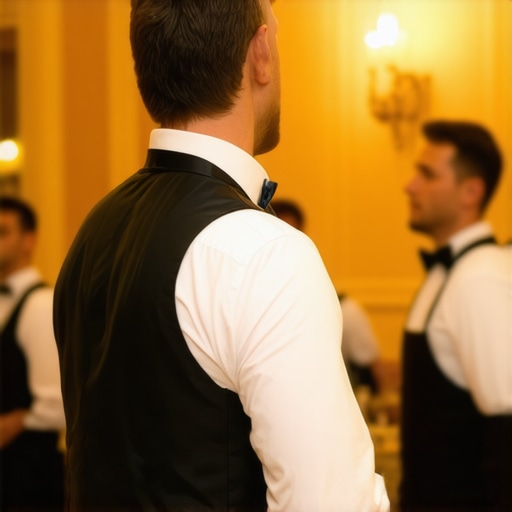
Can You Spot a Quality Server Before the First Course?
It isn’t just about how they carry a tray; it is about how they read the room. A study published in the Cornell Hospitality Quarterly suggests that ‘service pacing’—the ability to modulate the speed of delivery based on guest engagement—is the single highest predictor of perceived luxury. If the servers are clearing plates while a guest is mid-sentence, the rhythm is broken. To prevent this, I always emphasize how to organize a staff meeting before a 500 person dinner to discuss the specific ‘vibe’ of the group. Are they talkative networking types or focused executives? Your staff needs to know.
The Sensory Saboteur You Are Probably Ignoring
Even with perfect service and a world-class Malbec, your pairing can fail if the acoustics are wrong. High-end events often take place in beautiful, ‘hard’ spaces like marble halls or industrial warehouses. If the room is too loud, guests can’t hear the server explain the pairing, and the brain actually perceives flavors less intensely in high-noise environments. This is why heavy linens actually reduce noise in loud ballrooms and are a functional necessity, not just a stylistic choice. I once had a client insist on bare wood tables for a 300-person fundraiser; by the second course, the clatter of silverware and voices was so deafening that nobody noticed the $200-a-bottle wine. We now include acoustic checks as part of our standard prep. Have you ever fallen into this trap where the environment ruined the meal? Let me know in the comments.I have seen the most expensive wine service crumble because the back-of-house felt like a war zone. To scale from hosting small dinners to managing massive galas, I had to stop relying on my memory and start using a dedicated digital logistics hub. I personally swear by real-time cloud-based floor plan editors. They allow me to adjust the layout the second a guest list changes, ensuring we never lose that vital connection between the kitchen and the table. This level of detail is a core part of the ultimate guide to corporate event catering logistics that every planner should memorize. I transitioned from paper clipboards to tablets years ago, and I have never looked back because the ability to sync a change across twelve lead servers instantly is the difference between a smooth transition and a chaotic bottleneck.
How do I maintain this level of precision across dozens of events?
It really comes down to building a culture of ‘incremental checks’ and high-standard maintenance. I am obsessive about my equipment. For example, I always ensure why your wedding venue needs a temperature-controlled prep space is the first thing on my site-visit checklist. Temperature is not just about food safety; it is about flavor integrity. The Wine & Spirit Education Trust (WSET) notes that serving a full-bodied white wine too cold—specifically below 10°C (50°F)—can completely mask its aromatic complexity. If your prep space is too cold or too hot, your $100 bottle of Chardonnay will taste like nothing. I also look for ‘invisible’ tools that help my team stay in sync without shouting. For instance, I have found that the advantage of using a wireless microphone for speeches extends far beyond the guest experience; it allows the lead server to hear verbal cues from anywhere in the room, allowing the staff to prep the next course’s beverage pour in perfect silence. 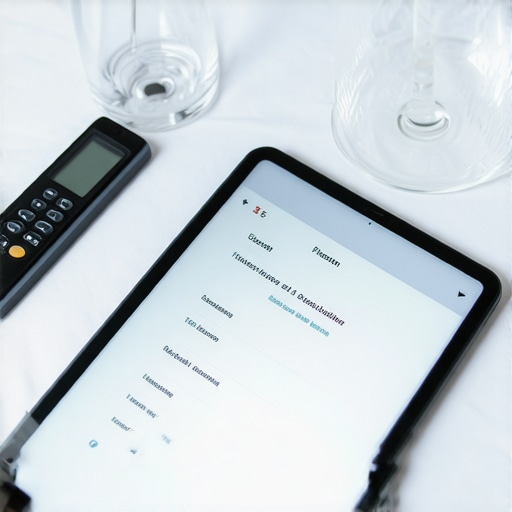
Looking Ahead to the Future of High-End Service
Looking ahead, I predict we are going to see a massive shift toward real-time guest feedback loops integrated directly into the service flow. We are already seeing the early stages of this with digital wine lists that allow guests to rate pairings on the fly. Until that becomes the standard, you have to rely on a rock-solid essential checklist for successful corporate event catering to keep your sanity. And never forget the human element; I have learned that why your event staff should have a dedicated break room is actually a maintenance tool for your team’s morale. A tired server makes mistakes with the wine pour. A rested server notices the guest’s glass is empty before the guest does. My advanced tip for you this week? For your next event, assign one specific person to ‘glassware temperature monitoring.’ It sounds obsessive, but when that first pairing hits the tongue at exactly 55 degrees, your guests will realize they are experiencing something truly elite.
Hard Truths About Event Hospitality I Had to Learn the Long Way
In the high-pressure world of catering, the most expensive mistake you can make is thinking the food speaks for itself. I once thought that a Michelin-star menu would cover for a disorganized floor, but a guest who is thirsty or confused will never fully enjoy their meal. First, always remember that silence is a luxury; your servers should be ghosts, not obstacles. Second, never sacrifice temperature for aesthetics. I’ve seen beautiful platters go cold because someone wanted a specific ‘look’ that didn’t account for the heat lamps. Finally, always remember why a lead server should never be assigned a single table—their job is to protect the experience of the entire room, not just a handful of VIPs.
A Few Secrets to Keep in Your Back Pocket
To keep your edge, you need tools that help you see the things others miss. I always recommend studying the Wine & Spirit Education Trust (WSET) guidelines for service temperatures, as they are the gold standard for preserving flavor integrity. For logistics, lean into digital floor plan software that allows for instant updates—it has saved my skin more times than I can count. Additionally, I constantly refer back to this essential checklist for successful corporate event catering to ensure no detail, from glassware to garnishes, is overlooked. These resources aren’t just for pros; they are the foundation of any host who wants to truly impress.
#IMAGE_PLACEHOLDER_E#
The Future of Your Next Grand Event
As you move forward with your own planning, remember that every choice you make—from the weight of the wine to the staffing ratio—is a building block for an unforgettable atmosphere. When you apply these corporate event catering strategies for success, you aren’t just serving dinner; you are curating a memory. Don’t be afraid to take risks with your pairings, provided you have the technical foundation and the professional staff to back it up. I’ve seen a simple sparkling cider outperform a vintage Champagne because the service was flawless and the context was right. Your next event has the potential to be a masterpiece of hospitality. Have you ever experienced a food and drink pairing that felt like it was written in the stars, or perhaps a service ‘save’ that changed everything? I’d love to hear your stories in the comments below.