

I’ll never forget a corporate gala I helped organize back in 2018. It was ten degrees outside in February, and within fifteen minutes of the doors opening, we had a line of three hundred people snaking down the icy sidewalk. I had made a rookie mistake. I’d only assigned two servers to the coat check, thinking they could handle the flow. Big mistake. People were shivering, frustrated, and their very first impression of our luxury event was a cold wait in the dark. It taught me that the coat check isn’t just a utility; it is the gatekeeper of your guest’s mood. Today, I’m going to share exactly how to avoid that nightmare so your event starts with a smile rather than a shiver. Have you ever stood in a line so long you considered just wearing your parka to the dinner table?
Stop Turning Your Grand Entrance Into a Traffic Jam
The biggest issue I see is that planners treat the coat check as an afterthought. We spend weeks planning the ultimate wedding reception meal but only five minutes thinking about where the jackets go. When you have a massive influx of guests arriving simultaneously, you need a system that functions like a well-oiled machine. This usually starts with why your business luncheon needs a dedicated coat check person instead of asking the catering staff to multitask. In my experience, even a small gathering can fall apart if the person taking the coats is also trying to hand out champagne. According to the Cornell Center for Hospitality Research, the perceived wait time for service can feel much longer than the actual duration, especially when guests are in a transition zone like a foyer. You have to manage the psychology of the queue just as much as the physical garments.
Does paying for extra staff really change the guest experience?
I get it. Budgets are tight. You might wonder if it’s truly worth the extra line item to hire more hands for a task that only lasts an hour. But think about the cost of a bad start. If you’re managing a winter gala, you absolutely need to know the best way to manage a coat check for 1000 winter guests, which involves more than just hangers. It involves a strategy of pre-tagging and zone-based storage. I’ve seen beautiful ballrooms lose their magic because the first thirty minutes were spent in a congested hallway. One tactic I swear by is the logic of placing the bar as far from the entrance as possible. This naturally pulls people through the coat check area and into the main room, preventing a secondary bottleneck right at the door. We want flow, not a flood.
Move the Congestion Away from the Front Door
The physical layout of your check-in area is your secret weapon. Most venues tuck the coat room right next to the front door, which is a recipe for disaster. If everyone stops the moment they walk in, the line backs up outside. I always recommend setting up a “landing zone” where guests can take off their own scarves and gloves before they even reach the counter. It sounds simple, but it shaves seconds off every transaction. When we look at effective catering strategies for corporate event impressiveness, we often focus on the food, but the logistics of arrival are what set the tone for the entire evening. By creating space for guests to prepare themselves, you ensure the staff can focus on the rapid exchange of a ticket for a coat, keeping the line moving at a steady clip.
Master the Rapid Exchange with a Pre-Ticket Strategy
Handing out claim tickets while guests are still standing in the queue is the ultimate speed hack. I tried this at a high-stakes product launch last year where the venue was essentially a narrow glass corridor. By the time the guest reached the counter, they already had their ticket in hand and their coat unbuttoned. It turned a thirty-second interaction into an eight-second handoff. This requires optimizing server efficiency to enhance event satisfaction because it forces your team to be proactive rather than reactive. If you wait for the guest to reach the front to start the process, you’ve already lost the battle against the clock. This ‘walking the line’ technique also gives staff a chance to pre-screen for bulky items like umbrellas or laptops that might need special handling before the guest hits the bottleneck.
Why Pre-Tagging Everything is Non-Negotiable
Before the first guest even walks through the door, every single hanger should already have the ‘guest’ half of the ticket attached to it. This sounds like common sense, but you would be shocked at how many people try to tear tickets and loop them onto hangers while a guest is staring them down. When you are mastering corporate event planning secrets to seamless success, you realize that those three seconds saved on tearing a ticket add up to twenty-five minutes of saved time across five hundred guests. It’s about removing friction at every single touchpoint. 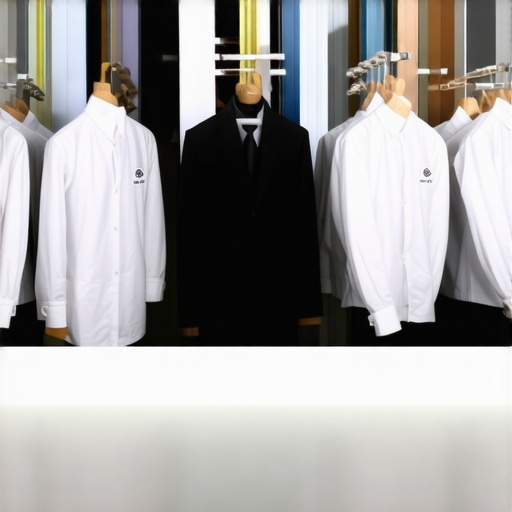
Assign Zones to Prevent Your Staff from Running Marathons
Think of your coat room like a high-speed fulfillment center rather than a closet. If coats are just hung haphazardly, your staff will spend more time walking than working. I always divide the racks into clear, color-coded zones based on ticket numbers. For instance, tickets 1-100 are in the ‘Blue Zone’ nearest to the counter, while 400-500 might be in the ‘Red Zone’ further back. This ensures that the most server skills that make every event stand out—like spatial awareness and speed—are utilized properly. I once managed an event where we didn’t zone, and by the end of the night, my lead server had clocked eight miles on her pedometer just inside a forty-foot room. It was exhausting for her and slow for the guests. Zoning also allows for a ‘bulk’ retrieval process at the end of the night, as staff can quickly scan specific sections instead of the whole room.
Hit the Sweet Spot with Your Staffing Ratios
The math of a coat check is unforgiving. For a standard winter event, you should aim for one staff member for every 75 guests. If it’s a luxury gala where you expect heavy wraps and bags, drop that ratio to one per 50. Hiring the best corporate event servers for 2025 means finding people who understand the rhythm of a crowd. You need a ‘loader’ who stays at the counter and a ‘runner’ who moves the garments to the racks. This prevents the bottleneck of one person trying to do both tasks. In my experience, even the most talented individuals fail when the system is understaffed. I remember one gala where the host insisted on only two people for six hundred guests; by 9 PM, the line to leave was an hour long, and guests were literally climbing over the counter to find their own coats. It was a disaster that could have been avoided with a simple staffing adjustment. Even when considering the hidden benefit of hiring a lead server for every ten guests for the dining room, remember that your front-of-house logistics need that same level of specialized oversight to keep the energy high from the moment the coats come off.
Most planners think that the more choices you give a guest, the more premium the event feels. I am here to tell you that is a total myth. In reality, over-complicating a menu—especially at a high-volume gala—is a recipe for a logistical logjam. According to psychologist Barry Schwartz, author of The Paradox of Choice, giving people too many options leads to decision fatigue and anxiety. In the world of corporate event catering strategies for success, this translates to longer lines and colder food. I always tell my clients to pick three stellar dishes rather than ten mediocre ones. It allows the kitchen to focus on perfection and helps your best corporate event servers for 2025 move with actual grace instead of juggling a dozen different dietary modifiers.
Why do we keep serving foods that guests are actually afraid to eat?
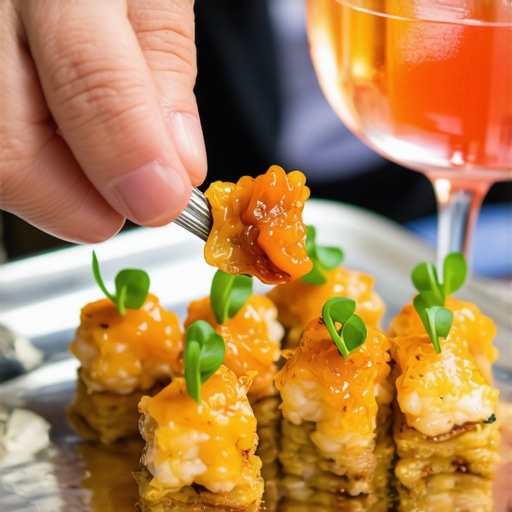
This is one of my biggest pet peeves. I have seen it a hundred times: a beautiful tray-passed hors d’oeuvre arrives, but it is a giant, overstuffed crostini that requires three bites and a napkin. At a networking event, this is a disaster. Guests have a drink in one hand and want to shake hands with the other. If you serve the danger of serving finger foods that require two hands, you have effectively paralyzed your VIPs. They will stop talking to avoid the crumb-on-the-chin look. True expertise in mastering corporate event planning secrets to seamless success means choosing items that can be consumed in one clean bite. If they need a fork, a knife, and a prayer to eat it standing up, it does not belong on the tray.
One oops factor that even veterans miss is the acoustic environment of the room. You can spend fifty thousand dollars on a band, but if the room is all glass and steel, it is going to sound like a construction site. This is where the impact of table linens on the acoustic quality of a room becomes a secret weapon. Heavy fabrics absorb sound, making it easier for people to network without shouting. I once worked a tech retreat where the CEO was livid because the room was too loud, even though there was no music. The fix? We brought in floor-length, heavy-weight linens and plush chair covers. It dampened the echo instantly. Have you ever fallen into this trap? Let me know in the comments.
Stop Ignoring the Chain of Command on the Floor
Finally, let us talk about the most underrated person in the room: the lead server. Everyone wants to hire a dozen kids from the local college, but the hidden risks of hiring student servers for high-end events are real. Without a pro who knows why your server team needs a clear chain of command on-site, your service will be reactive rather than proactive. You need someone who spots the empty water glass before the guest does. Do not just look for staff; look for specialized skills like how to spot a server who has not been trained in French service if you are aiming for a true luxury feel. It is those tiny, invisible touches that separate a basic meeting from a true experience.
Beyond the Clipboards: The Real Tech Behind High-End Events
As you scale from a fifty-person boutique lunch to a thousand-person gala, your memory is no longer a reliable tool. I transitioned to digital floor planning software years ago because it allows for granular control that a printed PDF just can’t match. When you are learning how to layout a corporate ballroom for maximum networking, being able to adjust aisle widths by six inches on the fly to accommodate a last-minute wheelchair access request is a lifesaver. I personally use platforms like Social Tables because the real-time syncing means my captain, the florist, and the rental company are all looking at the exact same version of the truth. No more ‘I thought the stage was on the north wall’ arguments ten minutes before doors open.
Maintaining these standards over a long season requires more than just good intentions; it requires rigorous systems. I often look to the Forbes Travel Guide’s 900-point inspection criteria as my North Star for service excellence. If you want to know how to train temporary server staff on high-end table manners, you have to realize that consistency is the result of repetition, not a one-time briefing. We hold ‘standard drills’ where we practice the silent clear and the synchronized drop until it is muscle memory. This is how you ensure that effective catering strategies for corporate event impressiveness don’t just happen by accident but are a guaranteed output of your process.
Why I Trust Real-Time Logistics Software Over a Printed Sheet
Communication is where most large-scale events bleed money and reputation. I’ve moved my teams entirely to discrete earpieces and push-to-talk apps. It allows me to whisper a guest’s name to a server across the room so they can greet them personally without a frantic shout. This level of coordination is the backbone of mastering corporate event planning secrets to seamless success. It transforms a group of individuals into a single, responsive organism. If a VIP arrives early, the whole floor knows in three seconds, and the champagne is poured before they even reach the bar. 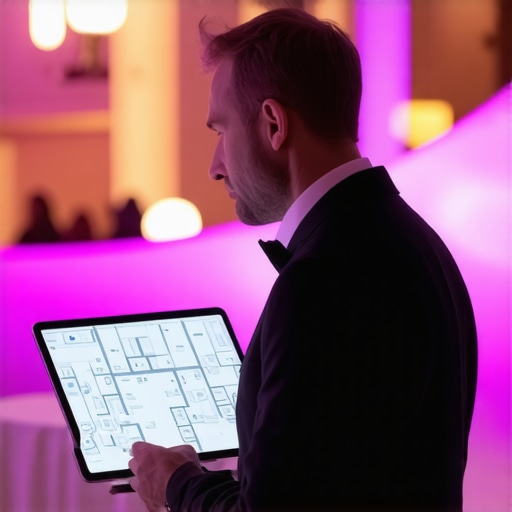
How do I keep my event standards high as the guest count grows?
The secret to scaling isn’t just ‘hiring more people’; it’s about maintaining the ratio of leadership to staff. When managing the logistics of running a 3-course dinner for 800 people, I implement what I call the ‘Shadow Lead’ system. For every twenty servers, there is one lead who does nothing but watch for errors—they don’t carry trays, they don’t pour water; they simply observe and correct. This prevents the ‘drift’ in quality that happens when a manager gets bogged down in administrative tasks. It ensures that best corporate event servers for 2025 are always performing at their peak because they have immediate, constructive feedback on the floor.
Looking ahead, I predict that guest flow management will soon be driven by heat-mapping AI, allowing us to redirect staff to beverage stations or coat checks before a line even forms. We are already seeing wedding catering trends to impress guests in 2025 leaning heavily into this hyper-personalized, tech-enabled service. My advice? Start small by implementing one advanced tracking tool—like a digital inventory system for your coat check—and watch how much mental bandwidth it frees up for you to focus on your guests. Try implementing a ‘Shadow Lead’ at your next mid-sized event and see how many small fires are put out before they ever reach your ears.
The One Truth About Event Flow That Most Planners Ignore
After a decade in the field, the most vital lesson I have learned is that the guest journey is psychological, not just physical. I used to think a fast coat check was about the hangers, but it is actually about reducing the ‘anxiety of arrival.’ When a guest walks in, they are often checking their phone, worrying about who they know, and feeling exposed in their outerwear. By mastering server skills that make every event stand out, your team can transition a guest from ‘outside stress’ to ‘inside luxury’ in under thirty seconds. I also learned that ‘more’ isn’t always ‘better’—throwing ten untrained staff at a problem is less effective than three professionals who understand the rhythm of a queue. Lastly, never underestimate the power of the first thirty feet of a venue; if that space feels cramped, the rest of the night feels small, no matter how large the ballroom is.
My Essential Gear for Managing Chaos and Crowd Flow
I never step on-site without a few specific tools that have saved my reputation more times than I can count. First, I swear by Social Tables for digital floor planning. It is the gold standard for how to layout a corporate ballroom for maximum networking because it allows you to visualize bottlenecking before it happens. Second, I rely on the Forbes Travel Guide Service Standards as my training manual; it provides the rigorous framework needed for how to train temporary server staff on high-end table manners so that every interaction feels premium. Finally, I use Zello for encrypted, crystal-clear communication, which is essential for maintaining why your server team needs a clear chain of command on-site. These aren’t just gadgets; they are the infrastructure of a seamless night.
Stop Planning Logistics and Start Designing Guest Emotions
At the end of the day, your guests won’t remember the exact dimensions of the coat rack, but they will remember how they felt the moment they stepped into the room. Whether you are implementing the best corporate event servers for 2025 or refining your corporate event catering strategies for success, your goal is to remove every possible friction point. When logistics are handled with invisible precision, you create a space where genuine connection can happen. Go ahead and take that first step—re-examine your arrival sequence today and watch how it transforms the energy of your next gathering. What was the one logistical ‘oops’ moment that changed how you plan your arrivals? Let me know in the comments below.