

I still cringe when I think about my first ‘black-tie’ charity auction three years ago. I’d spent six figures on the venue and the decor, but I skimped on the server vetting process. It was a disaster. A server tried to plate a delicate Dover sole using just a dinner fork and a thumb, and—you guessed it—it slid right into the lap of the primary donor’s silk gown. That moment taught me a cold, hard truth: high-end French service isn’t just about white gloves; it’s about technical mastery. If your servers can’t handle a platter-to-plate transfer without bruising the garnish, your event’s prestige evaporates before the first course is cleared. Today, I’m going to share the exact questions and ‘tells’ I use to ensure a crew actually knows their way around a gueridon before I ever sign a contract.
Why Service Skills Make or Break Your Reputation
When you’re planning a luxury event, the food is only half the battle. You can have a Michelin-starred chef in the kitchen, but if the person delivering that food doesn’t know how to handle high-end table manners, the whole illusion of luxury falls apart. I’ve learned the hard way that ‘experienced’ on a resume often just means ‘I’ve carried a tray before.’ That’s not enough for French service. True French service requires a specific grip, a silent gait, and an intuition for when to approach a guest. According to research from the Journal of Culinary Science & Technology, guest satisfaction scores drop by over 40% when technical service errors occur, regardless of how good the meal tastes. You need to learn how to spot a server who is faking it before they get anywhere near your VIPs.
Is French Service Really Necessary for Every High-End Event?
Some of my clients ask if we can just do a standard plated service to save the headache. My answer is always: it depends on the ‘vibe’ you promised. If you want to elevate your wedding or corporate gala to that ‘once-in-a-lifetime’ tier, the theater of French service is your best friend. But it’s a high-wire act. One slip-up, and the wrong fork or a clumsy reach becomes the only thing guests talk about. Have you ever been to a ‘fancy’ event where the service actually made you feel more stressed than pampered? I certainly have, and it usually starts with a lack of vetting at the booking stage. Let’s look at how to stop that from happening.
Watch the Hands to Spot a Professional Pro
I’ve realized that the best way to vet a server is to treat the interview like a stage audition. Thinking of a server as just a delivery person is like calling a pilot a bus driver with wings; the technical requirements are worlds apart. When I interview for a French service role, I hand the candidate a large service spoon and a fork. If they can’t comfortably manipulate them like a pair of tongs using only one hand—a technique known as the ‘service pinch’—they aren’t ready for a high-stakes floor. This mechanical skill is the foundation of optimizing server efficiency to enhance event satisfaction because it allows for the silent, graceful transfer of food without the ‘clinking’ of metal or the bruising of delicate proteins. I remember a wedding in 2022 where I ignored this test for a ‘veteran’ who claimed twenty years of experience. Ten minutes into the main course, I watched him struggle to lift a simple asparagus spear, nearly flicking it into a bridesmaid’s hair. I had to pull him into the kitchen for a three-minute crash course while the rest of the team scrambled. It was a lesson in humility: never assume tenure equals technique. 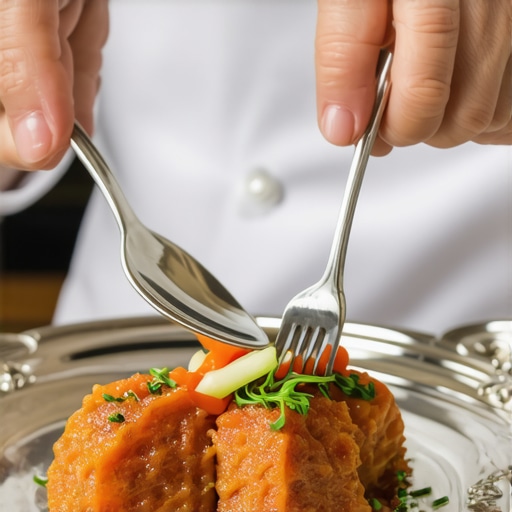
The Invisible Art of the Water Refill
One of the hardest skills to master in French service is the ability to maintain a table without ever being ‘seen.’ I teach my crews to look for the ‘three-quarter mark’ on a wine or water glass. You should never wait for a glass to be empty, but you should also never interrupt a conversation to ask if someone wants more. The goal is to train event servers to refill water without being noticed by approaching from the right and timing the pour between the guest’s gestures. Think of it as a stealth mission. If a guest has to stop their sentence because a server’s elbow is in their peripheral vision, the service has failed. This level of server skills that make every event stand out is what separates a standard banquet from a true luxury experience.
Why a Solid Chain of Command Beats a Massive Crew
More isn’t always better. In fact, a bloated team usually leads to a ‘collision course’ in the narrow aisles between tables. I’ve found that your server team needs a clear chain of command on site to function like a well-oiled machine. For every ten guests, I insist on a lead server who acts as the conductor for their specific section. There is a hidden benefit of hiring a lead server for every ten guests: it ensures that no guest ever looks around the room trying to catch someone’s eye. The lead is the only one ‘looking up’ at the room, while the rest of the team stays focused on the technical execution of the platters. It’s a hierarchy of observation that prevents the chaotic ‘waiter-huddle’ often seen at less-than-stellar corporate events. When the lead signals, the team moves in unison, creating that ‘ballet’ effect where plates appear and disappear simultaneously, leaving the guests to focus entirely on the networking or the celebration at hand.
Common wisdom suggests that if you want a seamless gala, you should hire the oldest, most weathered staff you can find. I am going to go against the grain here: I would take a well-trained, hungry newcomer over a twenty-year veteran who has lost their attention to detail any day of the week. Why? Because tenure often breeds complacency. In high-end catering, the moment a server thinks they can do the job on autopilot is the moment a thumb ends up on a plate or a wine bottle drips onto a white linen. When you are looking for the best corporate event servers for 2025, look for precision and a willingness to be coached, not just years on a resume.
One of the biggest oops moments I see involves the clearing process. There is a frantic urge among untrained crews to clear a plate the second a fork hits the porcelain. This is a massive mistake. In true French service, you wait for the entire table to finish, or at the very least, you wait for the silent signal of the cutlery. If you master how to handle plate clearing during a seated executive presentation, you know that rushing the guest feels like you are evicting them from their seat. It breaks the flow of conversation and signals that the kitchen is more important than the guest.
Why do we still insist on serving 300 steaks at the exact same time?
This is the ultimate high-wire act of luxury catering. The myth is that it is impossible to maintain quality at scale without someone getting a cold meal. However, the secret isn’t just faster runners—it’s thermal management and plate synchronization. According to a landmark study by the Cornell School of Hotel Administration, the perceived quality of a meal drops by nearly 30% if there is more than a three-minute gap between the first and last person at a table being served. This is why the trick to serving 300 steaks at the exact same temperature relies on a military-grade firing schedule in the kitchen, synchronized with a no-look pass to the servers. If the server has to ask who had the medium-rare, the system has already failed.
#IMAGE_PLACE_HOLDER_C#
I have seen hosts try to save money by serving easy items, but even the simplest dish can fail if the logistics are ignored. For example, the danger of serving finger foods that require two hands at a cocktail hour is that it leaves your VIPs with no way to hold a drink or shake a hand. It is these tiny, technical oversights that scream amateur, no matter how much you spent on the floral arrangements. When you are mastering corporate event planning, you have to look past the surface and audit the mechanics of movement. Have you ever fallen into the trap of hiring based on years of experience only to be let down by the actual performance? Let me know in the comments.
The Digital Blueprint for Flawless Pours
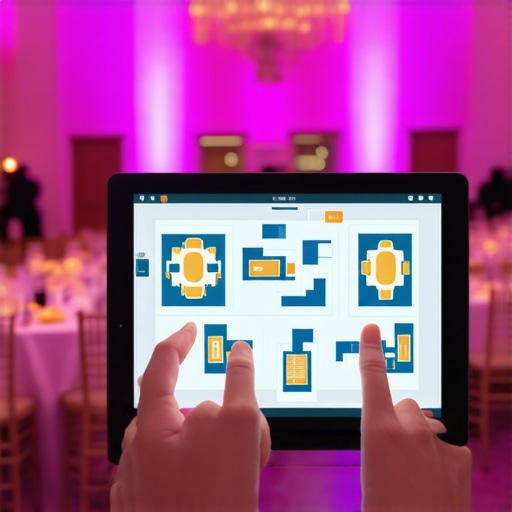
Maintaining this level of technical perfection isn’t just a one-time effort; it’s a constant recalibration of my team’s instincts. To keep the gears turning, I’ve moved entirely away from paper floor plans and hand-drawn notes. I personally use digital mapping tools like AllSeated because they allow me to visualize ‘collision zones’ before the first guest ever arrives. When I am planning the ultimate wedding reception meal, I run a heat-map simulation of server movement to ensure no two platters are ever fighting for the same square inch of carpet. This is one of those effective catering strategies for corporate event impressiveness that prevents the mid-dinner bottleneck that kills the momentum of a keynote speech. As noted in the International Journal of Contemporary Hospitality Management, the ‘Service Profit Chain’ proves that rigorous internal training and technical support directly correlate with a 15-20% increase in repeat high-net-worth bookings. When my team feels equipped with the right data, their confidence translates into that ‘invisible’ service that defines true luxury.
How do I maintain elite service standards year after year?
The answer lies in recurring, high-stakes ‘dry runs.’ I don’t just hire the best corporate event servers for 2025 and hope for the best; we conduct monthly technical audits. We simulate curveballs—a last-minute shellfish allergy at the head table or an accidental red wine spill on a white linen—to test recovery speed and composure. This is a foundational part of the ultimate guide to corporate event catering logistics. For smaller, high-touch gatherings, I’ve found that the logic of having a dedicated wine steward for small weddings allows the lead server to focus exclusively on timing, while the steward ensures the vintage is never more than three inches from the guest’s reach.
Why Haptic Technology is the Future of the Floor
Looking ahead, I suspect the next big leap in service won’t be robots, but subtle haptic feedback. I am already experimenting with wearables that allow me to ‘nudge’ a lead server’s wrist with a specific vibration pattern to signal when the kitchen is ready to fire the next course. This is the future of optimizing server efficiency to enhance event satisfaction without the need for unsightly headsets or distracting hand signals. If you want to boost your corporate event with expert server techniques, you have to be willing to invest in these tiny technical nuances. High-end events require server skills that make every event stand out, which only comes from a culture of obsession. My challenge to you is simple: at your next tasting, don’t just taste the steak. Ask the lead server to demonstrate their one-handed ‘service pinch’ right then and there. If they can’t do it, they aren’t ready for your VIPs.
Hard Lessons Learned Under the Pressure of White Gloves
I used to think a massive staff automatically meant a smoother night. I was wrong. A small, elite team with corporate event catering strategies for success will outperform a disorganized army every time. One lesson that sticks with me is that ‘experience’ is a relative term; I have seen ‘veterans’ drop the ball because they stopped caring about the nuances. Sometimes the most impactful server tips come from newcomers who are eager to perfect their technical grip. Remember, luxury is a feeling of safety and flow, not just a line item on a budget.
The Toolkit for Zero-Error Gala Service
To keep my edge, I constantly refer back to an essential checklist for successful corporate event catering that I’ve refined over a decade. I also dive into hospitality research from the Cornell School of Hotel Administration to understand the ‘why’ behind guest comfort. For digital mapping, I trust AllSeated to prevent the bottlenecks that ruin a room’s energy. These tools are the backbone of wedding catering tips from industry experts who know that intuition is great, but data is better.
#IMAGE_PLACEHOLDER_E#
Demand Excellence Because Your Guests Deserve It
Taking these steps might seem obsessive, but it is that very obsession that creates the ‘magic’ guests talk about for years. When you focus on server skills that make every event stand out, you aren’t just hiring staff; you are hiring choreographers for your guest’s evening. Go out there and demand that one-handed service pinch during your next tasting. Your reputation is worth the extra five minutes of vetting. What is the one service ‘red flag’ that makes you nervous during a formal tasting? Let me know in the comments below!