

I was standing in the middle of a stunning, empty warehouse at 2 AM, staring at a stack of five hundred rented dinner plates that I—and only I—was responsible for rinsing before the rental company picked them up. I had spent eighteen months planning this “perfect” corporate gala, convinced that booking a “blank canvas” venue was the only way to show off my personality. I was wrong. By the time I factored in the generators, the portable restrooms, and the frantic late-night run for extra ice, I had blown past my budget by nearly five thousand dollars. I made the classic mistake of thinking that “raw space” meant “saving money.” It didn’t. It just meant I was the one responsible for every single screw-up. Today, I want to help you avoid that specific brand of exhaustion by looking at the real, often invisible, benefits of going all-inclusive. [image_placeholder]
Stop Paying the DIY Tax on Your Sanity
I used to be a total “blank canvas” snob. I thought that if a venue provided the food, the tables, and the staff, it would feel like a soulless hotel conference room. But after that warehouse disaster, I realized that the hidden cost of DIY centerpieces at scale and sourcing your own forks isn’t just about the money—it is about the mental load. When you choose an all-inclusive spot, you aren’t just buying a package; you are buying a single point of accountability. If a server doesn’t show up or a circuit breaker blows, it is their problem to fix, not yours. Even though your event budget needs a 10 percent contingency fund regardless, with an all-inclusive, you actually get to use that money for upgrades rather than fixing preventable disasters. According to industry data from The Knot, the average wedding involves coordinating with about 14 different vendors. That is 14 separate contracts to sign and 14 different delivery windows to manage. By consolidating, you eliminate the “finger-pointing” that happens when the caterer blames the venue’s kitchen and the venue blames the rental company. Have you ever found yourself staring at a “raw space” rental contract and wondering if you’re actually signing up for a second full-time job?
Will an all-inclusive package actually limit your creativity?
This is the biggest fear I hear from my neighbors and friends. They think “all-inclusive” means they have to use 1990s-era beige linens and eat rubbery chicken. In reality, modern venues are much more flexible now. You can still learn how to choose a catering style based on your venue size that feels unique to you, whether that is a family-style feast or high-end small plates. The difference is that the infrastructure—the stuff that usually keeps you up at night—is already handled by people who do this every single weekend. Instead of micromanaging the delivery of folding chairs, you can focus on the fun stuff, like the signature cocktail or the playlist. The real secret is that these venues have relationships with vendors you didn’t even know you needed. They have the “in” with the best florists and the most reliable audio-visual teams, and because they work together every week, the communication is seamless. It’s like having an invisible team of experts working behind a curtain, ensuring that the transition from dinner to dancing happens without a single guest noticing the tables being moved. Trust me, the freedom you think you get from a raw space is often just an illusion that masks a mountain of logistical grunt work.
Go Beyond the Pretty Paint and Audit the Bones
When you walk into a potential all-inclusive venue, don’t let the crystal chandeliers distract you from the functional realities. I once managed a high-stakes gala where the lobby was breathtaking, but the service elevator—the only way to get food to the third floor—broke every forty minutes. To avoid this, you need to use the 5-step process for vetting a new event venue checklist that focuses on the ‘un-sexy’ details. Check the loading docks and, weirdly enough, check the waste management. I’ve found that why you should audit your venues trash cans after a gala is the ultimate litmus test for staff efficiency; if the bins are overflowing during the event, the management isn’t prioritizing the guest experience. 
Insist on a Real-Time Walkthrough
Never sign a contract based on a Tuesday morning tour when the building is empty. You need to see the machine in motion. I always suggest that why venue walkthroughs should happen at the same time as your event because it reveals the true noise levels and traffic patterns. During one walkthrough for a tech product launch, I realized the venue’s ‘house sound’ was actually just four ceiling speakers that couldn’t handle a bass-heavy presentation. Because I saw it live, we had time to learn how to hide unsightly power cables at a corporate gala while bringing in an external audio team. It saved the CEO from sounding like he was speaking through a tin can.
Audit the Server Ratio Like a Forensic Accountant
An all-inclusive venue might tell you they have ‘plenty of staff,’ but what does that actually mean? For a VIP experience, a standard one-to-twenty ratio is a recipe for cold soup and empty wine glasses. You must why you should audit your server to guest ratio for vip dinners to ensure high-touch service. I remember a wedding where the venue assigned the lead server to a specific table. It was a disaster because the person meant to steer the ship was stuck peeling shrimp for the bride’s aunt. This is why your lead server should never be the one managing the kitchen or tied to a single station; they need to be the eyes and ears of the floor, spotting issues before they become guest complaints.
The Menu Needs Both Anchors and Sails
Food at an all-inclusive venue shouldn’t be a one-note experience. You need ‘anchors’—heavy, satisfying proteins—and ‘sails’—light, acidic elements that keep people from falling into a food coma. You should why your menu needs to balance heavy and light options to keep the energy up, especially if there is dancing or networking afterward. I once served a ‘winter comfort’ menu at a corporate mixer that was so carb-heavy the entire sales team was yawning by 8 PM. Now, I always insist on why you should always request a tasting before finalizing your menu to verify the texture and timing of every course. If the venue resists a tasting, they are often hiding a lack of consistency.
Most people think that once they sign an all-inclusive contract, their work is done. This is the first major mistake. In my experience, the ‘preferred vendor’ list is the most misunderstood tool in the industry. While it sounds like a curated seal of approval, you must be aware of the hidden cost of only using preferred vendors at popular venues. Often, these lists are built on referral fees or long-standing insurance certificates rather than current performance. I’ve seen planners get stuck with a subpar photographer just because the venue wouldn’t allow outside talent without a massive ‘buy-out’ fee. If you want a truly custom feel, don’t be afraid to push back and vet every name on that list as if you were hiring them from scratch. I’ve also seen too many hosts fall for the ‘soggy salad’ trap because they didn’t account for the transit time from a remote kitchen to the far side of a massive ballroom. If you’re hosting an outdoor celebration, you must learn how to avoid the soggy salad trap at large outdoor weddings by insisting on a service timeline that respects the local humidity and distance. 
Can you spot a professional server before the first course is served?
I have a ‘ten-second test’ for every event I manage. When I walk into a room, I don’t look at the centerpieces; I look at the staff’s peripheral vision. There are 3 signs your event server is a pro within seconds of meeting, and the biggest one is ‘the scan.’ A true professional never walks across a room with empty hands or without scanning every table for a half-full water glass. This level of intuition is what separates a high-end experience from a basic one. The ‘oops’ factor I see most often is hiring from a general labor agency instead of a dedicated service team. It is vital to recognize the difference between a staffing agency and a service partner. An agency sends ‘warm bodies’ who might have worked a warehouse the night before, whereas a service partner provides trained experts who understand top server tips to elevate your event experience, like the art of silent service and the mechanics of synchronized plate placement. According to a report by EventMB, vendor reliability is the top stressor for 40% of professional planners, which is why I always cross-reference wedding catering tips from industry experts before finalizing a staffing plan. Technical training will beat ‘extra hands’ every single time. Have you ever fallen into the trap of thinking more staff automatically means better service? Let me know in the comments.To move from managing a small dinner to a massive gala, you have to stop thinking like a host and start thinking like a systems engineer. The biggest hurdle I faced when I began scaling my events was the realization that I couldn’t be in three places at once. I had to rely on tools that acted as my eyes and ears on the floor. For example, I never walk into a venue now without a digital floor plan that maps out the exact ‘flow’ of the service staff. By analyzing these paths, I can focus on the ultimate guide to corporate event catering logistics to ensure that no two servers are colliding in a narrow hallway with trays of hot hors d’oeuvres. According to event technology expert Corbin Ball, the most successful planners are those who leverage ‘frictionless’ communication, which is why I’ve switched my teams to discreet earbud-based radios. This allows me to course-correct the pacing of a meal without ever having to leave the VIP table I’m currently attending to. 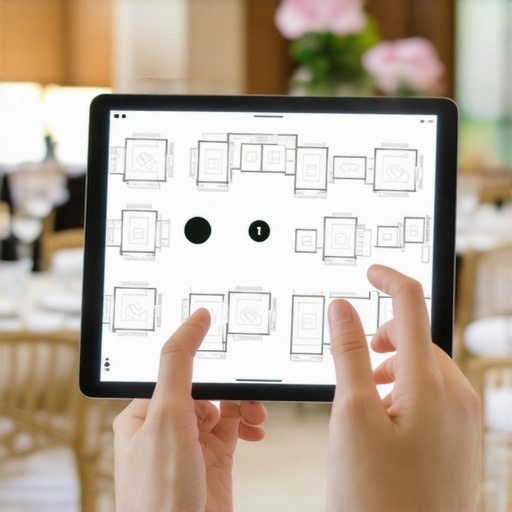
Stop Guessing and Start Mapping Your Floor Plan
I’ve seen too many planners rely on a paper sketch that hasn’t been updated in three years. When you are optimizing server efficiency to enhance event satisfaction, you need a living document that accounts for every power cord and pillar. I personally use software that allows for real-time adjustments; if we decide to move the bar ten feet to the left to avoid a draft, everyone on the team sees the change instantly on their tablets. This prevents the ‘where did the wine go?’ panic that can derail a high-stakes networking hour. Having an essential checklist for successful corporate event catering integrated into your digital workflow ensures that small details, like checking for extra linens or verifying the backup generator, don’t get lost in the noise of a 500-person guest list.
How do I maintain consistent service quality across multiple events?
Maintaining standards during a back-to-back event season is the ultimate test of your systems. I manage this by creating what I call ‘The Playbook’ for every client. This document includes everything from the specific garnish for the signature cocktail to why your server lead needs a copy of the event script. If your lead server knows exactly when the CEO is scheduled to walk onto the stage, they can ensure that all clearing of plates stops five minutes prior, preventing the sound of clinking silverware from ruining a keynote speech. This is the bedrock of corporate event catering strategies for success. Looking ahead, I predict we will soon see AI-integrated floor sensors that alert staff to spills or bottlenecks before a human eye even spots them. To stay ahead of the curve right now, I challenge you to try one advanced tip: the next time you have a walkthrough, physically walk the ‘service path’ from the kitchen to the farthest table. You’ll be shocked at how many obstacles you find that a software program might miss.
The Invisible Mechanics of a Flawless Gala
After years of managing high-pressure environments, I have realized that the most successful events are the ones where the logistics are completely invisible to the guest. This doesn’t happen by accident; it happens through meticulous planning behind the scenes. First, remember that the lead server is your most vital asset on the floor. I have learned the hard way that why a lead server should never be assigned a single table; they need to be mobile and observant, spotting a guest’s frown or a slow-moving buffet line from across the room. You can often how to spot a bad lead server in the first 10 minutes of an event by watching if they are buried in tasks or scanning the horizon. Additionally, always prioritize professional training over sheer numbers. Recognizing the difference between a staffing agency and a service partner will change the way your event feels to your VIPs. Warm bodies fill a room, but service partners enhance the experience through silent, proactive care.
The Gear That Keeps My Sanity Intact
Efficiency is a byproduct of the right tools. I never walk onto a site without a few essentials that act as my safety net. For floor planning, I rely on digital mapping software that allows for real-time changes, ensuring that every server knows exactly where the dietary restriction at Table 12 is sitting. I also swear by the essential checklist for successful corporate event catering, which I keep shared on a cloud drive for the entire team. This eliminates the ‘I thought you did it’ conversations. For communication, discreet earbud-based radios are non-negotiable for events over 100 people. Lastly, I always carry a hard copy of the ‘Shot List’ for the decor, as outlined in why your wedding photographer needs a shot list for the decor, to ensure that the beauty we worked so hard on is documented before the first guest walks in. [image_placeholder]
Trade Your Clipboard for a Glass of Champagne
The transition from ‘raw space’ DIY projects to all-inclusive excellence is ultimately about reclaiming your time. You deserve to be present at your celebration, whether it is a corporate milestone or a wedding day. By delegating the heavy lifting to a single point of accountability, you move from being a stressed-out project manager to a gracious host. Use corporate event catering strategies for success to build a framework that supports your vision, but then trust your team to execute. The goal is mastering corporate event planning secrets to seamless success so that your only job is to enjoy the moment you’ve created. What is the one ‘invisible’ detail you are most worried about for your next big event? Let me know in the comments below.