

I’ll never forget the “Old Mill” wedding of 2018. The couple had booked a phenomenal 10-piece soul band—complete with a full horn section—for a venue that was basically a converted closet. I stood there, clipboard in hand, watching a sweating trombonist try to extend his slide without impaling the bride’s grandmother or the four-tier red velvet cake. We had only about 140 square feet of stage space. In my early days, I made the amateur mistake of assuming talent could overcome physics. It can’t. I thought we’d just “wing it” and let the musicians find their groove, but the result was a cluttered mess that ruined the sightlines and gave the sound engineer a nervous breakdown.
The Night Physics Beat My Floor Plan
If you’re planning a big bash, you’re likely facing the same puzzle I did. You want that high-energy live sound, but your venue choice didn’t account for a drum kit, three singers, a keyboard, and a horn line. Today, I’m going to walk you through the hard-won secrets of fitting a massive band onto a tiny footprint. We’re talking about vertical stacking, shared monitors, and the crucial space that keeps your guests safe from flying drumsticks. Have you ever had to tell a lead singer they were standing too close to the buffet? It’s an awkward conversation I’d love to help you avoid.
Is a 10-piece band actually worth the headache in a small room?
You might be wondering if you should just scale back or look into the logic of choosing a DJ over a live band for small spaces. It’s a fair question. A big band in a small room can be a sonic nightmare if handled poorly. According to the Audio Engineering Society, sound waves in confined spaces can create “standing waves” that muddy the music if the stage is improperly positioned. But when you get the logistics right, that intimacy creates an electric atmosphere you simply can’t replicate with a Spotify playlist.
Make the Most of Every Square Inch
The first thing I learned after that cake-near-miss was that the impact of ceiling height on event acoustic quality matters just as much as the floor space. If you can’t go out, go up. We started using tiered risers for the horns, which cleared up the “front-line” for the vocalists. You also need to realize that why your ballroom floor plan needs a three-foot safety buffer isn’t just a suggestion—it’s a requirement to prevent feedback and accidents. In those tight corporate setups, I’ve seen the most common mistakes in corporate event seating charts happen when the stage is treated as an afterthought. You have to treat the stage as a living, breathing part of the room. When the space is cramped, every monitor and cable becomes a potential trip hazard. I once spent forty minutes taping down cables because I forgot to account for the keyboardist’s power needs. It’s those small details that separate a professional production from a chaotic garage session.
Get the Horns off the Floor
To fit a full ensemble into a tight corner, you have to think like a Tetris champion. In a cramped ballroom, your biggest enemies are the feet of the music stands and the sprawl of the horn section. I once worked a gala where the 12-piece band was expected to perform in a space designed for a string quartet. We solved it by putting the brass section on 12-inch risers tucked behind the rhythm section. By elevating them, we didn’t just save four feet of floor depth; we allowed the sound to project over the heads of the front-line singers rather than muffled into their backs. Remember that the impact of ceiling height on event acoustic quality dictates how high you can go. If you push a trumpeter too close to a low, hard ceiling, the reflection will pierce the ears of everyone in the first three rows.
Build Up Not Out with Tiered Platforms
Using tiered risers is like adding a second story to a small house. It creates a visual hierarchy and keeps the drummer from being swallowed by the vocalists. However, this verticality requires you to be hyper-aware of why your ballroom floor plan needs a three-foot safety buffer. At that same gala, I saw a backup singer nearly trip over the edge of the drum riser because we hadn’t taped the perimeter with high-visibility glow-tape.
Kill the Stage Volume with In-Ear Monitors
In a small room, five floor wedges (those angled speakers at the musicians’ feet) are five pieces of equipment you simply don’t have room for. They are the sonic equivalent of trying to have a private conversation with a megaphone. I now mandate that large bands in small venues use In-Ear Monitors (IEMs). This removes the physical footprint of the speakers and allows the sound engineer to keep the room volume under control. When you remove those wedges, you suddenly find an extra ten square feet of space—enough for a whole extra keyboard or a much-needed percussion rig.
Why Floor Wedges Are the Enemy of Small Stages
Beyond the physical space, floor wedges create a feedback loop that forces the band to play louder and louder. By switching to IEMs, you help optimizing server efficiency to enhance event satisfaction because your staff doesn’t have to scream over the music to take a drink order. I’ve seen the most common mistakes in corporate event seating charts happen when the band’s stage volume is so high that the tables nearest the stage become ‘dead zones’ where no guest wants to sit.
Protect Your Service Corridors
The biggest mistake planners make is forgetting that the band isn’t an island. Your catering team needs to move around them. In a 100-person wedding I coordinated in a wine cellar, the band’s bass player kept leaning back into the primary service artery. Every time a server came through with a tray of hot appetizers, it was a high-stakes game of chicken. You must know how to hide unsightly power cables at a corporate gala so that your team isn’t tripping while trying to maintain corporate event catering strategies for success. Use gaffer tape to create a ‘no-go’ line that separates the band’s gear from the service path. If a musician’s instrument case or cable bag bleeds into that path, it doesn’t just look messy—it slows down the entire meal service.Beyond just maintaining a physical path, there is a psychological element to service efficiency that most planners miss. A common myth in the industry is that ‘more is always better’ when it comes to staffing. I used to fall into this trap, thinking that throwing more bodies at a VIP dinner would guarantee a seamless experience. In reality, overstaffing often leads to what I call ‘server gridlock.’ When you have too many bodies in a confined space, the noise levels from internal chatter rise, and the kitchen door becomes a bottleneck. This is exactly why you should audit your server-to-guest ratio for VIP dinners rather than just hiring based on a gut feeling. A lean, elite team will always outperform a bloated, uncoordinated crowd of temps.
Stop Assigning Your Lead Server a Table
If you want to spot a rookie coordinator, look for the one who assigns the lead server their own section of guests. This is the ultimate ‘oops’ factor. In my experience, why a lead server should never be assigned a single table is about maintaining the ‘bird’s eye view.’ The moment your lead picks up a wine bottle to pour for Table 4, they lose sight of the kitchen delay at Table 12 or the guest at Table 2 who just signaled for the check. A lead server is your air traffic controller; they need to be free to pivot, troubleshoot, and keep the staff in sync with the kitchen.
Is a 1:10 server-to-guest ratio actually overkill for modern galas?
It depends on the service style, but for high-stakes corporate functions, quality beats quantity every time. A study by the Cornell School of Hotel Administration suggests that labor productivity in hospitality peaks when staff have clear, non-overlapping zones of responsibility. When roles become too diluted, a phenomenon called ‘social loafing’ occurs, where individuals subconsciously work less because they assume someone else will pick up the slack. You want a team where every person is essential to the essential checklist for successful corporate event catering.
Agencies vs. Partners: The Choice That Saves Your Reputation
There is a massive, often misunderstood difference between a staffing agency and a service partner. An agency sends you warm bodies with black vests; a service partner sends you trained professionals who understand the nuances of French service and table etiquette. If you don’t know how to spot a professional server in an interview, you risk hiring people who might be technically proficient but lack the ‘soft skills’ to handle a high-pressure environment. I once hired a budget crew for a product launch and spent the entire night apologizing for their lack of menu knowledge. Never again. Have you ever fallen into the trap of overstaffing only to have it backfire? Let me know in the comments below.Scaling a catering business or a high-end event production isn’t just about hiring more people; it’s about the systems that keep them from tripping over each other. For years, I relied on printed floor plans and a frantic set of walkie-talkies. It was a disaster. Now, I swear by digital collaboration tools like AllSeated or Social Tables. These aren’t just toys; they allow me to simulate the guest flow before a single fork is polished. If you want to dive into the nitty-gritty, I’ve documented my approach in the ultimate guide to corporate event catering logistics. Being able to show a client a 3D walkthrough of their gala at 2:00 PM on a Tuesday builds a level of trust that no ‘trust me, it’ll be great’ ever could.
How do I maintain peak performance when the calendar is full?
The secret isn’t more caffeine; it’s the post-event audit. Every Sunday after a busy weekend, my leads and I sit down for a thirty-minute ‘Decompression Session.’ We look at where the bottlenecks happened and update our essential checklist for successful corporate event catering. If Table 9 consistently got their wine late, we don’t blame the server; we look at the floor plan. Consistency is a byproduct of evolution. You have to be willing to kill your darlings—if a signature dish is slowing down the line, it’s gone. This dedication to optimizing server efficiency to enhance event satisfaction is what separates the veterans from the flash-in-the-pan startups.
Software is My Secret Weapon for Chaos Control
I’ve recently started integrating real-time communication apps like Slack or Voxer for my server leads. Standard radios are loud and intrusive. A subtle earpiece linked to a dedicated ‘Kitchen-to-Floor’ channel ensures that when the fish is three minutes out, every server knows without a single shout. This is one of those mastering corporate event planning secrets to seamless success that transforms the vibe of the room. It feels like magic to the guests, but it’s just disciplined tech usage. 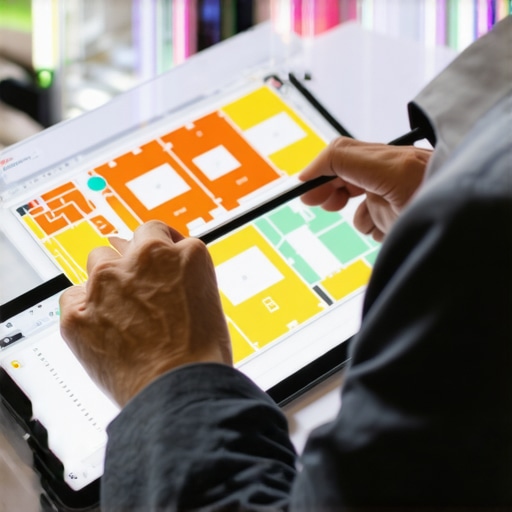
Trace the Path Before You Place the Table
As for the future? I predict we are going to see AI-driven heat mapping become the standard for large-scale events. Imagine knowing exactly where guest congestion will happen ten minutes before it does. We are already seeing prototypes of this in stadium management, and it’s only a matter of time before it hits the ballroom. As noted in the NFPA 101 Life Safety Code, maintaining clear egress is non-negotiable, and digital mapping is the fastest way to ensure your ‘creative’ layouts don’t become a safety hazard. If you’re serious about leveling up, I challenge you to audit your next floor plan. Don’t just look at where the tables go—trace the path of a single appetizer tray from the kitchen to the farthest guest. If that line crosses a guest’s path more than twice, redraw it. Trust me, your team will thank you.
Lessons I Learned the Hard Way in the Event Trenches
After a decade of juggling 10-piece bands and 400-guest dinners, I’ve realized that the most common mistake is over-promising on physical space. You simply cannot ignore the laws of physics. One of my biggest lightbulb moments was realizing that the difference between a staffing agency and a service partner is what determines if your staff can handle a cramped room with grace. I also learned that a visual ‘no-go’ zone is non-negotiable; why your ballroom floor plan needs a three-foot safety buffer became my mantra after seeing too many near-misses with expensive instruments and hot soup.
Another hard truth? Your lead server is the brain of the operation, not another set of hands. When I stopped assigning them tables, my event satisfaction scores skyrocketed because they could actually lead. It’s about building a culture where server skills that make every event stand out are cultivated through mentorship, not just a checklist. #IMAGE_PLACEHOLDER_E#
The Gear That Keeps My Sanity Intact
If you want to move from ‘surviving’ to ‘thriving,’ you need the right tools. I never walk into a venue without my digital floor planning software. It’s the backbone of the ultimate guide to corporate event catering logistics and prevents 90% of on-site arguments. For communication, I’ve ditched the bulky walkies for subtle earpieces paired with Slack; it’s one of those top server tips to elevate your event experience that guests won’t see but will definitely feel. Finally, I always keep a roll of high-vis gaffer tape and a clear copy of the event script in the hands of my lead server to ensure everyone is literally on the same page.
Your Path to Becoming an Event Maestro
Don’t be intimidated by the complexity of a 10-piece band or a high-pressure VIP gala. Every great coordinator started with a messy floor plan and a lesson learned. By focusing on optimizing server efficiency to enhance event satisfaction and respecting the spatial needs of your performers, you’re already ahead of the pack. Take these mastering corporate event planning secrets to seamless success and apply them one step at a time. Your next event isn’t just a job; it’s an opportunity to create a seamless, electric atmosphere that guests will talk about for years. Have you ever had to squeeze a massive band into a tiny room? What was your ‘make it work’ moment? Let me know in the comments below!