

I remember sitting in a stunning cabin in the Catskills three years ago. The air was crisp, the coffee was artisanal, and the catering was top-notch. But as I looked around the room, all I saw was the blue glow of MacBooks reflected in glassy eyes. We’d spent thousands on this ‘bonding’ retreat, yet we were essentially just working in a prettier location. It was a total failure. I realized then that if you do not intentionally carve out a space where the pings and buzzes cannot follow, you are not really retreating; you are just relocating your stress.
Stop Treating Your Retreat Like a Remote Office Day
If you want your team to actually talk, you have to break the digital tether. I made the mistake early in my career of thinking that how to vet a venue for corporate wifi stability and speed was my top priority. I thought fast internet equaled a happy team. I was dead wrong. Speed is for the office; connection is for the retreat. When I finally implemented a dedicated tech-free lounge—a cozy spot with actual books, comfortable seating, and zero outlets—the dynamic changed instantly. People started mastering corporate event planning secrets to seamless success by focusing on the humans in the room rather than their inbox. It is about creating an environment where the brain can actually shift gears.
Is a Mandatory Tech-Free Zone Actually Worth the Hype?
You might worry your team will revolt if they cannot check Slack every ten minutes. I certainly did. But the truth is, a how to layout a corporate ballroom for maximum networking strategy only works if the environment discourages the ‘quick check’ that turns into a thirty-minute email rabbit hole. A study published in the Journal of Social and Personal Relationships found that just the presence of a smartphone on a table, even if it is turned off, can significantly decrease the quality of a conversation and the empathy between participants. It is a silent energy killer. We often think we need more bells and whistles to how to keep executive board members focused during a catered lunch, but usually, we just need fewer distractions. Have you ever hosted an event where the Wi-Fi went down and suddenly everyone was actually laughing and talking? Tell me about your most frustrating ‘everyone is on their phone’ moment in the comments below.
Build a Digital Coat Check Before the First Meeting
You cannot just ask people to put their phones away; you have to provide a secure, high-end alternative that feels like a service rather than a punishment. I once managed a high-stakes retreat in the Berkshires where I set up a literal ‘phone valet’ system. I hired why your business luncheon needs a dedicated coat check person specifically to manage a custom-built charging locker. When the VPs arrived, their devices weren’t just confiscated; they were ‘checked in’ for luxury maintenance. This simple framing changed the entire mood. Instead of feeling restricted, they felt taken care of. If you want the same effect, treat the digital exit like a formal ceremony. 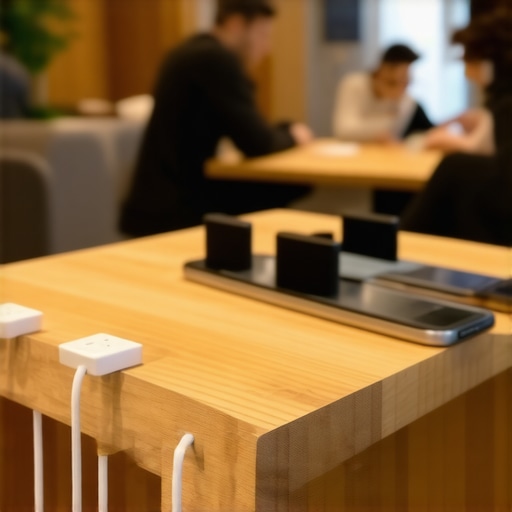
Ditch the Round Tables to Force New Dynamics
The layout of the room dictates the flow of the conversation. I’ve seen countless retreats fail because they stuck to traditional banquet seating. I realized that why round tables kill the energy at corporate networking mixers because they create small, impenetrable silos of four or five people. On that same Berkshire trip, I swapped the rounds for long, narrow trestle tables. Suddenly, the middle-of-the-table void was gone. People were forced into a communal dining experience that felt like a family dinner rather than a wedding reception. It’s an easy physical hack that yields massive psychological dividends.
Pick Foods That Encourage Eye Contact Not Napkin Scrambles
The ‘meat’ of your retreat is literally what you put on the plate. If you serve food that is difficult to eat, your team will spend their energy looking at their forks instead of their colleagues. I learned this the hard way at a tech launch where I served ‘authentic’ street tacos that fell apart instantly. Everyone was silent, terrified of dropping salsa on their linen shirts. You have to understand the danger of serving finger foods that require two hands; if you can’t hold a drink and a bite while standing up, the networking stops. Stick to one-bite wonders or clean, plated meals that don’t require a surgical degree to navigate.
Put the Clock in the Hands of the Pros
One of the biggest mistakes I see is the host trying to manage the schedule while also trying to lead the discussion. You cannot be the visionary and the timekeeper at the same time. At my most successful events, I let the catering lead drive the timeline. They know exactly how to keep your event schedule on track without rushing guests by using subtle cues like the clearing of plates or the dimming of lights. By outsourcing the ‘logistical push’ to the service team, I was free to actually listen to my staff. It allows the transitions between deep work and relaxation to feel organic rather than forced. It’s about creating a rhythm that the team feels, rather than a schedule they have to read.
The Invisibility Cloak of Truly Great Service
Most people think that the mark of a successful event is the speed of the service. They believe that if the food arrives fast, the job is done. I used to think that too, until I watched a gala fall apart because the servers were too present. They were efficient, yes, but they were also disruptive, cutting into conversations and hovering like shadows. In high-stakes environments, the best service is actually invisible. It is about creating a flow where a guest never has to look for a refill because it simply appears. This is why you must understand how to choose the right staffing ratio for a vip event. If your ratio is off, your staff is forced to rush, and rushing is the loudest thing in a quiet room.
Why Your Venue Manager Is Not Your Secret Weapon
One of the most dangerous traps I see seasoned executives fall into is assuming the venue manager will handle the fine details of the day. They won’t. I have seen countless retreats lose their momentum because the host didn’t realize why your venue manager should not be your day-of-coordinator. The venue manager works for the building; a coordinator works for your goals. When you conflate the two, you end up with a team that cares about the floors and the lights, but misses the fact that the CEO’s dietary restriction was completely ignored by the kitchen. It is a subtle but catastrophic distinction that separates a generic hotel event from a bespoke corporate experience. Have you ever fallen into this trap and assumed someone else had the ‘human’ details covered? Let me know in the comments. 
The True Cost of Amateur Hands in a Professional Setting
The ‘oops’ factor usually happens when someone tries to shave the budget by hiring ‘bodies’ rather than professionals. I once consulted on a high-end wedding where they saved a few thousand by using local college students. The result? They didn’t know how to spot a server who hasnt been briefed on the menu, and by the main course, guests were being served allergens they had specifically requested to avoid. This isn’t just a minor mistake; it’s a liability. You must weigh the hidden risks of hiring student servers for high-end events against the prestige of your brand. A study by the Cornell University School of Hotel Administration highlights that in luxury service, guests perceive value through the ‘anticipatory’ nature of the staff—something that requires years of training, not just a weekend orientation.
How Do You Tell the Difference Between a Pro and a Pretender?
The secret is in the briefing. A professional team doesn’t just show up and start carrying trays. They internalize an essential checklist for successful corporate event catering that includes everything from the phonetic pronunciation of VIP names to the exact temperature of the red wine. If your service team isn’t asking you deep, almost annoying questions about the ‘why’ behind your event, they aren’t pros; they are just labor. True expertise lies in the nuance of the hand-off, the silence of the plate clearing, and the ability to read a room’s energy before a single word is spoken. If you want your next retreat to actually mean something, stop looking at the price per plate and start looking at the training of the hands that hold them.
My Secret Tool for Silent Synchronization
I used to think that a loud, assertive floor manager was the key to a tight event. I was wrong. The best events I’ve ever run were the quietest. I transitioned my teams away from shouting over the din of a kitchen and onto the Motorola CLP series. These aren’t your chunky construction site radios; they are sleek, discrete, and essential for [optimizing server efficiency to enhance event satisfaction] without the guests ever hearing a crackle. When you can whisper a dietary change to the kitchen from the middle of the ballroom, you aren’t just managing; you are conducting an orchestra. It allows the team to maintain that ‘invisible’ presence I mentioned earlier, ensuring that [effective-catering-strategies-for-corporate-event-impressiveness] are felt rather than heard.
Real-Time Data Beats a Messy Clipboard Every Time
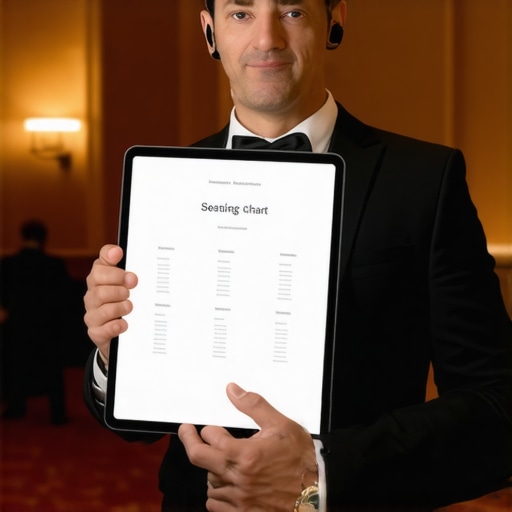
I’ve replaced my old beat-up leather binder with a customized tablet interface that syncs with the kitchen in real-time. This is the only way to survive a high-stakes retreat where the schedule is fluid. If the keynote runs ten minutes long, I can push a button and the kitchen knows to hold the sear on the sea bass. We use this tech specifically for [how to brief your server-team on complex dietary restrictions in minutes], because a printed list is obsolete the moment a guest decides they’ve suddenly gone keto. By using cloud-based checklists, we ensure that [the-ultimate-guide-to-corporate-event-catering-logistics] is a living document, not a static piece of paper that gets coffee spilled on it by noon.
How can I keep the quality from slipping during the holiday rush?
Consistency is the hardest thing to scale. When you go from one event a week to five, your standards will naturally want to erode. To combat this, I treat every single event like it is our first audition. I rely on a ‘lead server’ model where one veteran is responsible for the performance of only four others. It’s a slightly higher labor cost, but it’s the secret to finding the [best corporate-event-servers-for-2025]. Food safety expert Dr. O. Peter Snyder, a pioneer in retail food operations, famously argued that the human element is the most variable factor in any system—which is why I automate the checklists but never the oversight. I also use infrared thermometers for every outdoor setup to ensure we are hitting the [the-secret-to-maintaining-food-temperature-at-outdoor-events] benchmarks every single time.
The Coming Era of Predictive Hospitality
Looking ahead, I see a shift toward predictive analytics in high-end catering. We are already experimenting with heat-mapping guest movement to see where they congregate most, allowing us to adjust server placement on the fly. In the next few years, I expect AI will help us predict exactly how much wine will be consumed based on the industry of the attendees—lawyers and tech founders have very different habits, believe me. For now, the best thing you can do is focus on the tools that empower your humans. If you want to see a massive jump in your team’s performance, I challenge you to try a ‘silent floor’ policy at your next event. Switch to ear-piece comms and watch how the atmosphere shifts from chaotic to curated. It’s a professional-grade move that separates the amateurs from the true masters of the craft.
Hard Truths About Running a High-Stakes Retreat
Over the years, I’ve learned that the most expensive decor cannot save a poorly timed meal. Silence is often your best indicator of success; when a team is deep in breakthrough conversation, the service should flow like a ghost in the machine. One major lightbulb moment for me was realizing that how to spot a professional server in an interview has nothing to do with how many plates they can carry and everything to do with their emotional intelligence. Also, never underestimate the power of hierarchy; why your server team needs a clear chain of command on site is the difference between a minor hiccup and a full-scale catastrophe.
My Essential Toolkit for Flawless Execution
I do not step foot into a venue without a few non-negotiables. First, the Motorola CLP series radios I mentioned earlier are my lifeline for silent synchronization. Second, I swear by Setting the Table by Danny Meyer—it is the absolute bible for anyone wanting to master the concept of enlightened hospitality. For organization, I rely on a living essential checklist for successful corporate event catering that I keep updated on a shared tablet for the whole team. Finally, a high-quality infrared thermometer is a boring but vital tool; it ensures that your high-end ingredients stay at peak safety and flavor profiles regardless of the venue’s limitations.
Your Turn to Orchestrate a Masterpiece
Planning a retreat is about more than just checking boxes; it is about creating a container where humans can actually connect, recharge, and innovate. When you focus on the invisible details—the silence of the service, the temperature of the room, and the tech-free zones—you elevate the entire experience. It is time to boost your corporate event with expert server techniques and show your team that their focus and time are truly valued. The future of corporate event catering isn’t just about the food; it is about the lasting feeling your guests leave with when the lights go down. Have you ever seen a retreat saved—or ruined—by a single logistical detail? Let me know your experiences in the comments below!