

I’ll never forget the corporate gala I organized three years ago where I learned a hard, dark lesson. We had this incredible spread—braised short ribs, a vibrant mango slaw, and local oysters—but the venue’s ‘ambient’ lighting was so dim that guests were practically using their phone flashlights to see if they were grabbing a napkin or a slice of bread. It was embarrassing. I had followed my usual essential checklist for successful corporate event catering, but I completely ignored the buffet’s specific luminosity. The food looked like grey lumps. It didn’t matter how good it tasted; the visual experience was a total flop. Today, I’m going to walk you through exactly how to avoid that ‘mining in the dark’ vibe and ensure your evening buffet looks as good as it tastes.
That Time I Served Mystery Meat in the Dark
Early in my career, I made the amateur mistake of thinking the room’s overhead dimmers were enough. They weren’t. I didn’t realize that why you need a backup plan for outdoor buffet lighting isn’t just for rain—it’s for the inevitable moment the sun goes down and your beautiful platters vanish into the shadows. I once relied entirely on cheap battery-operated puck lights that flickered and died right as the CEO started the line. It was a mess.
Is Professional Lighting Really Worth the Hassle?
You might be thinking that a few candles or the venue’s existing chandeliers should do the trick. But here is a surprising fact: research suggests that lighting directly influences how we perceive flavor. According to the Illuminating Engineering Society (IES), the color rendering index (CRI) of your light source can significantly change the way guests perceive the freshness and quality of meat and vegetables. When people can see the glisten on a glaze or the crisp edge of a vegetable, they enjoy the meal more.
Why Your Buffet Needs Its Own Spotlight
If you want to how to style a buffet table for maximum visual impact, you have to treat it like a stage. You wouldn’t put a lead singer in the dark, so why do it to your main course? Lighting guides the eye and, more importantly, keeps the line moving. When guests can see the labels clearly—and I’ve got a great simple trick for keeping buffet labels legible and clean—they don’t have to stop and squint at every dish. Have you ever been to an event where you had to guess what was in the chafing dish? Tell me about your worst ‘mystery meal’ experience! We’re going to dive into the specific gear and placements that make your food pop without blinding the guests standing in line.
Warm Light Makes Your Salmon Look Like Art
The biggest mistake I see at high-end events isn’t the menu choice; it’s the color temperature of the bulbs. If you use standard office-style LEDs, your beautiful seared salmon will look like a grey slab of mystery meat. You want to aim for a Kelvin rating between 2700K and 3000K. This warm spectrum mimics a sunset and makes the reds, yellows, and oranges in your food pop. When you are developing your corporate-event-catering-strategies-for-success, think of lighting as an ingredient just as important as salt. If the light is too cool, it triggers a biological ‘danger’ signal in our brains that makes food seem unappealing. I once did a wedding in a converted warehouse where the house lights made the salad look like it was harvested from a swamp. I had to swap out every single bulb for warm tones 20 minutes before doors opened. It was a panic-inducing lesson in why CRI (Color Rendering Index) matters.
Angle Your Lights Like a Stage Director
Never point a light directly down onto a plate. This creates ‘flat’ lighting that hides texture. Instead, use cross-lighting. Place two light sources at 45-degree angles from the front-left and front-right of the buffet line. This creates subtle shadows that highlight the flaky texture of a pastry or the glistening glaze on a roast. If you’re wondering how-to-use-lighting-to-guide-guests-through-a-venue, remember that the buffet should be the brightest point in the room. This naturally draws people toward the food without a server having to shout directions. 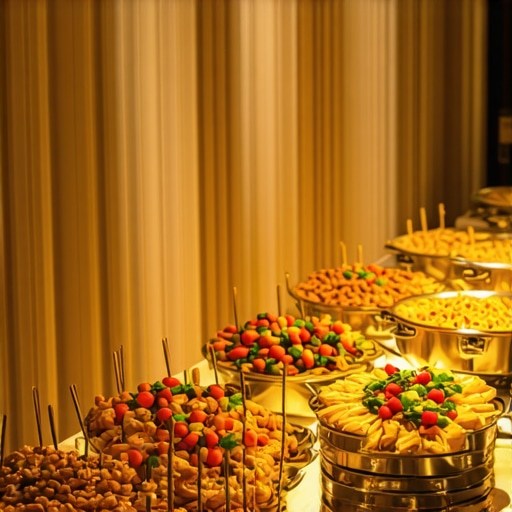
Bury the Wires to Save Your Servers
There is nothing that ruins a professional atmosphere faster than a guest or a waiter tripping over a black power cable. This is where execution meets safety. Use gaffer tape that matches the floor color or run your cables along the underside of the table frame. Knowing how-to-hide-unsightly-power-cables-at-a-corporate-gala is a non-negotiable skill for any planner. I remember a tech launch where a loose wire got caught in a rolling hot box, nearly pulling down the entire dessert station. Since then, I’ve realized that why-your-event-venue-selection-impacts-your-av-budget is largely about the number of floor outlets available. If the venue doesn’t have them, you need to budget for professional cable ramps or battery-powered wireless uplights.
Check Your Work When the Sun Goes Down
A buffet that looks great at 2:00 PM during setup will look like a cave at 7:00 PM. This is why you must perform a night-mode walkthrough. Turn off the work lights and see exactly where the shadows fall. This is the only way to catch ‘blind spots’ where guests might accidentally miss a signature dish because it’s tucked into a dark corner. I advocate for this because why-you-should-test-your-event-lighting-during-the-day-and-night is the difference between an amateur setup and a high-end experience. Adjust your dimmers so the food is the star, but ensure the labels remain readable. If you have to use your phone’s flashlight to read ‘Gluten-Free,’ your lighting has failed.
While we’ve spent time focusing on the physics of light, there is a common myth in the industry that high-end equipment can fix a poorly organized floor. I’ve seen planners spend thousands on pin-spotting and wireless uplights only to have the entire atmosphere ruined by a chaotic service team. The most contrarian view I hold is this: your lighting is only as good as your lead server’s ability to navigate the room. Most people assume the most experienced staff member should be doing the heaviest lifting, but why your lead server should never be the one managing the kitchen is a nuance that separates the pros from the amateurs. If your lead is stuck behind a swinging door, they aren’t on the floor noticing that a guest is squinting or that a specific station has gone dark. Expertise isn’t about doing the work; it’s about seeing the work that needs to be done.
Stop Treating Your Staff Like Background Noise
The biggest ‘oops’ factor I see at corporate galas is the failure to realize that the staff’s movements are part of the visual experience. If your servers are sprinting or looking flustered, no amount of warm 2700K lighting will make the room feel elegant. A study by the Cornell School of Hotel Administration suggests that guest perception of service quality is tied directly to the ‘calmness’ of the environment, which includes the physical flow of staff. This is why you must understand how to choose the right staffing ratio for a VIP event before you ever pick out a centerpiece. When you have the right ratio, your team can move with a grace that complements the lighting rather than distracting from it. 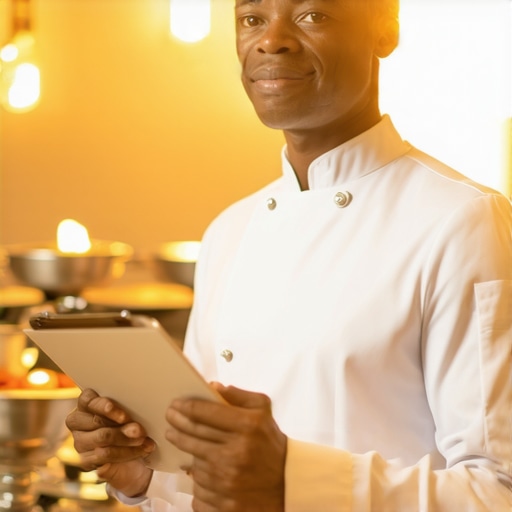
Why Is Your Lead Server Operating Without a Script?
It sounds overkill to some, but why your server lead needs a copy of the event script is the most advanced tip I can give you. They need to know exactly when the house lights will dim for a video presentation so they can clear the floor and avoid casting shadows on the screen. If they are in the dark—literally and figuratively—they become a liability. You might even consider the advantage of hiring servers who specialize in French service for high-stakes dinners, as their training emphasizes a level of spatial awareness that most general staff lack. They know how to stay out of the light while ensuring every guest is attended to. Finally, never forget that happy staff perform better; why your event staff should have a dedicated break room isn’t just a kindness, it’s a strategic move to ensure they stay sharp and professional in front of your guests. Have you ever fallen into the trap of over-lighting a room only to realize the service was the real problem? Let me know in the comments!
Moving from a single successful event to a consistent streak of high-level productions requires more than just a good eye for lighting; it requires a tech stack that acts as your invisible manager. I personally swear by integrated software like Planning Pod for my the-ultimate-guide-to-corporate-event-catering-logistics. It’s the only way I can manage floor plans, guest counts, and equipment rentals without losing my mind. When you are mastering-corporate-event-planning-secrets-to-seamless-success, you realize that the real work happens in the data. For example, I use a digital light meter app to ensure every buffet station hits at least 500 lux—a standard I adapted from museum gallery guidelines to ensure the food truly pops.
The Secret Gear in My On-Site Survival Kit
Beyond the software, there is a physical toolkit I never leave the office without. It includes high-intensity battery-powered uplights from brands like Astera, which allow me to fix a dark corner in seconds without hunting for an outlet. This is essential when planning-the-ultimate-wedding-reception-meal in a historic venue where the wiring hasn’t been updated since the 1950s. A study published in the Journal of Consumer Psychology (2016) titled ‘The Cool Side of the Pillow’ actually found that ambient light levels influence choice; diners in brighter rooms were 16-24% more likely to choose healthier options. If you’re catering a wellness-focused corporate retreat, boosting the lumens might actually help guests stick to their goals.
How do I maintain this level of precision as my events scale up?
The transition from a 50-person dinner to a 500-person gala is where most planners stumble. The answer isn’t just ‘more staff’; it is about optimizing-server-efficiency-to-enhance-event-satisfaction through rigorous post-event audits. After every single gig, I sit down with my lead server to review what I call the ‘friction points.’ Did the lighting dim too early? Did the servers struggle to navigate the buffet because of a tight corner? We refine the server-skills-that-make-every-event-stand-out by turning every mistake into a mandatory training module for the next month. 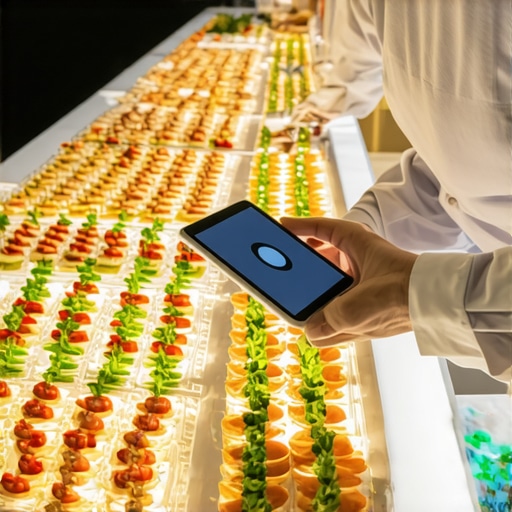
Where the Industry is Headed in 2025
I predict that by 2025, we will see ‘smart’ buffet stations equipped with built-in, heat-resistant LED strips that are controlled via a central tablet. We are moving away from external lighting rigs toward furniture that illuminates itself. This will make the job of a server much safer and the visual impact much more seamless. If you want to stay ahead of the curve, stop thinking about lighting as an ‘add-on’ and start treating it as a core component of your catering equipment. My advanced tip for you this week: for your next event, why-you-should-audit-your-server-to-guest-ratio-for-vip-dinners and see if a higher staff count actually allows you to better manage the physical atmosphere of the room. You’ll be surprised how much better the food looks when the staff isn’t blocking the light while rushing.
What I Learned After 100 Dark Dinner Services
Experience has taught me that the most expensive lighting rig in the world can’t save a team that isn’t synchronized. I’ve seen incredible chefs get demoralized because their hard work was hidden in the shadows. One major ‘lightbulb moment’ was realizing that top server tips to elevate your event experience often include teaching staff how to stand so they aren’t blocking the key light source. Another lesson? Always carry your own power; the venue’s ‘reliable’ outlets are often hidden behind heavy drapes or locked doors. Finally, remember that your buffet is a visual story—if the lighting doesn’t highlight the climax, which is usually the main course, the audience loses interest before they even pick up a plate.
My Go-To Gear for Perfect Buffets
To keep things professional, I rely on a few specific tools. First, I never start a layout without checking wedding catering tips from industry experts to see how they handle mixed-use spaces. For logistics, I rely on management software to keep my rental orders straight. For the physical setup, I recommend a digital light meter app to ensure consistency across every station. Most importantly, I keep a shortlist of the best corporate event servers for 2025 to ensure that once the stage is lit, the performers are ready to deliver a five-star experience.
Light Up Your Next Big Win
Now that you know how to manipulate shadows and color temperatures, you’re ready to transform your food into a masterpiece. Lighting isn’t just an expense; it’s the final seasoning that makes everything else taste better. As you refine your corporate event catering strategies for success, don’t be afraid to experiment with angles and warmth to see what makes your signature dishes shine. Your guests might not consciously notice the 2700K bulbs, but they will certainly feel the difference in the atmosphere. Have you ever had a lighting disaster that changed how you view event planning? Let me know in the comments!