

I remember a high-end corporate gala I catered a few years back where the cake was a five-tier masterpiece of red velvet and gold leaf. But looking at the crowd, nobody was smiling. Why? Because the line for the coffee urn was tangled with the queue for the cake like a pair of cheap headphones in a pocket. It was a complete disaster. Guests were desperately juggling heavy plates while trying to pour hot liquids, and the sheer frustration in the room was palpable. I felt like a total amateur watching the energy of the evening evaporate just because I hadn’t accounted for the ‘beverage linger.’ That night, I learned the hard way that when you force your guests to choose between their dessert and their caffeine in the same line, everyone loses. Today, I am going to show you exactly how a simple shift in your floor plan can save your sanity and your guests’ shoes from hot spills.
Stop the Dessert Table Traffic Jam Before it Starts
The biggest mistake I made early in my career was thinking that centralization was the same thing as efficiency. It’s a common trap. You think, ‘Hey, the sugar is for the coffee and the cake, so let’s put them together!’ But in reality, optimizing server efficiency means understanding that these two items require different physical movements. A guest grabbing a cookie takes three seconds. A guest preparing a cup of tea with lemon, honey, and a splash of milk takes thirty. When you mix them, the cookie-grabbers get stuck behind the tea-minds, and the whole room stalls. This is especially vital when planning the ultimate wedding reception meal, where guests are already eager to hit the dance floor.
Is separate service really worth the extra table space?
You might be worried that splitting things up will make the room look cluttered or that guests will be confused. Trust me, they won’t. In fact, a study by the Cornell University School of Hotel Administration suggests that physical bottlenecks in service areas can decrease overall event satisfaction scores by a staggering 25% to 30%. People value flow over proximity. By creating a dedicated beverage station, you allow the ‘quick movers’ to get their sweets and find a seat, while the coffee lovers can take their time without feeling the burn of a hundred eyes staring at the back of their heads. You also need to consider how to set up a bar to avoid congestion, as the same principles of movement apply to your coffee service. Have you ever been stuck in a never-ending line for a simple cup of coffee while your dessert slowly melted on your plate? It’s a specialized kind of torture, isn’t it? Let’s make sure that never happens at your event. [image_placeholder]
Move the Caffeine Away from the Crumbs
To fix the traffic jam, you need to think like an urban planner rather than just a host. Think of your dessert table as the high-speed lane and your coffee station as the scenic overlook. If you put them together, you are essentially building a toll booth in the middle of a highway. Instead, place your coffee station at least fifteen feet away from the dessert spread. This distance forces a mental and physical reset for the guest. They grab their plate of sweets, move out of the high-traffic zone, and only then do they decide if they truly want that latte. I applied this strictly at a tech product launch last year where we had 300 developers who were essentially powered by sugar and caffeine. Instead of one long buffet, we scattered three micro-stations around the perimeter. One was exclusively for high-end pastries, and two others were dedicated espresso bars. By the time the keynote ended, the room stayed perfectly balanced. No one was elbowing their way to a brownie because the beverage lingerers were comfortably positioned on the opposite side of the hall. This is one of those corporate event catering strategies for success that works every single time.
Keep Your Staffing Ratios in Check
Splitting your stations means you cannot just have one person keeping an eye on things. You need to know how to choose the right staffing ratio for a vip event to ensure both areas stay pristine and fully stocked. A messy coffee station with spilled sugar and used stirrers is a major mood killer for the next person in line. I recommend why your server team needs a designated captain for every 50 guests, especially when managing decentralized stations. These captains act as the eyes and ears on the ground, spotting a low milk carafe or a depleted tray of macarons before the guests even notice the gap. 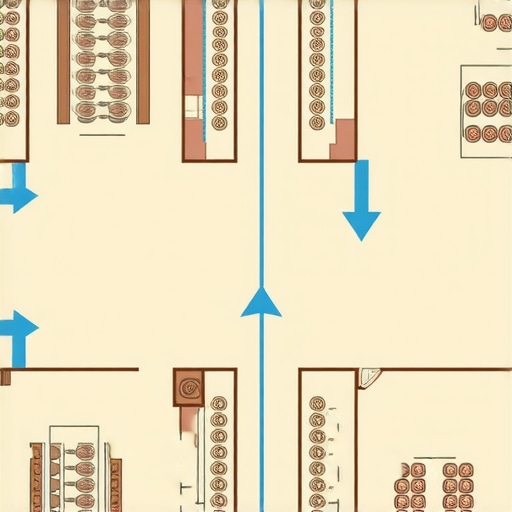
Why Your Layout Needs a Three-Foot Buffer
It is not just about where the tables go; it is about the negative space around them. Every station needs what I call a landing zone. This is an empty three-foot perimeter where guests can pause to adjust their grip on a plate or tuck a napkin under their arm. When you are looking at the ultimate guide to corporate event catering logistics, you will see that guest comfort is directly tied to their personal bubble. If a table is pushed too far into a corner, that bubble pops, frustration rises, and the line grinds to a halt as guests struggle to maneuver.
Don’t Let the Coffee Bar Become a Dead End
When you set up that separate beverage station, ensure it has a clear entrance and an exit. Most people naturally move from left to right, so treat the table like a production line. Place the cups and saucers on the far left, the airpots in the middle, and the sweeteners or creamers on the right. This linear progression keeps the line moving in one direction. If you put the spoons at the very beginning, people will have to double back once they have poured their coffee, creating a salmon swimming upstream effect that ruins the flow. Understanding how to choose a catering style based on your venue size helps you decide if a linear bar or a circular 360-degree station is the better fit for your specific room. This keeps the energy high and helps how to keep your event schedule on track without rushing guests because they are not spending twenty minutes waiting for a simple drink.
I see it every year: a corporate planner or a stressed-out couple thinks that by throwing money at the staffing agency to double the server count, they are guaranteeing a ‘flawless’ evening. This is the biggest myth in the industry. Everyone says a 1:10 server-to-guest ratio is the gold standard for luxury, but in my experience, over-staffing without a clear hierarchy actually creates more problems than it solves. It leads to what psychologists call the Ringelmann Effect—a phenomenon where individual productivity drops as the team size increases. In a catering context, this manifests as three servers standing by the kitchen door talking while a guest’s water glass sits empty. Instead of raw numbers, you should be looking for server skills that make every event stand out, focusing on ‘skill density’ rather than just ‘warm bodies.’
Why does your 1:10 staffing ratio still feel like slow motion?
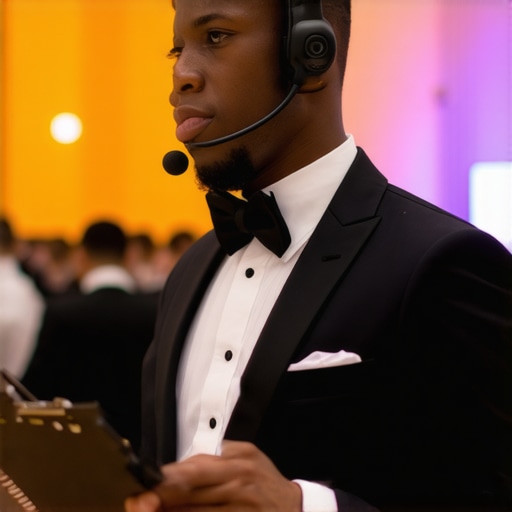
If you have ever been at a gala where the food arrived cold despite a small army of staff, you have seen the ‘crowded kitchen’ trap. According to a study published in the International Journal of Hospitality Management, service efficiency is more closely tied to role specialization than to the total number of employees on the floor. When you hire generalists, they often bump into each other. True luxury comes from having a team that knows top server tips to elevate your event experience, such as ‘silent service’ and anticipatory clearing. For a truly seamless vibe, you need to know how to spot a professional server in an interview who understands the cadence of a high-end meal. Have you ever fallen into this trap of thinking ‘more is better’ only to have it backfire? Let me know in the comments.
The Hidden Danger of the Super-Server Trap
One of the most common ‘oops’ factors I encounter is the tendency to assign the most experienced lead server to the highest-priority VIP table. It sounds logical, right? Put your best person with the CEO or the Bride’s parents. But this is a tactical disaster. Why a lead server should never be assigned a single table is simple: when your leader is busy pouring individual glasses of wine, they lose their ‘macro’ view of the room. They can’t see the bottleneck at the bar or the fact that Table 12 hasn’t received their appetizers. Your lead needs to be a ‘floater’ who can troubleshoot in real-time. This is why why your server lead needs a copy of the event script; they should be the conductor of the orchestra, not the first violinist. They are the ones who ensure that the essential checklist for successful corporate event catering is being followed to the letter across the entire floor, not just at one table.
Mastering the Art of Subtle Efficiency
To truly elevate your event, stop looking at your catering team as a group of food-movers and start seeing them as the engine of your event’s atmosphere. This is a core part of the ultimate guide to corporate event catering logistics. When you have a lean, highly trained team, the energy in the room stays focused on the guests, not the service staff. When I’m planning the ultimate wedding reception meal, I focus on ‘zone defense’ rather than individual table assignments. It ensures that no guest is ever more than five seconds away from catching a server’s eye, without the room feeling cluttered by a sea of uniforms. It is a nuanced balance, but once you see it in action, you will never go back to the ‘throw-more-staff-at-it’ method again.
Forget Paper Checklists and Move to Real-Time Updates
It is one thing to have a plan on paper, but keeping that plan alive during a four-hour gala is another beast entirely. I have retired the old-school printed lists in favor of a shared, cloud-based ‘Hot Sheet.’ We use a simple messaging app with channels dedicated to specific zones—Bar, Buffet, and VIPs. This allows a server at the far end of the room to flag a low ice supply or a broken glass without ever leaving their post. When you are mastering corporate event planning secrets to seamless success, you realize that the faster information moves, the slower your team has to run. This digital pulse is what separates a frantic evening from a fluid one, ensuring the essential checklist for successful corporate event catering is updated in real-time, not after the event is over.
How do I maintain a high-performance service team over time?
Consistency is the dragon we are all chasing. To keep standards from slipping, I implement a ‘Shadow and Lead’ rotation. Every veteran server is paired with a junior member for the first hour of every third event. This isn’t just training; it is a live audit of server skills that make every event stand out. According to the 2024 NACE Catering Trends Report, catering companies that use peer-to-peer mentorship programs see a 22% higher retention rate among their top-tier staff. It creates a culture of accountability where the veteran wants to show off their best ‘silent service’ and the junior learns how to spot a server who hasn’t been briefed on the menu before the client ever notices a mistake. 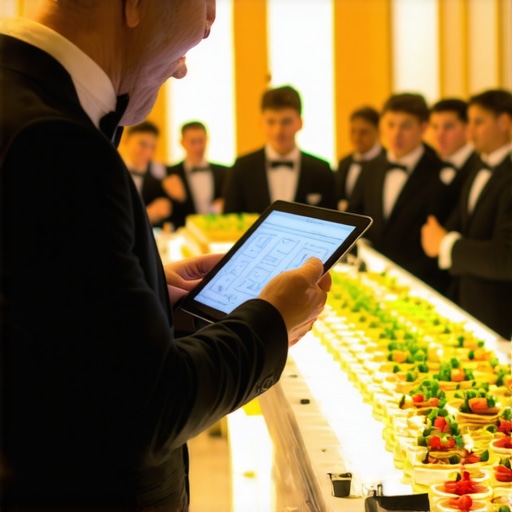
The Tech-Driven Future of the Dining Room Floor
Looking ahead, I believe the next major shift in optimizing server efficiency to enhance event satisfaction will be ‘Predictive Staffing.’ I am already experimenting with simple heat-mapping tools that track guest movement at trade shows. I predict that by 2027, the best corporate event servers for 2025 and beyond will be guided by AI-driven ‘load balancing’ software that anticipates when the coffee station will hit peak capacity based on the keynote speaker’s remaining slides. It sounds like science fiction, but it is just the natural evolution of why your server lead needs a copy of the event script. If we know what is coming, we can be there waiting for it. I want you to try this advanced tip: At your next event, assign one person purely to ‘Flow Observation’—no serving, no clearing, just watching the room’s rhythm for 30 minutes. You will be shocked at the bottlenecks you have been ignoring.
Hard-Won Lessons from a Decade in the Dining Room
Reflecting on hundreds of galas and weddings, I’ve realized that the most expensive mistakes aren’t usually about the food—they’re about the physics of the room. Here are the lightbulb moments that changed my approach to optimizing server efficiency:
- Stop Over-Staffing for the Sake of Status: Many clients think a high headcount is the pinnacle of luxury, but without a clear hierarchy, you just end up with more people standing around. It’s better to have eight elite pros than twelve unbriefed temps who lack the top server tips to elevate your event experience.
- The Lead Server is a Tactical Asset: Never tie your strongest person to a single VIP table. Why a lead server should never be assigned a single table becomes obvious the moment a bottleneck forms at the bar and there’s no one free to redirect the team.
- Distance Prevents Traffic: That fifteen-foot gap between the cake and the coffee isn’t a nuisance; it’s a release valve. By separating them, you’re respecting the guest’s personal space and their time.
[image_placeholder_e]
Tools I Use to Keep the Chaos at Bay
I didn’t develop these strategies in a vacuum. To stay ahead of the curve, I rely on a few specific resources that bridge the gap between simple catering and complex logistics. If you want to dive deeper, I recommend looking at the difference between a staffing agency and a service partner to understand how to properly vet your labor source. I also religiously follow the annual NACE Catering Trends Report for data on evolving guest expectations. For real-time coordination, I suggest skipping the clunky walkie-talkies and using a dedicated channel on a platform like Slack—it allows for a digital pulse that paper checklists simply can’t match. Finally, ensuring the best corporate event servers for 2025 are on your team requires looking for people who view service as a performance, not a chore.
Your Path to a Seamless Event Flow
The secret to a truly unforgettable evening isn’t found in the grand gestures, but in the total absence of friction. When you prioritize movement, communication, and strategic staffing, you create a space where guests can actually enjoy the celebration rather than navigating a series of obstacles. Whether you are hiring a professional team or managing your own vendors, remember that the energy of the room is the direct result of your floor plan’s efficiency. Don’t be afraid to break tradition if it means a better experience for your guests. What is the one traffic jam you see at every event you attend? Let me know in the comments!