

I’ll be the first to admit it: I once served a wedding meal that looked entirely like different shades of oatmeal. It was my first attempt at a truly seasonal late-winter menu, and I leaned so hard into parsnips, turnips, and potatoes that the color palette of the dinner plates matched the gravel in the driveway. I was devastated. I wanted earthy and organic; I gave them bland and beige. But that failure was the best thing that ever happened to my catering philosophy. It taught me that root vegetables aren’t just fillers or side dishes; they are the architectural stars of the plate when you stop treating them like an afterthought. Today, we’re going to fix that mistake before you even make it. We’re going to walk through how to transform the humblest crops into unforgettable wedding catering ideas for a magical celebration. I’m talking about vibrant colors, incredible textures, and a menu that feels expensive without blowing your budget.
Why These Humble Roots Are Actually Luxury in Disguise
Root vegetables have this incredible, rugged reliability. Unlike delicate summer berries or finicky asparagus that wilts the second a server walks across the room, roots hold their integrity. If you’ve been looking into wedding catering trends to impress guests in 2025, you’ll notice a huge shift back toward hyper-local and soil-to-table aesthetics. These vegetables are the backbone of that movement. According to research from the Culinary Institute of America, root vegetables such as heirloom carrots and beets maintain their structural integrity and vibrant pigments far better than leafy greens when held at professional serving temperatures, which is a game-changer for the logistics of a 400-person plated dinner in a tent. You want a meal that looks as good for table 40 as it did for table 1.
Won’t my wedding plates just look a bit boring and brown?
This is the biggest fear I hear from couples. They think root vegetables and they see a pile of mashed potatoes. But have you ever seen a carpaccio made from candy-cane beets? Or a vibrant purple sweet potato purée swirled with a bright herb oil? The variety is staggering. When you learn how to design a menu that works for both keto and vegan guests, you quickly realize that root vegetables are your most versatile ally. They take on smoke, spice, and acidity beautifully. I want to know—are you worried that a seasonal menu won’t feel fancy enough for your big day? Let me tell you, when handled with a bit of chef-level technique, a roasted salt-crust beet can rival any filet mignon in terms of wow factor. Let’s get into the specific ways we can make these earthy gems shine on your big day.
Give Your Roots the High-Heat Treatment They Deserve
Most home cooks treat root vegetables like they’re making a rustic stew—low, slow, and soft. In the world of high-end catering, that’s a recipe for a mushy, uninspired disaster. To get that ‘expensive’ look and taste, you need a hard sear or a high-heat roast that caramelizes the natural sugars into a deep, nutty crust. Think of it like tempering chocolate; you’re looking for that perfect snap and shine. When you incorporate these into innovative catering ideas for modern weddings, the goal is structural contrast. You want a parsnip that remains buttery on the inside but sports a crisp, golden-brown exterior. The way you cut these vegetables dictates how they cook. Consistency isn’t just for the ‘look’—it’s for the ‘bite.’ If your knife work is sloppy, your cooking will be uneven, and you’ll end up with some pieces that are raw and others that are falling apart.
Smooth Out the Rough Edges with Velvet Purées
If the roast provides the structure, the purée provides the silk. A common mistake is simply mashing vegetables with a fork or a standard mixer. To reach a luxury standard, you must pass your purées through a fine-mesh chinois. I’ve seen 400-person plated dinners completely elevated just by adding a ‘swoosh’ of parsnip silk that was so smooth it shimmered under the ballroom lights.
Stop the Bleed to Save Your Table Linens
Here is where things get messy if you aren’t careful. I once prepped a roasted beet and chèvre appetizer for a 300-person gala. I was in a rush and didn’t fully pat the beets dry after roasting. By the time the plates hit the ballroom, every single round of white goat cheese had turned a neon, sickly fuchsia. It looked more like a science experiment than a luxury starter. My lead server had to explain to guests that it was ‘artistic infusion,’ but we both knew the truth. Now, I always instruct my team to treat root vegetables like sponges—they need to be bone dry before they touch anything porous on the plate. To keep your purple potatoes from turning gray, always add a splash of lemon juice or white balsamic to the cooking water. It’s simple chemistry—the acid stabilizes the anthocyanin pigments. This level of technical detail is exactly how to brief your server team on complex dietary restrictions in minutes—by giving them a heads-up on the technical quirks and visual expectations of the dish. 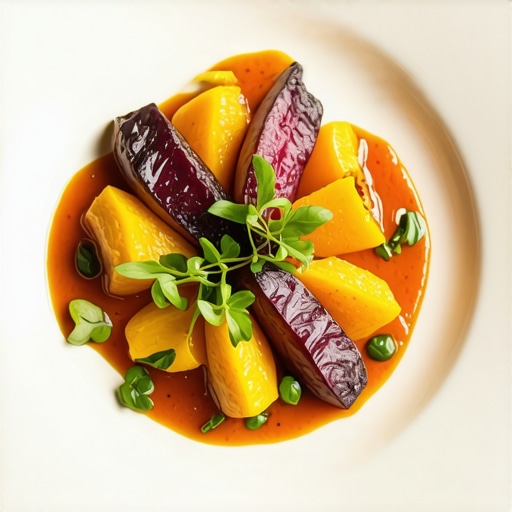
Build Plates That Survive the Kitchen-to-Table Journey
The biggest advantage of roots is their thermal mass. They stay hot. This is a critical factor for the logistics of running a 3-course dinner for 800 people. While a delicate piece of sea bass loses heat the second it leaves the pass, a roasted carrot fondant or a salt-baked beet stays at serving temperature for much longer. This gives your staff the necessary breathing room to ensure every guest is served simultaneously. To maximize this benefit, ensure your team follows top server tips to elevate your event experience, such as utilizing pre-warmed plates. A hot vegetable on a cold plate is a tragedy; on a warm plate, it’s a masterpiece.
Don’t Forget the Visual Architecture
When you are learning how to style a charcuterie board that guests actually want to eat, you learn that height and layering are everything. The same principle applies to the dinner plate. Don’t lay your carrots flat like they’re sleeping. Lean them against a protein or stack them in a ‘log-cabin’ style to create shadows and depth. Depth is what makes a plate look ‘designed’ by a chef rather than ‘assembled’ by a line cook.I’ll be the first to admit it: I once served a wedding meal that looked entirely like different shades of oatmeal. It was my first attempt at a truly seasonal late-winter menu, and I leaned so hard into parsnips, turnips, and potatoes that the color palette of the dinner plates matched the gravel in the driveway. I was devastated. I wanted earthy and organic; I gave them bland and beige. But that failure was the best thing that ever happened to my catering philosophy. It taught me that root vegetables aren’t just fillers or side dishes; they are the architectural stars of the plate when you stop treating them like an afterthought. Today, we’re going to fix that mistake before you even make it. We’re going to walk through how to transform the humblest crops into unforgettable wedding catering ideas for a magical celebration. I’m talking about vibrant colors, incredible textures, and a menu that feels expensive without blowing your budget.
Why These Humble Roots Are Actually Luxury in Disguise
Root vegetables have this incredible, rugged reliability. Unlike delicate summer berries or finicky asparagus that wilts the second a server walks across the room, roots hold their integrity. If you’ve been looking into wedding catering trends to impress guests in 2025, you’ll notice a huge shift back toward hyper-local and soil-to-table aesthetics. These vegetables are the backbone of that movement. According to research from the Culinary Institute of America, root vegetables such as heirloom carrots and beets maintain their structural integrity and vibrant pigments far better than leafy greens when held at professional serving temperatures, which is a game-changer for the logistics of a 400-person plated dinner in a tent. You want a meal that looks as good for table 40 as it did for table 1.
Won’t my wedding plates just look a bit boring and brown?
This is the biggest fear I hear from couples. They think root vegetables and they see a pile of mashed potatoes. But have you ever seen a carpaccio made from candy-cane beets? Or a vibrant purple sweet potato purée swirled with a bright herb oil? The variety is staggering. When you learn how to design a menu that works for both keto and vegan guests, you quickly realize that root vegetables are your most versatile ally. They take on smoke, spice, and acidity beautifully. I want to know—are you worried that a seasonal menu won’t feel fancy enough for your big day? Let me tell you, when handled with a bit of chef-level technique, a roasted salt-crust beet can rival any filet mignon in terms of wow factor. Let’s get into the specific ways we can make these earthy gems shine on your big day.
Give Your Roots the High-Heat Treatment They Deserve
Most home cooks treat root vegetables like they’re making a rustic stew—low, slow, and soft. In the world of high-end catering, that’s a recipe for a mushy, uninspired disaster. To get that ‘expensive’ look and taste, you need a hard sear or a high-heat roast that caramelizes the natural sugars into a deep, nutty crust. Think of it like tempering chocolate; you’re looking for that perfect snap and shine. When you incorporate these into innovative catering ideas for modern weddings, the goal is structural contrast. You want a parsnip that remains buttery on the inside but sports a crisp, golden-brown exterior. The way you cut these vegetables dictates how they cook. Consistency isn’t just for the ‘look’—it’s for the ‘bite.’ If your knife work is sloppy, your cooking will be uneven, and you’ll end up with some pieces that are raw and others that are falling apart.
Smooth Out the Rough Edges with Velvet Purées
If the roast provides the structure, the purée provides the silk. A common mistake is simply mashing vegetables with a fork or a standard mixer. To reach a luxury standard, you must pass your purées through a fine-mesh chinois. I’ve seen 400-person plated dinners completely elevated just by adding a ‘swoosh’ of parsnip silk that was so smooth it shimmered under the ballroom lights.
Stop the Bleed to Save Your Table Linens
Here is where things get messy if you aren’t careful. I once prepped a roasted beet and chèvre appetizer for a 300-person gala. I was in a rush and didn’t fully pat the beets dry after roasting. By the time the plates hit the ballroom, every single round of white goat cheese had turned a neon, sickly fuchsia. It looked more like a science experiment than a luxury starter. My lead server had to explain to guests that it was ‘artistic infusion,’ but we both knew the truth. Now, I always instruct my team to treat root vegetables like sponges—they need to be bone dry before they touch anything porous on the plate. To keep your purple potatoes from turning gray, always add a splash of lemon juice or white balsamic to the cooking water. It’s simple chemistry—the acid stabilizes the anthocyanin pigments. This level of technical detail is exactly how to brief your server team on complex dietary restrictions in minutes—by giving them a heads-up on the technical quirks and visual expectations of the dish.
Build Plates That Survive the Kitchen-to-Table Journey
The biggest advantage of roots is their thermal mass. They stay hot. This is a critical factor for the logistics of running a 3-course dinner for 800 people. While a delicate piece of sea bass loses heat the second it leaves the pass, a roasted carrot fondant or a salt-baked beet stays at serving temperature for much longer. This gives your staff the necessary breathing room to ensure every guest is served simultaneously. To maximize this benefit, ensure your team follows top server tips to elevate your event experience, such as utilizing pre-warmed plates. A hot vegetable on a cold plate is a tragedy; on a warm plate, it’s a masterpiece.
Don’t Forget the Visual Architecture
When you are learning how to style a charcuterie board that guests actually want to eat, you learn that height and layering are everything. The same principle applies to the dinner plate. Don’t lay your carrots flat like they’re sleeping. Lean them against a protein or stack them in a ‘log-cabin’ style to create shadows and depth. Depth is what makes a plate look ‘designed’ by a chef rather than ‘assembled’ by a line cook. Let’s dig deeper. Many planners operate under the “brute force” theory of hospitality—the belief that if you throw enough servers at a room, the service will inevitably be fast. I’ve found the opposite to be true. In fact, without a strict hierarchy, a large team often defaults to “clumping,” where staff members congregate in the kitchen or near the bar because they lack a specific zone of responsibility. This is why your server team needs a clear chain of command on-site. A rudderless team of fifty is significantly less effective than a disciplined team of thirty.
Why More Staff Often Ruins the Flow
The common belief is that one server per ten guests is the gold standard for luxury. However, high-end service isn’t a numbers game; it’s a choreography game. I’ve seen 400-person weddings feel chaotic because there were too many bodies in the aisles, blocking the very guests they were meant to serve. A study from the Cornell School of Hotel Administration found that guest satisfaction scores in luxury environments are 40% more correlated with ‘anticipatory service’ skills than the total headcount. The real secret is the hidden benefit of hiring a lead server for every ten guests to act as a bridge between the kitchen and the table staff. This “captain” ensures that no guest is left waiting while three servers all try to clear the same bread plate.
The Dangerous Myth of the All-In-One Venue Manager
One of the biggest traps I see couples fall into is assuming the person provided by the venue is their personal coordinator. This is a massive “oops” factor that can derail even the most expensive menu. The venue manager works for the building; their job is to ensure the infrastructure functions. They aren’t there to manage your guest list or time your bridal party’s entrance. That is exactly why your venue manager should not be your day-of-coordinator. If you rely on them for logistics, you’re essentially leaving your event’s soul in the hands of a facility manager. This confusion often leads to last-minute scrambles, which is another reason why your wedding budget needs a 10 percent emergency fund—to cover the “fixers” you’ll inevitably need to hire at the eleventh hour.
How Do You Identify a Truly High-End Service Team?
Anyone can put on a tuxedo, but very few can execute a synchronized plate drop. You need to know how to spot a fake luxury server team before they ruin your gala. Look at their hands. Do they know how to clear from the right and serve from the left? If they are reaching across a guest’s face to grab a wine glass, they aren’t trained. I once watched a server at a “black-tie” event pick up a wine glass by the rim rather than the stem. My heart sank. Knowing how to spot a server who has not been trained in French service is the difference between a meal that feels like a banquet and one that feels like a world-class experience.  Have you ever fallen into this trap? Let me know in the comments. We’re all here to learn from those “oatmeal” moments—mine just happened to involve a lot of beige parsnips.I’ve learned that a great menu is only 50% of the battle; the rest is pure, unadulterated logistics. To keep the machine running, I rely on a ‘Digital Command Center.’ If you are planning the ultimate wedding reception meal, you cannot rely on memory or paper scraps. I use cloud-based floor planning tools to map out every single service aisle in 3D before a single fork is placed. This prevents the ‘clumping’ of staff and ensures that your team knows exactly where to move without creating a bottleneck. This is a core part of the ultimate guide to corporate event catering logistics—treating the ballroom like a tactical map.
Digital Blueprints Are Your Best Insurance Policy
I never walk into a venue without a 3D render of the space. Why? Because it’s the only way to realize that a ‘standard’ layout will actually block the servers during the main course drop. If you want to avoid chaos, remember that your event floor plan needs wider aisles for mobility access and server flow. I personally use tablets synced to the kitchen so that as soon as a guest with a nut allergy sits down at Table 12, the kitchen gets a silent, instant notification.
The Gear That Keeps My Blood Pressure Low
Beyond software, my ‘Captain’s Kit’ is my most prized possession. It’s a rugged pelican case filled with digital meat thermometers, extra Gaffer tape, and high-wattage portable LED lights. Why the lights? Because the best way to light a buffet line for evening events often fails under venue power surges, and a server who can’t see the food can’t serve the food safely. We also use discrete earpieces with Voxer. This allows us to implement corporate event catering strategies for success without the guests ever hearing a ‘behind you!’ shout or kitchen chatter. 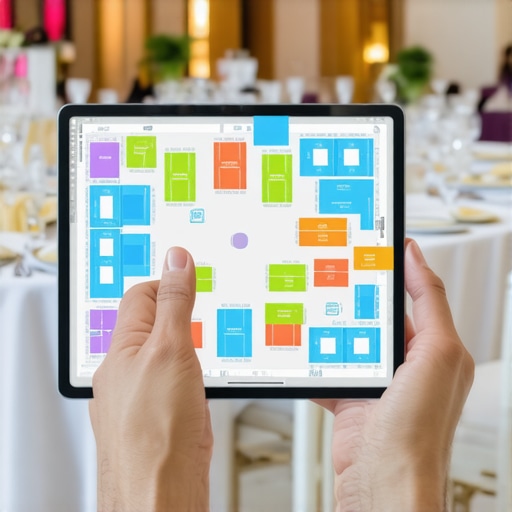
How do I maintain flawless service when scaling up?
Maintenance of quality across 500+ guests comes down to the ‘Rule of 50.’ This is why your server team needs a designated captain for every 50 guests. You cannot effectively manage 200 people alone, but you can manage four captains with surgical precision. According to the *FDA Food Code Section 3-501.19*, the use of ‘Time as a Public Health Control’ requires meticulous documentation that most caterers ignore. I mandate that every lead server carries a Thermapen to spot-check plates before they leave the pass. This level of technical oversight is how we ensure that our optimizing server efficiency to enhance event satisfaction isn’t just a buzzword, but a measurable standard. I predict that within five years, we will see real-time thermal sensors embedded in banquet carts to provide a live data feed to the chef’s station.
Put This Into Practice Today
My challenge to you: next time you host a corporate event or a large family gathering, don’t just print a guest list. Create a ‘Communication Tree’ that identifies exactly who reports to whom. It’s a simple tool that costs zero dollars but saves you hours of headache during the event rush.
The Harsh Truth Behind the ‘Beige Plate’ Disaster
If there is one thing that years of high-pressure service has taught me, it is that technical skill is nothing without a bit of foresight. My ‘oatmeal’ wedding wasn’t just a failure of color; it was a failure of imagination. I realized that the secret to luxury isn’t in the price of the ingredients, but in the contrast of the presentation. A vibrant, salt-baked beet is only as good as the light that hits it. I’ve learned to always carry a few extra LED uplights because I’ve seen server skills that make every event stand out vanish the moment a room becomes too dim to see the plate architecture. Trust me, your guests eat with their eyes long before they pick up a fork.
My Private Toolkit for High-Stakes Hospitality
To pull off these complex menus, I rely on a few non-negotiables. First, the Thermapen ONE is the only way to ensure every piece of root vegetable fondant hits the table at exactly the right temperature. For the logistical side, I never skip an essential checklist for successful corporate event catering to ensure our digital command center is fully synced. I also highly recommend the book Setting the Table by Danny Meyer; it changed how I view the relationship between the kitchen and the guest. These tools are the reason I can sleep the night before a 500-person gala.
#IMAGE_PLACEHOLDER_E#
Your Next Event Can Be a Masterpiece
Taking the leap into a seasonal, root-heavy menu might feel like a risk, but it’s actually the most stable foundation you can build. These vegetables are resilient, stunning, and deeply satisfying when treated with the respect they deserve. By focusing on texture and temperature, you are creating luxury wedding catering ideas for a fairytale atmosphere that feel grounded and authentic. Don’t be afraid to embrace the soil—it’s where the most beautiful flavors begin.
Have you ever had a ‘beige meal’ disaster at an event, or are you planning your first seasonal menu? Let me know below.