

I remember standing in the middle of a stunning garden venue, watching a delivery truck sink six inches into the mud just forty-eight hours before the ceremony. I’d spent months refining my spreadsheets, meticulously comparing luxury wedding catering ideas for a fairytale atmosphere to find the perfect fit. But in that moment, as the driver looked at me and mentioned the cost of a specialized tow and a temporary plywood road, I realized my ‘perfect’ budget was a house of cards. I hadn’t planned for the mud. I hadn’t planned for the reality that live events are chaotic, unpredictable beasts that do not care about your Excel formulas. Today, I’m going to show you why a 10 percent emergency fund isn’t a luxury—it’s the only thing that will keep you from losing your mind when the inevitable happens.
Why Your Spreadsheet is Probably Lying to You
To be totally honest, I made a massive rookie mistake early in my planning days: I treated my budget like a shopping list rather than a living document. I accounted for the steak and the champagne, but I completely ignored the truth about corkage fees and those sneaky ‘service charges’ that aren’t actually tips for the staff. When you are planning the ultimate wedding reception meal, you’re often quoted a base price that looks great on paper, but by the time you add in the logistics, you’re suddenly thousands over. This is where that 10 percent buffer saves the day. It’s your ‘peace of mind’ tax. It covers the extra hour of photography when the speeches run long, or the sudden need for a heated tent with sidewalls because a cold front decided to crash your outdoor party.
Is a 10 percent contingency really worth the extra savings?
You might be thinking that 10 percent is a lot of money to leave ‘unused’ until the end. However, according to experts at Brides.com, hidden costs like taxes, gratuities, and vendor meals can easily bloat a budget by 20% to 30% if you aren’t vigilant. Having that dedicated emergency fund ensures you aren’t putting your honeymoon on a high-interest credit card at the last second. It’s about being realistic rather than optimistic. Whether it’s handling a liquor shortage mid-way through the night or realizing you need more servers for a seamless wedding reception, that cash gives you the power to say ‘fix it’ instead of ‘how will we pay for this?’. Have you ever faced an unexpected wedding bill that made your stomach drop? Tell me about your closest budget call in the comments below. We’re about to dive into exactly where those hidden costs hide so you can protect your wallet before the first deposit is even signed.
Stop Guessing and Start Calculating Your Server Ratios
To move from a hopeful spreadsheet to a bulletproof reality, you have to treat your service staff like a high-performance pit crew. In event planning, labor isn’t just a line item; it is the engine. If you under-calculate the number of hands on deck, your dinner service will stall, and you’ll end up paying overtime for a team that is exhausted and moving at half speed. I always look at the math behind hiring extra servers for a flowing champagne reception before I even pick out the linens. For a seated dinner, you need to think about the friction of the room. If the kitchen is fifty yards from the furthest table, your staff is spending 40 percent of their time just walking. That is why I advocate for a higher staff-to-guest ratio than the industry ‘minimum.’ When you invest in more hands upfront, you avoid the ‘panic hire’ fees that caterers charge when they have to scramble for last-minute help.
A Clear Chain of Command Saves More Than Just Time
I once managed a high-stakes corporate gala where three different servers asked me where the vegan meals were. They were running around like headless chickens because there was no central hub for information. That day, I learned the hard way that why your server team needs a clear chain of command on-site is about financial efficiency as much as it is about service. When there is a designated captain, problems get solved in seconds instead of minutes. Minutes cost money. By ensuring your catering lead has a direct line to your event planner, you eliminate the ‘telephone game’ that leads to double-poured drinks or forgotten dietary requirements. 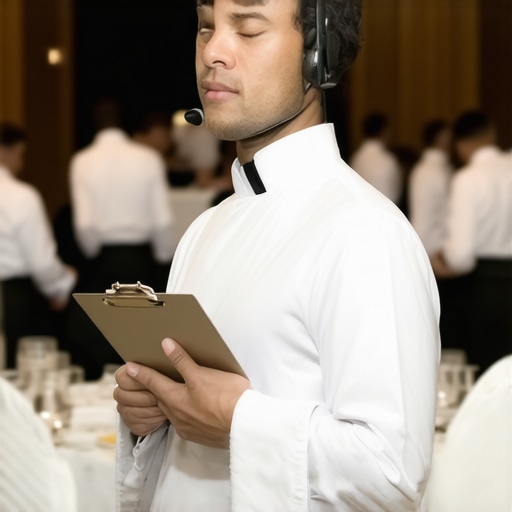
The $500 Fork and Why You Must Audit Every Rental Pallet
Let me tell you about the time I didn’t check the rental crates until an hour before the doors opened. We were short fifty forks for a 400-person gala. I had to pay a $200 ’emergency delivery fee’ plus the cost of the runner’s time just for a few pieces of stainless steel. It was the most expensive silverware I’ve ever seen. This is why you must learn how to audit your rental order for missing water glasses and utensils the moment the truck arrives. Don’t assume the warehouse packed it correctly. If you find the error four hours early, the rental company fixes it on their dime. If you find it an hour before dinner, it’s coming out of your 10 percent emergency fund.
How do you stop the clock before the fees kick in?
The most common way budgets bleed out is through ‘the slow creep’ of the event schedule. When the toasts go fifteen minutes long and the band plays an extra encore, you aren’t just paying for the ‘fun’—you are paying for every server, bartender, and security guard to stay on the clock. Mastering the ultimate guide to corporate event catering logistics means building hard stops into your evening. I now use a ‘pre-pouring strategy’ to keep things moving. By knowing why pre-pouring water is the secret to a fast service start, you can shave twenty minutes off the transition from cocktail hour to dinner. That twenty minutes across a staff of twenty people is nearly seven hours of saved labor costs. It’s about being a tactical operator of your own timeline, ensuring you keep your event schedule on track without rushing guests while protecting your bottom line.
Cheap labor is the most expensive mistake you will make
Most planners think they are being savvy by trimming the labor line item, but in my fifteen years of experience, I’ve seen this backfire more than any other ‘saving’ strategy. There is a persistent myth that anyone can carry a tray, leading many to overlook the hidden risks of hiring student servers for high-end events. When you hire based on price rather than proficiency, you aren’t just saving fifty dollars an hour; you are gambling with the entire guest experience. Professional servers don’t just ‘bring food’; they manage the psychology of the room. They anticipate a guest’s need for water before the glass is empty, which optimizes server efficiency to enhance event satisfaction without the guest ever realizing why they feel so well-attended. I’ve seen ‘budget’ teams freeze during a minor kitchen delay, while a pro team pivots so seamlessly that the guests think the delay was a planned intermission. Have you ever fallen into the trap of hiring ‘warm bodies’ instead of experts? Let me know in the comments how that worked out for you.
Why does your server count actually dictate how much guests drink?
It sounds counterintuitive, but a higher staff-to-guest ratio can actually control your liquor liability and overall bar costs. According to research from the Cornell University School of Hotel Administration, professional service staff are significantly better at monitoring consumption levels and pacing service than overworked, under-trained teams. When a server isn’t rushed, they can maintain ‘mindful service,’ ensuring that guests aren’t just being topped off automatically, which reduces waste and prevents over-intoxication. This is one of those effective catering strategies for corporate event impressiveness that also protects your legal bottom line. 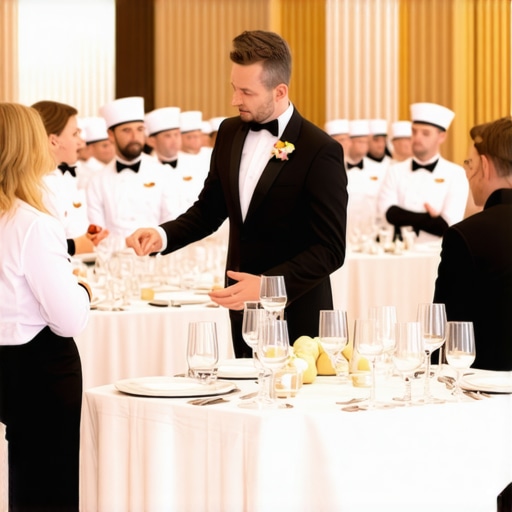
The steak dinner trap that kills your timeline
One of the most common ‘oops’ factors I see in high-volume events is the insistence on a complex menu for a massive crowd. Let’s be real: the problem with serving steak at a 500-person business lunch isn’t the meat itself—it’s the physics. To get 500 medium-rare filets to the table simultaneously requires a level of logistical precision that most venues simply cannot sustain without a massive, highly-trained staff. If you don’t have the right ratio, the first table is finished before the last table even sees their plate. This creates a disjointed energy that no amount of fancy decor can fix. To avoid this, you must know how to spot a fake luxury server team before they ruin your gala. A real luxury team will be honest about what their kitchen can actually handle. When checking your essential checklist for successful corporate event catering, prioritize the ‘flow’ over the ‘flare.’ It is always better to serve a perfectly executed, simpler dish than a lukewarm, ‘prestige’ meal that arrives forty minutes late. Remember, your guests will remember the service long after they’ve forgotten exactly what was on the plate.I used to be the guy with a three-ring binder that looked like a telephone book. It was heavy, it was messy, and it was entirely useless when a server dropped a tray and I needed an instant inventory update. Now, I live and die by cloud-based event management software. If you aren’t using a specific tool for your logistics, you’re working ten times harder than you need to. These platforms aren’t just for the ‘planning’ phase; they are for real-time execution. When I’m mastering corporate event planning secrets to seamless success, I need to see exactly where my budget stands and where my staff is positioned in one click. This digital-first mindset is the only thing that allows me to scale without sacrificing the tiny details that my clients pay for.
Why a digital source of truth beats a physical binder every time
I personally use integrated project management tools because they allow for ‘version control.’ When the kitchen changes a sauce forty-five minutes before service, I can update the digital file and every tablet on the floor reflects that change instantly. This prevents the nightmare of a server misinforming a guest because they were looking at an old printout. 
How do I maintain elite service levels as I scale up?
The secret isn’t just hiring more people; it’s building better systems. I’ve found that the only way to keep quality from dipping as your events grow is to create ‘micro-briefings.’ I’ve perfected a method on how to brief your server team on complex dietary restrictions in minutes using mobile devices at each station. This ensures that the best corporate event servers for 2025 aren’t just guessing; they are moving with certainty. According to the National Association for Catering and Events (NACE), companies that implement standardized digital communication protocols see a 30 percent reduction in service-related guest complaints. This data-driven approach is the bedrock of modern corporate event catering strategies for success.
The future of event logistics belongs to the data-driven
Looking ahead, I predict we will see AI-integrated floor plans that can predict traffic bottlenecks before they happen based on real-time guest movement patterns. We are moving away from ‘gut feelings’ and toward predictive analytics. But before the robots take over, you need to ensure your venue can actually handle the tech. Always learn how to vet a venue for corporate wifi stability and speed before you commit to a digital-first strategy. If your connection drops in a basement ballroom, your high-tech plan becomes a high-tech brick. My challenge to you: For your next gala or wedding, ditch the paper BEOs for your team captains and give them access to a shared digital dashboard. You’ll be amazed at how much ‘noise’ disappears from your radio when everyone is looking at the same live data.
The Hard-Won Truths I Only Learned by Failing Fast
After a decade in the weeds, I’ve realized that the ‘perfect event’ isn’t the one where nothing goes wrong; it’s the one where the guest never sees the correction. First, never underestimate the power of the ‘staff meal.’ A hungry server is a distracted server, and distracted servers lead to missed details. I always ensure my team eats before the guests arrive. Second, remember that the venue’s ‘capacity’ is a marketing number, not a logistical one. Always subtract 10 percent from that number if you want a room that flows without guests bumping elbows. Finally, I’ve learned that wedding catering tips from industry experts are only as good as the team you have on the ground. You can have the most expensive menu in the world, but if your server doesn’t know how to carry a tray or read a guest’s body language, the prestige of the meal is lost entirely.
My Go-To Kit for Bulletproof Event Execution
When I’m onsite, I don’t rely on luck; I rely on a specific set of tools that have never failed me. For floor plans and guest flow, I swear by Allseated; it allows for real-time 3D walkthroughs that catch bottlenecks before the first guest arrives. For team communication, we use Slack with specific channels for ‘Kitchen,’ ‘Floor,’ and ‘VIPs’ to keep the radio chatter down. If you’re looking for deep industry insights, the NACE (National Association for Catering and Events) resource library is my primary source for staying ahead of labor trends. I also highly recommend reviewing these top server tips to elevate your event experience to keep your staff’s skills sharp and consistent between busy seasons.
Your Blueprint for an Event That Actually Lets You Breathe
Planning is intense, and the pressure can feel overwhelming, but you have the tools now to move from a state of constant reaction to proactive leadership. By implementing these corporate event catering strategies for success, you aren’t just checking boxes; you are crafting an atmosphere of excellence. Don’t be afraid to demand more from your vendors and even more from your own logistics. The goal is to reach a point where you can stand in the back of the room, watch the service unfold, and see the magic happen without needing to step in to solve a crisis. You’ve done the work, you’ve built the buffer, and now it’s time to see the results. What was the one ‘hidden cost’ or logistical hiccup that surprised you most at your last event? Let me know in the comments below!