

I’ll never forget the sinking feeling in my stomach at my best friend’s reception. The venue was a legendary steakhouse, the kind with dark wood and taxidermy on the walls. The main course arrived: massive, glistening cuts of beef. And then, there was Sarah. She sat there with a plate of plain white rice and a sprig of parsley. It was embarrassing. I had spent months planning the ultimate wedding reception meal, but I completely overlooked the logistical reality of a kitchen that defines ‘protein’ exclusively as ‘cow.’ That night was a turning point for me. I realized that a beautiful venue and high-end beef mean nothing if ten percent of your guests are leaving hungry and frustrated. Today, I’m going to walk you through the exact steps to ensure your vegan friends aren’t secretly ordering Uber Eats from the parking lot. We are going to bridge the gap between a meat-centric venue and a modern, inclusive menu that leaves everyone satisfied. [image_placeholder_1]
Stop Treating Plant-Based Guests Like an Afterthought
A wedding is about hospitality. When you invite someone into your inner circle to celebrate, you’re promising to take care of them. My biggest mistake early on was thinking that ‘notifying the kitchen’ was enough. It isn’t. I’ve learned the hard way that you need to be proactive. If you don’t advocate for those guests, they end up with a ‘side of sides’—a sad pile of mashed potatoes (which probably have butter anyway) and some soggy green beans. Why does this matter right now? Because food culture has shifted. According to The Vegan Society, there are approximately 629,000 vegans in the UK alone as of 2019, and the trend is globally mirrored, with plant-based diets becoming a standard expectation rather than a niche request. If you ignore this, you aren’t just being traditional; you’re being a bad host. You need to brief your server team on complex dietary restrictions before the first appetizer even leaves the pass. This isn’t just about the food; it’s about the delivery. You might even consider why your event needs a dedicated staff member for dietary requests to handle these nuances professionally. Think of it as part of wedding catering tips from industry experts—the pros never leave a guest behind.
Will a Steakhouse Chef Actually Take a Vegan Seriously?
It’s a valid fear. You worry the chef will roll their eyes or, worse, just remove the meat from a dish and call it a day. But here is the secret: most high-end chefs actually enjoy a challenge when they are given enough lead time. The disaster happens when the request comes in at 7:00 PM on a Saturday night during the rush. By optimizing server efficiency, you ensure that these special orders are tracked and delivered with the same grace as the filet. Have you ever been to a wedding where you had to ‘scavenge’ for food because of a dietary restriction? I want to hear your horror stories in the comments. Managing a meat-heavy menu requires a strategy, much like effective catering strategies for corporate event impressiveness, where every detail is mapped out. It’s time to move past the iceberg lettuce salad and toward a meal that actually satisfies. We need to look at the case for seasonal vegetables in high-volume catering as a way to elevate the plate from a garnish to a masterpiece. When you treat the vegan option with the same respect as the prime rib, your guests will notice. It’s the difference between a good party and an unforgettable celebration.
Get Your Chef on Board Before the Menu is Set
Most hosts treat the kitchen like a black box—you put an order in, and food comes out. In a steakhouse or a meat-heavy venue, this passive approach is how you end up with the dreaded ‘vegetable medley’ of doom. I remember a wedding I coordinated at a famous BBQ smokehouse. The chef was legendary for his brisket, but he looked at me like I had three heads when I mentioned vegan guests. Instead of just sending an email, I sat down with him and asked, ‘What’s the most complex vegetable dish you can make with your existing prep?’ By engaging his ego rather than just giving a command, we turned a potential disaster into a roasted cauliflower steak with a chimichurri that guests were actually trying to steal from the vegan table. This is why you need to choose a catering style based on your venue size and kitchen capability early. If the kitchen is built for high-heat searing, lean into that for your plant-based options too. Don’t ask a grill master to steam delicate dumplings; ask them to char high-quality seasonal produce.
Audit Your Catering Contract for Headcount Deadlines
Timing is your best friend when dealing with dietary restrictions. You cannot expect a meat-focused kitchen to have high-end vegan ingredients sitting in the walk-in ‘just in case.’ You must be firm with your guests about RSVPs. I’ve seen events descend into chaos because five unexpected vegans showed up at a plated dinner. This is exactly why your catering contract needs a firm headcount deadline. When the kitchen has a hard number ten days out, they can source the right oils, grains, and fresh produce to make the plant-based meal feel intentional, not like an emergency. 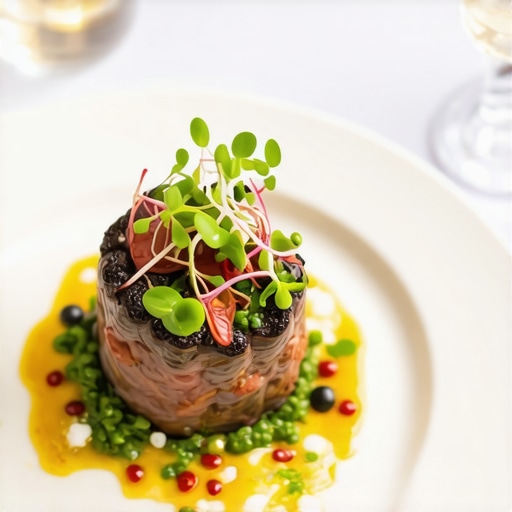
Design One High-Impact Plate That Wins Over Everyone
Stop trying to offer five different dietary options. It dilutes the quality and confuses the kitchen. The most efficient strategy I’ve found is to create one ‘Universal’ alternative dish. You want a plate that is naturally gluten-free, vegan, and nut-free but still looks like a $50 entree. It sounds like a tall order, but learning how to design a menu that works for both keto and vegan guests is the ‘holy grail’ of modern event planning. Focus on umami-rich ingredients like mushrooms, miso, or balsamic reductions to provide the depth that meat-eaters usually miss. When the plate looks as beautiful as the prime rib, your vegan guests feel like VIPs instead of a burden.
Train Your Servers to Spot the Gaps
The best meal in the world fails if it’s delivered by a server who doesn’t know what’s in it. I once watched a server at a high-end gala tell a guest a soup was vegan, only for the guest to find a piece of pancetta at the bottom. It was a nightmare. You have to know how to spot a server who hasn’t been briefed on the menu before the doors open. During the pre-shift meeting, quiz the staff. Ask them specifically: ‘Which sauce has butter?’ or ‘Is there honey in this dressing?’ By optimizing server efficiency to enhance event satisfaction, you create a safety net for your guests. If a server is confident about the ingredients, the guest relaxes, and the entire energy of the table shifts from anxiety to enjoyment.
Timing Matters More Than Your Wagyu Upgrade
Everyone tells you to spend your budget on the highest grade of beef, but in my experience, the logistics of the plate-to-table journey work much harder for your reputation than the price per pound of meat. You can have the best chef in the city, but if they are plating in a kitchen that is too small for the headcount or far from the dining room, your guests are getting a tepid meal. This is where cold plates become the enemy of a perfect filet mignon. A study by researchers at the Cornell University School of Hotel Administration on hospitality service sequences found that the time elapsed between finishing a plate and it hitting the guest’s table is the single biggest predictor of guest satisfaction, often outweighing the actual culinary complexity. If that window is more than a few minutes, the perceived quality of the food drops significantly because the texture and temperature of protein and vegetables begin to degrade instantly. 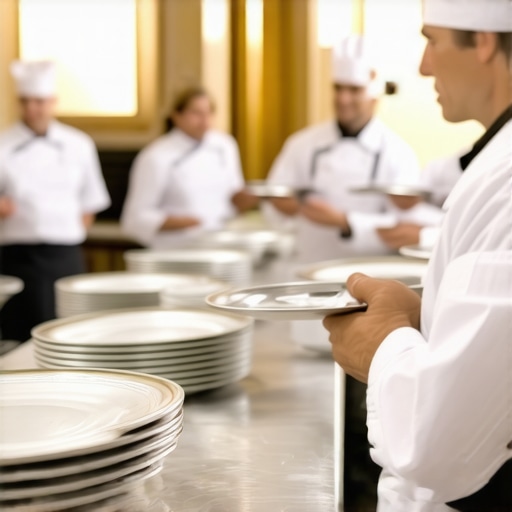
The Deadly Buffer Mistake Most Planners Make
One massive trap I see all the time is the ‘over-crowded ballroom’ syndrome. Planners often want to maximize their guest list to lower the cost per head, but they ignore the physical reality of the service. In my career, I’ve seen that your ballroom floor plan needs a three-foot safety buffer behind chairs to allow for professional movement. When servers have to play Tetris just to deliver a plate, the service slows down, wine gets spilled, and the luxury feel evaporates. It’s a classic sign of how to spot a fake luxury server team; an amateur team won’t tell you the room is too full during the walkthrough because they only care about the headcount. Real pros will insist on the space they need to perform because they know that guest comfort is tied directly to the efficiency of the staff.
Can Your Venue Actually Support a 400-Person Plated Service?
You need to look at the infrastructure, not just the aesthetic. I’ve worked in gorgeous rustic barns where the kitchen was actually a tent in the mud fifty yards away. To pull that off successfully, you need to know how to choose the right staffing ratio for a VIP event. For a high-stakes dinner with difficult geography, you can’t rely on a standard ratio; you need more hands on deck. Furthermore, your server team needs a designated captain for every 50 guests to manage the small, local ‘fires’ that inevitably pop up during a multi-course meal. Without that middle management, the head server or event lead gets overwhelmed by small requests, and the whole system collapses into a chaotic mess. Have you ever fallen into the trap of prioritizing the ‘look’ of a room over the actual service flow? Let me know in the comments.
Give Your Server Lead a Playbook, Not Just a Schedule
It’s easy to get the first hour of a wedding right, but maintaining that momentum through a five-hour gala is where the real work happens. I personally swear by a detailed ‘Run of Show’ that goes far beyond a simple timeline. This is exactly why your server lead needs a copy of the event script. It’s not just about when the toasts happen; it’s about knowing that the moment the CEO finishes the keynote, the coffee service must be 100% ready to deploy. I use a digital floor plan tool because it allows me to visualize my layout in real-time, preventing the ‘clogged vein’ effect of a crowded room. If your leads don’t have the script, they are just reacting to chaos rather than directing a symphony. This level of preparation is what separates a standard meal from unforgettable wedding catering ideas for a magical celebration. When the staff knows the ‘why’ behind the ‘when,’ the service feels effortless. 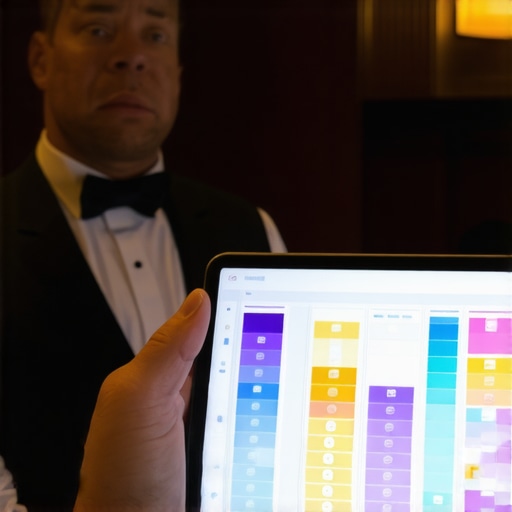
How Can I Keep the Quality High During a Five-Hour Event?
Maintenance is about more than just checking temperatures; it’s about the psychological endurance of your team. To keep a high-end feel, you need to know how to spot a professional server in an interview who has the stamina for luxury environments. In my experience, even the best team will flag without a structured support system. I always ensure there is a dedicated break room for event staff so they can recharge away from guest eyes. Danny Meyer, the founder of Union Square Hospitality Group, often speaks about ‘Enlightened Hospitality,’ noting that if you take care of your staff first, they will naturally take better care of the guests. This is a long-term play. If you burn out your best people with poor logistics, your reputation for excellence will vanish within a single season.
What Tools Do You Recommend for Scaling Your Service?
To scale from small dinners to massive corporate galas, you need to stop relying on memory. I recommend using a cloud-based inventory and staffing platform to track server skills that make every event stand out. This allows you to deploy your ‘A-team’ to the most sensitive tables, like the VIP section or the bride’s immediate family. Additionally, your event budget needs a 10-percent contingency fund specifically for logistics—things like last-minute heater rentals or extra hands for a sudden rainstorm. Looking ahead, I predict we will see AI-integrated headsets that can provide real-time dietary alerts to servers as they approach a table, completely eliminating the ‘human error’ factor in allergy management. By optimizing server efficiency to enhance event satisfaction now, you are building the foundation for that tech-forward future. My challenge to you: At your next event, take ten minutes to walk your floor plan with a literal yardstick to ensure your service paths are clear. You might be surprised at how many bottlenecks you find before the first guest even arrives.
The Hardest Lesson the Grill Master Taught Me
After years of managing events in environments where ‘charred’ and ‘rare’ are the only two settings, I’ve realized that inclusion is actually a test of your leadership, not just your menu. The most significant lightbulb moment for me was realizing that a chef’s reluctance is often just a mask for fear of the unknown. When you provide clear, early directives, that fear turns into creativity. I’ve learned that you must always double-check the ‘hidden’ ingredients; many steakhouses use beef fat even for their sautéed vegetables, so ‘vegan’ needs to be defined explicitly every single time. Moreover, I now know that briefing your server team on complex dietary restrictions is the only way to prevent a well-intentioned dish from becoming a health hazard. Finally, never assume the kitchen has a ‘backup’ plan. If it isn’t on the BEO (Banquet Event Order), it doesn’t exist. You have to advocate for the guest who isn’t in the room yet. [image_placeholder_1]
The Wisdom and Gear Behind Every Flawless Plate
To move from a reactive host to a proactive visionary, you need a toolkit that supports high-level execution. I never step into a venue without ‘Setting the Table’ by Danny Meyer; his philosophy on ‘Enlightened Hospitality’ is the bedrock of how I train teams to value every guest equally. For logistics, I rely heavily on shared digital scripts to ensure the front-of-house and back-of-house are perfectly synced. I also recommend following the Plant Based Foods Association for industry standards that help you design a menu that works for both keto and vegan guests without compromising on flavor. These resources, combined with sharp server skills that make every event stand out, ensure that your ‘meat-heavy’ venue still feels like a sanctuary for every palate.
Make Your Next Celebration a Masterpiece of Inclusion
Choosing a steakhouse or a smokehouse doesn’t have to mean compromising your values of hospitality. By taking control of the narrative early and treating your plant-based options with the same reverence as a prime cut, you elevate the entire experience for everyone. These effective catering strategies are about more than just food; they are about making sure every person at your table feels seen, respected, and well-fed. It’s time to stop settling for the ‘vegetable medley’ and start demanding culinary excellence for every guest. Have you ever felt like a burden at a wedding because of your dietary needs, or have you seen a venue handle a restriction perfectly? Let me know your experiences in the comments below!