

I’ll never forget the sinking feeling I had at a 300-person black-tie wedding three years ago. I stood by the DJ booth, watching the first dance begin, but half the guests weren’t even in their seats. They were trapped in a bottleneck near the door, shuffling their feet while staring longingly at a single bartender struggling with a complex mojito. It was a disaster. I realized then that a party’s energy is directly tied to the speed of the pour. If your guests are spending twenty minutes of their night staring at the back of someone else’s head, you’ve lost the room. Today, I’m going to share exactly how I fixed that, because nobody should miss the best parts of a celebration while waiting for a glass of Chardonnay.
Stop Trapping Your Guests at the Entrance
One of the biggest mistakes I made early on—and one I see planners make constantly—is placing the bar right where people walk in. It seems logical, right? Give them a drink immediately. But the logic of placing the bar away from the entrance is sound: you need to pull the crowd into the room to prevent a ‘logjam’ effect. When I finally started moving the service stations deeper into the venue, the flow improved instantly. Have you ever been to a wedding or gala where the bar line made you want to just head home early? Research from the Cornell School of Hotel Administration suggests that guest satisfaction scores drop significantly for every few minutes spent in a static queue. We are aiming for the ‘Goldilocks Zone’ of under two minutes. [image-placeholder]
Is a two-minute wait even realistic for a huge crowd?
You might think it’s impossible to serve hundreds of people that fast without a small army. It isn’t about just throwing bodies at the problem, though the math behind hiring extra servers certainly helps establish a baseline. It’s actually about prep and physics. Whether you’re coordinating a high-end wedding or looking for top server tips to elevate your event experience, the secret lies in clearing the path before the first guest arrives. Sometimes, that even means realizing why your corporate gala needs a secondary bar for the last hour to handle that final rush before the lights come up. Let’s dive into the specific setup tweaks that turn a sluggish line into a high-speed service.
Eliminate Choice Paralysis to Speed Up the Bar
Efficiency isn’t about rushing; it’s about removing friction. Think of your bar like a highway on-ramp. If everyone has to stop to pay a toll, traffic backs up for miles. The first ‘toll booth’ we have to remove is the decision-making process. I once managed a high-stakes fundraiser where the line hit a standstill because a guest wanted a specific, off-menu cocktail that required the bartender to find a muddler. From that day on, I learned to choose a signature drink that won’t stain the carpet or take five minutes to build. By limiting the ‘rush hour’ menu to beer, wine, and two pre-mixed signature cocktails, you cut transaction time by 60%.
Pre-Pouring is Your Best Friend During the First Thirty Minutes
You should never wait for a guest to ask for water or sparkling wine during the initial surge. I call this the ‘flooding’ technique. At a 500-person tech conference last year, we faced a nightmare scenario: the keynote ended early, and the entire room surged toward the lobby at once. Because we had calculated the math behind hiring extra servers for a flowing champagne reception, we had 300 glasses already filled and waiting on silver trays. The guests didn’t even have to reach the bar; they were greeted ten feet away. #IMAGE_PLACE_HOLDER_B# This also means mastering the ‘backstage’ logistics, like knowing the best way to chill 500 wine glasses in 20 minutes so the drinks stay crisp even in a crowded room.
Build a Dedicated Service Chain of Command
If your servers are all doing the same thing, nobody is leading. High-speed service requires a hierarchy. I’ve found that why your server team needs a designated captain for every 50 guests is the difference between a smooth operation and a chaotic mess. The captain isn’t pouring; they are ‘scanning.’ They see the tray that’s running low on napkins or the wine station that’s about to run out of Cabernet before it happens. This proactive approach to optimizing server efficiency to enhance event satisfaction ensures that the frontline staff can focus entirely on the guest in front of them without looking over their shoulder for supplies.
Separate the Fluids from the Solids
Never put the coffee or the water at the same station as the main bar or the buffet. This is a classic rookie mistake that creates a ‘clumping’ effect. When you look at how to layout a corporate ballroom for maximum networking, you’ll see that high-traffic items should be distributed in the ‘four corners’ of the room. I once had a client insist on putting the dessert and coffee on the same long table; the resulting bottleneck meant that guests who just wanted a quick caffeine fix were trapped behind forty people waiting for cake. Now, I always advise that your dessert buffet needs a separate line for coffee and tea to keep the energy moving and ensure people are back on the dance floor in record time. Even the most complex events, like the logistics of a 400-person plated dinner in a tent, rely on these simple spacing rules.Waiters with white gloves and silver trays look impressive, but the biggest lie in event planning is that high headcount equals high quality. In my experience, a lean team of experts beats a bloated team of novices every single time. I’ve seen planners try to cut costs by hiring college students to ‘just carry plates,’ but the hidden risks of hiring student servers for high-end events are often invisible until the first course is served cold. It’s not just about the food; it’s about the choreography. If a server doesn’t know how to spot a server who has not been trained in French service, they might reach across a guest or clear a plate while someone is still mid-bite, shattering the luxury atmosphere you worked so hard to build.
Stop Hiring Warm Bodies for Cold Plates
I’ve often heard the advice that you should just ‘throw people at the problem’ when the guest count rises. This is a trap. Efficiency is born from expertise, not volume. When you train temporary server staff on high-end table manners, you’re teaching them to move with purpose. A single expert server can often manage two tables faster and more discreetly than four untrained staff members who are constantly bumping into each other. Research published by the Journal of Culinary Science & Technology indicates that task-switching in high-pressure hospitality environments leads to a 40% increase in errors. This is why specialized roles are non-negotiable.
Can a server’s clearing technique actually derail a keynote speech?
It sounds dramatic, but I’ve watched it happen. Picture this: your CEO is delivering the closing remarks of a three-day summit, and a dozen servers start clinking silverware and stacking porcelain right behind the VIP table. It’s a common ‘oops’ factor that most planners ignore until it’s too late. Learning how to handle plate clearing during a seated executive presentation is a masterclass in invisibility. If you can hear the bus tub, the service has failed. #IMAGE_PLACE_HOLDER_C# Instead of just adding more bodies, you should look at the hidden benefit of hiring a lead server for every ten guests. This isn’t just about supervision; it’s about situational awareness. A lead server sees the empty water glass or the guest with an unaddressed allergy before the guest even realizes they have a problem. This proactive approach is especially critical when you need to brief your server team on complex dietary restrictions in minutes. One major trap I see often is the ‘shadowing’ effect, where three servers hover over one table while another table sits ignored. This is exactly why your server team needs a clear chain of command on site. I once managed a gala where the ‘pro’ servers didn’t even know how to serve a hot meal in a venue without a kitchen, leading to a frantic scramble that almost blew the circuit breakers. You must spot a fake luxury server team before they ruin your gala. Have you ever fallen into this trap where the service looked great on paper but fell apart in practice? Let me know in the comments.
Stop Guessing and Start Measuring Your Floor Plan
I’ve seen too many planners rely on ‘gut feelings’ when it comes to spatial awareness. If you want to avoid the disasters I mentioned earlier, you need to treat your layout like a surgical environment. According to the Events Industry Council (EIC) APEX Standards, a minimum of 36 inches of clearance is required for primary service aisles to prevent collisions and maintain a safe ‘flow’ state. I personally never sign off on a floor plan without walking it physically or using a 1:1 digital twin. Understanding the logistics of running a 3-course dinner for 800 people requires more than just a big room; it requires a calculated grid where every server has a clear ‘exit strategy’ from the kitchen. When you look at the ultimate guide to corporate event catering logistics, you’ll see that the most successful events treat movement as a science, not an afterthought.
How do I keep my team sharp during a twelve-hour shift?
The biggest threat to a multi-day conference or a long wedding weekend isn’t a lack of staff; it’s decision fatigue. To maintain excellence, I implement ‘micro-briefings’ every four hours. Instead of one long meeting at the start of the day, we break the day into phases. This ensures that the best corporate event servers for 2025 remain focused on the immediate task—whether that’s the transition from a buffet to a seated dessert or handling a sudden surge at the bar. If you aren’t refreshing your team’s focus, their server skills that make every event stand out will inevitably dull by the time the keynote speaker hits the stage. 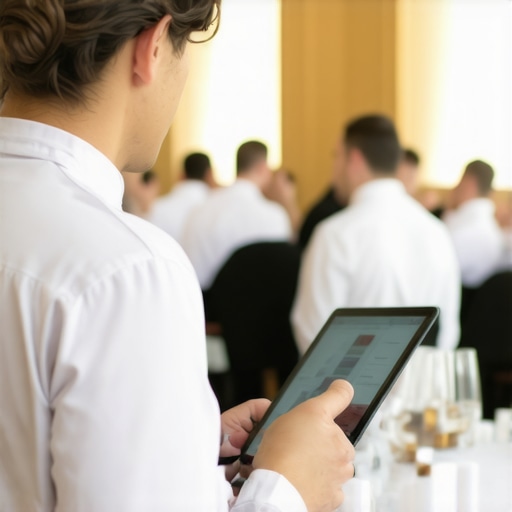
Invest in Tools That Kill the Queue
If you are still serving coffee by walking table to table with a single pot, you are living in the past. In my kit, I always include high-capacity thermal dispensers and pre-staged ‘satellite stations.’ I’ve found that the best way to serve coffee to 200 people in five minutes is to decouple the cream and sugar from the pour itself. This prevents the ‘stalling’ that happens when one guest takes three minutes to find their preferred sweetener. This kind of systemic thinking is at the heart of mastering corporate event planning secrets to seamless success. I predict that over the next few years, we will see even more automation in these ‘utility’ service areas, allowing human staff to focus purely on high-touch hospitality rather than just pouring liquids. I highly recommend you try my ‘satellite station’ method for your next large gathering—it’s the fastest way to see an immediate jump in guest satisfaction scores. These are the effective catering strategies for corporate event impressiveness that separate the amateurs from the veterans.
Lessons from the Front Lines of High-Stakes Hospitality
One of my biggest lightbulb moments was realizing that a server’s speed is completely irrelevant if their movement patterns are flawed. I spent years thinking I needed to hire more staff to solve bottlenecks, but I really just needed better methods for optimizing server efficiency to enhance event satisfaction. I also discovered that choosing the perfect servers for your wedding isn’t about finding the fastest hands, but the sharpest eyes—staff who can spot a guest’s need before the guest even says a word. Another hard-earned lesson? Silence is the ultimate sign of luxury. If you can hear the service happening, it’s too loud. We train our teams to communicate with nods and hand signals, never shouting over the music.
My Go-To Resources for Event Perfection
To stay ahead of the curve, I rely on a few key pillars of information. First, I always return to my own essential checklist for successful corporate event catering to ensure no detail, from the width of the service aisles to the temperature of the dessert plates, is overlooked. I also keep a close eye on wedding catering tips from industry experts to understand how modern guest expectations are shifting toward more interactive, yet efficient, food stations. These tools help bridge the gap between a ‘good’ event and one that guests will talk about for years. [final-service-image]
The Future of Seamless Guest Experiences
At the end of the day, mastering effective catering strategies for corporate event impressiveness is about respect—respect for your guest’s time and for the atmosphere you’ve worked so hard to build. Whether you are planning a high-end gala or an intimate reception, remember that the best service is the kind that feels like magic: it’s everywhere when you need it and invisible when you don’t. Don’t be afraid to experiment with your layout and trust your data over your ‘gut’ feeling. Have you ever seen an event fall apart because of a single bottleneck in the service line? Let me know in the comments below!